
Written by: Matt Beucler, CEO, Plura AI
Updated September 2026
Key Takeaways
- A predictive dialer comparison should focus on pacing behavior under load, abandonment control, AMD accuracy, caller-ID reputation, and cost per connected conversation.
- Most vendor comparisons stay at the dialer-type label level instead of showing how platforms perform under real production and regulatory pressure.
- The five evaluation criteria that drive outcomes are: pacing that auto-throttles near abandonment thresholds, AMD accuracy above 95%, real-time abandonment dashboards, carrier-level branded caller ID, and transparent pricing beyond seat costs.
- Plura AI’s AI Predictive Dialer satisfies all five criteria on its own FCC-licensed carrier stack, with compliance controls before dial and stateful signals that improve pacing over time.
- See the AI Predictive Dialer in action and test these criteria against your own operation.
Why Most Predictive Dialer Comparisons Miss the Point
Most content ranking for “predictive dialer comparison” compares dialer types, such as predictive, progressive, preview, and power. Buyers in contact centers, marketing, and operations already know these labels. The real comparison sits in pacing behavior, compliance tooling, and total cost of ownership.
Marketing language blurs the picture further. Vendors often label progressive pacing as “predictive” because the term converts better. A platform that dials one call per available agent operates as a progressive dialer regardless of the sales deck. The framework below cuts through that noise by focusing on how the platform behaves under load, not what the vendor calls it.
Dialer-Type Decision Table
The table below covers the four standard dialing architectures. Use it to confirm which mode a vendor actually sells. Once you know the mode, the five criteria below show whether that mode will hold up under production load.
| Dialer Type | Pacing Strategy | Primary Goal | Abandonment Exposure | Personalization Depth |
|---|---|---|---|---|
| Predictive | Dynamic ratio of 2 to 4 calls per agent, adjusted in real time by answer rate, handle time, and agent availability | Maximum agent talk time (45 to 50 min/hr per agent) | Highest, because abandoned calls are structurally inherent to over-dialing | Low, because the agent connects mid-hello with minimal pre-call context |
| Progressive | One call placed per available agent the moment the prior call ends, with no over-dialing | Eliminate abandoned calls while automating dialing | None by design, because no call fires without a confirmed-available agent | Low-to-medium, because the agent is ready but has no pre-call review time |
| Power | Fixed multiplier (typically 1.5 to 3 calls per available agent), faster than progressive and slower than predictive | Balance throughput and abandonment risk for mid-size teams | Moderate, because abandons occur when more calls connect than agents can handle | Low, similar to progressive with no pre-call review |
| Preview | Agent reviews the contact record and manually triggers the call | Prioritize preparation and personalization over volume | None, because no call is placed until the agent initiates | High, because the agent reads full history before speaking |
Progressive vs Predictive Dialer: The Practical Difference
A progressive dialer places exactly one call per available agent the moment the prior call ends. An agent is always ready when a call connects, so abandoned calls are structurally impossible.
A predictive dialer dials multiple numbers simultaneously ahead of agent availability. It uses a statistical algorithm to anticipate when agents will free up, which increases talk time but introduces abandonment risk.
An auto dialer is a broader category that includes both modes. Vendor marketing often uses “auto dialer” and “predictive dialer” interchangeably, which creates definitional confusion. The evaluation criteria below apply regardless of the label a vendor uses.
Five Evaluation Criteria for Any Predictive Dialer Comparison
Five platform-level criteria determine production performance. Each one comes with a concrete question to take into vendor conversations.
1. Pacing Algorithm Behavior Under Load
A predictive dialer’s pacing algorithm calculates a dial ratio from three live inputs: the number of currently free agents, average conversation duration, and the percentage of dialed numbers that connect to a human. Most enterprise predictive dialers default to a safety pacing rate of around 1.2 to 1.5 calls per agent to stay under the 3% abandonment threshold.
The critical question is what happens when answer rates shift mid-campaign. Ask the vendor whether the algorithm auto-throttles when abandonment approaches 2.5%, or whether a supervisor must intervene manually.
Plura AI’s AI Predictive Dialer decides who to call next using stateful conversion signals such as historical answer rates, prior negotiation outcomes, and prior offer-acceptance bands instead of a static ratio. The pacing logic improves as the platform accumulates data on a contact list and responds to current session behavior.
2. AMD Accuracy and Its Effect on Abandonment
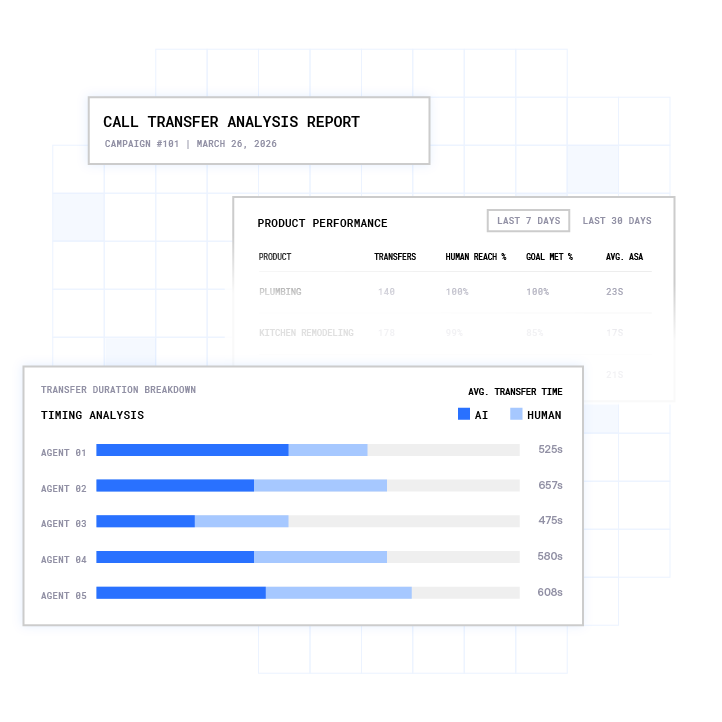
Answering-machine detection (AMD) classifies each connected line as a live human or a voicemail within the first one to three seconds of audio. Legacy silence-based AMD systems, including the one built into stock Asterisk, document accuracy ceilings of 75 to 80%3. That range means between one in five and one in four classifications is wrong.
A healthy AMD false positive rate is under 2%. Above 5%, the AMD system actively destroys the outbound contact rate.
The compliance impact is direct. If AMD misclassifies a live answer as voicemail and the system never attempts to connect an agent, that outcome functions as an abandoned call under FCC rules and often never hits the abandonment dashboard. Ask the vendor for AMD accuracy rates, how they measure them, and how the system handles call-screening tools such as iOS 26 Call Screening, Google Call Screen, and carrier-level filters.
3. Abandonment-Rate Controls
Under 47 CFR Section 64.1200(a)(7), a telemarketing call is abandoned if it is not connected to a live sales representative within two seconds of the called person’s completed greeting2. The FCC caps abandoned calls at 3% of all calls answered live, measured per campaign over a rolling 30-day period. One compliance source recommends setting the dialer’s abandon-rate target to 1.5% to preserve a buffer against spikes in answer rates, while the regulatory cap remains 3%.
Pacing aggressiveness trades directly against abandonment exposure, so the vendor’s answer to two questions matters. Ask whether the platform includes a real-time abandonment dashboard with auto-throttle, and ask for the minimum recommended agent count for predictive mode. A predictive dialer running with fewer than eight agents is nearly impossible to keep under the 3% abandoned-call cap, because statistical variance in call-answer timing can spike abandonment before the pacing algorithm can react.
4. Caller-ID Reputation and Branded Caller ID
Mobile answer rates for unknown numbers in the US have dropped from roughly 25 to 30% in 2015 to between 8% and 12% in 2026.3 Four forces drove that decline: carrier spam scoring, iOS Silence Unknown Callers, Android equivalents, and STIR/SHAKEN attestation warnings.
A platform that cannot issue branded caller ID at the carrier level has only one option: rent someone else’s reputation. That approach limits control over answer rates and remediation.
Plura issues branded caller ID directly through its FCC-licensed carrier and runs STIR/SHAKEN authentication on every outbound call. Plura remediates spam labels at the carrier level to improve pickup rates. Ask any vendor whether they issue branded caller ID under their own carrier identity or through a third-party reseller.
5. True Cost Per Connected Conversation
The advertised seat price is not the total cost. Dialer software alone often runs $75 to $200 per seat per month. That figure excludes the two line items that scale with usage: telephony minutes at roughly $0.01 to $0.04 per outbound minute and compliance add-ons such as DNC scrubbing, call recording storage, and TCR registration at another $20 to $50 per seat. Ask the vendor what the seat price excludes and the per-minute rate on outbound calls.
Plura prices per conversation, scaling with AI volume, while seat-based platforms price per agent and scale with human headcount. That distinction changes the economics for teams that want to grow conversations without matching headcount growth.
Walk through these five criteria on your own operation and see how the numbers move.
Are Predictive Dialers Illegal? Compliance as an Operational Constraint
Predictive dialers operate inside a specific regulatory framework that buyers should understand before configuring pacing. Under 47 U.S.C. Section 227(a)(1), an automatic telephone dialing system (ATDS) is defined as equipment with the capacity to store or produce telephone numbers to be called using a random or sequential number generator and to dial those numbers automatically. The U.S. Supreme Court held in Facebook, Inc. v. Duguid, 592 U.S. 395 (2021), that equipment must use a random or sequential number generator to qualify as an ATDS under the federal TCPA2, which narrows the definition for list-based dialers at the federal level.
State laws in Florida, Oklahoma, and others use broader definitions that may capture list-based systems regardless of number generation method. Operators can review 47 CFR Section 64.1200 and consult qualified counsel when evaluating specific configurations.
The abandonment-rate rule functions as an operational metric every buyer must manage. Under 47 CFR Section 64.1200(c)(1), telephone solicitations to residential subscribers are limited to 8 a.m. to 9 p.m. local time at the called party’s location. Pacing configuration trades directly against abandonment exposure, because a more aggressive dial ratio produces more talk time per agent-hour and more abandoned calls. Compliance posture remains the customer’s responsibility. Plura provides infrastructure, not legal conclusions.
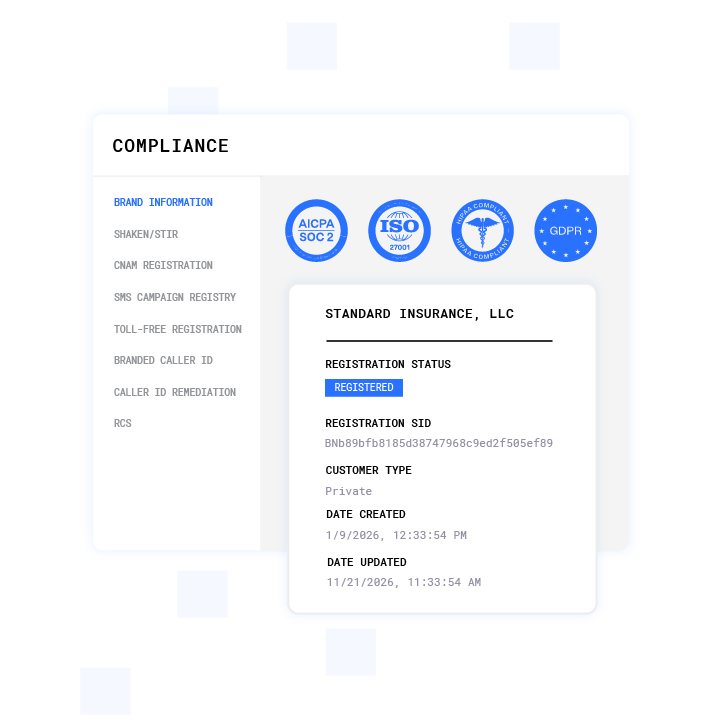
Plura supports TCPA and DNC (Do Not Call) compliance efforts through real-time DNC scrubbing before dial, SHAKEN/STIR caller ID verification on every outbound call, automated quiet-hours enforcement through time-zone detection, and immutable consent logging inside the platform. These capabilities provide tooling. Whether a specific campaign configuration satisfies applicable law is a question for qualified counsel.
What the Advertised Price Does Not Include
Compliance tooling is one of several line items that never appear in the advertised seat price. Telephony minutes, phone number rental, call recording storage, workforce management (WFM) modules, AI add-ons, and regulatory registration all sit on top of the base license at most platforms. Three hidden line items to budget for in any dialer deployment include outbound minutes at roughly $0.01 to $0.03 per minute, number rental at $1 to $5 per number per month, multiplied if you rotate, and CRM integration time, often 2 to 10 engineering days for a reliable two-way sync.
Minimum seat commitments also change the math for smaller teams. Five9 enforces a stated 50-seat minimum4, which rules out smaller operations entirely. NICE CXone publishes per-agent suite pricing ranging from $110 to $249 per agent per month4, with AI forecasting, scheduling, and WFM gated to higher tiers. The more useful question for leaders is “what drives my total cost per connected conversation,” because the seat price only starts the calculation.
Plura’s pricing and ROI calculator are published transparently. Run your numbers before a vendor conversation, not after.
Where Plura AI’s AI Predictive Dialer Fits
Those hidden costs often trace back to one architectural choice: whether the vendor owns its carrier. Plura AI is its own FCC-licensed audio bridging carrier. Voice does not route through a third-party CPaaS (Communications Platform as a Service, the API-only telecom layer that providers like Twilio sell to AI vendors that do not own a carrier).
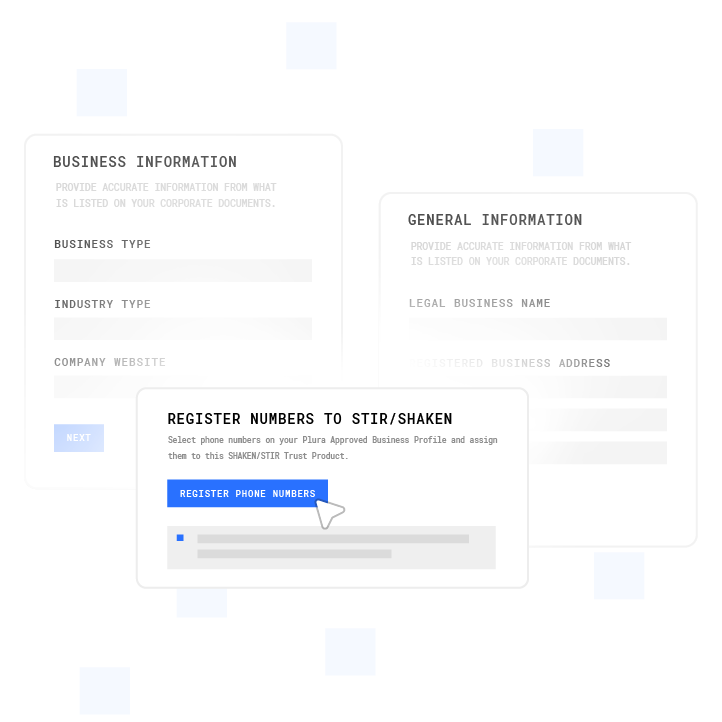
This architecture means Plura issues branded caller ID at the carrier level, runs STIR/SHAKEN authentication on every outbound call, and supports compliance controls at origination instead of layering them on later.
The AI Predictive Dialer uses the same stateful conversion signals described above to improve pacing with every campaign. Voice, SMS, RCS, and webchat share a Stateful Conversation Database, so an agent that texted a lead at 9 a.m. can pick up the call at noon already knowing what was said. Real-time DNC scrubbing and TCPA-litigator screening run before dial.
Plura includes a built-in AI Predictive Dialer with list management, dynamic pacing, timezone logic, answer-rate optimization, and compliance controls. Voice-only platforms built on third-party carriers often cannot match that level of carrier-level control.
Annual contracts include a 90-day opt-out window. If the deployment does not deliver, customers are not held to the full year. Compare plans and rates side by side, or run your numbers through Plura’s ROI calculator to check projected return.
Run a live outbound campaign demo and see the AI Predictive Dialer in production conditions.
Questions to Ask a Vendor Before Signing
Take this eight-question checklist into every vendor conversation and every internal budget meeting.
- What is your pacing algorithm’s behavior when abandonment approaches 2.5%, and does it auto-throttle or require manual intervention?
- What is your AMD accuracy rate, how is it measured, and does your system classify call-screening tools (iOS 26, Google Call Screen, carrier filters) separately from voicemail?
- What is your minimum recommended agent count for predictive mode, and what happens to abandonment rate below that threshold?
- Do you issue branded caller ID under your own carrier identity or through a third-party reseller?
- What is your minimum seat commitment and contract length?
- What does the seat price exclude, including telephony minutes, number rental, call recording, WFM, AI modules, and regulatory registration?
- What API and webhook support is available for CRM integration, and what is the realistic engineering time for a two-way sync?
- Is there an opt-out window in the annual contract if the deployment does not perform?
If those answers leave gaps, the questions below cover the definitional and regulatory points buyers raise most often.
Frequently Asked Questions
Do Predictive Dialers Violate the TCPA?
As covered in the compliance section, predictive dialers operate within a framework defined by the TCPA at 47 U.S.C. Section 227 and 47 CFR Section 64.1200. State laws in some jurisdictions apply broader definitions. Whether a specific configuration aligns with those rules depends on how it is built and used, so review the regulation and consult qualified counsel.
How Do Progressive and Predictive Dialers Differ?
The progressive versus predictive comparison above provides the full breakdown. In short, progressive pacing dials one call per ready agent, while predictive pacing dials ahead of agent availability using a statistical model, which increases talk time and introduces abandonment risk.
What Are the Common Problems With Auto Dialers?
The most common operational problems include AMD false positives that disconnect live humans, abandonment spikes when pacing outpaces agent availability, caller-ID reputation damage from ghost calls and spam flags, and hidden costs that inflate true cost per connected conversation. Below eight to ten simultaneously active agents, predictive pacing often lacks enough statistical data to stabilize, which causes oscillation between idle agents and abandonment violations.
What Drives Predictive Dialer Cost?
The pricing section above lists the main cost drivers. The most useful metric remains true cost per connected conversation, because it rolls software, telephony, compliance tooling, and integration effort into a single outcome-based number.
What Is an AI Predictive Dialer?
An AI predictive dialer uses machine learning signals such as historical answer rates, prior conversation outcomes, offer-acceptance patterns, and real-time AMD classification to decide who to call next and at what pace. The pacing algorithm improves with each campaign instead of resetting, and AMD can classify live humans, voicemail, and call-screening tools more accurately than silence-based systems. Plura’s AI Predictive Dialer runs on Plura’s own FCC-licensed carrier, with branded caller ID and compliance controls supported at origination.
Conclusion: The Comparison That Matters
The predictive dialer comparison that matters is between platforms’ pacing behavior under load, AMD accuracy, abandonment-rate controls, caller-ID reputation, and true cost per connected conversation, not between dialer-type labels. These five criteria determine whether a platform performs in production and whether the choice stands up in a budget review.
Run your numbers through Plura’s ROI calculator to check projected ROI. Compare plans and rates side by side. Or book a live demo with Plura and see the AI Predictive Dialer running against your use case.
1 Plura AI maintains SOC 2, HIPAA, ISO, and GDPR posture as part of its platform infrastructure. References to compliance frameworks in this article describe Plura’s platform capabilities and do not constitute a guarantee that any customer using Plura will themselves be compliant with applicable laws or standards. Customers remain solely responsible for their own regulatory obligations, certifications, consent management, recordkeeping, and the claims they make to their own end users. Consult qualified legal counsel for guidance specific to your use case.
2 This article describes regulatory frameworks at a general level and does not constitute legal advice. Laws and regulations vary by jurisdiction, change over time, and apply differently depending on facts and circumstances. Readers should consult qualified legal counsel before making compliance decisions.
3 Performance figures, customer outcomes, and industry statistics referenced in this article are drawn from cited third-party sources or Plura customer case studies. Individual results vary based on implementation, use case, industry, audience, and execution. Past or aggregate performance is not a guarantee of future results.
4 References to third-party products, services, companies, or research are made for informational and comparative purposes only. Plura AI is not affiliated with, endorsed by, or sponsored by any third party named in this article unless explicitly stated. Trademarks and product names referenced remain the property of their respective owners.
This article is provided for informational purposes only and reflects Plura AI’s understanding at the time of publication. Product capabilities, integrations, and specifications are subject to change. For the most current information, visit plura.ai.
This article was produced with the assistance of AI tools and reviewed by Plura AI prior to publication.