
Written by: Matt Beucler, CEO, Plura AI
Updated September 2026
Key Takeaways
- Sales automation reduces CAC by lowering labor costs, improving conversion rates, and increasing talk utilization without cutting ad spend.3
- Automation impacts five cost lines inside the funnel: lead qualification, speed-to-lead, automated outreach, CRM hygiene, and cycle compression.
- Responding to new leads within minutes materially lifts conversion rates and lowers effective CAC.
- Plura AI agents sustain full talk utilization, which sharply reduces sales labor cost in the CAC numerator.
- Plura AI delivers measurable CAC reduction through its FCC-licensed carrier stack and compliance engine; see how Plura AI can transform your sales operations.
What Is CAC in Sales?
Customer acquisition cost (CAC) is total sales and marketing spend divided by new customers acquired in the same period. According to Fiscallion’s SaaS unit economics guide, the numerator includes sales salaries, commissions, marketing costs, paid media, sales tools, and a fractional allocation of overhead for customer-facing roles.4 Omitting salaries, tools, agencies, creative, and data costs from the acquisition numerator makes CAC look 40-60% cheaper than reality, according to Tomba’s 2026 CAC guide. YourGrowthPartner separately identifies using only ad spend rather than total marketing and sales expenditure as the most common calculation error.
Understanding the components of CAC is the first step. The next step is identifying where automation can reduce those components inside your funnel. The Funnel-Leak Framework maps each automation to a specific cost line.
The Funnel-Leak Framework: Which Cost Line Each Automation Moves
Lead Qualification and Routing as a Labor-Cost Lever
Reduce CAC through lead qualification by tying scoring thresholds to cost per qualified lead rather than close rate. Average cost per lead across paid channels before qualification ranges from $35 to $85, while AI-qualified leads run $25 to $60. This gap shows why qualification quality directly affects CAC. The automation reduces the labor cost line by replacing manual SDR qualification with real-time scoring.
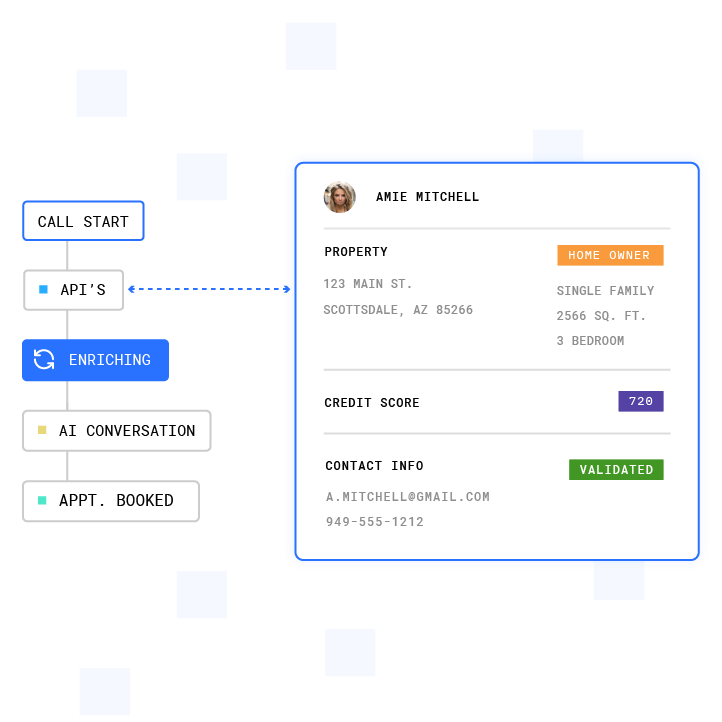
According to The Bridge Group’s 2025 SDR Models, Motions and Metrics report, median SDR compensation sits at $80K OTE with a three-month ramp period before full productivity.4 Every week a human SDR spends manually qualifying leads that an AI scoring layer could handle is a direct labor cost that inflates CAC without appearing on any media invoice.
Speed-to-Lead as a Conversion-Rate Lever
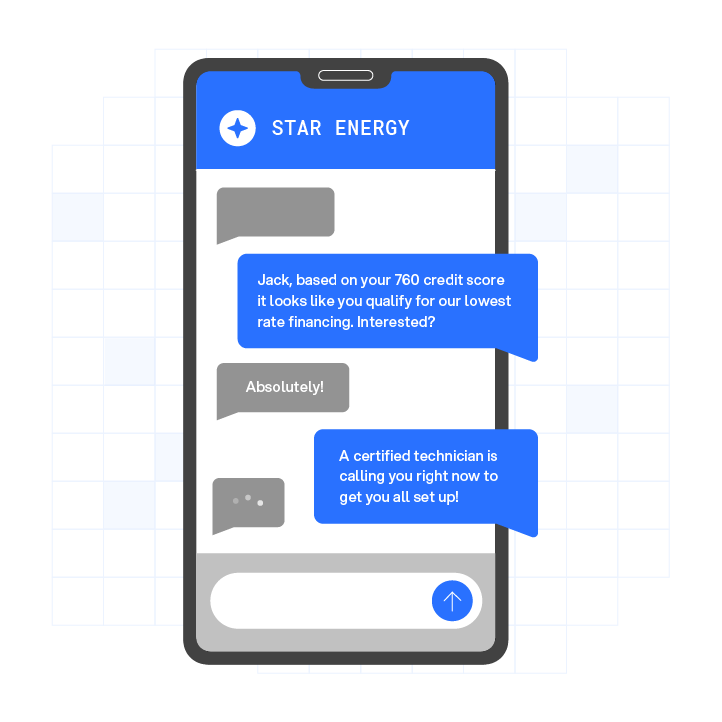
To reduce CAC, frame speed-to-lead as cost per acquired customer, not a response-time vanity metric. Harvard Business Review research found that companies responding within five minutes are 100 times more likely to connect with a prospect than those waiting 30 minutes, and leads contacted within one minute are 391% more likely to convert. This impact shows how response time shapes conversion economics.
The automation moves the conversion-rate line by compressing the gap between lead capture and first contact. For example, Plura’s AI SMS and AI voice agent reach new leads in under five seconds, 24/7, without a human queue.
Automated Outreach as a Talk-Utilization and Connect-Rate Lever
Human agents typically operate at partial talk utilization, while Plura agents sustain full utilization. The automation moves the talk-utilization line by eliminating idle time between calls. Plura’s AI Predictive Dialer places the next call before the agent is free, routing only live connections to the conversation.
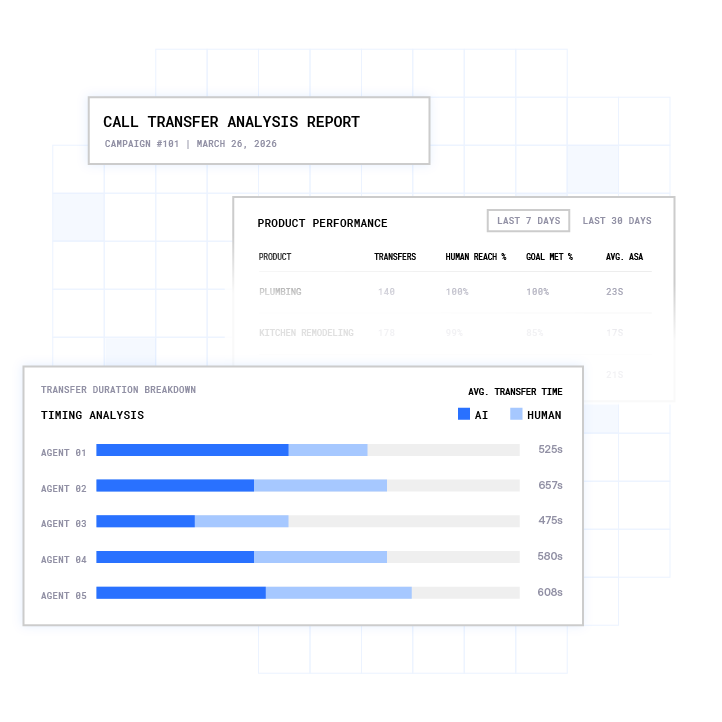
The result is a substantial increase in real conversation time per hour on the same team size. Agents spend far less time waiting between calls and far more time speaking with prospects who actually pick up.
CRM Hygiene as a Wasted-Spend Lever
Bad data waste, including paid rep time emailing bouncing addresses and dialing dead numbers, inflates CAC without appearing on any acquisition invoice. The automation moves the wasted-spend line by keeping contact records current and suppression lists enforced.
Plura’s compliance engine runs real-time DNC scrubbing on every outbound contact before dial, blocking non-compliant numbers before the first attempt and preventing wasted dials from accumulating in the denominator of your CAC calculation.1 Plura supports compliance workflows but does not replace your own legal review or policy decisions.
Cycle Compression as a Cash-Flow and Cost-Per-Conversion Lever
The average B2B buying cycle compressed from 11.3 months in 2024 to 10.1 months in 2025, according to 6sense’s 2025 B2B Buyer Experience Report.4 This trend highlights the opportunity to use automation to pull revenue forward. The automation moves the cost-per-conversion line by shortening the interval between first touch and closed deal.
Because faster cycles mean the same sales and marketing spend is divided across more closed customers in the same period, CAC is mechanically reduced without changing the budget. The effect shows up both in unit economics and in cash-flow timing.
What Is a Good LTV:CAC Ratio?
A 3:1 LTV:CAC ratio is the widely cited healthy benchmark, meaning for every dollar spent acquiring a customer, the business earns three dollars back. Ratios below 3:1 suggest acquisition costs are too high or retention too weak. Ratios well above 5:1 may signal under-investment in growth.
The ratio matters more than absolute CAC because it connects acquisition spending to long-term revenue and surfaces unit-economic problems before they become a crisis. A rising CAC with a flat LTV is a warning signal the ratio surfaces before it shows up in quarterly results.
CAC payback period is a complementary metric. According to Phoenix Strategy Group’s 2026 SaaS benchmarking cited by Tenbound, the median CAC payback period is 15 to 18 months, with elite companies aiming for under 12 months. Automation that moves two cost lines simultaneously, labor cost down and conversion rate up, compresses payback period faster than any single-lever approach.
Worked Example: From Spend and Customer Count to New CAC
Assume quarterly acquisition spend of $240,000 and 80 new customers acquired. This matches the structure of Tomba’s 2026 worked CAC example for a mid-market B2B company, which breaks that spend across paid ads, loaded sales team cost, loaded marketing team cost, tools, agency fees, and data costs.
CAC = $240,000 / 80 = $3,000 per customer.
Now assume automation moves two cost lines:
- Speed-to-lead improvement lifts conversion, adding customers without adding spend
- Talk-utilization improvement reduces sales labor cost
Assume conversion lifts new customers from 80 to 95 in the same quarter. Assume automation and labor efficiencies reduce acquisition spend from $240,000 to $220,000. New CAC = $220,000 / 95 = $2,316 per customer, a 23% reduction from the original $3,000 per customer.
In a comparable worked example, the initially reported (ad-only) CAC is $105,000 / 50 = $2,100 per customer, while the fully-loaded CAC is $316,700 / 50 = $6,334 per customer. The cost lines that moved in our scenario are sales labor (down) and conversion rate (up). CAC falls without touching the media budget.
The arithmetic is reproducible from any operator’s own spend and customer count. Plura’s ROI calculator estimates monthly human agent costs at $60,000 for 15 agents at partial talk utilization, versus $14,400 for equivalent output using Plura agents at full utilization, a $45,600 monthly difference that flows directly into the CAC numerator.
Cost-Structure Comparison: Automation vs. Adding SDR Headcount
The following table compares the cost structure of adding SDR headcount versus implementing sales automation across three dimensions: base compensation, ramp time, and talk utilization. The comparison highlights how automation shifts costs from fixed labor to scalable technology.
| Cost Line | Adding SDR Headcount | Sales Automation (Plura) |
|---|---|---|
| Base salary + variable | $80K OTE median per SDR (Bridge Group 2025) | $2,750 agent build fee (Plura pricing) |
| Ramp time to productivity | ~3 months (Bridge Group 2025) | Days to weeks depending on conversation complexity |
| Talk utilization | Typical partial utilization (Plura calculator) | Sustained full utilization (Plura calculator) |
Compliance overhead often sits outside these headline comparisons. Under the TCPA (47 U.S.C. § 227), statutory damages reach $500 per violation for negligent violations and $1,500 per violation for willful violations.1 A campaign of 10,000 calls to a bad list can therefore create material exposure.
Manual compliance processes add staff hours that inflate the CAC numerator without generating a single new customer. Plura enforces real-time DNC scrubbing, TCPA-litigator list filtering, and automated quiet-hours enforcement inside the platform before dial, which supports your compliance program and reduces manual workload.1
Reducing CAC Operationally Without Increasing Ad Spend
Most CAC discussions focus on budget levels instead of operational execution. In an illustrative model with $3,000 monthly ad spend at $50 cost-per-lead, responding within 5 minutes yields a $200 effective CAC, while responding the next day yields $1,000, a 5x difference with identical ad spend. The lever is response time and conversion efficiency, not budget.
Three operational fixes that move CAC without touching media spend:
- Set a hard 5-minute SLA during business hours with a named accountable person
- Use AI SMS as a bridge when a call cannot happen within 5 minutes
- Track contact rate as a KPI alongside cost per lead
For a 100-seat contact center, traditional operations cost $4 million to $7 million annually, while AI-powered communications using platforms like Plura cost $300,000 to $700,000. The gap reflects cost-to-serve: labor, utilization, compliance overhead, and the conversion rate lost to slow follow-up.
Estimate your monthly savings by modeling your agent costs in Plura’s ROI calculator.
Frequently Asked Questions
How Fast Should You Respond to a New Lead?
The first five minutes are the window that largely determines whether a lead converts. Companies responding within five minutes are 100 times more likely to connect with a prospect than those waiting 30 minutes. Lead conversion rates drop 10x after the first five minutes. Earlier research also shows a several-hundred-percent lift when response time falls to around one minute.
Practically, the response SLA needs automation, not aspiration. A human queue cannot reliably hit a five-minute SLA at volume. An AI voice agent or AI SMS agent can respond in under five seconds, on every lead, around the clock.
What Does CAC Reduction Mean?
CAC reduction means lowering the total cost to acquire each new customer, either by reducing the numerator (total sales and marketing spend) or increasing the denominator (new customers acquired in the same period). Automation typically affects both levers at once.
Talk-utilization improvements reduce the labor cost in the numerator. Speed-to-lead improvements increase the conversion rate, which grows the denominator without adding spend. Many teams treat CAC as a media-spend problem and cut ad budgets, while the larger opportunity sits in reducing the cost-to-serve each lead through the funnel.
How to Reduce Cost Per Acquisition?
Map each automation to a specific cost line before deploying it. Lead qualification automation moves the labor cost line by replacing manual SDR screening with real-time AI scoring. Speed-to-lead automation moves the conversion-rate line by compressing the gap between form fill and first contact.
Automated outreach moves the talk-utilization line by eliminating idle time between calls. CRM hygiene automation moves the wasted-spend line by keeping contact records current and suppression lists enforced. Cycle compression automation moves the cost-per-conversion line by shortening the interval between first touch and closed deal.
Sequencing matters. Fix speed-to-lead before refining outreach cadence, because a fast response to a bad or stale list still wastes spend.
What Is a Good CAC Percentage?
CAC as a percentage of first-year ACV (annual contract value) should be below 100% and trending lower. A CAC that exceeds first-year ACV means the business is pre-financing more than a full year of customer revenue before recovering acquisition cost. Since payback is measured against gross profit rather than raw revenue, this directly affects cash burn and fundraising timing.
The 3:1 LTV:CAC ratio benchmark is the companion metric: for every dollar spent acquiring a customer, the business should earn three dollars back over the customer’s lifetime. Ratios below 3:1 signal that either acquisition costs are too high or retention is too weak. Both problems have operational solutions that focus on funnel efficiency rather than ad cuts.
How Long Does Plura Implementation Take?
Typical implementation runs from days to weeks depending on conversation complexity. A simple inbound qualification flow is typically built in days. A complex multi-step intake, such as a 25-question health-history survey, runs closer to one to two months because the workflow logic itself takes time to design and validate.
Plura’s onboarding sequence includes a discovery audit, intake of sample calls and existing scripts, an overnight build of a conversation mockup, a review meeting, engineering build of the production workflow, a pilot test on a subset of real calls, and full go-live. Annual contracts include a 90-day opt-out window if the deployment is not delivering.
Conclusion: CAC as a Cost-to-Serve Problem
CAC behaves like a cost-to-serve problem before it behaves like a media-spend problem. Many operators cut ad budgets and watch CAC stay flat because the underlying cost lines sit inside the sales operation.
The five cost lines that automation moves, labor cost, conversion rate, talk utilization, wasted spend, and cost per conversion, all reside within the sales operation rather than the media plan. Treating CAC as an operational challenge unlocks more durable gains than budget cuts alone.
Plura owns its FCC-licensed carrier stack and enforces compliance inside the platform before dial. It delivers 3x average ROI in 90 days.3 The cost structure for a 50-seat equivalent contact center runs $8,000 to $15,000 monthly with AI, versus $35,000 to $50,000 monthly for traditional offshore operations. That difference reflects CAC reduction that you can trace directly to cost-to-serve.
Run your own numbers in Plura’s calculator to project CAC and ROI.
Compare plans and rates side by side.
1 Plura AI maintains SOC 2, HIPAA, ISO, and GDPR posture as part of its platform infrastructure. References to compliance frameworks in this article describe Plura’s platform capabilities and do not constitute a guarantee that any customer using Plura will themselves be compliant with applicable laws or standards. Customers remain solely responsible for their own regulatory obligations, certifications, consent management, recordkeeping, and the claims they make to their own end users. Consult qualified legal counsel for guidance specific to your use case.
2 This article describes regulatory frameworks at a general level and does not constitute legal advice. Laws and regulations vary by jurisdiction, change over time, and apply differently depending on facts and circumstances. Readers should consult qualified legal counsel before making compliance decisions.
3 Performance figures, customer outcomes, and industry statistics referenced in this article are drawn from cited third-party sources or Plura customer case studies. Individual results vary based on implementation, use case, industry, audience, and execution. Past or aggregate performance is not a guarantee of future results.
4 References to third-party products, services, companies, or research are made for informational and comparative purposes only. Plura AI is not affiliated with, endorsed by, or sponsored by any third party named in this article unless explicitly stated. Trademarks and product names referenced remain the property of their respective owners.
This article is provided for informational purposes only and reflects Plura AI’s understanding at the time of publication. Product capabilities, integrations, and specifications are subject to change. For the most current information, visit plura.ai.
This article was produced with the assistance of AI tools and reviewed by Plura AI prior to publication.