
Written by: Matt Beucler, CEO, Plura AI
Updated September 2026
Key Takeaways
- Call center payroll reduction lowers paid hours per contact through five levers: overtime elimination, schedule-to-volume matching, shrinkage reduction, AHT reduction, and first-contact resolution, while maintaining headcount.
- Industry shrinkage rates of 25–40% mean only 60–75% of paid hours reach the queue, so a 5% paid-hours recovery can deliver substantial annual savings at $15–$25 per agent hour.
- FLSA wage-and-hour rules, including the 7-minute rounding rule and compensable pre-shift login time, shape how payroll changes can be implemented and where back-pay exposure may arise.
- AI agents can run at 100% talk utilization with no shrinkage or overtime, and Plura AI’s ROI calculator shows a 15-agent human team at $60k per month versus 6 Plura agents at $14.4k per month, producing a 12-month ROI of $547k in the illustrative scenario.
- Plura AI’s U.S.-based, carrier-grade platform with AI Voice, SMS, RCS, and AI Webchat gives contact centers a fast, compliance-supported way to cut paid hours while maintaining service levels, and the ROI calculator helps teams quantify the impact before they change staffing plans.
What Call Center Payroll Reduction Really Targets
Call center payroll reduction lowers total paid hours per contact across the floor by targeting five operational levers: overtime elimination, schedule-to-volume matching, shrinkage reduction, average handle time reduction, and first-contact resolution (FCR) improvement. The focus is on paid hours tied to each contact rather than on cutting headcount.
Wage-and-hour rules under the Fair Labor Standards Act (FLSA) define how hours can be reduced.2 The U.S. Department of Labor’s FLSA call center fact sheet (Fact Sheet #64) describes compensable time, rounding rules, and off-the-clock obligations specific to contact center operations. Any payroll reduction plan should align with those guardrails before implementation. Consult the regulation or qualified counsel on wage-and-hour questions.
The Paid-Hours Model: Where Call Center Payroll Actually Goes
On a 100-agent floor paid for 4,000 hours a week, only part of those hours reach the queue. Paid hours split across five categories:
- Productive talk time
- Shrinkage (breaks, training, meetings, absence)
- Overtime
- Overstaffing against forecast
- Repeat contacts driven by unresolved first calls
Total shrinkage rates across the contact center industry typically range from 25% to 40%, with averages around 30–35%. For every 100 hours purchased, only 60 to 75 hours reach the queue. The staffing formula that accounts for this is: Required Scheduled Agents = Required Available Agents divided by (1 minus Shrinkage Rate). At 30 percent shrinkage, a floor needing 70 agents available must schedule 100.
Five percent is a threshold worth targeting because it is large enough to matter on payroll and small enough to recover through scheduling, shrinkage management, and AHT reduction without layoffs. On a 100-agent floor paid for 4,000 hours a week, that 5 percent represents 200 hours a week recovered. At a domestic agent cost of $15 to $25 per hour before benefits and overhead, those 200 hours create meaningful annual savings while keeping headcount stable.
The median cost per contact is $1.84 for self-service channels and $13.50 for assisted channels, per Gartner’s customer service benchmarks.4 Every paid hour recovered from non-productive activity moves contacts toward the lower end of that cost curve.
The Five Levers, Ordered by How Fast They Pay Off
Each lever targets a different slice of paid hours, and some deliver savings faster than others.
- Overtime Elimination. Overtime is the most expensive paid hour on the floor and often the fastest to reduce. Hours accumulate in unplanned absence coverage and forecast misses. When volume spikes beyond forecast or agents call out, remaining agents absorb the load at 1.5x their regular rate. Accurate forecasting and real-time adherence monitoring are the dependencies; without both, overtime recurs.
- Schedule-to-Volume Matching. Schedule alignment quickly reduces both idle time and overtime. Hours accumulate in overstaffing during low-volume intervals and understaffing that drives overtime during peaks. Accurate interval-level volume forecasting is the single most effective tool for keeping occupancy within target range,4 and per NICE CXone staffing requirement calculations, overstaffing by 15% yields roughly 70% occupancy, while understaffing by 15% yields roughly 95% occupancy. Both conditions stem from forecasting gaps and have direct payroll impact.
- Shrinkage Reduction. Shrinkage changes more slowly than overtime but still moves within a few quarters. Hours accumulate in unplanned absence, extended breaks, and training scheduled during peak intervals. Planned and unplanned shrinkage should be tracked separately because they have different drivers. Cutting planned shrinkage too aggressively removes necessary coaching and recovery time, which can raise attrition and increase unplanned shrinkage later.
- Average Handle Time Reduction. AHT reduction typically takes longer than schedule changes because it touches process and systems. Hours accumulate in after-call work (ACW), hold time, and system lookup delays. On a team handling 1,000 calls per day, the difference between 1.5-minute and 3-minute ACW is 25 agent-hours of daily capacity. AHT targets should sit behind FCR guardrails. Operations optimizing for minimum AHT without FCR guardrails saw repeat contact rates rise by 5 to 10 percentage points, with one analysis showing a 5% increase in repeat contacts when FCR drops from 75% to 70%, which offsets much of the per-contact cost savings.
- First-Contact Resolution. FCR usually moves slowest but compounds over time. Hours accumulate in repeat contacts and callbacks. Each 1 percent improvement in FCR correlates with a 1 percent improvement in customer satisfaction and a 1 percent reduction in operating costs. Systems access, agent authority, and knowledge management investment are the main dependencies. Every resolved contact removes a future repeat from the queue.
Model your own paid-hours recovery in the Plura ROI calculator.
Wage-and-Hour Guardrails for Call Center Payroll Reduction
Any payroll reduction plan that touches scheduling, timekeeping, or compensation should reflect FLSA constraints. The following describes the framework. Consult the regulation or qualified counsel before changing timekeeping or pay practices.
The 7-Minute Rounding Rule. Under 29 CFR §785.48(b), employers may record employees’ starting and stopping times rounded to the nearest 5 minutes, one-tenth of an hour, or quarter of an hour, and this rounding practice will be accepted for enforcement purposes provided it does not, over a period of time, result in failure to compensate employees properly for all the time they have actually worked. Under the 7-minute rule, punches 1 to 7 minutes past a quarter mark round down, while punches 8 to 14 minutes past round up. The enforcement focus is whether the arrangement averages out so employees receive pay for all time actually worked.
Off-the-Clock Boot-Up and Login Time. Under the FLSA, pre-shift computer boot-up and system login, mandatory pre-shift meetings, and post-shift wrap-up are generally compensable working time when they are integral and indispensable to the employee’s principal activities, but time spent clocking in and out, and waiting in line to do so, before the first or after the last principal activity is not compensable. Payroll reduction strategies that rely on excluding integral and indispensable work time can create back-pay exposure.
Retroactive Pay Cuts. Future wages can be lowered with proper advance notice, and wages already earned for hours already worked remain unchanged. Any compensation restructuring applies prospectively only.
AI Agents as a Payroll Lever With Plura AI
AI agents reduce paid hours per contact because they run at 100 percent talk utilization. Shrinkage, overtime, and repeat-contact cost from inconsistent script execution do not apply in the same way they do for human teams. AI agents function as a paid-hours lever while leadership manages headcount decisions separately.
The illustrative 15-agent scenario from Plura’s ROI calculator shows how much of the gap comes from utilization alone. At 40 percent talk utilization, 15 human agents cost $60,000 a month. Six Plura agents handling equivalent volume at 100 percent utilization cost $14,400.3
| Metric | Human Agents (15 agents) | Plura AI (6 agents) | Source |
|---|---|---|---|
| Monthly cost | $60,000 | $14,400 | Plura ROI calculator |
| Talk utilization | 40% | 100% | Plura ROI calculator |
| 30-day ROI | — | $45,600 | Plura ROI calculator |
| 12-month ROI | — | $547,200 | Plura ROI calculator |
Plura is its own FCC-licensed audio bridging carrier, so voice traffic does not route through a third-party CPaaS provider.2 That architecture matters for payroll reduction in two ways. Branded caller ID is issued at the carrier level, which raises pickup rates and reduces wasted dial attempts. Compliance-supporting controls such as real-time Do Not Call (DNC) scrubbing, TCPA (Telephone Consumer Protection Act) litigator screening, automated quiet hours, and immutable consent logging operate inside the platform before dial.
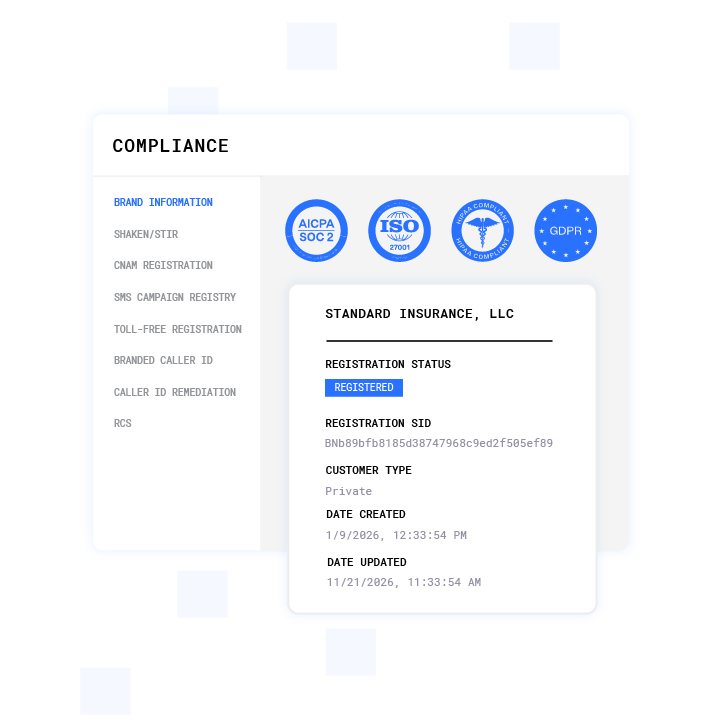
1
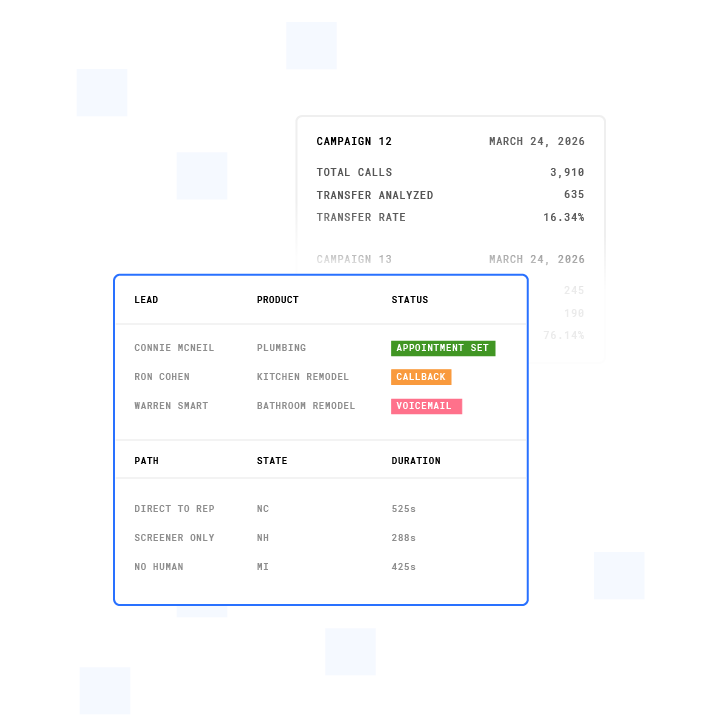
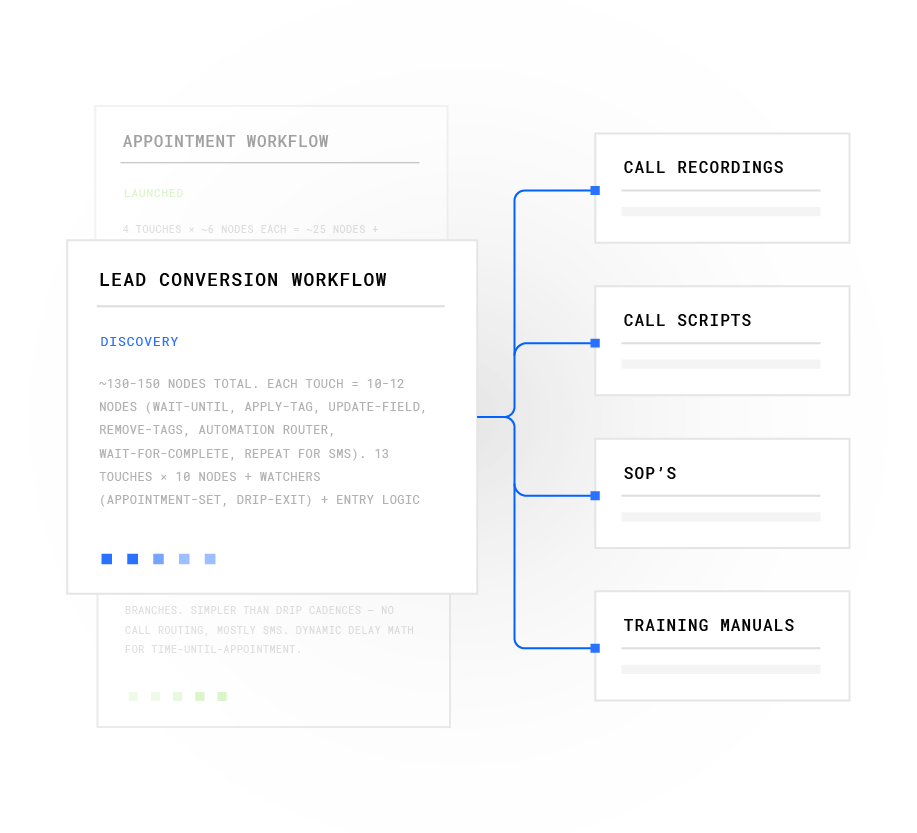
Plura’s AI voice agents handle inbound and outbound calls on that carrier infrastructure. The AI Predictive Dialer routes contacts using stateful conversion signals, which increases talk time per dial. AI SMS handles lead qualification and live transfer. AI Voice, AI SMS, AI RCS, and AI Webchat share a Stateful Conversation Database so context carries across channels. The no-code workflow builder lets operators design conversation logic without engineering overhead. All infrastructure runs on 100 percent U.S. architecture, which keeps offshore regulatory exposure out of the routing design.
Plura deployments have produced 3x average ROI in 90 days, 47 percent pipeline growth, and 90 percent faster lead-response time.3 Time to first contact drops to under 5 seconds compared with industry norms measured in hours.
See what the same volume costs on Plura using the ROI calculator.
A Decision Framework for Sequencing Payroll Levers
The right starting point depends on where paid-hours waste is largest on your floor. A short diagnostic based on three metrics helps set the sequence.
- If overtime is high, start with forecast accuracy and schedule-to-volume matching. Overtime is the most expensive paid hour on the floor and the fastest to recover once forecasting improves.
- If shrinkage is high, separate planned from unplanned shrinkage and address the unplanned portion first. Unplanned absence is the component that hits the roster on the day with no time to backfill.
- If occupancy is above 85 percent, address AHT and FCR before adding headcount. High occupancy paired with low service level signals a staffing gap, and adding agents without fixing AHT or FCR inflates payroll without resolving the underlying contact volume problem.
- If occupancy is below 70 percent, address overstaffing against forecast. Agents available and waiting for contacts represent paid hours with no contact output.
Frequently Asked Questions
What Is the 7-Minute Rule for Payroll Timekeeping?
The 7-minute rule is the quarter-hour application of the FLSA’s time-rounding regulation at 29 CFR §785.48(b). Punches 1 to 7 minutes past a quarter-hour mark round down, and punches 8 to 14 minutes past round up. The key question is whether the rounding arrangement averages out so that employees are fully compensated for all time actually worked over time. Consult the regulation or qualified counsel before implementing or modifying a rounding policy.
Can an Employer Reduce Call Center Agent Pay?
Future wages can be reduced with proper advance notice, and wages already earned for hours already worked remain in place. Any compensation restructuring applies only to hours not yet worked. State law may impose additional notice requirements beyond the federal baseline, so leaders should consult qualified counsel in each state where agents physically work.
How Does Shrinkage Inflate Required Headcount?
Shrinkage is the percentage of paid time during which agents are unavailable to handle contacts. The staffing formula is: Required Scheduled Agents = Required Available Agents divided by (1 minus Shrinkage Rate). At 33% shrinkage, a floor needing 50 agents available must schedule approximately 73 agents, per the Soon shrinkage calculator. Shrinkage typically runs 25 to 40 percent in mature contact centers, so the gap between agents on payroll and agents actually handling contacts is substantial. Reducing shrinkage by even a few percentage points lowers the scheduled headcount required to meet the same service level and directly reduces payroll.
How Do AI Agents Reduce Paid Hours Per Contact?
AI agents operate at 100 percent talk utilization, so every logged-in hour is a productive hour. In Plura’s illustrative ROI calculator scenario, human agents run at 40 percent talk utilization because the remaining 60 percent of paid time goes to breaks, training, meetings, absence, and idle time between contacts. An AI agent handling the same contact volume requires fewer total paid hours because utilization stays at 100 percent. The calculator scenario above shows the gap: the same volume costs $14,400 a month on Plura instead of $60,000.
How Long Does Plura AI Deployment Take?
A simple inbound qualification flow is typically built in days. A complex multi-step intake, such as a 25-question health-history survey, runs closer to one to two months because the workflow logic takes time to design and validate. Plura’s onboarding sequence includes a discovery audit, intake of sample calls and existing scripts, an overnight build of a conversation mockup, a review meeting, engineering build of the production workflow, a pilot test on a subset of real calls, and full go-live. Annual contracts include a 90-day opt-out window if the deployment is not delivering.
How Do You Measure Success for a Call Center Payroll Reduction Initiative?
The primary metric is paid hours per contact, tracked weekly against a pre-initiative baseline. Supporting metrics include overtime as a percentage of total hours (target under 5 percent), shrinkage rate separated into planned and unplanned components, occupancy (target 75 to 85 percent for inbound voice), FCR rate, and cost per contact. For AI agent deployments, talk utilization and 30-day ROI against the calculator baseline are fast indicators of performance. Gartner’s benchmark puts the median assisted-channel cost per contact at $13.50, and moving contacts toward self-service or AI-handled resolution is a direct path to reducing that figure at scale.
Put your floor’s numbers into the ROI calculator before you finalize your sequencing plan. Compare plans and rates side by side.
1 Plura AI maintains SOC 2, HIPAA, ISO, and GDPR posture as part of its platform infrastructure. References to compliance frameworks in this article describe Plura’s platform capabilities and do not constitute a guarantee that any customer using Plura will themselves be compliant with applicable laws or standards. Customers remain solely responsible for their own regulatory obligations, certifications, consent management, recordkeeping, and the claims they make to their own end users. Consult qualified legal counsel for guidance specific to your use case.
2 This article describes regulatory frameworks at a general level and does not constitute legal advice. Laws and regulations vary by jurisdiction, change over time, and apply differently depending on facts and circumstances. Readers should consult qualified legal counsel before making compliance decisions.
3 Performance figures, customer outcomes, and industry statistics referenced in this article are drawn from cited third-party sources or Plura customer case studies. Individual results vary based on implementation, use case, industry, audience, and execution. Past or aggregate performance is not a guarantee of future results.
4 References to third-party products, services, companies, or research are made for informational and comparative purposes only. Plura AI is not affiliated with, endorsed by, or sponsored by any third party named in this article unless explicitly stated. Trademarks and product names referenced remain the property of their respective owners.
This article is provided for informational purposes only and reflects Plura AI’s understanding at the time of publication. Product capabilities, integrations, and specifications are subject to change. For the most current information, visit plura.ai.
This article was produced with the assistance of AI tools and reviewed by Plura AI prior to publication.