
Written by: Matt Beucler, CEO, Plura AI
Key Takeaways
- Sales automation compliance starts with mapping every outreach channel to its governing U.S. rule, then proving adherence with an audit log.
- Each channel carries distinct consent standards. CAN-SPAM focuses on accurate headers, physical addresses, and 10-business-day opt-out processing. TCPA focuses on prior express written consent, 31-day DNC scrubbing, and one-to-one consent effective January 2025.2
- Liability stays with the business even when vendors or outsourced SDR teams send the messages. CAN-SPAM and TCPA both treat sellers as vicariously responsible, so indemnification clauses do not prevent enforcement actions.
- A compliant CRM workflow captures contact source, consent timestamp, jurisdiction, outreach history, and suppression status. It retains immutable records for at least five years to align with key statutes of limitations.
- Plura AI embeds these controls directly into the workflow with real-time DNC scrubbing, TCPA-litigator screening, and immutable consent logging on its own FCC-licensed carrier. See how Plura enforces compliance before outreach leaves the system.
Channel-Specific Rules for Sales Automation
Sales automation compliance breaks when teams treat every channel as one category. Each channel runs on its own rule set, consent standard, and record requirement. The table below maps the core obligations.
| Channel | Governing Rule | Required Consent / Record |
|---|---|---|
| Email automation | CAN-SPAM, 15 U.S.C. § 7701 et seq. applies to B2B email | Accurate header info, non-deceptive subject line, clear opt-out, opt-outs honored within 10 business days, valid physical postal address |
| Calls and texts | TCPA, 47 U.S.C. § 227; 47 C.F.R. § 64.1200; National DNC Registry; state quiet hours; 10DLC for A2P | Prior express written consent per 47 C.F.R. § 64.1200(f)(9); DNC scrub at least every 31 days; time-of-day compliance; 10DLC brand and campaign registration |
| LinkedIn automation | Platform terms of service and scraping restrictions; consent and data-privacy rules | Platform-compliant activity limits; documented lawful basis for any personal data processed |
| Lead enrichment and scraping | Privacy requirements for purchased or brokered leads; source-of-consent rules | Record of where the lead came from and whether automated outreach consent exists for the specific seller |
| AI-generated personalization | Same underlying rule as the channel it runs on | Consent obligation does not change because AI wrote or personalized the message |
Email automation. CAN-SPAM imposes seven requirements on every commercial email: accurate From-line and routing information, non-deceptive subject lines, clear ad identification where applicable, a valid physical postal address, a clear opt-out mechanism, honoring opt-outs within 10 business days, and third-party compliance accountability. CAN-SPAM applies to any commercial email regardless of recipient type. Both the company whose product is promoted and the third party that sends the email carry legal liability, and a contract clause indemnifying a business against a vendor’s violations does not shield it from FTC enforcement.
Calls and texts. The TCPA defines prior express written consent (PEWC) at 47 C.F.R. § 64.1200(f)(9) as a signed written agreement that clearly authorizes the seller to deliver marketing messages using an automatic telephone dialing system or an artificial or prerecorded voice.2 The FCC’s 2023 Report and Order (FCC 23-107), effective January 27, 2025, added a one-to-one consent requirement so a single consent form authorizes contact from only one named seller. Call lists must be scrubbed against the National DNC Registry at least every 31 days. State quiet-hours rules vary significantly. At least five states enforce windows narrower than the federal 8 a.m.–9 p.m. baseline. Time-of-day restrictions apply in the called party’s local time zone, not the sender’s. A2P 10DLC registration links sending numbers to a registered brand and campaign. Carriers now filter unregistered numbers, which makes registration functionally mandatory for SMS outreach at scale.
LinkedIn automation. LinkedIn’s terms of service restrict automated activity and scraping. Any personal data processed in connection with LinkedIn outreach is subject to applicable privacy law, including GDPR for EU-based contacts. Teams should consult the platform’s current terms and qualified counsel for how those rules apply to a specific program.
Lead enrichment and scraping. The source of a purchased or brokered lead determines whether automated outreach consent exists for the specific seller. The FCC’s 2023 order requires consent to be logically and topically related to the website where it was collected and to name a single specific seller. Buying a list and assuming consent transfers does not satisfy that standard.
AI-generated personalization. The consent obligation stays the same even when AI writes or personalizes the message. AI tools used for commercial communications are subject to existing consumer protection laws, and the sender remains responsible for the compliance of messages sent under their domain or caller identity.
Lead-to-Audit-Log Workflow Inside Your CRM
Sales automation compliance depends on the workflow that produces the record. The sequence below describes what a CRM should run on every contact before outreach begins.
- Lead enters CRM with captured source, timestamp, and the exact disclosure shown at opt-in.
- Jurisdiction check resolves the contact’s state and country before any channel decision.
- Lawful-basis and consent check confirms a valid consent record for the specific seller and channel.
- Suppression and DNC check scrubs against federal and state DNC registries and the internal suppression list.
- Channel eligibility confirms which channels are permitted for this contact under the applicable rule.
- Approved message sends only a message that passed the channel’s content requirements.
- Send originates on infrastructure that authenticates the caller or sender identity.
- Automatic opt-out processing honors revocations received through any reasonable means.
- Suppression list writes the opt-out to a single authoritative suppression source every channel reads.
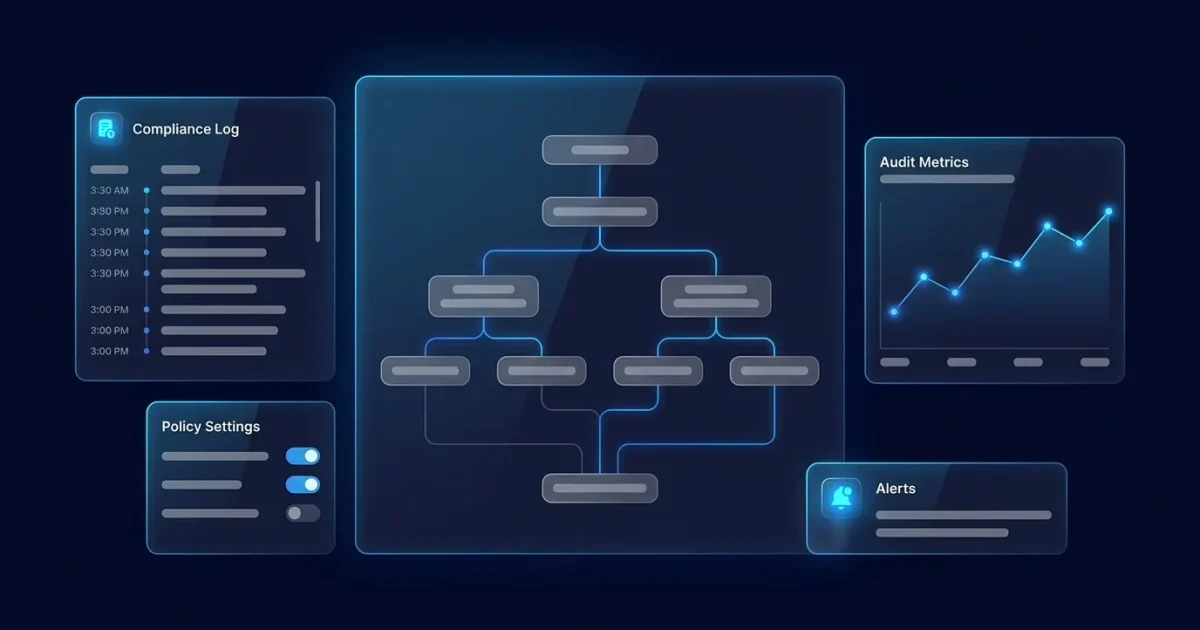
- Audit log writes the immutable record that ties the contact back to the consent that authorized it.
Every step in that sequence should produce a retrievable record. Courts have repeatedly distinguished between records of what a form contained and records of what the consumer actually experienced. That distinction separates a database row from admissible proof.
See this workflow running inside Plura before your next campaign ships.
CRM Fields That Support Sales Automation Audits
Specific CRM fields map directly to specific rules. Operators and CRM admins can use the list below as a target field set.
- Contact source records where the lead came from and the exact disclosure shown at collection. This field supports the consent chain of custody. A defensible consent record requires an unbroken chain of custody tying the consent event to the phone number ultimately dialed.
- Consent status and timestamp records the affirmative action taken, the disclosure language, and a server-side timestamp. This field supports TCPA prior express written consent under 47 C.F.R. § 64.1200(f)(9). A compliant consent audit trail should retain four things: the signed agreement or electronic equivalent, the timestamp and IP address for electronic consents, the form URL, and the exact text of the disclosure shown at the time of consent.
- Jurisdiction records the contact’s state and country. This field supports state quiet-hours and cross-border privacy rules. When jurisdiction signals conflict, the system should apply the stricter jurisdiction’s rules.
- Outreach history records every attempt, channel, and message template. This field supports DNC attempt-limit and opt-out rules. For outbound voice AI calls, systems must log a timestamped record that includes the suppression check result, call duration, ring time, and abandonment rate.
- Unsubscribe and DNC status records opt-out method, timestamp, and suppression confirmation. This field supports CAN-SPAM’s 10-business-day window and TCPA revocation rules. The FCC requires businesses to honor consent revocation through any reasonable means, including verbal statements, text messages, and voicemail.
- Suppression status records the authoritative suppression state every channel queries before send. This field supports cross-channel opt-out enforcement. The operational fix for cross-channel opt-out management is a unified consent database that sits above individual channel systems and acts as the authoritative suppression list.
Retention should run the full statute of limitations plus a buffer. The federal TCPA carries a four-year statute of limitations under 28 U.S.C. § 1658, which makes five years a reasonable floor for general lead generation. The Telemarketing Sales Rule mandates a five-year retention window for phone-based consent records, including the original consent document, disclosure text, timestamps, opt-out requests, and DNC scrub logs.
Vendor and Outsourced SDR Liability
Liability for outreach remains with the business, even when vendors or outsourced SDR teams send on its behalf. Under CAN-SPAM’s third-party compliance requirement, both the company whose product is promoted and the third party that sends the email carry legal liability. A contract clause indemnifying a business against a vendor’s violations does not shield it from FTC enforcement. The FTC’s August 2024 $2.95 million fine against Verkada, the largest CAN-SPAM penalty in the Act’s history, illustrates that enforcement is active and penalties are material.3
On the TCPA side, the FCC’s 2013 Declaratory Ruling (FCC 13-54) stated that sellers may be held vicariously liable under federal common law principles of agency for TCPA violations committed by third-party telemarketers. Courts and the FCC have repeatedly found that a business can be vicariously liable for its vendor’s TCPA violations even when the vendor was an independent contractor acting without explicit authorization for the specific conduct at issue. Teams should consult the regulation or qualified counsel for how these rules apply to a specific vendor relationship.
Watch how Plura enforces vendor-related controls at the point of origination.
Sales Automation Compliance Checklist
High-volume operations benefit from a short, concrete control list. The six controls below support day-to-day execution before the next campaign ships.
- Consent capture records affirmative action, the specific seller name, and the disclosure language stored with the record. Pre-checked boxes do not meet current compliance standards; affirmative action is required.
- DNC scrubbing checks federal and state registries before every campaign, at least every 31 days. Scrubbing quarterly or only at list acquisition does not satisfy the rule and will not support a safe harbor defense.
- Quiet-hours enforcement applies time-of-day rules in the contact’s local time zone, not the sender’s. A 9 a.m. to 8 p.m. window in the recipient’s local time zone is compliant in all 50 states and D.C. for most days, though Maine’s 5 p.m. Sunday cutoff requires a separate rule.
- Opt-out processing honors revocations through any reasonable means within the applicable window. The 10-business-day window to process and suppress a consumer who revokes consent is a ceiling, not a target.
- Suppression-list maintenance keeps one authoritative source every channel reads before send. Most CAN-SPAM unsubscribe failures trace back to a stale suppression list or a sending tool that was not wired into the suppression source.
- Audit-log retention keeps immutable records for the full statute of limitations plus a buffer. Hash chains, write-once storage, and independent timestamps are what convert a database row into admissible proof.
Outreach Compliance and Security-Certification Automation
Outreach compliance and security-certification automation solve different problems. GRC tools in the SOC 2 and ISO category automate evidence collection for security audits, such as access reviews, change management, and vendor questionnaires. Outreach compliance governs who you may contact, on which channel, at what hour, and with what consent record. The two disciplines share vocabulary but address separate operational risks. This article focuses on outreach compliance.
How Plura AI Supports Sales Automation Compliance Inside the Workflow
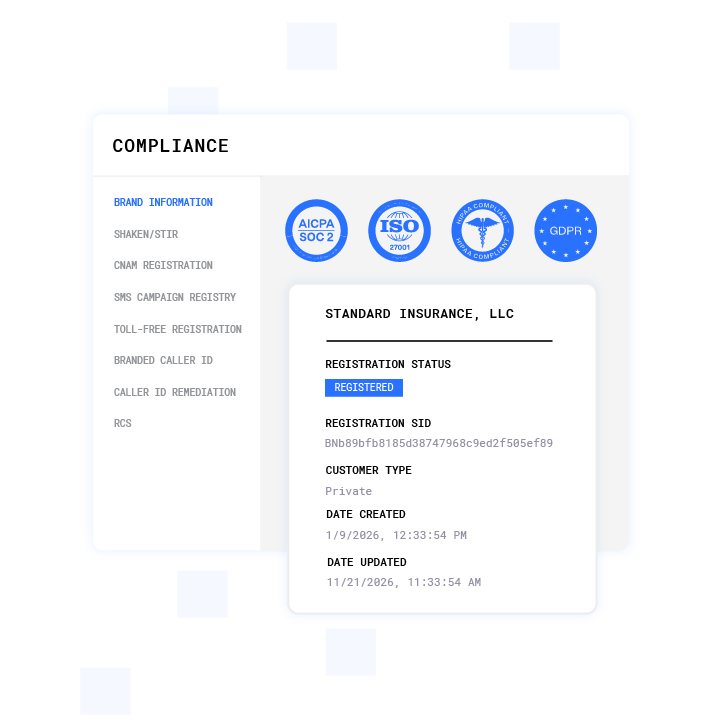
Most platforms treat compliance as an afterthought, such as a checkbox in a settings menu or a periodic third-party scrub. Plura AI supports compliance with obligations inside the workflow at the point of origination on its own FCC-licensed audio bridging carrier with STIR/SHAKEN caller ID verification on every outbound call.
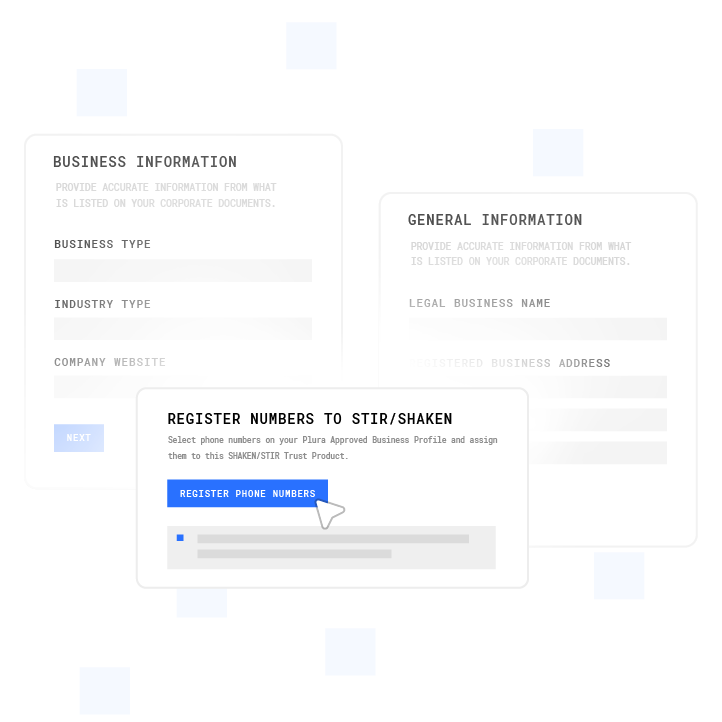
- Real-time DNC scrubbing runs against federal and state registries before dial through the platform’s AI Predictive Dialer. Plura’s compliance framework includes TCPA and STIR/SHAKEN enforcement and DNC screening integrated into the platform.
- TCPA-litigator screening applies to every outbound contact before the first attempt. Plura provides HIPAA-aligned encryption, SOC 2 Type II certification, and real-time DNC scrubbing and TCPA-litigator screening inside the platform; customers remain responsible for their own compliance obligations.1
- Immutable, timestamped consent records are written at the moment of capture and support the audit trail fields described earlier.
- Automated quiet-hours enforcement uses time-zone detection based on the contact’s location, not the sender’s.
- One-click audit-ready exports support legal review, carrier requirements, or regulatory inquiries.
- AI SMS outreach runs on 10DLC-registered numbers with TCPA consent management and per-state quiet-hours enforcement built into every send.
- No-code workflow builder lets compliance teams configure rule sets at the campaign level and set state-specific overrides without engineering support.
- CRM integration across HubSpot, Salesforce, Zoho, and 50+ tools keeps suppression lists and consent records synced to the systems operators already run.
Plura’s operational record on the platform is DNC and TCPA compliant with 0 violations. TCPA violations carry statutory damages of $500 to $1,500 per unsolicited call or text, with the average TCPA class action settlement reported at $6.6 million, a figure cited in 2023 and also attributed to 2018.3 Plura’s platform enforces TCPA rule sets, real-time DNC scrubbing, automated quiet-hours, and immutable consent logging on every outbound contact; customers remain responsible for their own compliance obligations. Plura supports customer compliance and does not absolve customers of their own obligations. Teams should consult qualified counsel for how specific rules apply to their programs.
Leaders can compare plans and rates side by side or use Plura’s ROI calculator to evaluate cost savings in real time.
Conclusion: Treat Compliance as a Channel-Level Policy System
Sales automation compliance functions as a per-channel policy system. Email runs on CAN-SPAM, calls and texts run on TCPA prior express written consent and DNC, LinkedIn runs on platform terms, enrichment runs on privacy law, and AI personalization does not change the underlying consent obligation. Operators who succeed map each channel to its rule, retain an audit log that proves adherence, and recognize that liability stays with them regardless of who sends.
Plura supports compliance with those obligations inside the workflow with real-time DNC scrubbing, TCPA-litigator screening, immutable consent logging, automated quiet hours, and audit-ready exports on its FCC-licensed carrier with STIR/SHAKEN caller ID verification on every outbound call. The platform’s AI voice agent, AI SMS, and AI Predictive Dialer all run on that same compliance foundation, alongside SOC 2, HIPAA, and ISO certifications and GDPR coverage.1
Explore Plura in a live demo before your next campaign ships. Then use Plura’s ROI calculator and plan comparison to align budget and risk strategy.
1 Plura AI maintains SOC 2, HIPAA, ISO, and GDPR posture as part of its platform infrastructure. References to compliance frameworks in this article describe Plura’s platform capabilities and do not constitute a guarantee that any customer using Plura will themselves be compliant with applicable laws or standards. Customers remain solely responsible for their own regulatory obligations, certifications, consent management, recordkeeping, and the claims they make to their own end users. Consult qualified legal counsel for guidance specific to your use case.
2 This article describes regulatory frameworks at a general level and does not constitute legal advice. Laws and regulations vary by jurisdiction, change over time, and apply differently depending on facts and circumstances. Readers should consult qualified legal counsel before making compliance decisions.
3 Performance figures, customer outcomes, and industry statistics referenced in this article are drawn from cited third-party sources or Plura customer case studies. Individual results vary based on implementation, use case, industry, audience, and execution. Past or aggregate performance is not a guarantee of future results.
4 References to third-party products, services, companies, or research are made for informational and comparative purposes only. Plura AI is not affiliated with, endorsed by, or sponsored by any third party named in this article unless explicitly stated. Trademarks and product names referenced remain the property of their respective owners.
This article is provided for informational purposes only and reflects Plura AI’s understanding at the time of publication. Product capabilities, integrations, and specifications are subject to change. For the most current information, visit plura.ai.
This article was produced with the assistance of AI tools and reviewed by Plura AI prior to publication.