

Written by: Matt Beucler, CEO, Plura AI
Key Takeaways for Twilio RCS vs. Plura
- Twilio RCS Business Messaging adds verified branding and rich interactive features to standard RCS, which supports high-volume A2P campaigns on Android and iOS.4
- Key operational drawbacks include device and connectivity dependency, complex carrier surcharges, wrapper-model limits that block carrier-level control, and regulatory exposure from foreign infrastructure.
- High-volume operators often face long build timelines and significant cost with Twilio’s CPaaS model, plus ongoing engineering overhead.
- Plura AI’s owned-carrier model delivers faster deployment, real-time DNC enforcement, stateful cross-channel memory, and 100% U.S. infrastructure to support compliance and performance needs.
- Teams that want a faster path to compliant, high-engagement RCS messaging can explore Plura AI’s AI-powered webchat and messaging platform.
How RCS Differs From RCS Business Messaging
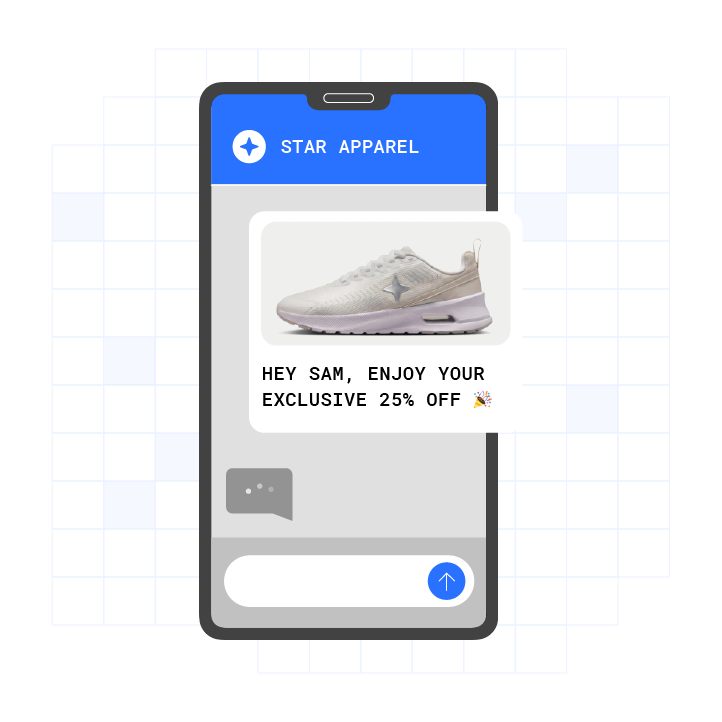
RCS is the next-generation messaging standard developed to replace SMS (Short Message Service). It runs over data networks rather than cellular infrastructure and supports high-resolution images, videos, branded sender profiles, interactive buttons, carousels, read receipts, and typing indicators. Standard RCS is a person-to-person protocol built into native messaging apps such as Google Messages.
RCS Business Messaging is the A2P layer built on top of that standard. It adds verified sender registration, branded caller ID with company logos and colors, and campaign-level analytics. Where a consumer RCS thread is unverified, an RCS Business Messaging sender presents a verified badge that increases trust in the message. For operators, RCS Business Messaging is the form of RCS that a brand can use for outbound marketing, appointment reminders, or transactional notifications at scale.
Apple adopted RCS in iOS 18 in 2024, which extended the channel beyond Android. All four major U.S. carriers now fully support the standard.
Operational Drawbacks of RCS for High-Volume Teams
RCS Business Messaging carries four operational constraints that matter to high-volume operators.
Device and connectivity dependency. RCS requires an active internet or data connection and a compatible device. If either condition is unmet, messages can fail to deliver, while SMS reaches every mobile phone on a cellular network. Most implementations fall back to SMS automatically, but the rich features disappear in that fallback.
Pricing complexity. Beyond technical constraints, operators also face economic complexity. Twilio charges $0.0083 per RCS message sent or received in the United States. On top of base rates, Twilio passes through applicable U.S. carrier surcharges, plus a monthly phone number rental fee of $1.15 for a standard local number or $2.15 for a toll-free number. At volume, those surcharges compound quickly.
Wrapper-model limitations. Twilio operates as a CPaaS layer. Operators building on Twilio’s RCS APIs do not own the carrier relationship, cannot issue branded caller ID at the carrier level, and cannot enforce real-time DNC scrubbing inside the originating infrastructure. Compliance is added after the fact rather than enforced at origination.
Infrastructure exposure. The FCC’s (Federal Communications Commission) Notice of Proposed Rulemaking, CG Docket No. 26-52, proposes restrictions on offshore handling of sensitive consumer data. Any platform with foreign infrastructure dependencies carries regulatory exposure that a 100% U.S.-hosted stack does not.
Twilio RCS Pricing for U.S. Operators
RCS pricing is still evolving, with some carriers charging per message and others per session, and pricing varies significantly by region and provider. For U.S. operators on Twilio specifically:
- RCS messages: $0.0083 per message sent or received
- Carrier surcharges: applicable U.S. carrier surcharges are passed through
- Phone number rental: $1.15/month (local) or $2.15/month (toll-free)
An operation sending 500,000 rich media RCS messages per month on Twilio faces base message costs of approximately $4,150 at the listed $0.0083 rate, plus applicable carrier fees, before number rental or engineering overhead. Building a production-ready AI voice and messaging agent on Twilio APIs typically takes 6 to 12 months and costs $300K to $500K or more in first-year engineering and infrastructure, with ongoing maintenance requiring 2 to 3 full-time engineers.
Run your numbers through Plura’s calculator to check your ROI in real time.
RCS vs. SMS for Business Messaging
The practical choice between RCS and SMS for business depends on use case, not preference. The core tradeoff is reach versus richness.
SMS works across virtually every mobile phone and network without internet access, which makes it the most reliable option for urgent notifications such as security alerts, authentication messages, and shipping updates. SMS maintains a 98% open rate and a 45% average response rate.3
While SMS excels at reach and reliability, RCS delivers materially higher engagement for interactive use cases. RCS for Business can deliver higher conversion rates in some cases, and Plura’s AI RCS messaging achieves a 35% click-through rate and an 80% read rate.3 Vibes’ 2026 Mobile Consumer Insights survey finds that 81% of consumers think RCS messaging is better than SMS, and over one billion RCS messages are sent daily in the U.S. alone.4
For healthcare operators, Plura’s RCS channel supports appointment confirmations and patient intake flows that achieve up to 40% improvement in no-shows.3
A hybrid strategy works best for most high-volume operators in 2026.5 Teams lead with SMS for transactional and time-sensitive messages and deploy RCS for promotional, interactive, and conversational flows.
Step-by-Step: Sending RCS via Twilio
- Register a Twilio account and provision a phone number ($1.15-$2.15/month per number).
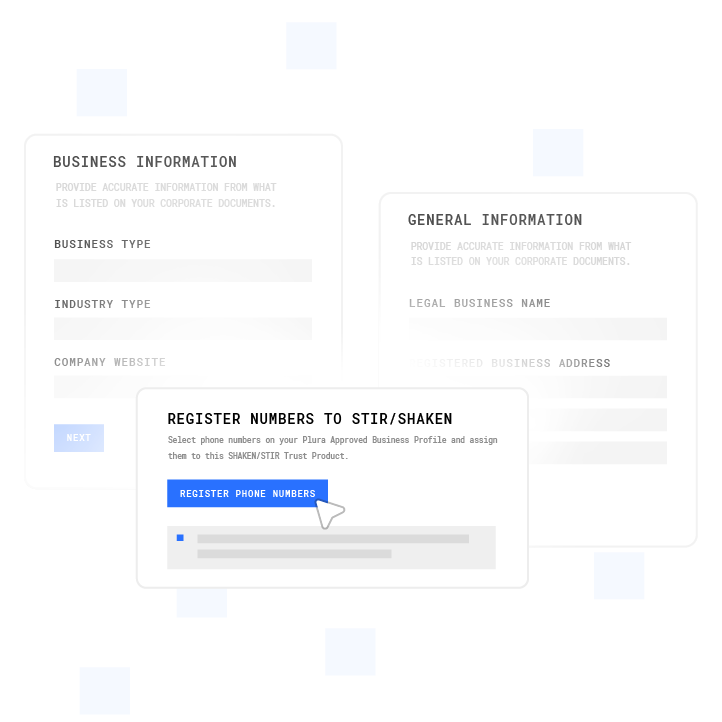
- Apply for RCS Business Messaging sender registration through Twilio’s console, including brand verification and campaign use-case submission.
- Configure messaging templates for each approved use case (promotional, transactional, conversational).
- Integrate Twilio’s Messaging API into your application stack. A production-ready integration typically takes 6 to 12 months and $300K to $500K or more in engineering costs.
- Implement SMS fallback logic for recipients on unsupported devices or without data connectivity.
- Build or bolt on a DNC scrubbing layer to check numbers against federal and state registries before each send.
- Configure TCPA (Telephone Consumer Protection Act) consent management separately from the Twilio platform, because consent logging is not native to the API.
- Monitor carrier surcharges per network and adjust campaign economics accordingly.
- Assign 2 to 3 full-time engineers for ongoing maintenance and model updates.
Step-by-Step: How Plura’s Owned-Carrier Model Changes Each Step
- No third-party number provisioning required. Plura issues numbers directly through its FCC-licensed carrier infrastructure.
- Branded sender registration is handled at the carrier level, not through a third-party API layer.
- Messaging templates are configured inside Plura’s no-code workflow canvas, with no engineering required for template changes.
- Plura deployment typically takes 2 to 4 weeks from contract to live AI conversations, not 6 to 12 months.
- SMS fallback is built into the channel orchestration layer by default, with no custom logic required.
- Real-time DNC scrubbing is a first-class layer of the platform, checking every outbound contact against federal and state registries before send, not added after the fact.
- TCPA consent records are timestamped, immutable, and audit-ready inside Plura’s compliance engine, not managed in a separate system.
- Per-message economics are transparent at the platform level, with no pass-through carrier surcharge surprises. Compare plans at Plura pricing.
- No dedicated engineering headcount required for ongoing maintenance. Plura’s team iterates conversation workflows continuously post-launch.
Twilio Wrapper Model vs. Plura Owned-Carrier Stack
| Capability | Twilio RCS (CPaaS Wrapper) | Plura AI (Owned-Carrier Stack) | Why It Matters | Source |
|---|---|---|---|---|
| Carrier Ownership | Rents carrier access, no FCC carrier license | FCC-licensed audio bridging carrier, owns origination infrastructure | Carrier ownership determines who controls branded ID, compliance enforcement, and per-message economics | Plura vs. Twilio comparison |
| Branded Caller ID Issuance | Issued via third-party reseller layer, not at origination | Issued directly at the carrier level, SHAKEN/STIR authenticated on every outbound contact | Carrier-level issuance helps prevent spam labels and supports iOS call-screening compatibility | Plura vs. Twilio comparison |
| Real-Time DNC Enforcement | Not native, requires separate integration and engineering | Built-in, every outbound contact checked against federal and state DNC registries before send | DNC enforcement at origination can reduce exposure related to consent-violation risk | Plura Compliance Engine |
| Cross-Channel Stateful Memory | Not available, each API channel operates independently | Voice, SMS, RCS, and webchat share one Stateful Conversation Database keyed to each customer token | Stateful memory removes repeat-yourself friction and enables context-aware negotiation across channels | Plura vs. Twilio comparison |
| 100% U.S. Infrastructure | Infrastructure mix varies, foreign dependencies possible | Voice origination, model hosting, data storage, and call recording on domestic infrastructure by architecture | 100% U.S. infrastructure by architecture addresses FCC NPRM CG Docket No. 26-52 exposure and state onshoring law requirements | Plura AI platform overview |
Regulatory Landscape for RCS in 20265
Operators evaluating RCS platforms in 2026 face a layered regulatory environment. Qualified legal counsel should be consulted before drawing compliance conclusions from the summary below.
The FCC’s Notice of Proposed Rulemaking, CG Docket No. 26-52, proposes capping offshore customer-service calls at 30% and prohibiting offshore handling of sensitive consumer data including passwords, multi-factor authentication codes, Social Security numbers, and banking and card data.2 Companion federal legislation includes the Keep Call Centers in America Act (S.2495) and the Foreign Robocall Elimination Act (S.2666), both tracked on Congress.gov.
At the state level, New York’s Call Center Jobs Act carries penalties up to $10,000 per day. New Jersey has a mirror statute. Connecticut restricts offshore handling in state contracts. Missouri issued an offshore-disclosure executive order. Florida restricts offshore handling of medical information. Coverage of these statutes is available from JD Supra and Polsinelli.
TCPA (47 U.S.C. § 227) and federal DNC rules describe outbound messaging consent and opt-out requirements. HIPAA (45 CFR Parts 160, 162, 164) describes requirements for protected health information in regulated verticals. SHAKEN/STIR (Secure Telephone Identity Revisited / Signature-based Handling of Asserted information using toKENs) caller ID authentication is addressed under FCC orders implementing the TRACED Act.2
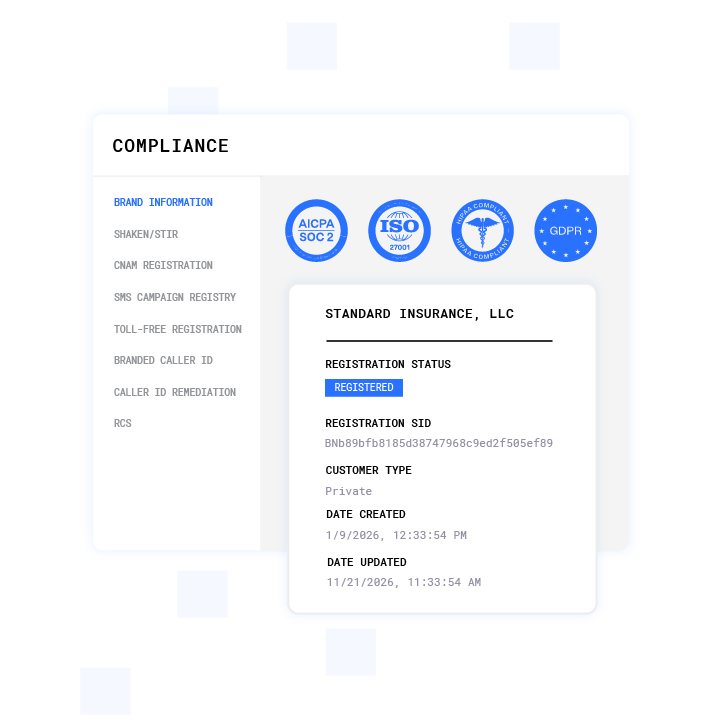
Plura supports compliance with TCPA, DNC, HIPAA, SOC 2, ISO certification, GDPR, and SHAKEN/STIR caller ID verification through its platform infrastructure. Customers remain responsible for their own regulatory obligations and certifications.1
Why High-Volume Operators Consider Owned-Carrier Alternatives
The case for moving off a CPaaS wrapper model is operational, not theoretical. A major insurance carrier spent 14 months and over $600K building a custom AI voice agent on Twilio before switching to Plura and deploying a more capable system in 3 weeks. That pattern, long build cycles, high engineering overhead, and compliance gaps that surface only after launch, is common on a wrapper model at volume.
The channel economics also favor owned infrastructure at scale. Plura’s AI RCS messaging achieves 3x higher engagement compared to SMS3, with support for over 2 billion devices and validation across third-party benchmarks. When those engagement rates are paired with stateful cross-channel memory, the AI agent that sent an RCS message at 9 a.m. can pick up the voice call at noon already knowing what was discussed, what was offered, and what objections were raised.
Plura’s platform delivers a TCO (total cost of ownership) of $300,000-$700,000 per year, replacing the $4M-$7M traditional contact-center cost structure on equivalent volume, with 3x average ROI in 90 days, 47% pipeline growth, and 90% faster lead-response time.3
Compare plans and rates side by side at Plura pricing.
Conclusion: When Twilio RCS Fits and When Plura Fits Better
Twilio RCS Business Messaging is a capable channel for operators who have the engineering resources to build and maintain a CPaaS integration, can absorb per-message surcharges at volume, and are prepared to manage DNC enforcement, TCPA consent logging, and compliance infrastructure outside the platform. For operators who need carrier ownership, real-time compliance enforcement, stateful cross-channel memory, and 100% U.S. infrastructure by architecture, the wrapper model introduces constraints that compound at scale.
Plura AI owns its FCC-licensed carrier stack, supports DNC and TCPA compliance at origination, and runs voice, SMS, RCS, and webchat on a single Stateful Conversation Database, all on domestic infrastructure designed for the regulatory environment of 2026.
Run your numbers through Plura’s calculator to check your ROI in real time.
Compare plans and rates side by side at Plura pricing.
Frequently Asked Questions
What is Twilio RCS Business Messaging and how does it differ from standard SMS?
Twilio RCS Business Messaging is an A2P messaging channel that enables brands to send verified, branded messages with rich media, interactive buttons, carousels, read receipts, and typing indicators inside native smartphone messaging apps. Standard SMS is limited to 160 characters of plain text delivered over cellular networks without branding, interactivity, or delivery confirmation beyond basic carrier-level receipts. For operators, RCS Business Messaging supports conversational commerce, in-thread payments, document signing, and personalized media, while SMS remains the more reliable fallback for universal reach across all devices and network conditions. Twilio provides API access to RCS Business Messaging as a CPaaS layer, which means operators build on top of Twilio’s infrastructure rather than owning the carrier relationship directly.
How much does Twilio RCS Business Messaging cost per message?
Twilio charges $0.0083 per RCS message sent or received in the United States. On top of those base rates, Twilio passes through applicable U.S. carrier surcharges. Phone number rental adds $1.15 per month for a standard local number or $2.15 for a toll-free number. High-volume operators should model total per-message cost inclusive of surcharges and carrier fees, not just the base rate, when comparing RCS platform economics.
What are the main limitations of using Twilio for RCS Business Messaging at high volume?
Four limitations surface consistently for high-volume operators. First, Twilio operates as a CPaaS wrapper, which means operators do not own the carrier relationship and cannot issue branded caller ID or enforce DNC controls at the origination layer. Second, building a production-ready integration typically takes 6 to 12 months and $300K to $500K or more in engineering costs, with ongoing maintenance requiring 2 to 3 full-time engineers. Third, carrier surcharges are passed through on top of base rates and vary by network, which makes per-message economics harder to forecast at scale. Fourth, compliance infrastructure for TCPA consent management and DNC scrubbing must be built and maintained outside the Twilio platform, which adds operational complexity and potential exposure.
How does Plura’s RCS capability differ from Twilio’s RCS Business Messaging?
Plura owns its FCC-licensed carrier infrastructure rather than renting access through a CPaaS layer. That structure means branded sender ID is issued at the carrier level, real-time DNC scrubbing runs before every outbound message, and SHAKEN/STIR caller ID verification is authenticated at origination. Plura’s RCS channel shares a Stateful Conversation Database with its voice, SMS, and webchat channels, so an AI agent that sent an RCS message at 9 a.m. can pick up a voice call at noon with full context of what was discussed. Deployment typically takes 2 to 4 weeks from contract to live conversations, compared to the 6 to 12 months common for a custom Twilio build. Plura supports compliance with TCPA, DNC, HIPAA, SOC 2, ISO certification, GDPR, and SHAKEN/STIR caller ID verification through its platform infrastructure. Customers remain responsible for their own regulatory obligations and certifications.
What regulatory considerations apply to RCS Business Messaging in the United States in 2026?
U.S. operators sending A2P RCS messages work within several overlapping regulatory frameworks. TCPA (47 U.S.C. § 227) describes consent requirements for outbound messaging. Federal and state DNC registries require pre-send scrubbing. HIPAA (45 CFR Parts 160, 162, 164) applies when messages contain protected health information. The FCC’s NPRM under CG Docket No. 26-52 proposes restrictions on offshore handling of sensitive consumer data, which affects any platform with foreign infrastructure dependencies. State-level laws in New York, New Jersey, Connecticut, Missouri, and Florida add additional restrictions on offshore data handling. Operators should consult qualified legal counsel to assess their specific obligations under each framework before selecting a messaging platform or drawing compliance conclusions from platform marketing materials.
1 Plura AI maintains SOC 2, HIPAA, ISO, and GDPR posture as part of its platform infrastructure. References to compliance frameworks in this article describe Plura’s platform capabilities and do not constitute a guarantee that any customer using Plura will themselves be compliant with applicable laws or standards. Customers remain solely responsible for their own regulatory obligations, certifications, consent management, recordkeeping, and the claims they make to their own end users. Consult qualified legal counsel for guidance specific to your use case.
2 This article describes regulatory frameworks at a general level and does not constitute legal advice. Laws and regulations vary by jurisdiction, change over time, and apply differently depending on facts and circumstances. Readers should consult qualified legal counsel before making compliance decisions.
3 Performance figures, customer outcomes, and industry statistics referenced in this article are drawn from cited third-party sources or Plura customer case studies. Individual results vary based on implementation, use case, industry, audience, and execution. Past or aggregate performance is not a guarantee of future results.
4 References to third-party products, services, companies, or research are made for informational and comparative purposes only. Plura AI is not affiliated with, endorsed by, or sponsored by any third party named in this article unless explicitly stated. Trademarks and product names referenced remain the property of their respective owners.
5 This article contains forward-looking statements regarding industry trends, technology adoption, and future capabilities. These statements reflect current expectations and are subject to change. Plura AI undertakes no obligation to update forward-looking statements except as required.
This article is provided for informational purposes only and reflects Plura AI’s understanding at the time of publication. Product capabilities, integrations, and specifications are subject to change. For the most current information, visit plura.ai.
This article was produced with the assistance of AI tools and reviewed by Plura AI prior to publication.