

Written by: Matt Beucler, CEO, Plura AI
Updated July 2026
Key Takeaways for Remote ViciDial Replacements
- Plura AI’s cloud-native AI Predictive Dialer deploys in days with browser-only access, removing VPNs, Linux administration, and hardware for remote teams.
- Unlike legacy on-premise solutions like ViciDial, Plura owns its FCC-licensed carrier infrastructure, which enables branded caller ID, SHAKEN/STIR verification, and real-time DNC/TCPA controls at the carrier level.1
- Plura’s Stateful Conversation Database and cross-channel integration across voice, SMS, and RCS combine speed with personalization while automating follow-ups without manual handoffs.
- Remote supervisors use browser-based dashboards and AI Conversation Intelligence for live coaching, QA, and analytics without local software or VPNs.
- For teams of 15 to 50 remote agents, Plura cuts total cost of ownership sharply compared to ViciDial; book a live demo with Plura AI to see the platform in action.
Evaluation Framework for Remote ViciDial Alternatives
Contact center leaders choosing a ViciDial alternative for remote teams in 2026 face a narrower decision than it appears. The core decision is which platform can put 15 to 50 distributed agents on live calls within days, support compliance across federal and state rules without a dedicated IT team, and scale without new servers every time headcount grows.
The evaluation criteria that matter for remote deployments are:
- Remote deployment speed: days versus weeks versus months
- Browser-only access: no software installs, no VPN dependencies
- AI predictive dialing performance for distributed agents
- Compliance automation covering TCPA, DNC, and state-level rules2
- Remote monitoring and QA tools accessible from any browser
- Total cost of ownership for 15 to 50 remote agents
Each section below addresses one of these criteria directly. Readers responsible for compliance decisions should consult qualified counsel on their specific regulatory obligations.
Outbound Dialer Landscape for Remote Teams
Three categories of outbound dialing platforms compete for remote contact center deployments in 2026.
Legacy on-premise dialers like ViciDial were built for centralized server rooms.4 Remote access to on-premise contact centers requires VPNs, additional configurations, and extra security measures for distributed agents. That architecture worked in 2010. In 2026, with agents on home networks, it creates friction at every layer of the stack.
CPaaS-based AI tools (Communications Platform as a Service) wrap third-party telecom APIs from providers like Twilio with a thin AI layer.4 They deploy faster than legacy systems but inherit the carrier’s caller ID reputation, cannot issue branded caller ID at the carrier level, and pass infrastructure costs to the customer in higher per-minute rates.
End-to-end AI communication platforms own the full stack: carrier license, voice origination, compliance controls, and conversation memory. Plura AI falls into this category. It holds an FCC carrier license, originates calls on its own domestic infrastructure, and applies TCPA and DNC controls at the carrier level rather than as a bolt-on.
61% of businesses plan to fully phase out on-premises telephony in 2026.3 The direction of the market is clear. The remaining decision is which cloud platform fits 2026 U.S. regulatory realities instead of being retrofitted to them.
Strategic Trade-offs for Remote Contact Centers
Three trade-offs shape the decision for remote teams specifically.
Automation versus oversight. Predictive dialers maximize talk time by dialing ahead of agent availability. Predictive dialing campaigns are limited to a maximum 3% abandonment rate over any 30-day period under the TCPA.2 Platforms that cannot enforce this limit in real time expose operators to per-call penalties. Plura’s AI pacing enforces abandonment limits automatically.
Speed versus personalization. Sales representatives spend about 28-30% of their workday actually selling, with the remainder lost to administrative tasks, data entry, and meetings.3 AI predictive dialers can triple talk time by automating outbound dialing and filtering out non-productive calls, which recovers much of that lost day. Plura’s Stateful Conversation Database adds personalization by carrying prior interaction context into each call, so speed and context stay aligned.
Channel mix for remote teams. Voice-only outreach leaves conversion on the table. Omnichannel cloud dialers allow management of voice, SMS, and email from a single platform, including triggering cross-channel follow-ups after missed calls. Plura’s AI Predictive Dialer shares a stateful database with AI SMS and AI RCS, so a missed call can trigger an automated text follow-up without manual intervention.
Comparison Table: Remote Deployment Factors
These strategic trade-offs become concrete when you compare how each platform type handles remote deployment. The table below summarizes the key differences for distributed teams.
| Platform Type | Remote Deployment Time | Browser-Based (No Install) | Carrier-Owned Infrastructure |
|---|---|---|---|
| ViciDial (self-hosted) | 6 to 10 weeks for enterprise deployments | Partial (WebRTC agent phone available in managed hosting only) | No (requires third-party SIP trunking) |
| CPaaS-based AI tools | Weeks to months of custom development | Varies by implementation | No (routes through third-party CPaaS) |
| Plura AI (end-to-end) | 2 to 4 weeks from contract to live conversations | Yes (fully browser-based, no install) | Yes (FCC-licensed carrier) |
Compare plans and rates side by side at plura.ai/pricing.
Why ViciDial Struggles With Remote Operations
ViciDial was designed for a server room, not a distributed workforce. The operational consequences for remote teams are concrete.
Self-hosted ViciDial deployments require Linux system administration expertise or a dedicated admin costing $60,000 to $150,000 or more per year. For a team of 15 to 50 remote agents, that overhead exists before a single call is placed.
ViciDial’s Asterisk-based architecture has a practical ceiling of roughly 25 agents at a 4:1 dial ratio per telephony server, requiring additional servers rather than hardware upgrades as agent count grows. Scaling from 25 to 50 agents means procuring, configuring, and maintaining additional server infrastructure.
Deployment cycles for on-premise contact center setups can consume months due to in-house procurement, hardware installation, network configuration, and system testing. Remote teams rarely have that runway.
Self-hosted ViciDial requires organizations to maintain SIP trunking relationships, DNC scrubbing services, STIR/SHAKEN attestation, and SSL certificates, creating ongoing compliance overhead that cloud-native alternatives can automate. Each dependency becomes a separate vendor relationship and a separate point of failure.
Predictive Dialing Performance for Distributed Agents
Plura’s AI Predictive Dialer uses stateful conversion signals to determine call priority, including historical answer rates, prior negotiation outcomes, and prior offer-acceptance data. Calls originate on Plura’s FCC-licensed carrier with SHAKEN/STIR caller ID verification on every outbound attempt.
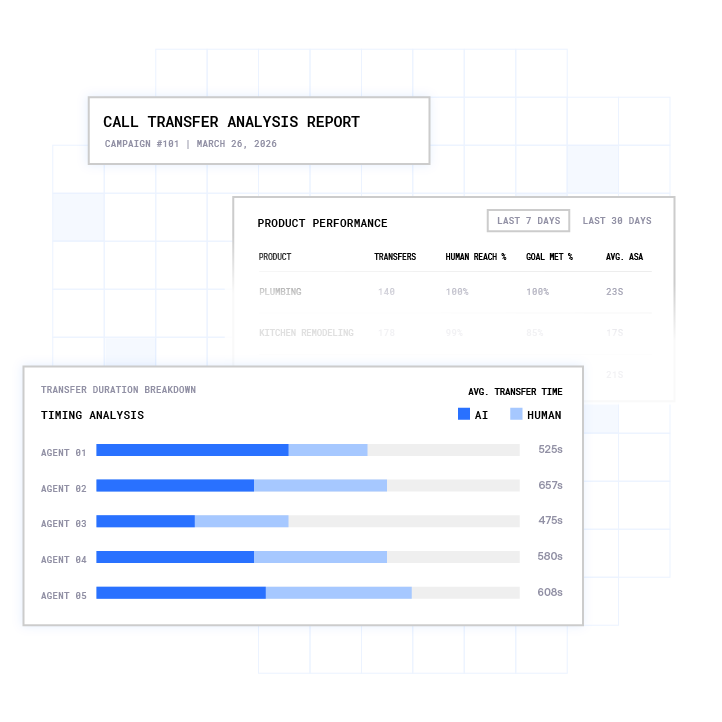
Implementing an agent dialer can triple a team’s talk time by automating the outbound dialing process and filtering out voicemails, busy signals, and disconnected lines. For a 15-agent remote team paying $20 per hour with a 40% talk utilization rate typical of manual dialing, that gap represents significant recoverable cost per month.
Plura’s platform also supports cross-channel follow-up. An unanswered call can trigger an AI SMS sequence automatically, with the SMS agent reading the same conversation history as the voice agent. No manual handoff between tools is required.
Real-time dashboards in cloud auto dialers enable supervisors to monitor live calls, whisper-coach agents, or barge in, alongside AI-powered post-call analytics. Plura’s browser-based dashboards give remote supervisors the same visibility they would have on a centralized floor.
Compliance Automation Without Dedicated IT
Plura supports compliance with TCPA, DNC, HIPAA, SOC 2, ISO certification, GDPR, SHAKEN/STIR caller ID verification, and 50-plus state rule sets.1 These controls run at the platform level before each outbound contact, not as a post-dial audit layer.
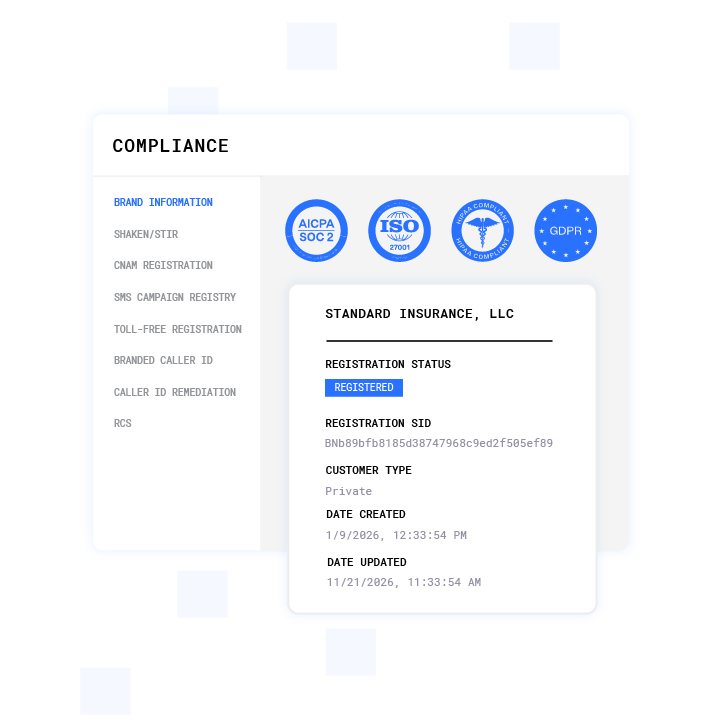
Solicitation calls using an artificial or prerecorded voice, including AI-generated audio, require prior express written consent from the called party per the FCC’s clarification on AI technologies. Plura’s compliance engine maintains timestamped, immutable consent records and checks every number against federal and state DNC registries in real time before dial.
Eleven states maintain separate Do Not Call lists in addition to the federal registry. Plura’s platform applies state-specific quiet-hours rules through time-zone detection automatically, without manual configuration per campaign.
Operators should consult qualified counsel on their specific TCPA, DNC, and state-law obligations. Plura provides the infrastructure, and customers manage their own compliance posture.
Remote Monitoring and QA for Distributed Teams
Plura’s Unified Inbox consolidates voice transcripts, SMS threads, RCS exchanges, and webchat sessions per customer in a single browser-based screen. Remote supervisors access the same view as on-site managers, with no VPN or local software required.
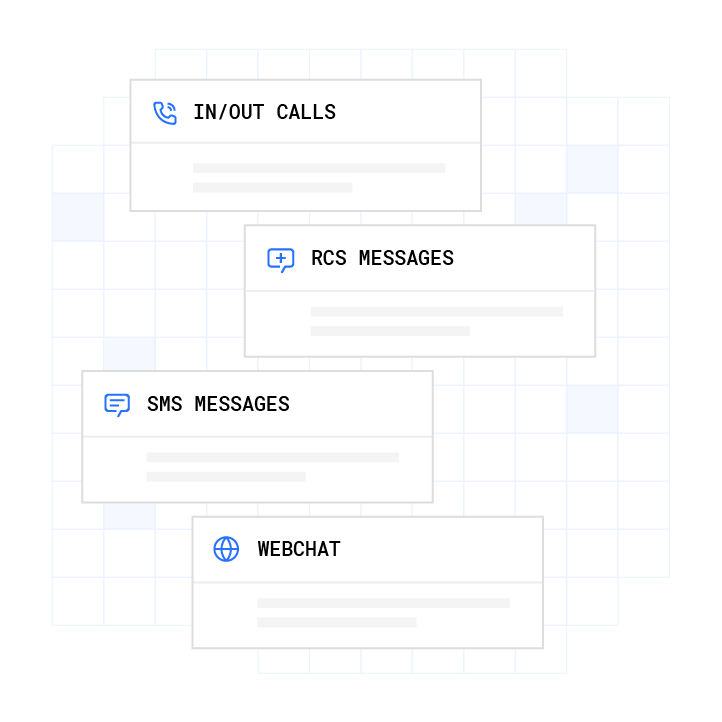
Effective distributed remote contact center models require structured visibility, real-time coaching capability, secure system controls, and documented accountability standards to replicate centralized supervisory mechanisms. Plura’s browser-based dashboards display live call volume, agent performance, and disposition data in real time.
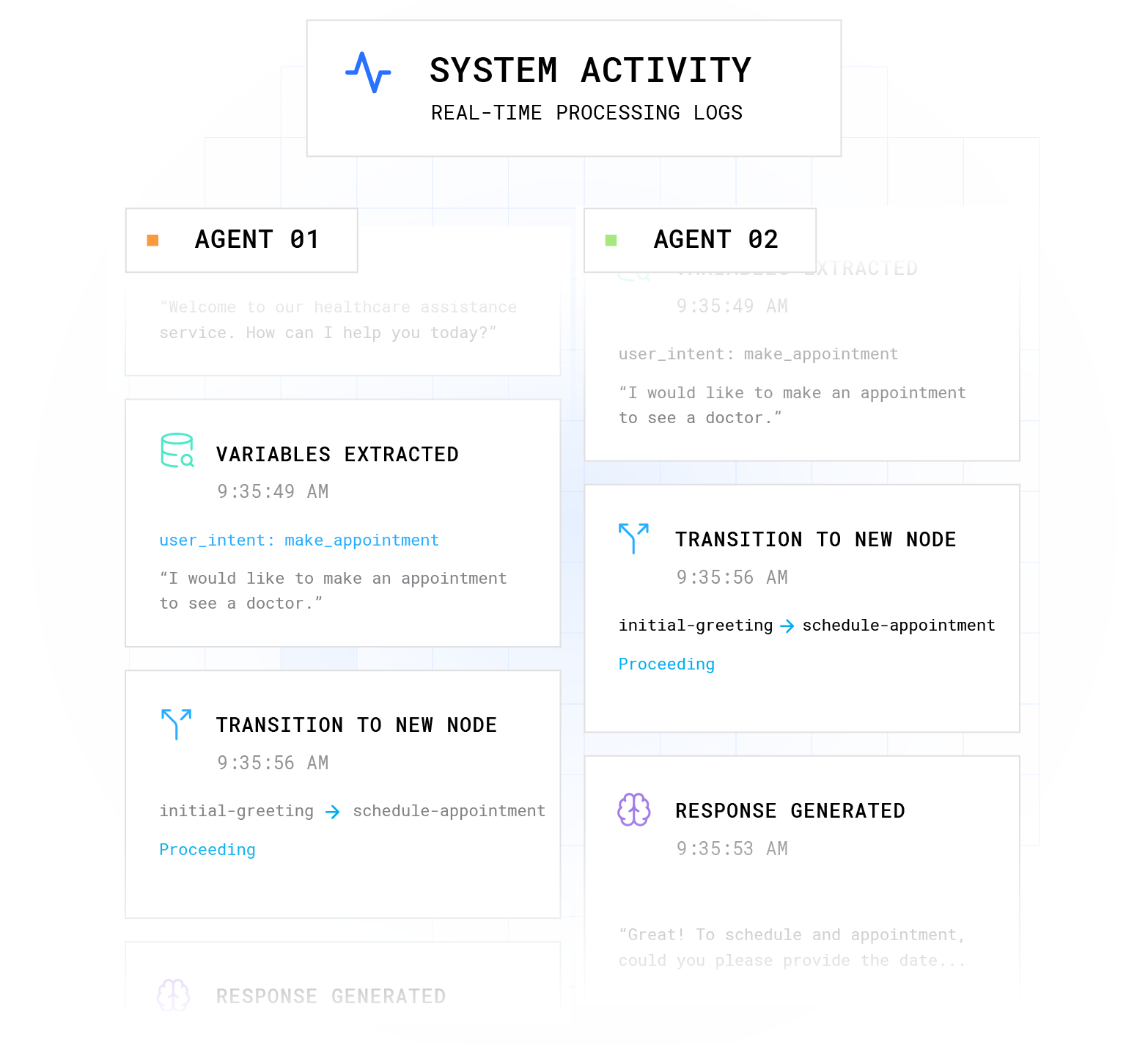
Plura’s AI Conversation Intelligence layer analyzes every interaction across channels to surface objection patterns, script performance, and conversion gaps. Remote QA workflows run from the same dashboard without requiring agents or supervisors to install local software.
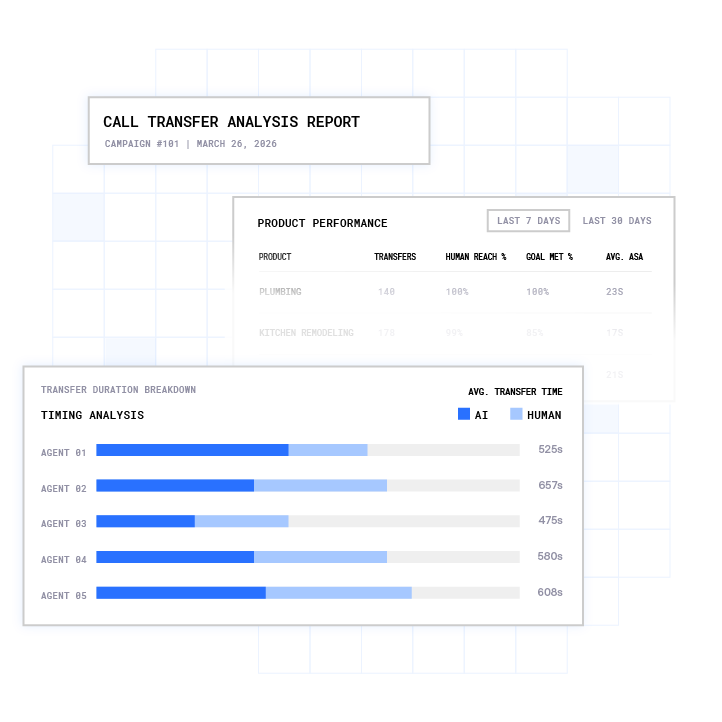
Book a live demo with Plura to see the remote monitoring dashboard in action.
Total Cost for 15 to 50 Remote Agents
The TCO comparison between ViciDial and Plura focuses on the full cost of keeping the system running, not just licensing fees.
ViciDial becomes cost-effective at 35 to 40 agents; below this threshold, infrastructure floor costs do not scale down, forcing teams to pay for unused server capacity. A 15-agent remote team on ViciDial pays for infrastructure sized for a larger operation.
Plura’s TCO of $300,000 to $700,000 per year replaces the traditional $4 million to $7 million contact center cost structure on equivalent volume.3 The default scenario on plura.ai/calculator shows a 15-agent operation at $20 per hour with 40% talk utilization costing $60,000 per month. Six Plura agents replacing those 15 humans at 100% talk utilization cost $14,400 per month, which yields a 30-day saving of $45,600.
Compare plans and rates side by side at plura.ai/pricing.
Key 2026 Regulatory Changes for Outbound Calling5
The regulatory environment for outbound calling in 2026 has shifted materially. Operators should consult qualified counsel on how these frameworks apply to their specific operations.
In March 2026 the FCC issued a Notice of Proposed Rulemaking seeking comment on requiring English proficiency for offshore call center staff, capping the percentage of customer service calls handled offshore, mandating disclosure when calls are handled abroad, and tying anti-robocall measures to foreign call centers.2 Plura runs on 100% U.S. infrastructure by architecture, not by promise.
SHAKEN/STIR caller ID verification runs on every Plura outbound call. The FCC’s broad revocation-of-consent rule requiring a single revocation to stop all robocalls and robotexts from the same sender has been delayed until January 31, 2027, though consumers may still revoke consent by any reasonable method. Plura’s consent ledger is timestamped and immutable, with one-click audit exports for legal review.
Free and Low-Cost ViciDial Alternatives
ViciDial itself is open-source and free to download. The primary cost sits in infrastructure and operations. Self-hosted ViciDial infrastructure requires bare metal or compute-optimized cloud servers, and burstable instances like AWS t3 fail under predictive dialing load. Server costs for operations above 25 agents run $70 to $200 per month per server for cloud hosting, plus Linux administration overhead.
Free or low-cost cloud dialer trials exist across the market, but they typically cap agents, limit compliance features, or require paid upgrades for DNC scrubbing and STIR/SHAKEN. Plura’s pricing page publishes transparent tier structures with no hidden infrastructure fees.
Open Source Dialers Versus Cloud Platforms
Open-source dialers including ViciDial, Asterisk, and FreePBX give operators full control over the codebase. That control comes with full responsibility for security patches, hardware refresh cycles, SIP trunk management, and compliance integrations.
Deep customization of on-premises systems without change control increases complexity and long-term maintenance risk, making it harder to support distributed remote agent teams over time. For teams without a dedicated Linux administrator, open-source self-hosted dialers carry operational risk that compounds as the team scales.
Cloud-native platforms like Plura trade customization depth for deployment speed, compliance automation, and zero infrastructure overhead. For most 15 to 50 agent remote teams, that trade-off favors the cloud-native option.
Remote Deployment Process With Plura
Plura deployment for a remote team follows a structured sequence that avoids server procurement and dedicated IT staff.
- Run a discovery audit of current call economics, existing scripts, and compliance requirements.
- Collect sample calls, SOPs, and CRM data to map real workflows.
- Build a dynamic conversation workflow overnight using Plura’s no-code workflow builder.
- Review the workflow with the operator and iterate based on feedback.
- Have engineering convert the approved design into a production workflow.
- Pilot test the workflow on a subset of real calls to validate performance.
- Move to full go-live with browser-based agent access and no software installs.
Plura AI deployment takes 2 to 4 weeks from contract to live AI conversations across all channels, compared to 3 to 6 months for typical enterprise setups on legacy platforms. Agents need a browser, a headset, and a stable internet connection. Cloud-based auto dialers support remote and hybrid teams because agents need only a browser, headset, and stable internet connection.
Annual contracts include a 90-day opt-out window. If the deployment is not delivering, the customer is not held to the full term.
Frequently Asked Questions
What makes Plura AI different from other ViciDial alternatives for remote teams?
Most ViciDial alternatives are either self-hosted open-source systems that require Linux administration or CPaaS-based tools that route calls through a third-party carrier like Twilio. Plura holds its own FCC carrier license, which means voice originates on Plura’s domestic infrastructure rather than a rented telecom layer. That distinction matters for three reasons. Branded caller ID is issued at the carrier level rather than bolted on. SHAKEN/STIR caller ID verification runs on every outbound call at origination. Real-time DNC scrubbing is enforced before dial rather than as a post-hoc audit. For remote teams, the practical difference is a platform that deploys in days from a browser, with compliance controls built into the infrastructure rather than managed separately by the operator’s IT team.
How does Plura AI handle TCPA and DNC compliance for remote outbound teams?
Plura’s compliance engine checks every outbound number against federal and state DNC registries in real time before the call is placed. Consent records are timestamped and immutable. Quiet-hours rules apply automatically through time-zone detection on the contact record, aligning state and federal calling-window restrictions with every campaign without manual configuration. The compliance dashboard exports audit-ready reports in one click. Plura supports compliance with TCPA, DNC, HIPAA, SOC 2, ISO certification, GDPR, and SHAKEN/STIR caller ID verification. Operators are responsible for their own regulatory obligations and should consult qualified counsel on how these frameworks apply to their specific operations.
How long does it take to migrate from ViciDial to Plura AI?
Plura’s deployment sequence typically runs 2 to 4 weeks from contract to live conversations for most remote team configurations. A simple inbound qualification or outbound dialing flow is often built in days. More complex multi-step workflows with custom qualification logic run closer to the 4-week end of that range. The migration does not require server procurement, Linux administration, or VPN configuration. Agents access the platform from any browser. Plura’s onboarding team handles the workflow build, pilot testing, and go-live sequence. Annual contracts include a 90-day opt-out window if the deployment is not delivering.
Is Plura AI cost-effective for teams of 15 to 50 remote agents?
Plura’s pricing is structured for high-volume operators, with three tiers starting at $5,000 per month. The TCO comparison against self-hosted ViciDial includes the cost of Linux administration, server infrastructure, SIP trunking, DNC scrubbing subscriptions, and STIR/SHAKEN attestation, all of which Plura includes in the platform. For a 15-agent team at $20 per hour with 40% talk utilization, the default scenario on plura.ai/calculator shows a monthly cost of $60,000 for the human team versus $14,400 for the equivalent Plura deployment, which yields a 30-day saving of $45,600. ViciDial’s infrastructure floor costs do not scale down below 35 to 40 agents, so smaller remote teams pay for unused server capacity regardless of call volume.
What compliance certifications does Plura AI hold?
Plura holds SOC 2 Type II certification with continuous monitoring, penetration testing, and third-party audits. The platform is HIPAA-aligned with end-to-end encryption, access controls, and audit logging for protected health information. Plura is ISO certified and supports GDPR for European operations. Every outbound call uses SHAKEN/STIR caller ID verification. The platform supports TCPA and DNC compliance controls on every outbound contact, with 50-plus state rule sets pre-loaded and applied automatically. Customers are responsible for their own certifications and regulatory obligations, and Plura provides the infrastructure and compliance support tools.1
Conclusion and Next Steps for Remote Teams
The evaluation framework for a ViciDial alternative for remote teams in 2026 comes down to six factors: deployment speed, browser-only access, AI predictive dialing performance, compliance automation, remote monitoring capability, and total cost for 15 to 50 agents. Legacy on-premise dialers fail on the first two criteria before the conversation reaches compliance or cost. CPaaS-based tools improve deployment speed but inherit third-party carrier limitations on caller ID, compliance enforcement, and infrastructure sovereignty.
Plura AI’s AI Predictive Dialer addresses all six criteria from a single platform. It delivers browser-based deployment in 2 to 4 weeks, carrier-owned infrastructure with SHAKEN/STIR caller ID verification on every call, real-time DNC and TCPA compliance support, and a stateful conversation database that carries context across voice, AI SMS, and AI RCS without manual handoffs between tools.
Run your numbers through Plura’s ROI calculator to check your cost savings in real time, or compare plans and rates side by side at plura.ai/pricing.
Book a live demo with Plura to see the AI Predictive Dialer running for a remote team your size.
1 Plura AI maintains SOC 2, HIPAA, ISO, and GDPR posture as part of its platform infrastructure. References to compliance frameworks in this article describe Plura’s platform capabilities and do not constitute a guarantee that any customer using Plura will themselves be compliant with applicable laws or standards. Customers remain solely responsible for their own regulatory obligations, certifications, consent management, recordkeeping, and the claims they make to their own end users. Consult qualified legal counsel for guidance specific to your use case.
2 This article describes regulatory frameworks at a general level and does not constitute legal advice. Laws and regulations vary by jurisdiction, change over time, and apply differently depending on facts and circumstances. Readers should consult qualified legal counsel before making compliance decisions.
3 Performance figures, customer outcomes, and industry statistics referenced in this article are drawn from cited third-party sources or Plura customer case studies. Individual results vary based on implementation, use case, industry, audience, and execution. Past or aggregate performance is not a guarantee of future results.
4 References to third-party products, services, companies, or research are made for informational and comparative purposes only. Plura AI is not affiliated with, endorsed by, or sponsored by any third party named in this article unless explicitly stated. Trademarks and product names referenced remain the property of their respective owners.
5 This article contains forward-looking statements regarding industry trends, technology adoption, and future capabilities. These statements reflect current expectations and are subject to change. Plura AI undertakes no obligation to update forward-looking statements except as required.
This article is provided for informational purposes only and reflects Plura AI’s understanding at the time of publication. Product capabilities, integrations, and specifications are subject to change. For the most current information, visit plura.ai.
This article was produced with the assistance of AI tools and reviewed by Plura AI prior to publication.