

Written by: Matt Beucler, CEO, Plura AI
Updated July 2026
Key Takeaways for RCS Pricing in 2026
- U.S. RCS outbound pricing in 2026 ranges from $0.007–$0.020 per message before carrier surcharges. CPaaS platforms add transport fees that raise total costs.
- Plura AI operates as the only FCC-licensed direct carrier in this comparison. Plura removes CPaaS wrapper fees for operators sending 10,000+ RCS messages monthly and bills only on delivered messages.
- Delivered-only billing models, used by Plura and AWS, avoid charges on undelivered messages. Attempted-billing platforms such as Twilio add fees on failed messages.
- RCS delivers higher engagement than SMS. On Plura’s platform, RCS averages 80% read rates and 35% click-through rates, which often lowers cost-per-conversion even with higher per-message pricing.3
- Operators can compare real-time ROI and review direct-carrier pricing by chatting with Plura AI for a customized assessment.
RCS Message Types and 2026 Per-Message Pricing
U.S. RCS pricing in 2026 splits into two message types across every provider. Rich RCS covers text-only messages up to 160 characters, suggested replies, and basic actions such as dial or open-URL. Rich Media RCS covers rich cards, carousels, media attachments, and advanced actions such as webview URLs or calendar events. The table below shows published 2026 base rates before carrier surcharges.
| Provider | Rich RCS Outbound (per segment) | Rich Media RCS Outbound (per message) | Billing Basis |
|---|---|---|---|
| Plura AI | Direct-carrier rate (no wrapper fee) | Direct-carrier rate (no wrapper fee) | Delivered only; contact plura.ai/pricing |
| AWS End User Messaging | $0.00700 transport + $0.00494 carrier = $0.01194 | $0.02000 transport + $0.00949 carrier = $0.02949 | Delivered only |
| Twilio | $0.0083 base + carrier surcharge | $0.0083 base + carrier surcharge | Attempted; $0.001 fee on failed messages |
| Vonage Messages API4 | From $0.00015 platform fee + carrier fees | Volume pricing by negotiation | Per message; volume discounts require direct negotiation |
Plura operates as an FCC-licensed direct carrier, so operators access carrier-level rates without a CPaaS transport markup. Every other provider in this table routes traffic through a third-party telecom layer and passes that cost to the sender. At 10,000 or more monthly sends, that wrapper fee becomes a material budget line.
RCS vs SMS: Cost Per Message and Cost Per Conversion
On a raw per-message basis, RCS outbound costs more than SMS in most configurations. Postscript estimates average U.S. carrier fees for text-only RCS at $0.0043, approximately 30% higher than standard SMS, and $0.0089 for media RCS, about 10% higher than standard MMS. Standard long-code SMS outbound on Twilio starts at $0.0083 per segment before carrier fees of $0.0035 from AT&T, $0.0045 from T-Mobile and Verizon, and $0.005 from US Cellular.
The cost-per-conversion picture looks different. Plura’s AI RCS messaging delivers an 80% read rate and a 35% click-through rate3, compared with significantly lower engagement on plain SMS. RCS messaging achieves 3x higher engagement rates than traditional SMS (Google / GSMA, 2024).3 For appointment reminders, payment requests, or promotional campaigns, many operators see higher per-message RCS pricing but lower cost per completed action than SMS at the same volume.

SMS fallback also affects total cost. When RCS fallback to SMS occurs on Twilio-routed traffic, billing may reflect standard SMS pricing instead of RCS rates. When automatic fallback to SMS occurs on AWS, dual-delivery of both RCS and SMS may result in charges for both. Operators should include fallback billing in TCO models, especially when a meaningful share of the audience uses devices that do not yet support RCS.
In the U.S., all RCS agents operate on a non-conversational model, so each message is billed separately regardless of whether it is classified as Rich or Rich Media. Some international markets use session-based pricing instead, so U.S. operators should not assume global pricing rules apply domestically.
Carrier Surcharges on U.S. RCS Traffic
Carrier surcharges sit on top of any CPaaS platform fee. The table below shows that outbound carrier pass-through fees apply by message type for the four major U.S. networks, but specific RCS rates and effective dates should be confirmed directly with each carrier because public information is limited.
| Carrier | Rich RCS Outbound (per segment) | Rich Media RCS Outbound (per message) | Effective Date |
|---|---|---|---|
| AT&T | varies | varies | varies |
| Verizon | varies | varies | varies |
| T-Mobile | varies | varies | varies |
| US Cellular | varies | varies | varies |
Carrier pass-through fees can change without notice and are passed through without markup by providers that use a pass-through model. Some carriers apply additional surcharges for large Rich Media RCS payloads. AT&T also applies an Interactive Session fee for conversational RCS flows.
Operators routing through a CPaaS platform pay these carrier fees plus the platform’s transport markup. Operators routing through Plura’s direct-carrier model pay carrier fees without a CPaaS transport layer on top.
Delivered-Only vs Attempted Billing by Provider
Billing basis is one of the most consequential variables in RCS TCO and one of the least-discussed in vendor documentation. The table below compares how each provider handles undelivered messages.
| Provider | Billing Basis | Failed Message Fee | Fallback Billing |
|---|---|---|---|
| Plura AI | Delivered only; direct-carrier model | None on undelivered | Contact plura.ai/pricing |
| AWS End User Messaging | Delivered only; no charge on failed messages | None | SMS fallback billed at SMS rate; dual-delivery may charge both |
| Twilio | Attempted; charge applies on send attempt | $0.001 per failed message | SMS fallback billed at SMS pricing; $0.001 waived on specific error codes |
| TrueDialog4 | Carriers charge regardless of delivery status | Carrier fees apply on send | Carrier fees pass through at cost |
The delivered-only model matters most at scale. An operator sending 100,000 Rich Media RCS messages monthly with a 10% undelivered rate pays for 10,000 messages that never reached recipients on an attempted-billing platform. At Twilio’s $0.0083 base rate plus the $0.001 failed-message fee, that equals $93 in wasted spend per month before carrier surcharges, or $1,116 annually on undelivered traffic alone.
High-Volume RCS TCO Examples
The tables above show per-message rates. The examples below show what those rates produce at operating volume, using Rich Media RCS as the benchmark message type and an estimated blended carrier surcharge of $0.009 per message.
Monthly sends: 10,000
- AWS: ($0.02000 transport + $0.00949 carrier) x 10,000 = $294.904
- Twilio: ($0.0083 base + $0.0090 blended carrier) x 10,000 = $173.00 plus $0.001 per failed message4
Monthly sends: 50,000
- AWS: $0.02949 x 50,000 = $1,474.50
- Twilio: $0.0173 x 50,000 = $865.00 plus failed-message fees
Monthly sends: 100,000
- AWS: $0.02949 x 100,000 = $2,949.00
- Twilio: $0.0173 x 100,000 = $1,730.00 plus failed-message fees
Plura uses direct-carrier pricing across these volume tiers, so operators remove the CPaaS transport markup shown in the AWS and Twilio examples. At all three tiers, operators pay only carrier-level rates. See plura.ai/pricing for operator-specific pricing.
The CPaaS transport markup on AWS Rich Media RCS is $0.02000 per message. At 100,000 monthly sends, that equals $2,000 per month, or $24,000 annually, paid to the platform layer before any carrier fee is counted. Plura’s direct-carrier model removes that layer for qualifying operators.
Plura’s AI RCS channel also supports in-message payments via Stripe, in-message document signing via DocuSign and PandaDoc, and personalized AI-rendered video, all delivered inside the message thread. These capabilities influence conversion rates and cost-per-action, not just cost-per-send.
Step-by-Step RCS Cost Calculation
Use this checklist before committing to a provider or volume tier:
- Identify your message type split. Estimate what percentage of sends will be Rich (text-only) versus Rich Media (cards, carousels, attachments).
- Pull the provider’s base transport rate for each message type from the published pricing page.
- Add a blended carrier surcharge based on your audience’s carrier distribution across AT&T, Verizon, T-Mobile, and US Cellular.
- Determine the billing basis, delivered-only or attempted. Apply an estimated undelivered rate, using your historical SMS undelivered rate as a proxy where helpful.
- Add SMS fallback costs if your audience includes devices that do not support RCS.
- Multiply the total effective per-message cost by monthly send volume to calculate monthly spend.
- Compare monthly spend against projected conversions and cost-per-action so you evaluate ROI, not just cost-per-send.
Run your numbers through Plura’s calculator to check your ROI in real time.
Compliance, Approvals, and RCS Access
RCS business messaging in the U.S. carries compliance obligations that affect both access and cost. U.S. carriers and Google require brand and sender verification, including submission of business details, branding assets, and use-case samples, before approving RCS agents for messaging. High-volume or promotional RCS campaigns face additional carrier validation reviews that can extend approval timelines by weeks beyond the standard brand (2–5 days), RCS Agent (3–7 days), and use-case (5–10 days) stages.
TCPA exposure for RCS operators remains an active legal question.2 The TCPA’s application to RCS messaging is unsettled.2 A February 2026 Louisiana district court ruling in McGonigle v. Shopperschoice.com held that the TCPA’s Do-Not-Call provisions apply to unsolicited text messages2, which creates material litigation risk for high-volume operators. Texas Senate Bill 140, effective September 1, 2025, explicitly covers RCS messages sent to or from Texas numbers and provides a private right of action under the DTPA with potential treble damages.2 Operators should consult qualified counsel on their specific TCPA posture for RCS campaigns.
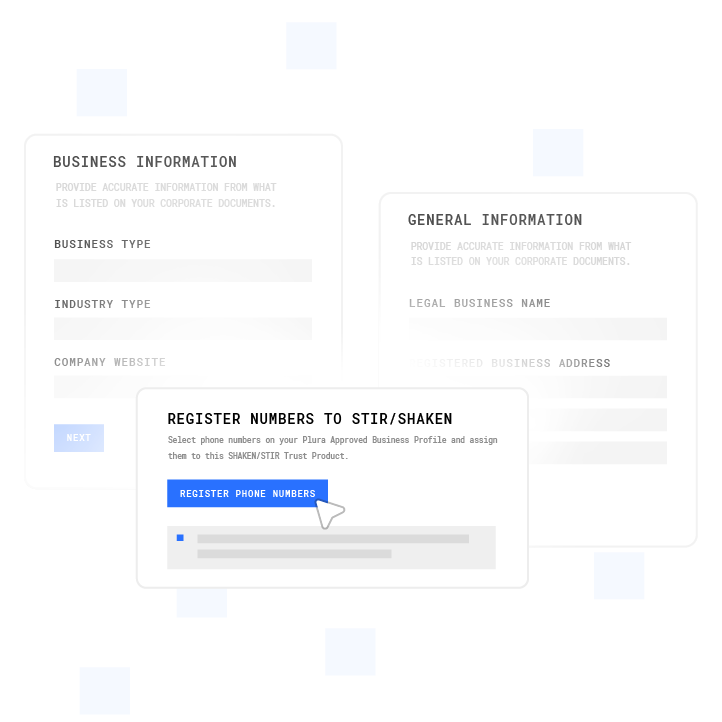
Plura supports compliance infrastructure for RCS and SMS operators through SOC 2, HIPAA, ISO certification, GDPR, SHAKEN/STIR caller ID verification, TCPA compliance, and DNC compliance frameworks built into the platform.1 Plura provides the infrastructure, and operators remain responsible for their own regulatory obligations and the claims they make to their end users. See plura.ai/sms-guidelines and plura.ai/acceptable-use for platform standards.
Bringing RCS Pricing, Performance, and Compliance Together
RCS outbound cost per message in 2026 ranges from $0.007 to $0.020 at the provider base rate, before carrier surcharges raise effective costs. The delivered-versus-attempted billing distinction, the CPaaS transport markup, and the carrier surcharge stack are the three variables that separate a predictable RCS budget from an unpredictable one at 10,000 or more monthly sends.
Plura AI is the only FCC-licensed direct carrier in this guide. Operators routing RCS through Plura access carrier-level rates without a CPaaS wrapper fee, with delivered-only billing and compliance infrastructure that supports TCPA, DNC, HIPAA, SOC 2, and SHAKEN/STIR postures. The AI RCS channel runs on the same stateful conversation database as Plura’s AI voice agent, AI SMS, and AI webchat, so every RCS message thread inherits the full context of prior customer interactions across channels.
Run your numbers through Plura’s calculator to check your ROI in real time.
Frequently Asked Questions
What is the difference between Rich RCS and Rich Media RCS for billing purposes?
U.S. carriers and CPaaS platforms classify outbound RCS messages into two billing categories. Rich RCS covers text-only messages up to 160 characters, suggested replies, and basic actions such as dial-phone or open-URL. Rich Media RCS covers rich cards, carousels, media attachments, and advanced actions such as webview URLs, location sharing, or calendar events. Rich Media RCS carries a higher per-message rate at every provider because it consumes more carrier infrastructure.
The classification is automatic on platforms like AWS End User Messaging, which determines message type based on content at send time. Adding a suggested reply to a text message does not upgrade it to Rich Media. Adding an image or carousel does. Operators building mixed campaigns should model their send volume by message type to get an accurate cost projection.
Does Plura charge for RCS messages that fail to deliver?
Plura operates as an FCC-licensed direct carrier and applies delivered-only billing for RCS outbound traffic. Operators are not charged for messages that do not reach the recipient. CPaaS platforms that apply attempted billing trigger the charge at send time regardless of delivery outcome and may add a separate failed-message processing fee.
At high send volumes, the difference between delivered-only and attempted billing becomes a material budget variable. Operators with historical undelivered rates above 5% should factor this into their provider comparison. For current Plura rates and billing terms, see plura.ai/pricing.
What compliance infrastructure does Plura provide for RCS operators?
Plura’s compliance infrastructure, detailed in the Compliance section above, includes the full certification stack (SOC 2, HIPAA, ISO, GDPR, SHAKEN/STIR, TCPA, DNC) plus operational features such as real-time DNC scrubbing, timestamped consent records, and automatic quiet-hours enforcement through time-zone detection.1 The compliance dashboard exports audit-ready reports on demand.
Plura provides this infrastructure to support operators in building their own compliance posture. Operators remain responsible for their own regulatory obligations, the consent records they maintain, and the claims they make to their end users. The TCPA and state-law landscape for RCS is actively evolving, and operators should consult qualified counsel on their specific situation.
How do carrier surcharges affect my total RCS cost at high volume?
Carrier surcharges apply on top of any platform or transport fee and apply per message based on the recipient’s carrier. Specific rates for Rich Media RCS vary by carrier and should be confirmed with the carriers directly. These fees are set by the carriers and passed through by providers.
At high volumes such as 100,000 monthly Rich Media sends, carrier fees can add substantial costs depending on recipient carrier distribution, before any platform transport fee is counted. Operators routing through a CPaaS platform pay the carrier surcharge plus the platform’s transport markup. Operators routing through Plura’s direct-carrier model pay the carrier surcharge without a CPaaS transport layer on top. Some carriers apply additional surcharges on Rich Media payloads that exceed standard size limits, which affects operators sending high-resolution media at scale.
Is RCS messaging more cost-effective than SMS for high-volume outbound campaigns?
On a raw per-message basis, RCS outbound costs more than SMS in most configurations. Text-only RCS carrier fees average approximately 30% higher than standard SMS carrier fees, and Rich Media RCS carries a higher base rate than MMS on many platforms. The cost-per-conversion comparison looks different.
As noted earlier, Plura’s platform achieves the 80% read rate and 35% CTR that can make RCS cost-effective despite higher per-message pricing. Operators running appointment reminders, payment requests, contract signings, or promotional campaigns with a clear conversion action often see a lower cost per completed action than SMS at equivalent volume. The right comparison focuses on cost-per-outcome, which requires modeling your specific conversion rate and average order or appointment value against the per-message cost differential. Plura’s ROI calculator at plura.ai/calculator supports this modeling.
1 Plura AI maintains SOC 2, HIPAA, ISO, and GDPR posture as part of its platform infrastructure. References to compliance frameworks in this article describe Plura’s platform capabilities and do not constitute a guarantee that any customer using Plura will themselves be compliant with applicable laws or standards. Customers remain solely responsible for their own regulatory obligations, certifications, consent management, recordkeeping, and the claims they make to their own end users. Consult qualified legal counsel for guidance specific to your use case.
2 This article describes regulatory frameworks at a general level and does not constitute legal advice. Laws and regulations vary by jurisdiction, change over time, and apply differently depending on facts and circumstances. Readers should consult qualified legal counsel before making compliance decisions.
3 Performance figures, customer outcomes, and industry statistics referenced in this article are drawn from cited third-party sources or Plura customer case studies. Individual results vary based on implementation, use case, industry, audience, and execution. Past or aggregate performance is not a guarantee of future results.
4 References to third-party products, services, companies, or research are made for informational and comparative purposes only. Plura AI is not affiliated with, endorsed by, or sponsored by any third party named in this article unless explicitly stated. Trademarks and product names referenced remain the property of their respective owners.
This article is provided for informational purposes only and reflects Plura AI’s understanding at the time of publication. Product capabilities, integrations, and specifications are subject to change. For the most current information, visit plura.ai.
This article was produced with the assistance of AI tools and reviewed by Plura AI prior to publication.