

Written by: Matt Beucler, CEO, Plura AI
Updated June 2026
Key Takeaways for RCS Pricing in 20265
- RCS business messaging pricing in 2026 follows a three-tier model of basic text, rich media, and conversational sessions, not a flat rate.
- Carrier-owned platforms like Plura AI deliver transparent, lower rates because they avoid the reseller markups built into CPaaS-based solutions.
- Engagement and conversion gains from rich and conversational RCS often create a lower cost per action than SMS, even with higher unit pricing.
- Carrier-owned infrastructure typically includes compliance controls such as DNC scrubbing, TCPA logging, and STIR/SHAKEN at the platform level, while reseller platforms often bill these as separate add-ons.
- Plura AI operates its own FCC-licensed carrier network and embeds compliance and multi-channel context into every RCS deployment. Request a volume-based pricing breakdown for your operation.
2026 U.S. RCS Pricing Ranges for Carrier-Owned and Reseller Platforms
The table below summarizes indicative 2026 U.S. market ranges across three message tiers. Plura AI rates reflect a carrier-owned model as published at plura.ai/pricing. Reseller ranges for platforms such as Twilio, Infobip, and Vonage reflect publicly documented CPaaS pricing structures that add a markup layer above underlying carrier costs.4 All figures are per-message or per-session estimates for U.S. domestic traffic, and volume discounts apply at thresholds that vary by platform.
| Tier | Description | Plura (Carrier-Owned) | Reseller Platform Range |
|---|---|---|---|
| Basic RCS | Text-only, branded sender ID | Competitive carrier-direct rate; see plura.ai/pricing | Typically per message, plus CPaaS markup |
| Rich RCS | Images, carousels, suggested replies, documents | Competitive carrier-direct rate; see plura.ai/pricing | Typically per message, plus CPaaS markup |
| Conversational RCS | Two-way session window, in-message payments, AI-driven flows | Competitive carrier-direct rate; see plura.ai/pricing | Typically per session or per message, plus CPaaS markup |
Reseller ranges above are indicative of publicly documented CPaaS pricing structures and do not represent a formal quote from any named platform. Operators should request itemized quotes from each vendor and confirm whether compliance tooling, DNC scrubbing, and STIR/SHAKEN authentication are included or billed as separate line items.
How Much an RCS Message Costs by Tier
RCS business messaging in the U.S. is priced across three tiers, and the tier usually drives cost more than volume alone.
Basic RCS covers text-only messages sent with a verified business sender ID. This tier is the closest analog to A2P (application-to-person) SMS and carries the lowest per-message rate. For high-volume campaigns above 100,000 messages per month, carrier-direct platforms often provide volume pricing that reseller platforms cannot match because the reseller margin sits on top of the same underlying carrier cost.
Rich RCS adds images, carousels, suggested action buttons, in-message documents through integrations such as DocuSign or PandaDoc, and personalized video. The additional payload and rendering complexity increase per-message costs compared with basic RCS. Engagement lift often offsets that higher unit cost because more recipients read, tap, and respond. Plura AI supports in-message payments via Stripe and 30-second AI-rendered personalized video delivered inside the message thread, as documented at plura.ai/pricing. The highest tier, conversational RCS, then shifts to a different billing model entirely.
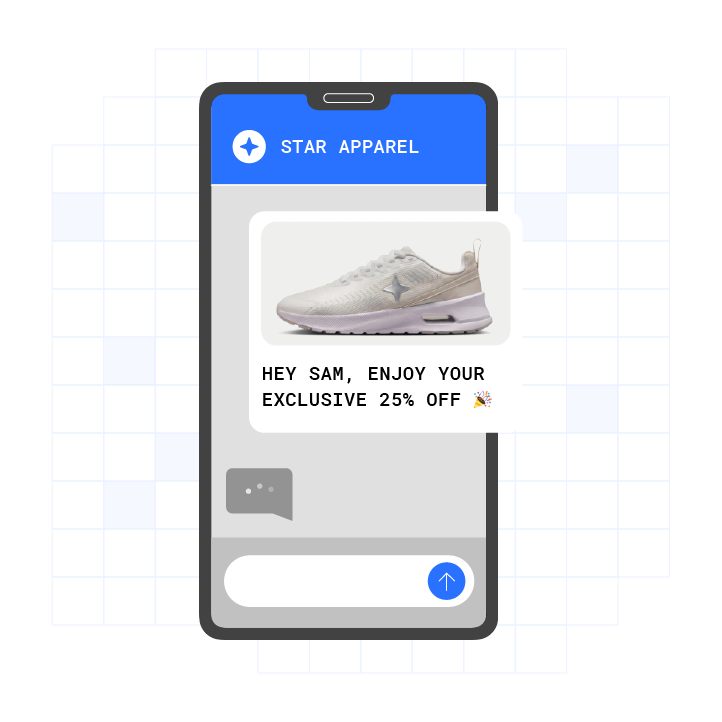
Conversational RCS is billed by session window rather than by individual message. A session window opens when the business sends the first message and remains open for a defined period, typically 24 hours. All messages in the thread during that window fall under one session fee. This model rewards operators who drive high reply rates because the marginal cost per exchange inside an open window approaches zero. Volume-discount patterns for conversational RCS typically activate at 10,000 sessions per month and compress further above 100,000 sessions.
RCS vs SMS: Cost per Message and Cost per Action
On a per-message basis, basic RCS and A2P SMS (Short Message Service, the standard text-messaging protocol) carry comparable rates in the U.S. market. Rich and conversational RCS tiers cost more per unit than SMS. The comparison changes once engagement rates and completed actions enter the calculation.
Industry data from the GSMA indicates that RCS business messages consistently generate higher read rates and click-through rates than SMS.4 Higher engagement means fewer messages are required to produce the same conversion outcome. For operators running qualification flows, appointment confirmations, or payment requests, the conversational session model can produce a lower cost per completed action than SMS even when the per-message rate is higher.
The clearest case where RCS is cheaper in total cost appears in a conversational window that closes a contract signature, collects a payment, or qualifies a lead in a single session. That session may cost $0.05 to $0.15 on a reseller platform but can replace a multi-touch SMS sequence that costs $0.01 to $0.02 per message across 10 or more messages, plus the human labor to handle replies. On a carrier-owned platform like Plura, the session cost is lower and the compliance infrastructure is included in the platform fee rather than billed as a separate add-on.
Key Drivers of RCS Pricing Variability
Four main factors explain most of the pricing spread operators see when comparing RCS quotes.
Carrier ownership. Platforms that own their FCC-licensed carrier infrastructure originate messages at cost and pass those savings directly to the operator. By contrast, platforms built as wrappers on top of a CPaaS like Twilio must first pay the underlying carrier rate, then layer their own margin on top before billing the operator. Because that margin applies to every tier and every message, the cost difference compounds with volume.
Message complexity. Basic text costs less to route and render than rich media. Carousels, video, and interactive buttons require additional processing at the carrier and device layer. That extra work appears as higher per-message rates for rich and conversational tiers.
Conversational session windows. Platforms that bill per session rather than per message create a pricing structure that rewards engagement. Operators who drive high reply rates pay less per exchange than those running one-way broadcast campaigns at the conversational tier. Session-window length, typically 24 hours for RCS, determines how much two-way activity fits under a single fee.
Stateful memory across channels. Platforms that maintain conversation context across voice, SMS, RCS, and webchat reduce the number of sessions required to move a lead through a qualification flow. Plura’s Stateful Conversation Database, documented at plura.ai/guides/ai-communications-strategy, allows an RCS session that starts a qualification flow to continue when the lead responds by phone without restarting from zero. That continuity reduces total session volume and total cost.
How U.S. Compliance Requirements Influence RCS Costs
U.S. operators sending RCS business messages work within several overlapping regulatory frameworks. TCPA (Telephone Consumer Protection Act, 47 U.S.C. § 227) addresses consent requirements for commercial messaging. The FTC’s (Federal Trade Commission) National Do Not Call Registry and state-level DNC lists restrict certain outbound contact. CAN-SPAM (15 U.S.C. § 7701 et seq.) applies to commercial electronic messages.2 More than 50 state-level rule sets add quiet-hours windows, disclosure expectations, and data-handling rules that vary by jurisdiction.
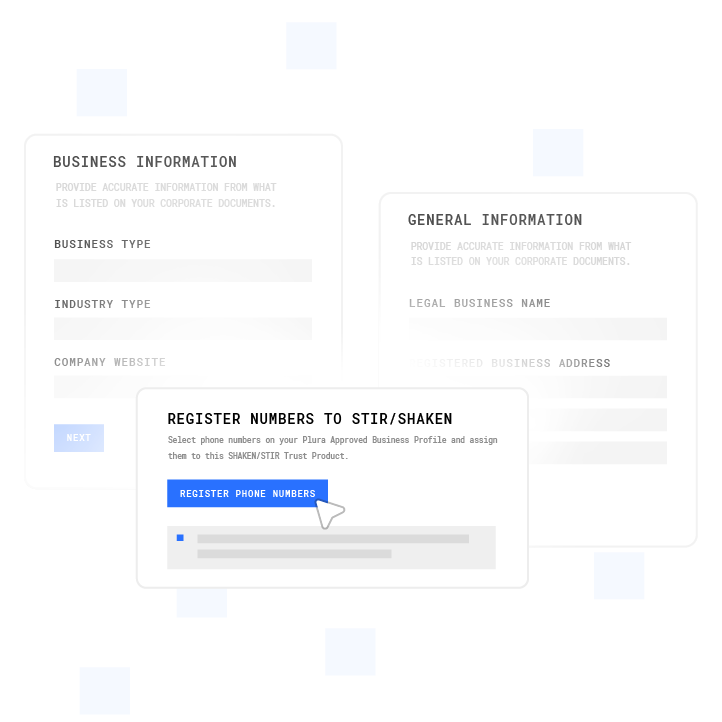
Compliance cost appears in two places. The first is the infrastructure required to apply these rules before each message is sent. The second is the liability exposure when that infrastructure is absent or incomplete. Operators using reseller platforms typically purchase DNC scrubbing, consent management, and audit logging as separate line items from third-party vendors. Those add-ons carry their own per-record or per-month fees and introduce integration and maintenance work.
Carrier-owned platforms can embed compliance enforcement at the infrastructure layer. Plura supports compliance by running real-time DNC scrubbing against federal and state registries before each outbound contact, maintaining timestamped and immutable consent records, enforcing quiet-hours rules through time-zone detection, and generating audit-ready exports on demand, as described at plura.ai/products/compliance. STIR/SHAKEN (Secure Telephone Identity Revisited / Signature-based Handling of Asserted information using toKENs) caller-ID authentication runs on every outbound voice call on the same platform. These controls operate as first-class layers of Plura’s infrastructure, not as third-party add-ons billed separately.
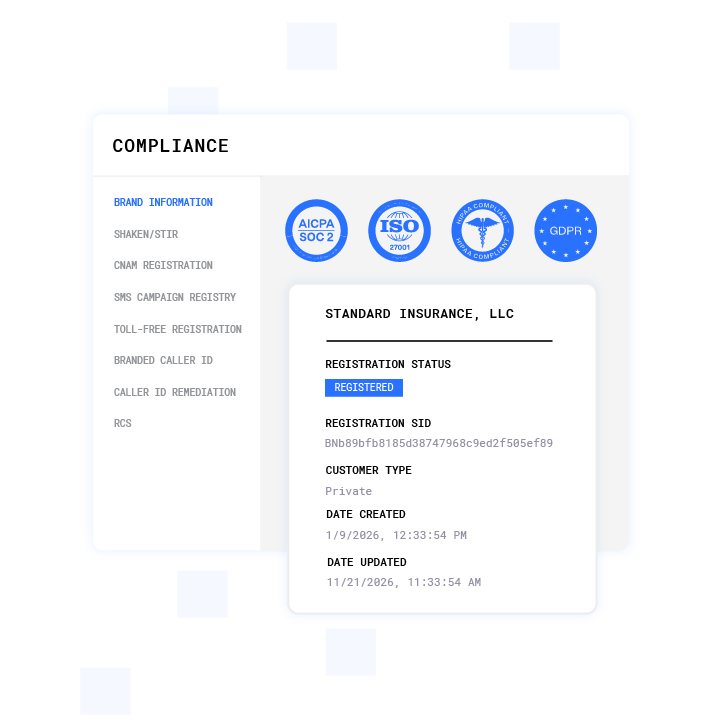
Operators should consult qualified legal counsel regarding their specific obligations under TCPA, DNC, CAN-SPAM, and applicable state rules. Plura provides the infrastructure that supports compliance, and the operator remains responsible for its own compliance posture.
See how Plura’s compliance infrastructure maps to your current RCS campaigns in a live walkthrough.
Carrier-Owned vs Reseller Economics for RCS
The economic difference between a carrier-owned RCS platform and a reseller platform is structural rather than marginal.
Reseller platforms, including Twilio-based API wrappers that power many AI messaging tools, pay the underlying carrier for origination and termination, then add their own margin before billing the operator. That margin applies to every message at every tier. On high-volume campaigns, the compounding effect is material. An operator sending 500,000 conversational RCS sessions per month at a $0.02 reseller markup pays $10,000 per month more than a carrier-direct rate for the same traffic.
Plura is its own FCC-licensed audio bridging carrier. Voice originates on Plura’s domestic infrastructure, and RCS messages route through the same carrier stack. Branded sender ID is issued at the carrier level, not bolted on through a third-party reseller. Real-time DNC scrubbing, TCPA consent logging, and STIR/SHAKEN authentication operate as first-class layers of the platform, as documented at plura.ai/guides/ai-communications-strategy.
The FCC NPRM (Notice of Proposed Rulemaking, CG Docket No. 26-52) discusses potential restrictions on offshore handling of certain consumer data. Plura runs on 100% U.S. infrastructure by architecture. Voice origination, model hosting, data storage, and message routing all sit on domestic infrastructure. Operators in healthcare, financial services, insurance, and legal verticals who need to describe U.S.-handled processing in their consumer disclosures can do so without architectural changes to the Plura deployment.
Total Cost of Ownership for RCS and Multi-Channel Messaging
The per-message rate is only one line item in the total cost of owning an RCS business messaging deployment. The full picture includes platform fees, compliance tooling, integration work, and the labor required to manage the deployment over time.
Plura’s published total cost of ownership for high-volume operators runs $300,000 to $700,000 annually, as documented at plura.ai/guides/ai-communications-strategy.3 That figure covers voice, SMS, RCS, and webchat on a single platform with a shared Stateful Conversation Database, built-in compliance infrastructure, and no separate billing for DNC scrubbing, consent logging, or audit exports.
The traditional contact-center economics that Plura replaces run $4 million to $7 million annually for equivalent conversation volume. Those costs are driven by agent labor at 60 to 70 percent of operating costs and 35 to 45 percent annual agent turnover that forces perpetual retraining. The illustrative 90-day ROI scenario on plura.ai/calculator shows a 15-agent operation costing $60,000 per month replaced by Plura at $14,400 per month, which produces $45,600 in 30-day savings and $547,200 over 12 months.3
Plura’s pricing tiers are Multi at $5,000 per month, Agency at $7,500 per month, and Enterprise at custom rates, all on annual contracts billed monthly with a 90-day opt-out window, as published at plura.ai/pricing. Agent build fees run $2,500 to $2,750 per agent.
Run a side-by-side TCO comparison against your existing messaging stack.
Frequently Asked Questions
How the Basic, Rich, and Conversational RCS Tiers Differ
Basic RCS delivers text-only messages with a verified business sender ID, functioning similarly to A2P SMS but with branded presentation on supported Android and Apple devices. Rich RCS adds media capabilities such as images, carousels, suggested reply buttons, in-message documents, and personalized video. Conversational RCS opens a two-way session window, typically 24 hours, during which the business and the recipient exchange messages under a single session fee rather than a per-message rate. Each tier carries a higher unit cost than the one below it, and the engagement and conversion rates at the rich and conversational tiers often produce a lower cost per completed action than basic RCS or SMS for qualification flows, payment requests, and contract signings.
Current U.S. Carrier Support for RCS and Its Impact on Pricing
As of mid-2026, RCS business messaging is supported across major U.S. carriers and on both Android and Apple devices running iOS 18 and later. Carrier support affects pricing because operators who route through a carrier-owned platform pay origination costs directly, while operators using a reseller platform pay the reseller’s markup on top of the same underlying carrier cost. The carrier-owned model also enables branded sender ID to be issued at the infrastructure layer rather than through a third-party registration process, which affects both cost and deliverability. Operators should confirm with each platform whether their RCS traffic routes through a carrier the platform owns or a CPaaS it rents.
How RCS Pricing Interacts with TCPA and DNC Compliance Costs
TCPA and DNC compliance for RCS business messaging involves real-time scrubbing of outbound contact lists against federal and state Do Not Call registries, timestamped consent records for each contact, quiet-hours enforcement by time zone, and audit-ready logging for regulatory review. On reseller platforms, these controls are typically purchased as separate add-ons from third-party compliance vendors, which adds per-record or per-month fees on top of the per-message rate. On carrier-owned platforms that embed compliance at the infrastructure layer, these controls are included in the platform fee rather than billed separately. Operators should evaluate the total compliance cost, including third-party tooling, integration maintenance, and audit preparation labor, when comparing per-message rates across platforms. Operators are responsible for their own compliance obligations and should consult qualified legal counsel regarding TCPA, DNC, CAN-SPAM, and applicable state rules.
When RCS Can Replace SMS for High-Volume Outbound Campaigns
RCS can handle the same outbound campaign use cases as SMS, including appointment reminders, lead follow-up, payment requests, and qualification flows, while adding media capabilities and two-way session windows that SMS does not support. Before switching, operators should confirm device coverage in their contact database, since RCS requires a supported device and carrier. They should also evaluate whether their current platform supports RCS or requires a new vendor relationship, assess the per-tier pricing structure against their actual message mix, and confirm that compliance controls for TCPA, DNC, CAN-SPAM, and state-level rules are embedded in the RCS platform rather than managed through separate tooling. Operators running multi-channel campaigns across voice, SMS, RCS, and webchat should also evaluate whether their platform maintains shared conversation context across channels, since a contact who received an RCS message should not be treated as a new lead when that contact responds by phone.
Conclusion: Carrier-Owned RCS Economics for 2026 Planning
RCS business messaging pricing in 2026 follows a three-tier structure where unit cost, compliance overhead, and total cost of ownership all vary significantly based on whether the platform owns its carrier infrastructure or resells access through a CPaaS layer. Operators running high-volume campaigns in regulated verticals face the largest exposure from reseller markups and separately billed compliance tooling because both costs compound with volume.
Plura AI operates as an FCC-licensed carrier, routes RCS on its own domestic infrastructure, and embeds DNC scrubbing, TCPA consent logging, STIR/SHAKEN authentication, and SOC 2-certified controls as first-class platform layers rather than third-party add-ons.1 The Stateful Conversation Database connects RCS sessions to voice, SMS, and webchat interactions on the same customer record, which reduces total session volume and total cost for operators running multi-channel qualification flows.
The carrier-owned model delivers the TCO advantage outlined above by replacing multi-million-dollar contact-center operations with a platform cost in the mid-six figures for equivalent conversation volume, with a 90-day opt-out window in every annual contract.
1 Plura AI maintains SOC 2, HIPAA, ISO, and GDPR posture as part of its platform infrastructure. References to compliance frameworks in this article describe Plura’s platform capabilities and do not constitute a guarantee that any customer using Plura will themselves be compliant with applicable laws or standards. Customers remain solely responsible for their own regulatory obligations, certifications, consent management, recordkeeping, and the claims they make to their own end users. Consult qualified legal counsel for guidance specific to your use case.
2 This article describes regulatory frameworks at a general level and does not constitute legal advice. Laws and regulations vary by jurisdiction, change over time, and apply differently depending on facts and circumstances. Readers should consult qualified legal counsel before making compliance decisions.
3 Performance figures, customer outcomes, and industry statistics referenced in this article are drawn from cited third-party sources or Plura customer case studies. Individual results vary based on implementation, use case, industry, audience, and execution. Past or aggregate performance is not a guarantee of future results.
4 References to third-party products, services, companies, or research are made for informational and comparative purposes only. Plura AI is not affiliated with, endorsed by, or sponsored by any third party named in this article unless explicitly stated. Trademarks and product names referenced remain the property of their respective owners.
5 This article contains forward-looking statements regarding industry trends, technology adoption, and future capabilities. These statements reflect current expectations and are subject to change. Plura AI undertakes no obligation to update forward-looking statements except as required.
This article is provided for informational purposes only and reflects Plura AI’s understanding at the time of publication. Product capabilities, integrations, and specifications are subject to change. For the most current information, visit plura.ai.
This article was produced with the assistance of AI tools and reviewed by Plura AI prior to publication.