AI Predictive Dialer for Sales Teams: How It Works
ON THIS PAGE
Written by: Matt Beucler, CEO, Plura AI
Key Takeaways
AI predictive dialers raise agent talk time from about 15 minutes per hour to 45–52 minutes per hour by cutting dead time from voicemails, busy signals, and idle waits.
Legacy dialers and Twilio-based AI wrappers carry structural compliance risk because they lack carrier ownership, carrier-level branded caller ID, and real-time DNC scrubbing at origination.2
Plura AI operates as a carrier-owned AI dialer with an FCC-licensed audio bridging carrier, SHAKEN/STIR attestation, and stateful cross-channel memory across voice, SMS, RCS, and webchat.
High-volume sales teams using Plura report 3x ROI in 90 days, 47% average pipeline growth, and 90% faster lead-response times while maintaining TCPA, DNC, SOC 2, HIPAA, and ISO compliance.1
Teams ready to replace manual dialing or legacy systems with a compliant, carrier-grade AI predictive dialer can book a live demo with Plura AI to see the platform in production.
Why Predictive Dialers Matter for Modern Outbound Teams
Manual dialing keeps most SDRs talking to prospects for only a small slice of each hour. The rest of their time disappears into ringing, voicemail, and idle gaps between calls. That idle time caps revenue, even when lead flow is strong.
Predictive dialers solve this by keeping lines active. Industry data shows predictive dialers raise agent talk time from around 15 minutes per hour to roughly 45–52 minutes per hour.3 Agents work through far more records per day compared with manual dialing, which directly increases pipeline coverage.
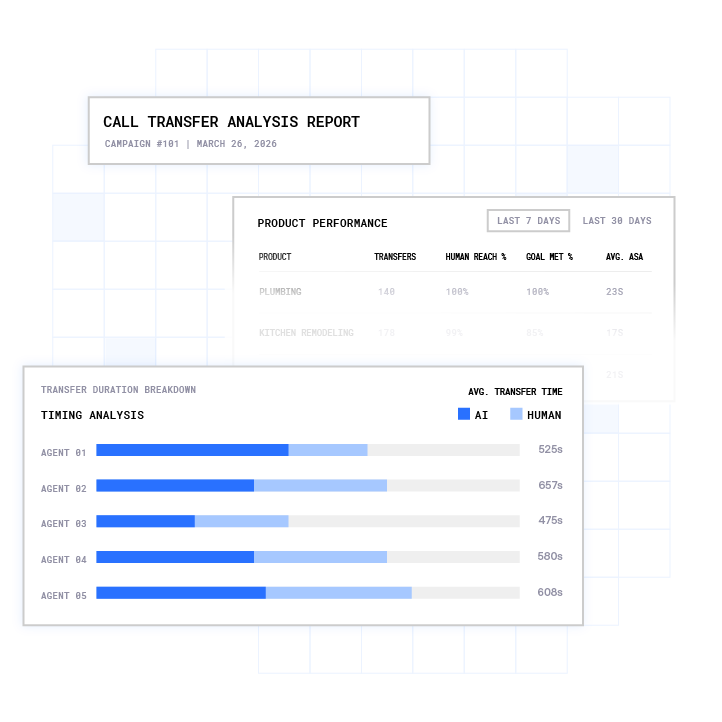
Plura Predictive Dialer automates outbound calling with AI-powered pacing, transfer optimization, and real-time performance analytics.
This productivity gain explains why the predictive dialer software market was valued at USD 3.20 billion in 2024 and is projected to grow at a CAGR of 42.3% through 2030.3 Growth is driven by AI-enhanced pacing, real-time compliance automation, and cross-channel stateful memory that supports more complex customer journeys.
How Dialer Categories Evolved
Legacy predictive dialers were built to do one thing well: maximize dials per hour. They rely on parallel dialing and rule-based answering machine detection to keep agents busy. The structural weakness sits in compliance. These systems often need 50–100 dedicated outbound agents for the abandonment-rate algorithm to stay within the FTC’s 3% abandoned-call cap. Smaller teams see unstable pacing and higher abandonment.
Twilio-based AI wrappers appeared as the next step.4 They add AI voice and SMS on top of third-party CPaaS infrastructure. Because they do not own the carrier, they bolt on branded caller ID, SHAKEN/STIR verification, and real-time DNC scrubbing after the fact instead of enforcing them at origination. Resellers that do not control the originating network typically cannot assign full A-level STIR/SHAKEN attestation, which makes traffic more likely to be flagged as “Spam Likely.” These structural limits created demand for a carrier-owned approach.
Carrier-owned AI dialers address those gaps. Plura AI sits in this category. Plura owns its FCC-licensed audio bridging carrier, issues branded caller ID at the carrier level, and enforces real-time DNC scrubbing before each dial. The platform is not a wrapper on someone else’s network. It is the full stack.
Plura’s Carrier-Grade Architecture for AI Dialing
Plura’s AI predictive dialer runs on four carrier-grade layers that control how every call originates and lands.
An FCC-licensed audio bridging carrier that originates and terminates voice traffic on 100% U.S. infrastructure
A carrier-identity layer anchoring operating company number registration and SHAKEN/STIR caller ID verification on every outbound call
A branded caller ID and spam-label remediation layer that presents the company name and call reason to the recipient
A real-time DNC scrubbing layer that checks every number against federal and state registries before dial, with TCPA compliance controls and integration with The Blacklist Alliance’s TCPA Litigation Firewall® for litigation protection
Every call feeds Plura’s Stateful Conversation Database. A lead contacted by SMS at 9 a.m. appears as the same record the dialer references at noon. The AI or human agent sees full context, including prior offers, objections, and qualification status. Many teams report customers repeating themselves because data lives in silos. Plura’s stateful memory closes that gap across voice, SMS, RCS, and webchat.
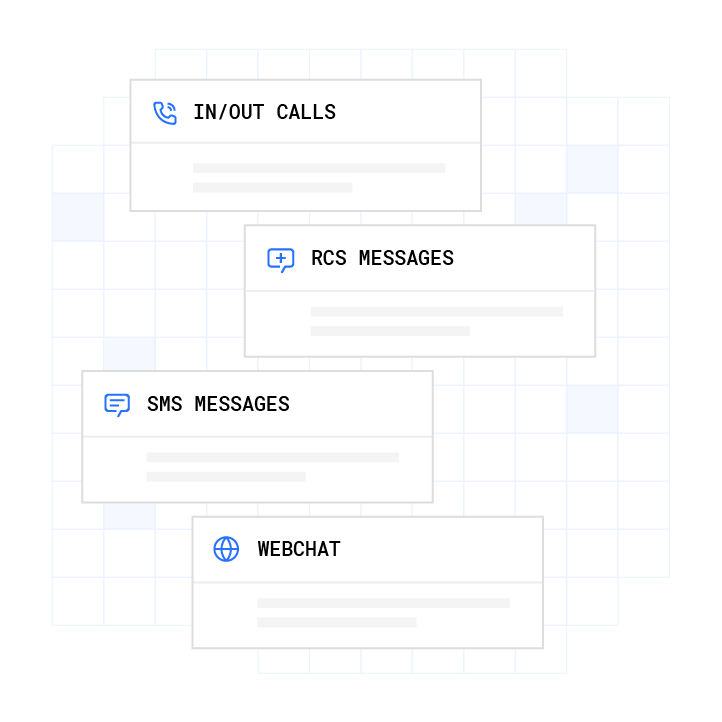
Plura Unified Inbox centralizes AI Voice, SMS, RCS, and Webchat conversations into one streamlined omnichannel communication workspace.
How Plura Onboards, Launches, and Iterates
Plura’s onboarding runs from discovery audit to go-live in a window of days to weeks, depending on conversation complexity. A straightforward outbound qualification flow typically launches in a few days. A multi-step intake with complex branching logic usually takes one to two months.
After launch, Plura continues to tune the deployment. The team monitors real calls, analyzes objection patterns, and adjusts workflows against actual outcomes. Every annual contract includes a 90-day opt-out window, so customers are not locked into a year if the deployment does not perform.
Pricing spans three tiers: Multi at $5,000 per month, Agency at $7,500 per month, and Enterprise with custom pricing. All tiers run on annual agreements billed monthly, with agent build fees of $2,500–$2,750 per agent.
Teams and Use Cases Plura Serves
Plura serves organizations that handle high volumes of customer conversations across channels. Common deployment patterns for the AI predictive dialer include:
Insurance: instant quote follow-ups and policy renewal outreach where sub-5-second response on inbound quotes often determines who wins the deal
Financial services: loan follow-ups and advisor-appointment scheduling on 100% U.S. infrastructure, relevant to sensitive-data handling under FCC NPRM CG Docket No. 26-52
Legal: mass-tort and personal-injury intake with field-level PII redaction and qualification routing to U.S. counsel
Real estate and service networks: property-inquiry follow-up and nationwide service-network coordination with stateful negotiation memory
Agencies: multi-client outbound operations where account-manager capacity expands from 5–8 clients to 15–20 without adding headcount
Buyer Fit and Volume Thresholds
Plura’s practical floor is at least 500 daily customer interactions or at least $5,000 per month in paid-media spend. Below that level, a platform with this depth typically does not generate enough ROI to justify the build effort.
Five buyer personas usually lead Plura evaluations. VP or Director of Contact Center Operations, Marketing Directors, Agency Owners, Franchise Owners, and C-Suite Executives each own part of the same challenge. They face too many conversations, not enough capacity, rising regulatory exposure, and customer expectations that a human-only model cannot meet at scale.
“We went from spending 60% of our time trying to contact leads to spending 90% of our time closing them.” – Marketing Director, Plura customer
Run your numbers through the ROI calculator to see projected savings based on your current volumes.
How Plura Compares to Other Dialer Models
Three categories compete for high-volume outbound sales teams in 2026.
Legacy dialers (including Vici Dial alternatives and on-premise systems) focus on dials per hour and often introduce compliance risk.4 They usually require 50–100 agents for reliable pacing, do not own carrier infrastructure, and cannot issue branded caller ID or enforce real-time DNC scrubbing at origination.
Offshore BPOs operate in a tightening regulatory environment. The FCC NPRM (CG Docket No. 26-52) proposes capping offshore customer-service calls at 30% and limiting offshore handling of sensitive consumer data. Several states, including New York, New Jersey, Connecticut, Missouri, and Florida, already restrict offshore handling of medical, financial, and consumer data. Plura runs on 100% U.S. infrastructure by architecture.
The default scenario on Plura’s ROI calculator models a 15-agent operation and shows how carrier-grade AI changes the cost structure. A $60,000 per month team drops to $14,400 per month with equivalent output, producing six-figure savings in the first year.
For larger operations, Plura’s total cost of ownership of $300,000–$700,000 per year can replace a $4M–$7M traditional contact-center cost structure on similar volume. These outcomes align with the performance benchmarks cited earlier and are validated across Plura’s customer base through the calculator’s scenario modeling.
What to Check When You Evaluate AI Dialers
When evaluating an AI predictive dialer for a high-volume sales team, six architectural questions determine whether a platform will perform in 2026 or create compliance and deliverability risk.
Start with carrier ownership. Confirm whether the vendor owns its FCC carrier license or routes through Twilio or another CPaaS. Carrier ownership drives everything downstream, including branded caller ID, SHAKEN/STIR attestation, and DNC enforcement.
If the vendor owns the carrier, check how branded caller ID is issued. Carrier-level issuance means your company name appears on the recipient’s screen. Reseller models inherit the upstream carrier’s reputation.
Next, verify that real-time DNC scrubbing is enforced before each dial, with immutable consent records. Batch scrubbing creates exposure windows that many operators want to avoid.
Beyond compliance, confirm that the platform maintains stateful conversation memory across voice, SMS, RCS, and webchat. Siloed channels force customers to repeat themselves, while stateful memory preserves context across every touchpoint.
Validate that the infrastructure is 100% U.S.-based by architecture, not just by marketing claim. Regulatory proposals such as FCC NPRM CG Docket No. 26-52 focus on offshore handling of sensitive data, so many teams prefer domestic infrastructure.
Finally, ask how the vendor manages workflows after launch. Some vendors hand off the keys and step back. Plura iterates conversation workflows continuously so the AI stays aligned with real outcomes.
Key Compliance Trends Affecting AI Dialers
The 2026 compliance environment for outbound dialers is materially stricter than in 2024, with several developments that compound each other’s impact on operations.5 Teams should review these with qualified counsel.
The FCC’s one-to-one consent rule (FCC 23-107), effective January 27, 2025, states that prior express written consent authorizes only one named seller at a time.2 This change affects shared-consent models where a single opt-in previously covered multiple sellers.
The FCC’s February 2024 declaratory ruling classifies AI-generated voices as “artificial” under the TCPA.2 The ruling applies the same prior express written consent standard used for prerecorded marketing calls, which places AI dialers under the same consent expectations as traditional robocalls.
The FCC’s April 2026 Know Your Customer proposal introduces significant per-call penalties for violations. These proposals sit alongside existing TCPA statutory damages of $500 to $1,500 per unsolicited call or text, with class action settlements regularly reaching $20M to $75M or more. Together, they make consent and DNC handling an operational priority.
Plura’s compliance engine operates as a core layer of the platform. Every outbound contact is checked against federal and state DNC registries in real time before dial, and consent records are timestamped and immutable. Quiet-hours rules apply automatically through time-zone detection, and the dashboard exports audit-ready reports in one click. Plura supports TCPA and DNC compliance efforts and aligns with the certifications referenced earlier, while customers remain responsible for their own regulatory obligations and the claims they make to end users.1
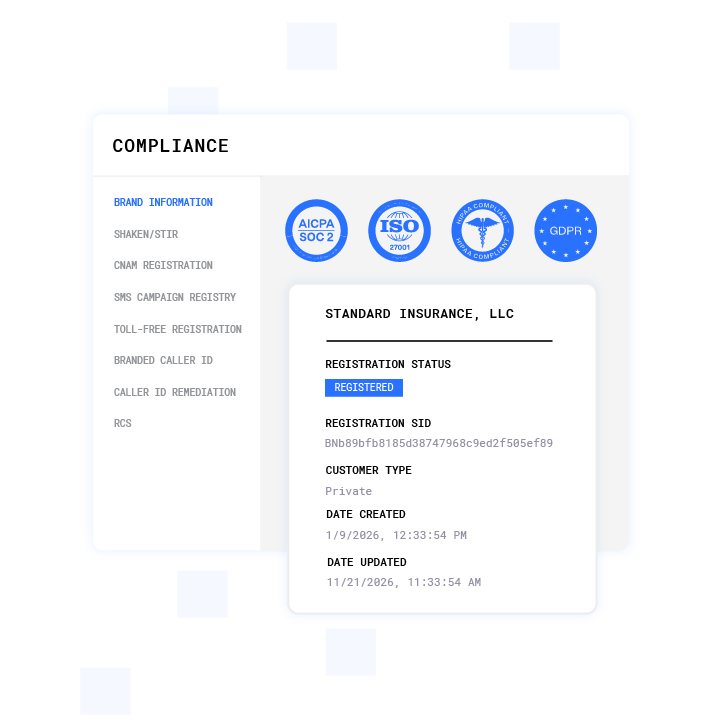
Plura Security & Compliance supports SOC 2, ISO, and GDPR standards with trust registration, verification management, and secure AI communications.
Dialer Performance for High-Volume Sales Teams
High-volume sales teams running thousands of outbound contacts each month need a dialer that increases talk time without creating abandoned-call exposure. The talk-time improvements described earlier translate into 200–300% productivity gains in practice, with idle time dropping from a large share of the day to near zero.
Plura’s AI predictive dialer adds stateful conversion signals to standard pacing logic. Historical answer rates, prior negotiation outcomes, and prior offer-acceptance bands influence who gets called next. This approach increases contact rate per dial, lowers cost per connected call, and removes dependency on third-party predictive-dialer software.
For teams below the 50-agent threshold where traditional predictive pacing becomes statistically unreliable, Plura’s power dialer mode removes abandoned calls by design while keeping AI-driven prioritization in place.
Voicemail Detection and Abandoned-Call Risk
Answering machine detection is the logic that separates live answers from voicemail before connecting an agent. Standard AMD often shows a false-positive rate on live-answer detection, which means live humans get misclassified as voicemail and dropped. That outcome wastes opportunities and affects abandoned-call calculations under FTC rules.
Plura’s voicemail detection runs on carrier-grade infrastructure with sub-400 millisecond latency from answer detection to first spoken word. When the system confirms voicemail, the AI leaves a pre-recorded message and moves to the next contact. When it detects a live answer, the call connects immediately with no audible bridge gap. The FCC’s 2026 FNPRM is considering clearer treatment of AMD because false positives can hide live answers and distort abandonment-rate calculations. Carrier-level AMD helps reduce that exposure.
Managing “Spam Likely” Labels at the Carrier Level
“Spam Likely” labels originate at the carrier level, so they require carrier-level controls. Most AI dialer platforms cannot fully address spam labels because they rent capacity from Twilio and inherit Twilio’s caller ID reputation.
Under the FCC’s Third-Party Authentication Order, effective September 18, 2025, every voice provider with a STIR/SHAKEN obligation must obtain its own Service Provider Code token and certificate. Providers that do not own their network typically cannot deliver consistent A-level attestation.
Plura issues branded caller ID directly through its FCC-licensed carrier. Calls present with the company’s name and the reason for the call instead of an unfamiliar number. SHAKEN/STIR verification runs on every outbound call, and destination carriers use that signal to validate origination. Plura’s integration with Number Verifier improves outbound call connection rates by up to 45% through built-in spam prevention. Plura’s AI also communicates with Apple’s iOS 26 call-screening layer so calls that might be intercepted can present a recognizable identity.
A dialer that does not write back to the CRM creates a growing data gap. Agents re-enter dispositions manually, call summaries disappear, and lead scores fall out of date. Many sales teams now plan to consolidate tools to avoid that fragmentation.
Plura’s CRM integration connects natively with HubSpot, Salesforce, and Zoho. Every call disposition, transcript, and intent signal writes back to the CRM record in real time. Post-call automation generates summaries and updates CRM fields without manual entry. The Stateful Conversation Database ensures the CRM record reflects every touchpoint across voice, SMS, RCS, and webchat.
Plura’s conversation intelligence layer surfaces patterns across the full call record, including which scripts close, which objections recur, and which conversion paths win. Marketing teams use these insights for ROI proof, and sales leaders use them to refine scripts. The full integrations directory covers more than 50 tools across CRMs, calendars, attribution platforms, document signers, and payment processors.
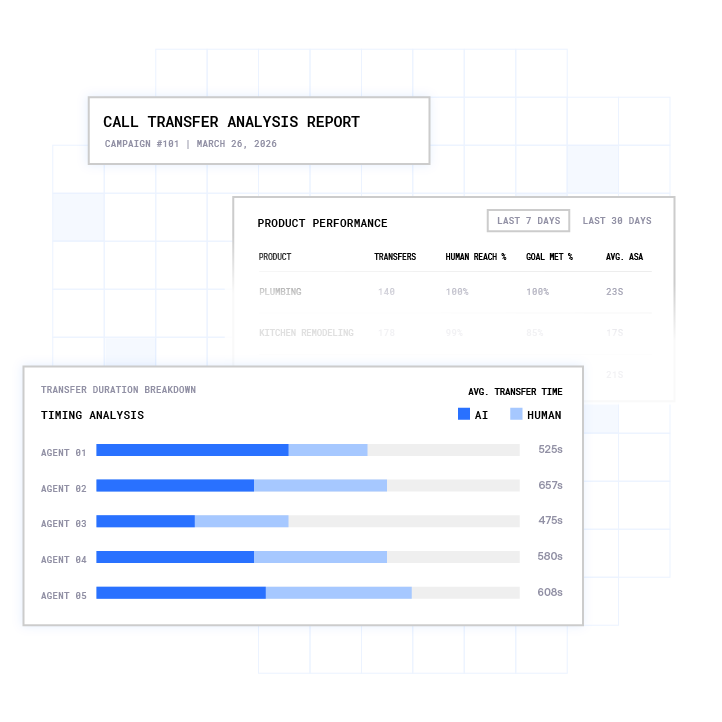
Plura Conversation Intelligence gives businesses AI-powered analytics, call transfer tracking, and customer interaction insights across every conversation.
Run your numbers through the ROI calculator and see what your current dialer setup is actually costing you.
Partial or gateway, resellers without network control typically cannot assign A-level attestation
Partial, dependent on upstream carrier
A-level attestation at origination
Real-time DNC scrubbing
Batch scrubbing, not enforced at dial
Bolted on, not enforced at carrier layer
Enforced before every dial, TCPA Litigation Firewall® integrated
Stateful cross-channel memory
None
Single-channel only
Voice, SMS, RCS, and webchat share one Stateful Conversation Database
U.S. infrastructure
Varies, often mixed
Dependent on Twilio’s infrastructure decisions
100% U.S. by architecture, including voice origination, model hosting, data storage, and call recording
FAQ
What makes Plura AI’s predictive dialer different from a Twilio-based AI dialer?
Plura owns its FCC-licensed audio bridging carrier, while Twilio-based AI dialers operate as software layers on third-party CPaaS. This difference appears first in branded caller ID. Plura issues caller ID directly at the carrier level, so calls present with the company name instead of an unfamiliar number or “Spam Likely.” It also appears in SHAKEN/STIR verification. Plura delivers A-level attestation at origination because it controls the originating network, which resellers without carrier ownership cannot guarantee. Finally, Plura enforces real-time DNC scrubbing before every dial, with TCPA controls built into the dialer instead of relying on external services. These factors support higher connect rates, lower spam-label exposure, and a compliance posture that lives inside the platform.
How does Plura AI handle TCPA compliance and DNC scrubbing?
Plura’s compliance engine operates as a core layer of the platform. Every outbound contact is checked against federal and state DNC registries in real time before dial, and non-compliant numbers are blocked before the first attempt. Consent records are timestamped, immutable, and audit-ready. Quiet-hours rules apply automatically through time-zone detection, using state and federal calling-window parameters for each campaign. The compliance dashboard exports audit-ready reports in one click. Plura supports TCPA and DNC compliance efforts and aligns with SOC 2, HIPAA, ISO, and SHAKEN/STIR verification, while customers remain responsible for their own regulatory obligations and should consult qualified counsel on their specific posture.1
What team size does Plura’s AI predictive dialer require to operate effectively?
Plura’s practical floor is at least 500 daily customer interactions. The AI predictive dialer uses stateful conversion signals, such as historical answer rates, prior negotiation outcomes, and offer-acceptance bands, to set pacing and prioritization. This approach differs from traditional Erlang-based pacing algorithms that require 50–100 human agents to stay within the FTC’s 3% abandoned-call cap. For teams below that human-agent threshold, Plura’s power dialer mode removes abandoned calls by design while keeping AI-driven lead prioritization. The platform scales from smaller high-volume teams to enterprise contact centers without changing the underlying compliance architecture.
How does Plura AI fix “Spam Likely” labels on outbound calls?
Spam labels are assigned at the carrier level based on caller ID reputation, SHAKEN/STIR attestation, and call behavior patterns. Plura addresses all three at the source. Branded caller ID is issued directly through Plura’s FCC-licensed carrier, so calls present with the company name and call reason. SHAKEN/STIR verification runs on every outbound call, delivering A-level attestation that destination carriers use to validate origination. Plura’s integration with Number Verifier monitors and manages number reputation continuously. The AI also communicates with Apple’s iOS 26 call-screening layer, which allows calls that might be intercepted to present a recognizable identity. Platforms that route through Twilio or another CPaaS cannot fully replicate this approach because they do not control the originating carrier.
How does Plura AI’s CRM sync work with existing sales tools?
Plura integrates natively with HubSpot, Salesforce, and Zoho, and connects to more than 50 tools across CRMs, calendars, attribution platforms, document signers, and payment processors through its integrations directory. Every call disposition, transcript, and intent signal writes back to the CRM record in real time without manual entry. Post-call automation generates call summaries and updates CRM fields automatically. The Stateful Conversation Database ensures the CRM record reflects every touchpoint across voice, SMS, RCS, and webchat. Conversation intelligence surfaces patterns across the full call record and produces client-ready reports, giving sales leaders and marketing teams outcome-based metrics instead of surface-level dashboards.
1 Plura AI maintains SOC 2, HIPAA, ISO, and GDPR posture as part of its platform infrastructure. References to compliance frameworks in this article describe Plura’s platform capabilities and do not constitute a guarantee that any customer using Plura will themselves be compliant with applicable laws or standards. Customers remain solely responsible for their own regulatory obligations, certifications, consent management, recordkeeping, and the claims they make to their own end users. Consult qualified legal counsel for guidance specific to your use case.
2 This article describes regulatory frameworks at a general level and does not constitute legal advice. Laws and regulations vary by jurisdiction, change over time, and apply differently depending on facts and circumstances. Readers should consult qualified legal counsel before making compliance decisions.
3 Performance figures, customer outcomes, and industry statistics referenced in this article are drawn from cited third-party sources or Plura customer case studies. Individual results vary based on implementation, use case, industry, audience, and execution. Past or aggregate performance is not a guarantee of future results.
4 References to third-party products, services, companies, or research are made for informational and comparative purposes only. Plura AI is not affiliated with, endorsed by, or sponsored by any third party named in this article unless explicitly stated. Trademarks and product names referenced remain the property of their respective owners.
5 This article contains forward-looking statements regarding industry trends, technology adoption, and future capabilities. These statements reflect current expectations and are subject to change. Plura AI undertakes no obligation to update forward-looking statements except as required.
This article is provided for informational purposes only and reflects Plura AI’s understanding at the time of publication. Product capabilities, integrations, and specifications are subject to change. For the most current information, visit plura.ai.
This article was produced with the assistance of AI tools and reviewed by Plura AI prior to publication.