

Written by: Matt Beucler, CEO, Plura AI | Last updated: August 25, 2026
Updated August 2026
Key Takeaways
- An AI predictive dialer uses machine-learning pacing and AMD to connect agents only to live humans, boosting talk time to 45-52 minutes per hour.3
- Plura AI is the only FCC-licensed, 100% U.S.-infrastructure platform that adds stateful cross-channel memory, real-time DNC/TCPA controls, and branded caller ID.
- Carrier ownership lets Plura issue STIR/SHAKEN attestation and enforce compliance before every dial, which reduces spam labeling and regulatory risk.1
- Compared with power dialers and legacy systems, Plura delivers higher talk-time utilization while staying under the FTC’s 3% abandoned-call cap.
- Experience these advantages firsthand by trying Plura AI’s AI webchat today.
How an AI Predictive Dialer Works in Practice
Legacy dialers waste agents 25–35 minutes per hour on manual dialing, ringing, and voicemails. An AI predictive dialer solves this by continuously analyzing three live inputs: number of free agents, average conversation length, and human connect rate. The pacing algorithm uses those inputs to calculate how many lines to dial at once for each available agent. A live answered call is ready as an agent finishes the prior conversation.
When a call starts, AMD classifies the outcome as a live human answer, voicemail, busy signal, disconnected number, or fax tone. Only live human answers route to an available agent. All other outcomes are logged automatically and the dialer advances to the next number. The result is agent talk time of 45-52 minutes per hour, compared to 15 minutes per hour with manual dialing.
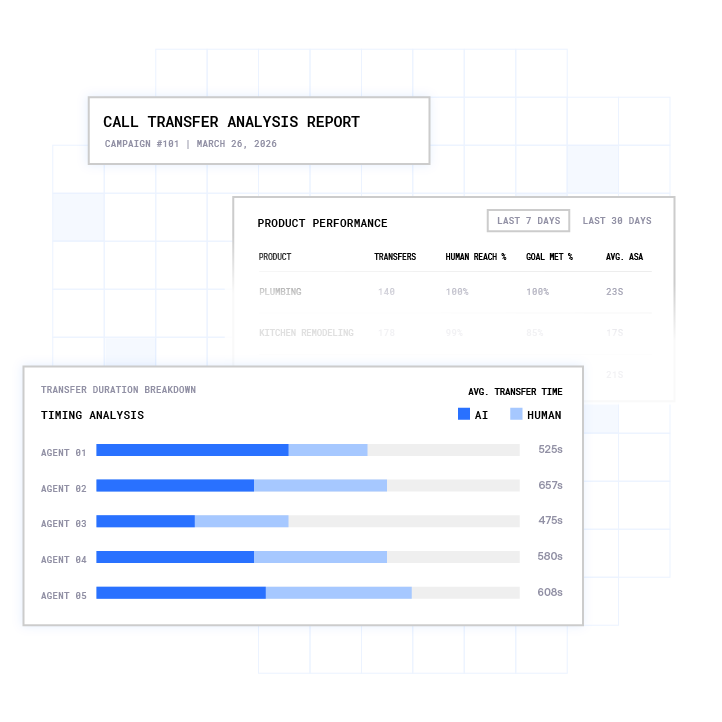
Plura’s AI predictive dialer adds stateful conversion signals that legacy systems cannot match. The dialer decides who to call next based on historical answer rates, prior negotiation outcomes, and prior offer-acceptance bands stored in Plura’s Stateful Conversation Database. Calls flow over Plura’s own FCC-licensed carrier with branded caller ID and STIR/SHAKEN (Secure Telephone Identity Revisited / Signature-based Handling of Asserted information using toKENs) authentication on every outbound attempt.
Book a live demo with Plura to see the AI predictive dialer in action on your own call data.
Power Dialer vs. Predictive Dialer for Your Team
A power dialer calls one number at a time per available agent and waits for connection before advancing. This setup produces zero abandoned calls by design and delivers lower agent talk time per hour than predictive dialers. Power dialers fit warm lists, high-value B2B conversations, and teams under 20 agents where predictive pacing could create volatile abandonment rates.
An AI predictive dialer uses statistical pacing to over-dial safely, which raises talk time per agent per hour while staying under the abandoned-call cap. The trade-off is compliance overhead. Abandoned calls occur when the algorithm dials more live answers than agents can absorb, and the FTC’s Telemarketing Sales Rule caps abandoned calls at 3% of answered calls measured over the duration of the campaign.
Plura narrows the gap between these two modes by adding stateful memory so context from a prior SMS or webchat session carries into the voice call. An agent who receives a warm transfer from Plura’s AI predictive dialer sees the full conversation history on screen. Pricing offers, objections, and qualification status appear in one view, so the prospect does not need to repeat details.
| Criteria | Power Dialer | AI Predictive Dialer (Plura) |
|---|---|---|
| Talk time per agent per hour | Lower than predictive dialers | 45-50 minutes for best predictive dialers |
| Abandoned-call risk | None by design | Managed by pacing algorithm, capped at 3% per campaign |
| Carrier ownership | Typically third-party CPaaS | FCC-licensed carrier (Plura-owned) |
| Branded caller ID | Reseller-issued | Issued directly at carrier level |
| Stateful cross-channel memory | Not standard | Yes, across voice, SMS, RCS, and webchat |
| Real-time DNC scrubbing | Varies by vendor | Enforced before every dial at carrier level |
| U.S. infrastructure | Varies | 100% U.S. by architecture |
Predictive Dialers and 2026 Regulatory Changes
Predictive dialers remain in use under federal rules when operators document consent, honor opt-outs, and maintain an abandoned-call rate below 3% per campaign measured over the duration of the campaign.2 The FCC’s 2026 FNPRM proposes to review whether the long-standing 3% abandoned-call cap for predictive dialers still makes sense, but nothing is final yet5. The caller carries the compliance burden and must maintain documented consent, pacing controls, and audit trails rather than relying only on the dialer vendor.
The regulatory landscape tightened materially in 2025 and 2026, which raised the stakes for outbound operations. Key developments that affect how leaders design their programs include:
- The FCC’s blanket revocation rule (originally scheduled for April 11, 2026) has been extended and is now effective January 31, 2027, meaning that if a consumer revokes consent for one type of communication, that revocation applies to all future robocalls and robotexts from that caller on unrelated matters, creating a system-wide DNC obligation.
- An October 2025 FCC Further Notice of Proposed Rulemaking (FNPRM) addressed robocall mitigation, caller-ID verification, and foreign-originated calls. This FNPRM is a request for public comment and is not yet law. Any changes would require a separate final order.
- TCPA class action filings spiked 283% in September 2025 compared to September 2024, with 224 class actions filed that month. Statutory damages range from $500 to $1,500 per unsolicited call or text.
- State mini-TCPA laws in Florida, Texas, and Oklahoma impose additional restrictions on calling hours, contact frequency, and consent requirements, per LeadCompliant’s TCPA feature guide. Leaders should consult qualified counsel for obligations specific to their campaigns and states.
- In its April 30, 2026 Further Notice of Proposed Rulemaking, the FCC sought comment on enhanced Know-Your-Customer requirements for originating voice providers and on assessing penalties for violations on a per-call basis.
- The Congressional Research Service report R48941 (May 2026) provides the federal baseline for robocall restrictions under the TCPA, Truth in Caller ID Act, and TRACED Act, available at Congress.gov.
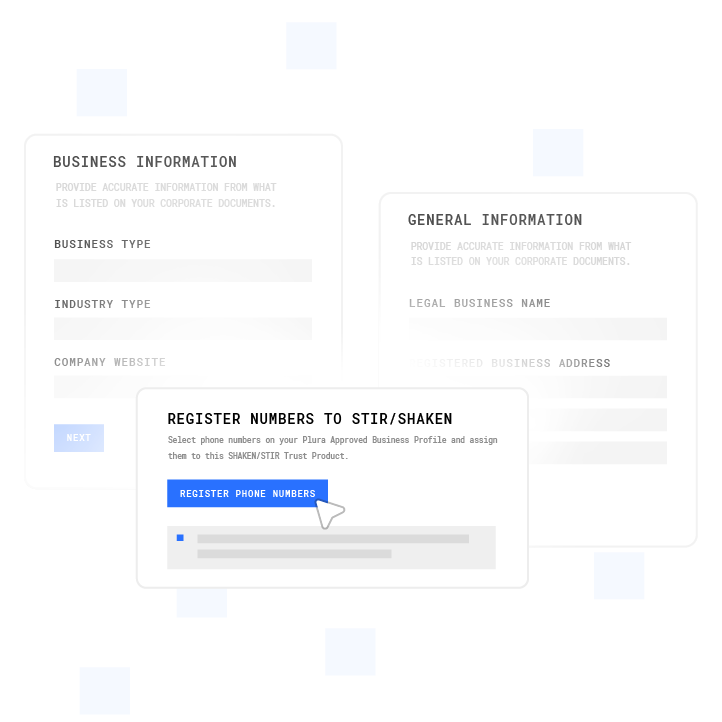
Plura supports compliance with these frameworks by enforcing controls at the carrier level in real time before each dial. Customers remain responsible for their own regulatory obligations and should consult qualified counsel on their specific compliance posture.
Run your numbers through Plura’s calculator to see how carrier-level compliance controls affect your total cost of ownership.
Why Carrier Ownership Changes Compliance Risk
Most AI predictive dialer platforms are built as wrappers on top of third-party CPaaS (Communications Platform as a Service) providers such as Twilio.4 This architecture means the platform rents the carrier layer rather than owning it, which creates three concrete problems that show up in day-to-day operations:
- Branded caller ID cannot be issued under the platform’s own carrier identity, so calls present with the CPaaS provider’s number reputation rather than the operator’s brand.
- DNC scrubbing and TCPA controls are bolted on after the call leaves the network rather than enforced at origination, which introduces a window of exposure on every dial.
- STIR/SHAKEN attestation levels depend on the CPaaS provider’s infrastructure, and lower attestation levels increase vulnerability to carrier filtering and spam labeling, per ArmorHQ’s outbound calling risk analysis.
Plura owns its FCC-licensed audio bridging carrier, so voice originates on Plura’s domestic infrastructure, not a third-party CPaaS. This structure means branded caller ID is issued directly at the carrier level, real-time DNC and TCPA scrubbing is applied before every dial, and STIR/SHAKEN authentication runs on every outbound call under Plura’s own operating company number registration, as detailed in Plura’s Synthflow comparison.
The FCC’s 2026 FNPRM (CG Docket No. 26-52) and companion state onshoring statutes create additional exposure for platforms with foreign infrastructure dependencies, which makes domestic infrastructure a compliance advantage rather than only a performance feature. Plura runs on 100% U.S. infrastructure by architecture. Voice origination, model hosting, data storage, and call recording all sit on domestic infrastructure. Operators should consult qualified counsel regarding their specific obligations under the FNPRM and applicable state laws.
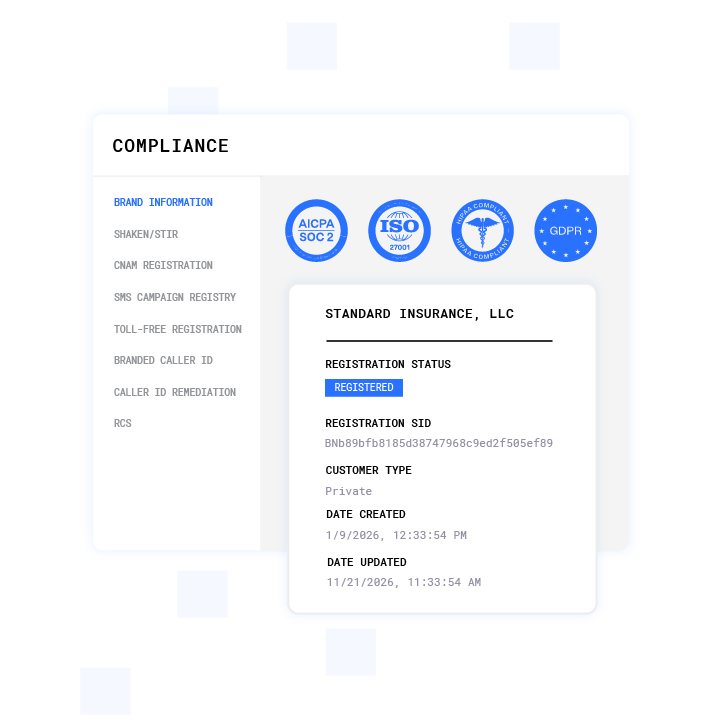
Number reputation also sits at the carrier layer. STIR/SHAKEN attestation levels assigned by carriers, A (full attestation), B (partial attestation), and C (gateway attestation), are used alongside other signals to assess trust, per ArmorHQ. Platforms that rent infrastructure inherit the CPaaS provider’s attestation posture. Plura issues A-level attestation under its own carrier identity, which directly affects whether high-volume outbound calls reach prospects or get filtered as spam.
2026 AI Predictive Dialer Comparison for Leaders
When leaders evaluate AI predictive dialer platforms in 2026, five criteria separate carrier-grade infrastructure from CPaaS wrappers. These criteria are carrier ownership, stateful cross-channel memory, branded caller ID issuance, real-time DNC enforcement, and 100% U.S. infrastructure. The table below reflects Plura’s documented capabilities alongside objective descriptors for the broader market.
| Criteria | Plura AI | Twilio-based wrappers | Legacy on-premise dialers |
|---|---|---|---|
| Carrier ownership | Yes, FCC-licensed (Plura vs. Synthflow) | No, rents from third-party CPaaS (Plura vs. Synthflow) | Varies, most rely on SIP trunking from third-party carriers |
| Stateful cross-channel memory | Yes, across voice, SMS, RCS, and webchat (Plura vs. Vapi) | Not standard, typically single-channel per session | No, channel memory is not a legacy dialer feature |
| Branded caller ID (carrier-level) | Yes, issued directly under Plura’s carrier identity | No, issued through CPaaS reseller identity | No, dependent on SIP trunk provider |
| Real-time DNC enforcement | Yes, before every dial at carrier level (Plura vs. Vapi) | Varies, typically a software-layer check post-network | Varies, often manual or batch scrubbing |
| 100% U.S. infrastructure | Yes, by architecture | Varies, CPaaS providers operate global infrastructure | Depends on hosting environment |
| Pricing model | Per-minute plus seat (plura.ai/pricing) | Typically per-minute API fees plus platform seat | Typically per-seat license plus hardware and maintenance |
Platforms built on third-party CPaaS inherit that provider’s number reputation rather than their own, as detailed in Plura’s Twilio comparison. U.S. mobile answer rates for unknown numbers have declined due to carrier spam labeling, STIR/SHAKEN enforcement, and iOS and Android unknown-caller filtering, per Retell AI. Carrier ownership provides a structural fix, while number rotation does not, because carriers and analytics firms track rotation patterns and treat them as signals of problematic dialing behavior, per ArmorHQ.
Migration from ViciDial to an AI Predictive Dialer
ViciDial is an open-source legacy dialer that requires on-premise infrastructure management, manual DNC scrubbing, and third-party integrations for compliance controls. Migrating to Plura’s AI predictive dialer follows a structured sequence that preserves audit trails and minimizes campaign disruption.
The migration process involves these steps:
- Export contact lists and consent records from ViciDial, including timestamps and consent artifacts required for TCPA audit trails.
- Map existing call workflows to Plura’s no-code workflow builder, replicating greeting nodes, qualification gates, transfer rules, and post-call actions without engineering work.
- Enable carrier-level STIR/SHAKEN authentication and branded caller ID under Plura’s FCC-licensed carrier identity.
- Configure real-time DNC scrubbing against federal and state registries, TCPA consent management, and state-specific calling-hour enforcement through Plura’s compliance engine.
- Run parallel campaigns for 30 days, comparing contact rates, talk-time utilization, and abandonment rates between the legacy system and Plura.
- Cut over fully once parallel results confirm parity or improvement, with Plura’s audit trail intact from day one.
Plura completes typical migrations in days to weeks depending on workflow complexity. A simple inbound qualification flow is typically built in days. A complex multi-step intake runs closer to one to two months because the workflow logic itself takes time to design and validate. Every annual contract includes a 90-day opt-out window if the deployment is not delivering.
The operational difference after migration is measurable. A 15-agent operation paying $20 per hour with standard taxes, benefits, and commissions at a 40% talk-utilization rate typical of human contact-center work costs $60,000 per month. Replacing that team with Plura at $15 per hour, 100% talk utilization, and 6 Plura agents doing the work of 15 humans drops the monthly cost to $14,400, per Plura’s ROI calculator.
Run your numbers through Plura’s calculator to model your specific migration ROI before committing to a timeline.
Frequently Asked Questions
What is an AI predictive dialer?
An AI predictive dialer is an automated outbound calling system that uses machine-learning pacing algorithms and answering-machine detection to dial multiple lines simultaneously per available agent. It routes only live human answers to agents while screening voicemails, busy signals, and unanswered rings. This design drives the 45-52 minutes of agent talk time per hour mentioned earlier, a dramatic improvement over manual dialing.
Predictive dialer vs. power dialer: what is the difference?
A power dialer calls one number at a time per agent and waits for connection, which produces zero abandoned calls and moderate levels of talk time per hour. An AI predictive dialer uses statistical pacing to dial multiple lines ahead of agent availability, which raises talk time per hour but requires active management of the FTC’s abandoned-call cap measured over the duration of the campaign.
Are predictive dialers legal in 2026?
Predictive dialers remain in use under federal rules when operators document consent, honor opt-outs, and keep abandoned calls within the 3% campaign-level cap described above. Many operators also scrub against the National DNC Registry and apply STIR/SHAKEN attestation as part of their programs. The FCC’s 2026 FNPRM proposes to review whether the long-standing 3% abandoned-call cap for predictive dialers still makes sense, but nothing is final yet. State mini-TCPA laws in Florida, Texas, and Oklahoma impose additional restrictions. Leaders should consult qualified counsel for obligations specific to their campaigns.
How does carrier ownership affect compliance?
Platforms that rent infrastructure from third-party CPaaS providers inherit that provider’s number reputation and have limited control at origination. Plura owns its FCC-licensed audio bridging carrier, so it can issue branded caller ID directly, apply real-time DNC and TCPA scrubbing before each dial, and send calls with its own STIR/SHAKEN attestation. This structure reduces spam-label exposure at the network level.
What is the best AI predictive dialer software in 2026?
Leading platforms in 2026 combine carrier ownership, stateful cross-channel memory, branded caller ID issued at the carrier level, real-time DNC enforcement, and 100% U.S. infrastructure. Plura is the only platform that meets all five criteria, operating on its own FCC-licensed carrier rather than a third-party CPaaS, with stateful memory shared across voice, SMS, RCS, and webchat on domestic infrastructure.
How do I migrate from ViciDial to an AI predictive dialer?
Teams typically export contacts and consent records, rebuild workflows on a no-code canvas, enable carrier-level authentication and branded caller ID, then run a short parallel period before full cutover. Plura completes most migrations in days to weeks while preserving audit trails and maintaining compliance controls throughout the transition.
Is there an AI that can make phone calls?
Yes. Plura’s AI voice agent handles both inbound and outbound calls on Plura’s own FCC-licensed carrier. It conducts full conversations in English or Spanish, qualifies leads, handles objections, and warm-transfers to a U.S. agent when a workflow gate triggers. Every call is logged to the Stateful Conversation Database for cross-channel context on subsequent SMS, RCS, or webchat interactions.
Conclusion: Turning Outbound Calling into a Data Asset
Legacy dialers and non-carrier AI wrappers create idle agent time, spam labeling, and regulatory exposure that compounds as FCC enforcement and state mini-TCPA laws tighten through 2026. The structural fix is not a software configuration change. It is carrier ownership, stateful cross-channel memory, and compliance enforced at origination before every dial.
Plura’s AI predictive dialer delivers 45 to 50 minutes of agent talk time per hour, branded caller ID issued under Plura’s own FCC-licensed carrier identity, real-time DNC and TCPA scrubbing before every dial, and stateful memory shared across voice, AI SMS, RCS, and AI webchat, all on 100% U.S. infrastructure. The TCO of $700,000 replaces traditional $7M contact-center economics on equivalent volume, per Plura’s communications strategy guide.
Run your numbers through Plura’s calculator to check your ROI in real time, or book a live demo with Plura to see the platform on your own call data.
1 Plura AI maintains SOC 2, HIPAA, ISO, and GDPR posture as part of its platform infrastructure. References to compliance frameworks in this article describe Plura’s platform capabilities and do not constitute a guarantee that any customer using Plura will themselves be compliant with applicable laws or standards. Customers remain solely responsible for their own regulatory obligations, certifications, consent management, recordkeeping, and the claims they make to their own end users. Consult qualified legal counsel for guidance specific to your use case.
2 This article describes regulatory frameworks at a general level and does not constitute legal advice. Laws and regulations vary by jurisdiction, change over time, and apply differently depending on facts and circumstances. Readers should consult qualified legal counsel before making compliance decisions.
3 Performance figures, customer outcomes, and industry statistics referenced in this article are drawn from cited third-party sources or Plura customer case studies. Individual results vary based on implementation, use case, industry, audience, and execution. Past or aggregate performance is not a guarantee of future results.
4 References to third-party products, services, companies, or research are made for informational and comparative purposes only. Plura AI is not affiliated with, endorsed by, or sponsored by any third party named in this article unless explicitly stated. Trademarks and product names referenced remain the property of their respective owners.
5 This article contains forward-looking statements regarding industry trends, technology adoption, and future capabilities. These statements reflect current expectations and are subject to change. Plura AI undertakes no obligation to update forward-looking statements except as required.
This article is provided for informational purposes only and reflects Plura AI’s understanding at the time of publication. Product capabilities, integrations, and specifications are subject to change. For the most current information, visit plura.ai.
This article was produced with the assistance of AI tools and reviewed by Plura AI prior to publication.