
Written by: Matt Beucler, CEO, Plura AI
Updated September 2026
Key Takeaways
- Outbound RCS delivers branded, interactive messages with 3x higher engagement, 80% read rates, and 35% click-through rates versus SMS.3
- High-value use cases include appointment reminders, order tracking, lead follow-up, abandoned cart recovery, and in-message payments.
- Only a few providers publish pricing, most require sales conversations, and carrier fees add roughly 40% to headline rates.
- US campaigns typically complete RCS agent registration plus 10DLC for SMS fallback, with enforcement handled at the carrier level.
- Plura AI offers transparent pricing and an FCC-licensed carrier stack that handles compliance and SMS fallback automatically. Book a live demo with Plura AI to see AI RCS in action.
Why Outbound RCS Belongs in Your Channel Mix
RCS achieves 3x higher engagement rates than traditional SMS (Google/GSMA, 2024) and supports over 2 billion devices globally.4 That engagement advantage shows up across providers. Sinch reports 3 to 7 times higher click-through rates than Rich SMS, and Twilio reported a 32% engagement and conversion lift across 349,000+ active accounts using RCS through their APIs as of August 2025.3
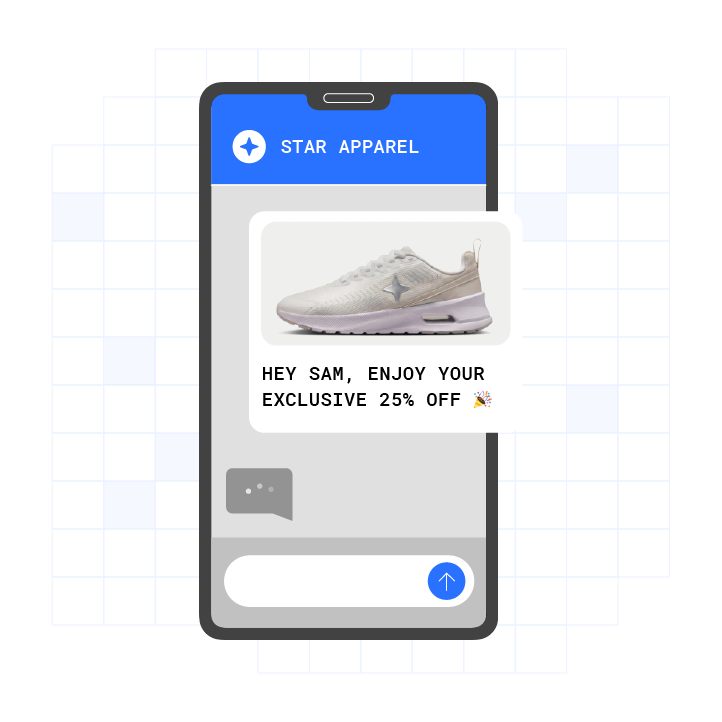
The engagement lift compounds at scale. For operators running 5,000 or more messages per month, the difference between a 5% SMS click-through rate and a 35% RCS click-through rate changes campaign economics. The higher-performing channel turns a break-even program into a measurable pipeline and revenue driver.
High-value use cases for outbound RCS include:
- Appointment reminders with one-tap confirm or reschedule buttons
- Order updates with real-time tracking maps embedded in the message thread
- Lead follow-up with branded carousels and direct reply options
- Abandoned cart recovery with product images and a single-tap checkout link
- Payment requests with in-message Stripe or payment processor integration
RCS is especially valuable for healthcare, insurance, financial services, e-commerce, and franchise networks. Engagement lift across thousands of monthly messages translates directly to revenue and retention.
To see how providers compare on cost, compare plans and rates side by side.
Top RCS Providers Compared: What You’re Actually Buying
Only two major providers publish RCS rates publicly. The rest require a sales conversation. The table below reflects published pricing where available and quote-based where not, with every figure linked to its source.
| Provider | Published Pricing (US Outbound) | US Carrier Coverage | Compliance Support |
|---|---|---|---|
| Twilio | $0.0083/segment (rich text), $0.022/message (rich media), plus carrier pass-through fees | All major carriers via Google Jibe | Self-serve agent registration, 10DLC required for SMS fallback |
| Infobip | Quote-based, conversational session billing available | All major carriers | Managed agent registration, carrier agreements handled |
| AWS End User Messaging | Quote-based, per-message plus session fees | All major carriers | Self-serve via AWS console, 10DLC required for SMS fallback |
| Telnyx | RCS quote-based, benchmarks Basic at SMS parity, Single (rich media) 20-30% higher, Conversational roughly 2x SMS with a 24-hour session window | All major carriers, direct carrier relationships | Itemized carrier fees, agent verification support |
| Sinch | Quote-based, enterprise contracts | All major carriers, direct-to-carrier | Managed registration, enterprise compliance tools |
| Plura AI | Transparent pricing | All major carriers, FCC-licensed carrier | Carrier-level compliance enforcement, 10DLC and agent registration managed |
Plura AI’s differentiator in this comparison is structural. Plura holds its own FCC carrier license, which means branded caller ID is issued at the carrier level rather than through a third-party reseller, and compliance enforcement happens before a message leaves the network. Plura’s AI RCS also includes stateful conversation memory, so a recipient who engaged with an SMS thread at 9 a.m. is recognized when the RCS message arrives at noon. The platform integrates with AI SMS for lead generation and voice channels, giving high-volume operators a single stack rather than a patchwork of point tools.
How to Buy Outbound RCS: Step-by-Step Process
- Assess your volume and use case. Determine monthly message volume, message types (transactional vs. promotional), and whether you need two-way conversational capabilities. This assessment determines provider tier and pricing model.
- Choose a provider. Evaluate based on published pricing, US carrier coverage, compliance support, and whether the provider owns its carrier infrastructure or resells another platform’s. Providers that own their carrier stack can issue branded sender identity and enforce compliance before the message leaves the network.
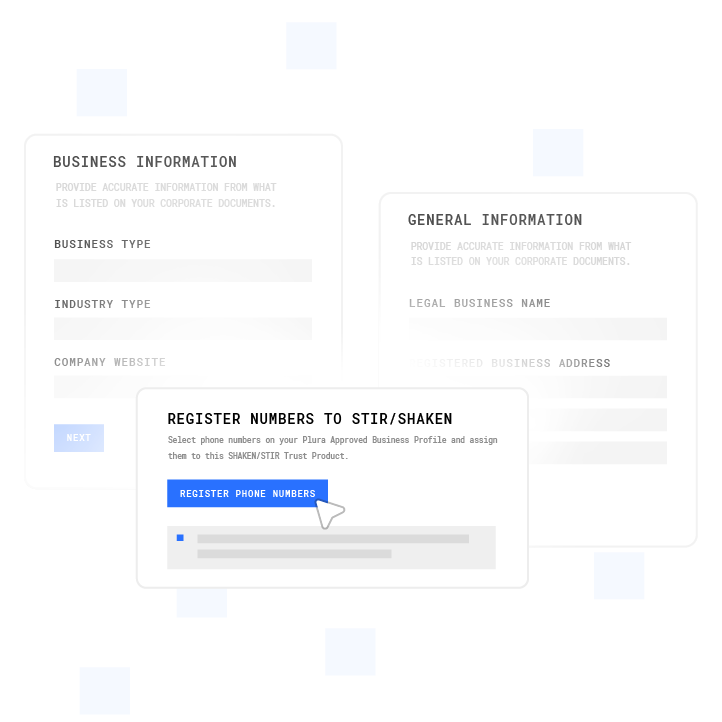
- Complete RCS agent registration. Submit brand assets including logo, legal entity proof, and privacy policy for verification through Google and US carriers. Google-managed launches typically take 1 to 3 business days, and carrier-managed launches take 2 to 3 weeks.
- Ensure 10DLC compliance for SMS fallback. Register your brand and campaign with The Campaign Registry (TCR). Budget 3 to 6 weeks end-to-end. Since February 1, 2025, major US carriers block unregistered 10DLC traffic.2
- Integrate via API. Connect the provider’s outbound API to your CRM or application. Most providers offer REST APIs with webhooks for delivery events including read receipts, taps, and opt-out signals.
- Set up SMS fallback. Configure automatic fallback for recipients whose devices or carriers do not support RCS. Google’s RCS for Business best practices call for a capability check before sending and a fallback path to SMS when RCS is unavailable.
- Test and launch. Run a staged rollout with a small recipient set, verify delivery and read rates per carrier, then scale. Measure RCS and SMS fallback performance separately, because a blended delivered figure hides the fallback rate.
RCS Pricing Explained: What You’ll Actually Pay
Pricing transparency remains the sharpest gap in the RCS market. Most providers require a sales conversation before disclosing rates.
Twilio publishes $0.0083 per segment for rich text and $0.022 per message for rich media, plus carrier pass-through fees ranging from $0.0045 to $0.0062 per segment for rich text and $0.007 to $0.0135 per message for rich media depending on the carrier. Carrier surcharges add roughly 40% to the headline rate and cannot be negotiated away at any volume tier.
Telnyx benchmarks RCS pricing to Infobip’s published framework. Basic is priced similarly to SMS, Single (rich media) runs 20 to 30% higher, and Conversational is roughly twice the SMS rate but includes a 24-hour session window for unlimited exchanges.
Infobip offers conversational billing, charging a single fee for a 24-hour session window instead of per-message charges once a session threshold is met. This model is live in the US as of Q2 2026.
Volume discounts exist across providers but typically require committed-use contracts negotiated through a sales team. Carrier fees are passed through at cost regardless of volume and are not negotiable.
Plura offers transparent pricing with a 90-day opt-out window, and its AI RCS delivers the engagement lift mentioned earlier.
Book a live demo with Plura to see AI RCS in action.
US Carrier Coverage and Compliance: Core Facts
All major US carriers support RCS as of the end of 2024, including AT&T, Verizon, T-Mobile, and UScellular, as well as prepaid and MVNO brands such as Cricket Wireless, Metro by T-Mobile, Visible, Xfinity Mobile, and Boost Mobile. iPhone supports RCS since iOS 18.1, and iOS 26.5 added default cross-platform end-to-end encryption for personal chats. Business (A2P) RCS is encrypted in transit but is not end-to-end encrypted on any carrier.
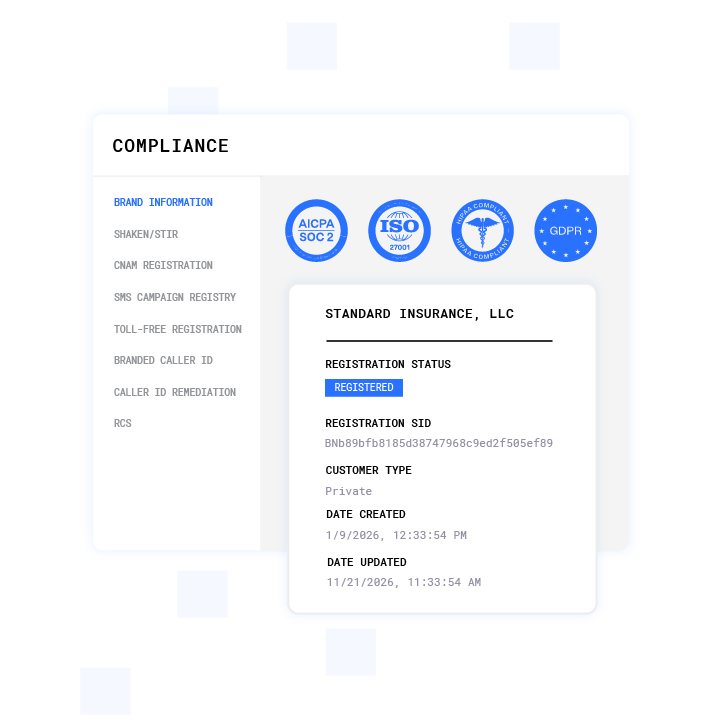
Key compliance considerations for US outbound RCS include:
- RCS agent registration is separate from 10DLC registration. RCS adds a verification layer on top of existing SMS registration, and both are common for campaigns with SMS fallback.
- TCPA (Telephone Consumer Protection Act) applies to RCS exactly as it does to SMS, with statutory damages of $500 to $1,500 per unsolicited message. Operators should consult qualified counsel on their specific obligations.2
- Under FCC rules effective April 2025, opt-out requests should be honored within 10 business days via any reasonable method, not only STOP keywords.
- Consent is per channel. Opting into SMS does not constitute opting into RCS, and records should show which channel the customer agreed to.
- RCS agent registration typically requires a square logo of at least 224×224 pixels, a brand name consistent across all fields, a functional privacy policy that explicitly states how phone numbers are used, and verifiable business contact information.
Plura is an FCC-licensed carrier and enforces compliance at the carrier level, including real-time DNC scrubbing, TCPA-litigator screening, automated quiet-hours enforcement, and immutable consent logging. Customers remain responsible for their own regulatory obligations and downstream compliance posture.
SMS Fallback Strategy: Essential for US Campaigns
A share of any list will always be mid-port, on an old client, on a rooted handset, or on a device that cannot register for RCS, and none of that is visible before sending. SMS fallback is a core requirement for production US campaigns.
Best practice is to design the rich RCS message and its plain-text SMS fallback together from the start. The plain-text version should stand on its own and avoid depending on rich-media elements that will not exist in SMS.
Measure RCS and SMS fallback performance separately after launch. A blended delivered figure hides the fallback rate that needs diagnosing.
Plura’s platform automatically handles fallback to SMS, routing each message to RCS where the handset supports it and to SMS where it does not, with delivery reported per channel.
Common Pitfalls That Still Catch Teams
- Choosing a provider without direct US carrier connections. Direct carrier connections deliver faster throughput and better delivery analytics than aggregated routes, which add latency and reduce delivery confirmation quality.
- Designing RCS and SMS separately. Teams sometimes design rich RCS flows first, then bolt on SMS later. This approach creates broken experiences for fallback users and inconsistent reporting.
- Skipping per-channel reporting. Some teams track a single delivery metric. Without separate RCS and SMS reporting, it becomes hard to diagnose carrier issues or handset gaps.
- Underestimating agent registration time. Google-managed launches take 1 to 3 business days, and carrier-managed launches take 2 to 3 weeks. Teams that wait until campaign week often face delays.
- Not budgeting for carrier fees. Carrier pass-through fees add roughly 40% to headline rates and cannot be negotiated away at any volume tier. Forecasting without these fees understates total cost.
- Sending without verified consent. Purchased lists are prohibited in the RCS ecosystem. Operators should consult qualified counsel on their consent obligations.
Conclusion and Practical Next Steps
Buying outbound RCS is a structured procurement decision. Teams assess volume and use case, choose a provider with US carrier coverage and compliance support, complete RCS agent registration and 10DLC for SMS fallback, integrate via API, configure SMS fallback, test with a staged rollout, and then scale.
The providers most buyers default to, including many Twilio-based API resellers, leave registration, compliance, and fallback management to the customer. A carrier-owned platform like Plura AI handles those layers inside the platform, with FCC-licensed carrier infrastructure, stateful conversation memory across voice, SMS, RCS, and AI webchat, and transparent pricing with a 90-day opt-out window.
For high-volume US operators in healthcare, insurance, financial services, e-commerce, or franchise networks, the decision framework stays straightforward. Verify carrier coverage, confirm compliance support is built into the platform rather than bolted on, and confirm SMS fallback is automatic and reported per channel.
Compare plans and rates side by side.
FAQ: RCS Outbound Service Buying Questions
How much does RCS cost per message?
Pricing varies by provider and message type. Twilio publishes $0.0083 per segment for rich text and $0.022 per message for rich media, plus carrier pass-through fees that add roughly 40% to the headline rate depending on the carrier. Telnyx benchmarks RCS at SMS parity for basic messages, 20 to 30% higher for rich media, and approximately twice the SMS rate for conversational sessions with a 24-hour session window. Infobip uses conversational billing, charging a single session fee for a 24-hour window of unlimited exchanges once a session threshold is met. Most providers require a sales conversation for volume pricing. Carrier fees are passed through at cost and cannot be negotiated away at any volume tier.
What is the RCS agent registration process?
RCS agent registration requires submitting brand assets including a square logo of at least 224×224 pixels, a brand name consistent across all fields, a publicly accessible privacy policy that explicitly states how phone numbers are used, and verifiable business contact information. The submission goes through Google and US carriers for vetting. Google-managed launches typically take 1 to 3 business days when materials are complete and the brand contact responds promptly. Carrier-managed launches take 2 to 3 weeks. Registration is per use case, so an agent approved for transactional messaging does not automatically cover marketing campaigns. Changes to the agent profile, such as updating the brand name or adding new carriers, may trigger a re-review.
RCS vs SMS: which should you use?
RCS delivers the 3x engagement advantage discussed above, with a 35% click-through rate and an 80% read rate compared to SMS. SMS has near-universal reach, predictable pricing, and registration requirements centered on 10DLC. For high-volume US operators, the practical answer is both. Use RCS for branded, interactive messages where the visual layer drives action, and use SMS as the automatic fallback for recipients whose devices or carriers do not support RCS. Design both versions together from the start rather than treating SMS fallback as an afterthought.
Do you need 10DLC for RCS?
Campaigns that include SMS fallback typically rely on 10DLC registration. RCS does not replace 10DLC registration. It sits on top of it, with RCS agent verification as an additional layer above the existing SMS registration. Since February 1, 2025, major US carriers block unregistered 10DLC traffic. Budget 3 to 6 weeks for 10DLC registration end-to-end, including brand registration, campaign review, and carrier approval. If your 10DLC registration is already in place, you only need to complete the RCS agent registration layer.
Which providers support RCS in the US?
All major CPaaS (Communications Platform as a Service) providers support RCS on US carriers, including Twilio, Infobip, AWS End User Messaging, Telnyx, and Sinch. The key differentiator is whether the provider owns its carrier infrastructure or resells another platform’s. Providers that own their carrier stack can issue branded sender identity at the carrier level and enforce compliance before a message leaves the network. Plura AI holds its own FCC carrier license, which means branded caller ID, real-time DNC scrubbing, and compliance enforcement are built into the platform rather than bolted on through third-party services.
1 Plura AI maintains SOC 2, HIPAA, ISO, and GDPR posture as part of its platform infrastructure. References to compliance frameworks in this article describe Plura’s platform capabilities and do not constitute a guarantee that any customer using Plura will themselves be compliant with applicable laws or standards. Customers remain solely responsible for their own regulatory obligations, certifications, consent management, recordkeeping, and the claims they make to their own end users. Consult qualified legal counsel for guidance specific to your use case.
2 This article describes regulatory frameworks at a general level and does not constitute legal advice. Laws and regulations vary by jurisdiction, change over time, and apply differently depending on facts and circumstances. Readers should consult qualified legal counsel before making compliance decisions.
3 Performance figures, customer outcomes, and industry statistics referenced in this article are drawn from cited third-party sources or Plura customer case studies. Individual results vary based on implementation, use case, industry, audience, and execution. Past or aggregate performance is not a guarantee of future results.
4 References to third-party products, services, companies, or research are made for informational and comparative purposes only. Plura AI is not affiliated with, endorsed by, or sponsored by any third party named in this article unless explicitly stated. Trademarks and product names referenced remain the property of their respective owners.
This article is provided for informational purposes only and reflects Plura AI’s understanding at the time of publication. Product capabilities, integrations, and specifications are subject to change. For the most current information, visit plura.ai.
This article was produced with the assistance of AI tools and reviewed by Plura AI prior to publication.