
Written by: Matt Beucler, CEO, Plura AI
Key Takeaways
- Nextiva predictive dialing sits inside the Professional contact-center tier, which is quote-only and does not publish per-agent pricing.
- The dialer uses statistical forecasting to place multiple simultaneous calls, and poor pacing can push abandonment rates above the FCC’s 3% cap.
- Operators bear full TCPA compliance responsibility, including real-time DNC scrubbing and consent documentation.
- Teams that need aggressive pacing, multi-channel stateful memory, or carrier-issued caller ID often outgrow Nextiva’s feature set.
- Plura AI provides an AI-native, carrier-owned alternative with real-time compliance support and shared conversation memory across voice, SMS, RCS, and webchat.
Where Nextiva Predictive Dialer Lives in the Product and Pricing
The Nextiva predictive dialer is an outbound feature inside Nextiva’s contact-center product. It is not a standalone outbound platform. Predictive dialing is gated behind the Professional contact-center tier or higher, and Nextiva publishes that tier as “Contact Sales” rather than a per-agent rate. Buyers cannot self-serve pricing for the tier that unlocks predictive dialing. The self-serve Essential contact-center tier starts at $75/agent/mo and does not include dialing modes. No Small Business plan (Core $15/user/mo, Engage $25/user/mo, Scale $75/user/mo) lists progressive or predictive dialing.
The pricing ambiguity is structural, not accidental. Nextiva’s pricing matrix lists “Dialing Modes (Progressive, Predictive, Quarterback)” under Campaign and Outbound Management as unavailable on the Essential plan and available starting with Professional. Both Professional and Premium are quote-only, which means the $75/agent/mo figure often cited for Nextiva is actually the Essential contact-center tier, the one that explicitly excludes dialing modes. Buyers who arrive at that number expecting predictive dialing will need a separate sales conversation before they can confirm what they will actually pay.
How the Nextiva Predictive Dialer Works in Practice
The Nextiva predictive dialer uses historical connection data, agent availability, and call duration to estimate when an agent will become free. It then dials multiple numbers before the current call ends so a live connection is ready the moment an agent is available.
The core mechanics, as documented in Nextiva’s auto-dialer guide, operate as follows:
- The dialer places simultaneous calls across multiple lines, calibrated to predicted agent availability.
- A statistical algorithm forecasts when each agent will finish based on answer rates and average talk time.
- Busy signals, no-answers, and answering-machine pickups are filtered before routing to an agent.
- Live connections route to available agents. Calls answered before an agent is free become abandoned calls.
Nextiva’s documentation notes that poor configuration can create abandoned or dropped calls when a customer answers before an agent is available. It recommends monitoring abandonment rate per campaign and reviewing agent availability, dialing pace, average handle time, and list quality when that rate rises.
Dialing Modes Explained: Predictive, Progressive, Power, Preview, and Quarterback
Nextiva’s pricing matrix and auto-dialer guide document four dialing modes in its contact-center product, plus a fifth mode called “Quarterback” listed on the pricing matrix.
- Predictive: Dials multiple numbers simultaneously per agent using availability forecasts. It delivers high agent utilization and carries higher abandonment risk if misconfigured. It is available on Professional tier and above.
- Progressive: Dials one number per available agent automatically when an agent becomes free. It produces fewer abandoned calls than predictive and lower throughput. It is available on Professional tier and above.
- Power: Calls one number at a time and places the next call only when an agent finishes the current one. Agents have more control, and there is no simultaneous multi-line dialing. It is available on Professional tier and above.
- Preview: Displays the next contact’s information before dialing, so agents can review prior interactions and account details before deciding whether to place the call. It fits complex B2B sales and high-value accounts.
- Quarterback: Appears on Nextiva’s pricing matrix as a distinct mode. Nextiva’s public documentation does not elaborate on its mechanics beyond the matrix listing.
These modes represent different tradeoffs between throughput and abandonment risk. Plura AI’s Predictive Dialer targets teams that want aggressive pacing without those tradeoffs, using stateful conversion signals instead of generic availability forecasts.
Regulatory Framework Around Predictive Dialing
Most search results about the Nextiva predictive dialer skip the federal regulatory framework that operators actually work under. That gap creates exposure for teams that assume the vendor handles compliance on their behalf.
The Telephone Consumer Protection Act (TCPA), codified at 47 U.S.C. § 227, addresses autodialed calls, prerecorded messages, and texts to cell phones.2 The Federal Communications Commission (FCC) implements the TCPA through rules at 47 C.F.R. § 64.1200.2 Two provisions are directly relevant to predictive dialing operations:
- Abandonment rate cap: 47 C.F.R. § 64.1200(a)(7) caps abandoned calls at 3% of answered calls per campaign over a rolling 30-day period. A call is treated as abandoned when a live person answers and no agent connects within two seconds of the completed greeting. The 30-day window is rolling and tied to each campaign.
- Consent: Predictive dialing to cell phones for telemarketing involves prior express written consent under 47 U.S.C. § 227(b)(1)(A), independent of the abandonment rate rule.
Statutory damages under 47 U.S.C. § 227(b)(3) run $500 per violation, up to $1,500 for willful or knowing violations, with each individual call counting as a separate violation.2 TCPA class action settlements have ranged from under $1 million for small classes to over $75 million for large consumer-facing operations.
Compliance remains the operator’s obligation. Nextiva’s auto-dialer documentation states that compliance tools do not transfer legal responsibility from the business to the software provider. Nextiva recommends scrubbing contact lists against the National Do Not Call (DNC) Registry every 31 days and notes that businesses must follow applicable TCPA requirements, obtain required consent, and document their calling practices.
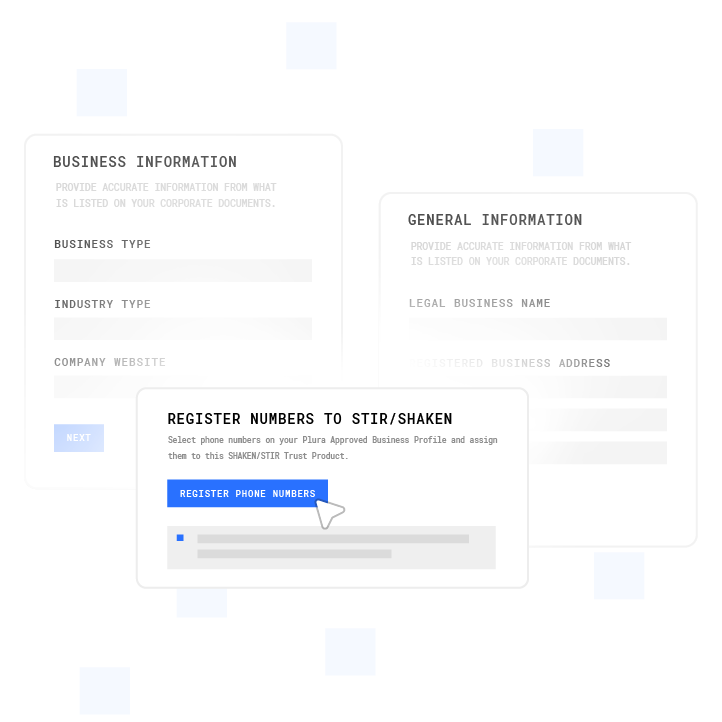
A defensible outbound operation typically includes timestamped consent records, real-time DNC scrubbing before each dial, quiet-hours enforcement by the called party’s local time zone, and per-campaign abandonment-rate monitoring. Operators should consult the regulation directly and engage qualified counsel on their specific obligations.
Operational Tradeoffs in Predictive Dialing
Predictive pacing introduces structural tradeoffs that configuration cannot remove entirely. Teams that understand these tradeoffs can keep campaigns cleaner and protect number reputation.
- Abandonment-rate spikes: When pacing is set too aggressively, calls connect faster than agents free up. Nextiva’s auto-dialer guide defines the call abandonment rate as the measure of calls answered by a customer when no agent is available. It advises businesses to monitor the rate for every predictive campaign and to review agent availability, dialing pace, average handle time, and list quality when abandonment increases.
- Voicemail detection accuracy: Nextiva’s answering-machine detection classifies a voicemail and then triggers one of five actions: leave a prerecorded message, mark the contact for a later callback, create a follow-up task, update the CRM record, or send an SMS when the campaign permits it. Detection accuracy varies by list composition and call environment.
- Agent idle time when prediction overshoots: If the algorithm over-predicts agent availability, calls queue without an agent ready. WFM Labs’ outbound operations wiki documents predictive dialing agent utilization at 75–90%, versus 60–80% for power dialing, and notes that over-prediction produces nuisance calls that count as abandoned under FTC rules.3
- Dropped-call experience: A customer who answers and hears silence before disconnection experiences both a compliance event and a brand event. Nextiva warns that poor configuration can create abandoned or dropped calls when a customer answers before an agent becomes available.
These are inherent tradeoffs of predictive pacing. Every predictive dialer on the market operates under the same basic pattern: more aggressive pacing increases talk time per agent-hour and increases abandoned calls per campaign.
How Nextiva Compares to Five9, Dialpad, RingCentral, and Aircall4
To understand where Nextiva’s dialer fits in the market, it helps to compare its published capabilities and pricing with four common alternatives. The comparison below uses each vendor’s current published documentation.
Five9 publishes five dialing modes: Predictive, Power, Progressive, Preview, and Manual Touch Mode, according to Five9’s outbound capabilities page. Five9 prices seats per concurrent user rather than per named seat, with a 50-seat minimum across all plans. Two tiers are published: Digital at $119/concurrent user/mo and Core at $159/concurrent user/mo. The remaining three tiers are quote-only.
Dialpad delivers outbound through Dialpad Dialer, available only to organizations with Dialpad Sell Premium licenses. Dialpad’s published help documentation (last updated May 12, 2026) describes it as a progressive outbound dialer with rule-based calling windows, voicemail detection, DNC scrubbing with an audit trail, and Salesforce integration. Dialpad Dialer applies customer-defined rules for when to call, how often to call, and who not to call.
RingCentral publishes preview, progressive, and predictive dialing in RingCX Standard at $75/user/mo ($65 billed yearly), according to published pricing comparisons. RingCX includes a drag-and-drop script builder and supervision features. No published seat minimum appears in current documentation.
Aircall offers a Power Dialer from its Professional plan and does not publish a predictive dialer, according to Vantage Point’s May 2026 telephony comparison. Aircall Professional is published at $70/user/mo monthly or $50/user/mo annually.
When Teams Outgrow Nextiva and What an AI-Native, Carrier-Owned Option Provides
Nextiva’s predictive dialer functions as a solid outbound feature inside a broader contact-center suite. Teams already standardized on Nextiva for unified communications (UCaaS) that need moderate outbound pacing inside that same suite often find it sufficient. Four signals suggest a team has reached its ceiling:
- Pacing needs to move to aggressive levels without abandonment blowback, and the current configuration cannot hold the 3% cap at target dial rates.
- Voice, SMS, Rich Communication Services (RCS), and webchat need to reach the same lead with shared memory instead of separate campaigns from separate platforms.
- Branded caller ID needs to be issued at the carrier level rather than inherited from a reseller, because “Spam Likely” labels are suppressing connect rates before the phone rings.
- Per-seat pricing is punishing scale, and per-conversation economics would improve unit economics.
Plura AI’s Predictive Dialer is built for teams that have hit those walls. The dialer decides who to call next using stateful conversion signals such as historical answer rates, prior negotiation outcomes, and prior offer-acceptance bands. This approach differs from generic availability forecasts. Calls flow over Plura’s own FCC-licensed carrier with branded caller ID and STIR/SHAKEN (Secure Telephone Identity Revisited/Signature-based Handling of Asserted information using toKENs) authentication.1 Every outbound contact is checked against federal and state DNC registries in real time before dial.1
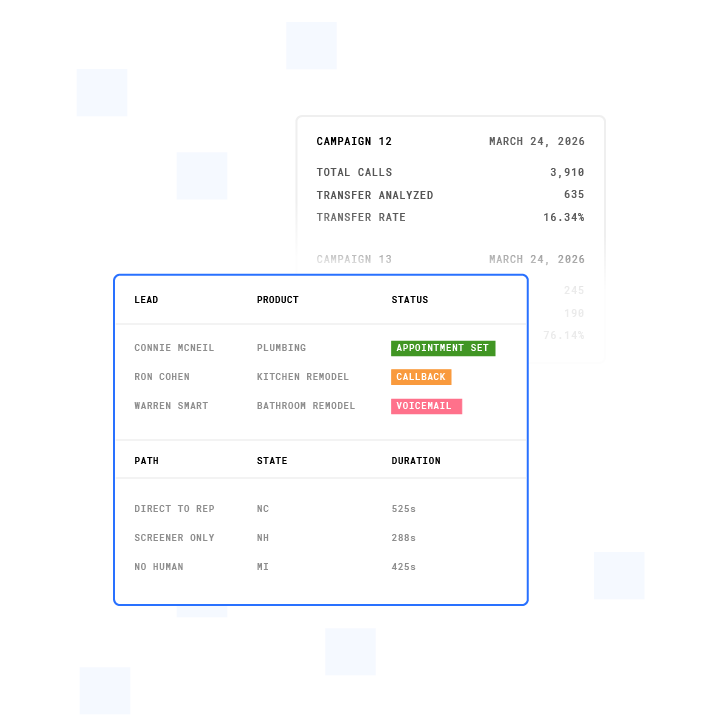
Plura’s AI SMS, AI RCS, and AI Webchat share a Stateful Conversation Database with AI Voice. A lead who texted at 9 a.m. is the same lead when the call comes at noon, with no re-introduction and no lost context. Plura supports compliance with 50+ state rule sets on every outbound contact and maintains a 99.9% uptime SLA.3
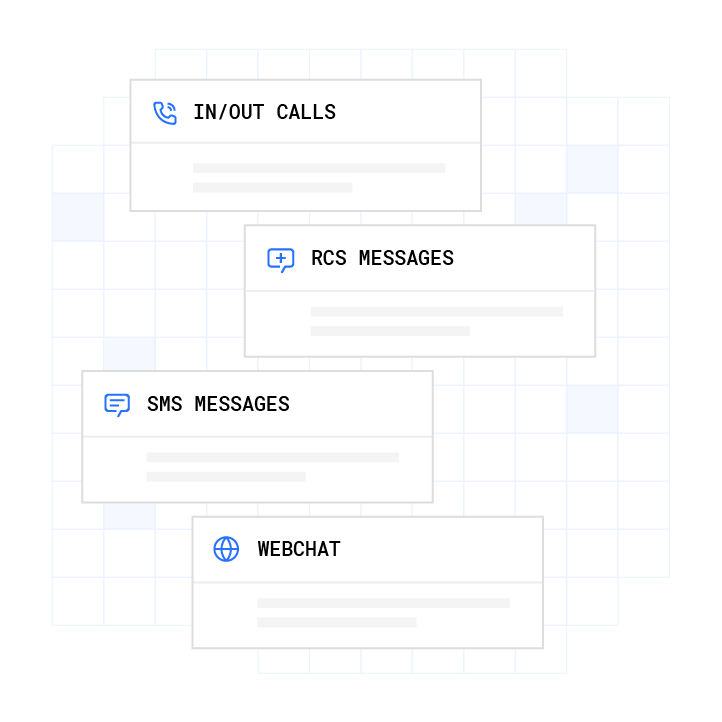
Plura is not a wrapper on a third-party Communications Platform as a Service (CPaaS). It owns the carrier stack, so branded caller ID is issued at origination, and compliance controls apply before the call leaves the network.
See the AI Predictive Dialer in Action and review how carrier-owned infrastructure supports pacing, compliance, and connect rates.
Frequently Asked Questions
How Does a Predictive Dialer Work?
A predictive dialer places multiple outbound calls simultaneously, using an algorithm that forecasts when each agent will finish their current call based on historical answer rates and average talk time. When a live person answers, the call routes to the next available agent. Calls that connect before an agent is free become abandoned calls, which is why pacing configuration and abandonment-rate monitoring sit at the center of running a predictive campaign within regulatory limits.
What Is the Difference Between a Predictive Dialer and an Auto Dialer?
An auto dialer is the broad category covering any system that dials numbers automatically without manual input. A predictive dialer is a specific type of auto dialer that uses statistical modeling to dial multiple numbers simultaneously and predict agent availability. Other auto dialer types include power dialers (one call per agent at a time), progressive dialers (one call per available agent, placed automatically), and preview dialers (agent reviews contact before the call is placed). The key distinction is that predictive dialing dials ahead of agent availability, while power and progressive dialing wait for an agent to be free before placing the next call.
Are Predictive Dialers Illegal?
Predictive dialers operate within federal and state regulatory frameworks that operators are responsible for following. The TCPA at 47 U.S.C. § 227 and the FCC’s implementing rules at 47 C.F.R. § 64.1200 address autodialed calls, consent requirements, and abandonment-rate limits. As noted earlier, the FCC’s 3% abandonment cap applies per campaign over a rolling 30-day period. State laws in Florida, Washington, California, and others layer additional requirements on top of the federal floor. Operators should consult the regulation directly and engage qualified counsel on their specific obligations.
How Much Does a Predictive Dialer Cost?
Pricing varies significantly by vendor and tier. Nextiva’s predictive dialer is available on the Professional contact-center tier, which is quote-only, so no per-agent rate is published. As mentioned, the Essential tier’s $75/agent/mo rate does not include dialing modes. Five9 publishes two tiers at $119 and $159 per concurrent user per month, with three additional tiers quote-only and a 50-seat minimum. RingCentral RingCX Standard, which includes predictive dialing, is published at $75/user/mo ($65 billed yearly). Dialpad Dialer requires a Dialpad Sell Premium license; pricing is not published on a per-dialer basis. Aircall’s Power Dialer is available from its Professional plan at $50/user/mo annually. Published rates typically exclude implementation fees, CRM connectors, AI consumption, and usage overages.
What Is the Difference Between a Power Dialer and a Predictive Dialer?
A power dialer calls one number at a time and places the next call only when an agent finishes the current one. A predictive dialer dials multiple numbers ahead of agent availability using statistical forecasts. That approach increases live connects per agent-hour and introduces abandoned calls when connections outpace agent availability. Plura AI’s Predictive Dialer uses stateful conversion signals to decide who to call next, prioritizing contacts most likely to convert instead of dialing indiscriminately at maximum volume.
What Is the Best Dialer for High-Volume Outbound in the USA?
The right dialer depends on three operational variables: pacing requirements, compliance infrastructure, and channel coverage. Teams running moderate outbound volume inside an existing Nextiva contact-center deployment may find Nextiva’s Professional tier sufficient. Teams with aggressive pacing needs, multi-channel requirements (voice plus SMS plus RCS plus webchat on the same lead), or carrier-level caller ID demands should evaluate platforms that own their carrier stack rather than routing through a third-party CPaaS. Plura’s AI Predictive Dialer runs on Plura’s own FCC-licensed carrier, supports real-time DNC scrubbing before each dial, and shares a Stateful Conversation Database across all four channels. Compare plans and rates side by side on our pricing page.
Get a Demo Tailored to Your Outbound Volume and see how carrier ownership and AI-native routing affect your connect rates and risk profile.
Conclusion: Where Nextiva Fits and When Plura Becomes the Better Fit
Nextiva’s predictive dialer works well as an outbound feature for teams already standardized on Nextiva for UCaaS or contact center that need moderate outbound pacing inside that suite. It aligns with organizations that want a single vendor covering unified communications and outbound dialing at manageable volume.
Teams that should evaluate alternatives typically share four characteristics. They need aggressive pacing without abandonment blowback. They need voice, SMS, RCS, and webchat reaching the same lead with shared memory. They need branded caller ID issued at the carrier level rather than inherited from a reseller. They also need per-conversation economics instead of per-seat pricing that scales linearly with headcount.
The evaluation criteria that matter for high-volume outbound are pacing control, abandonment management, channel coverage, carrier ownership, and compliance controls before dial. Nextiva’s Professional tier addresses pacing and abandonment at moderate scale. It does not address carrier ownership or cross-channel stateful memory. Plura’s AI Predictive Dialer addresses all five, running on FCC-licensed AI contact center infrastructure with real-time DNC support, STIR/SHAKEN authentication, and a Stateful Conversation Database shared across AI Voice, AI SMS, AI RCS, and AI Webchat.
Compare plans and rates side by side on Plura’s pricing page. Run your numbers through Plura’s calculator to check your ROI in real time at plura.ai/calculator.3
Schedule a Walkthrough of Carrier-Owned Infrastructure to evaluate whether AI-native outbound fits your operation’s pacing, compliance, and channel requirements.
1 Plura AI maintains SOC 2, HIPAA, ISO, and GDPR posture as part of its platform infrastructure. References to compliance frameworks in this article describe Plura’s platform capabilities and do not constitute a guarantee that any customer using Plura will themselves be compliant with applicable laws or standards. Customers remain solely responsible for their own regulatory obligations, certifications, consent management, recordkeeping, and the claims they make to their own end users. Consult qualified legal counsel for guidance specific to your use case.
2 This article describes regulatory frameworks at a general level and does not constitute legal advice. Laws and regulations vary by jurisdiction, change over time, and apply differently depending on facts and circumstances. Readers should consult qualified legal counsel before making compliance decisions.
3 Performance figures, customer outcomes, and industry statistics referenced in this article are drawn from cited third-party sources or Plura customer case studies. Individual results vary based on implementation, use case, industry, audience, and execution. Past or aggregate performance is not a guarantee of future results.
4 References to third-party products, services, companies, or research are made for informational and comparative purposes only. Plura AI is not affiliated with, endorsed by, or sponsored by any third party named in this article unless explicitly stated. Trademarks and product names referenced remain the property of their respective owners.
This article is provided for informational purposes only and reflects Plura AI’s understanding at the time of publication. Product capabilities, integrations, and specifications are subject to change. For the most current information, visit plura.ai.
This article was produced with the assistance of AI tools and reviewed by Plura AI prior to publication.