
Written by: Matt Beucler, CEO, Plura AI
Key Takeaways
- Predictive dialer best practices rest on three pillars: strict abandonment control under 3%, dynamic pacing that adjusts every few seconds, and rigorous list hygiene to keep answer rates consistent.
- Abandonment is measured against live answers, not total dials. Operators often set an internal ceiling of 2.5% to preserve a compliance buffer.
- Fixed dial ratios break when lead populations change. Stateful, real-time pacing driven by live answer rate, handle time, and agent availability prevents overshoot and protects that buffer.
- Segmenting campaigns by lead age and type, scrubbing DNC lists before every launch, and prioritizing callbacks over cold records keeps pacing accurate and conversion rates high.
- Plura AI’s AI Predictive Dialer embeds carrier-level controls, real-time DNC/TCPA scrubbing, and stateful pacing so teams can focus on performance instead of regulatory risk.
How To Keep Your Predictive Dialer Abandonment Rate Under 3%
The FTC Telemarketing Sales Rule (16 CFR Part 310) and FCC 47 CFR § 64.1200 describe a safe harbor framework for predictive dialing.2 The key conditions include: no more than 3% of calls answered by a live person may be abandoned, measured per campaign over each successive 30-day period. A call is treated as abandoned when no live sales representative connects within two seconds of the called person’s completed greeting. Unanswered calls must ring at least 15 seconds or four rings before disconnection. When no agent is available within two seconds, a prerecorded identification message must play. Consult the regulations directly or qualified counsel for guidance on your specific obligations.
The denominator problem is where many operations go wrong. Abandonment is measured against live answers, not total dials. A campaign placing 100,000 dials with 22,000 live answers has a legal ceiling of 660 abandoned calls, not 3,000. That gap is roughly five times, which means a campaign that reads 0.9% against dials may actually be at 4.1% against live answers.
Decision Rule: Set an internal ceiling at 2.5% to preserve room for pacing surprises. Experienced operators treat 3% as a fence because intraday variance can carry a campaign through the ceiling before the 30-day rolling average catches up.
Plura AI’s AI Predictive Dialer supports compliance through real-time DNC (Do Not Call) scrubbing, TCPA (Telephone Consumer Protection Act) litigator screening, automated quiet hours, and immutable consent logging inside the platform before each outbound contact. Plura holds SOC 2, HIPAA, and ISO certification and supports SHAKEN/STIR caller ID verification, TCPA compliance, and DNC compliance.1 Plura provides the infrastructure, and customers own their downstream compliance posture.
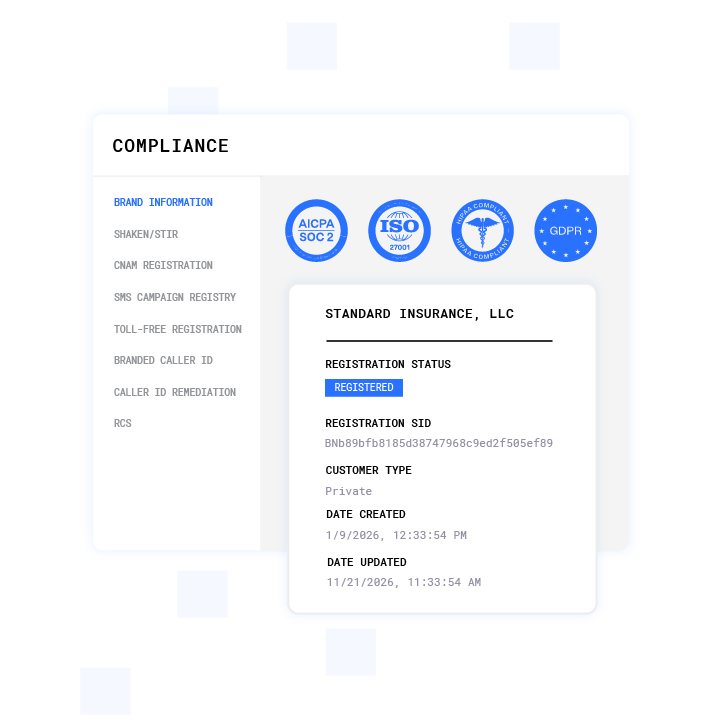
See Carrier-Level Abandonment Controls In Action to watch the AI Predictive Dialer manage the 3% ceiling before a call leaves the network.
Dynamic Pacing For Predictive Dialers
Effective abandonment control depends on pacing that reacts in real time to live conditions. A predictive dialer’s algorithm reads live answer rate (ASR), average handle time (AHT), after-call work (ACW), and agent availability, then adjusts the dial ratio every five to fifteen seconds. On a residential calling list, ASR ranges from 10% to 35% depending on list quality, time of day, and how recently numbers were scrubbed. At 15% ASR, roughly six to seven dials are needed to produce one answered call.
A fixed ratio breaks as soon as the lead population shifts. Fresh data answers more, so a pace tuned against a tired list overshoots when a new file drops. Midday shrinkage from breaks, huddles, and long wraps compounds the effect. The algorithm cannot tune accurately for a population it has not yet measured.
Decision Rule: Let the algorithm run on steady lists with a day or more of dialing history. Reserve manual caps for fresh lists with no history, the first 30 to 60 minutes after campaign start, and days when active agent counts swing. AMD (Answering Machine Detection) sensitivity feeds the same pacing logic. A false positive rate of even 2% can meaningfully erode the compliance buffer on a large campaign because every live person misclassified as a machine becomes an abandoned call and also misses the safe harbor message condition.
Plura’s AI Predictive Dialer uses stateful conversion signals, historical answer rates, and prior negotiation outcomes to decide who to call next. The system adjusts pacing in real time instead of relying on a static ratio.
List Hygiene And Campaign Segmentation
List composition feeds the pacer, so mixed populations create unstable pacing. Mixing new leads, callbacks, aged leads, and existing customers in one dialing pool breaks pacing because each population has a different answer rate. The pacer cannot optimize for all of them simultaneously. A five-minute-old lead has a 400% higher connect rate than a 24-hour-old lead, so a blended pool produces an average answer rate that is wrong for every segment inside it.
Randomizing records within each segment smooths contact-rate swings caused by geographic or demographic clustering. Scrubbing against DNC registries before each campaign launch aligns with the framework described in 47 CFR § 64.1200(c)(2)(i)(D), which describes using a version of the national registry obtained no more than 31 days prior to any call. Consult the regulation or qualified counsel for your specific obligations.
Decision Rule: Run separate campaigns for fresh leads (under 24 hours), aged leads (7 or more days), callbacks, and existing customers. Abandonment is measured per calling campaign, so a new-data campaign running hot cannot be offset by a customer-base campaign running cold, and merging campaigns in a reporting layer does not merge them in the regulator’s eyes.
Plura’s AI Predictive Dialer includes real-time DNC scrubbing and TCPA litigator screening as built-in platform capabilities, applied before each outbound contact.
How To Protect Caller Reputation And Avoid Spam Labels
Caller reputation now shapes contact rate as much as pacing. Spam labels come from carrier analytics engines that score per-number behavior such as attempt volumes, time-of-day spread, call durations, answer rates, and complaint marks. A stable pool of DIDs (Direct Inward Dial numbers) with honest pacing builds history in your favor. Rotating hundreds of numbers daily reads as snowshoeing to most models regardless of attestation level.
STIR/SHAKEN (Secure Telephone Identity Revisited / Signature-based Handling of Asserted information using toKENs) is the FCC’s caller-ID authentication framework that describes how U.S. voice service providers sign outbound calls with their own certificates. STIR/SHAKEN verifies that the caller is entitled to use the number displayed, but it does not guarantee that downstream carriers will avoid spam labeling. Attestation becomes one input among several in carrier analytics models.
iOS call screening has also shifted outbound math. Calls that present without a recognizable identity are increasingly intercepted before they ring through, which reduces effective contact rate even when pacing is tuned correctly.
Decision Rule: Keep traffic predictable and low-drama. Use stable DID pools, honest pacing, proper retirement of burned numbers, and weekly label monitoring per DID. Register every outbound DID and business identity through the Free Caller Registry, check labels weekly per DID from real handsets or a monitoring service, and watch carrier logs for SIP 603+ rejections.
Plura issues branded caller ID directly through its FCC-licensed carrier and runs STIR/SHAKEN authentication on every outbound call. Because Plura owns its carrier stack rather than routing through a third-party CPaaS (Communications Platform as a Service), caller ID is issued at the carrier level and controls are applied before the call leaves the network. Learn more about the AI Predictive Dialer.
Callback Priority And Lead Scoring
Callback handling and lead scoring determine which conversations your team has first. A requested callback outranks a cold record on three dimensions: the lead has already expressed interest, the answer rate is higher, and the conversation starts warmer. According to InsideSales.com’s 2021 Lead Response Study, conversion rates drop by 8x after the first five minutes, so a callback that sits in queue behind cold records loses value in real time.
Scoring leads before dialing uses prior negotiation outcomes, historical answer rates, and enrichment signals to rank the dialable pool. AI-driven lead handling has produced measurable conversion improvements when scoring is applied before the first dial rather than after the fact.
Decision Rule: Callbacks first, then scored fresh leads, then aged leads. Keep cold records behind any requested callback in the queue.
Plura’s AI Predictive Dialer uses AI Lead Intelligence enrichment across 30 or more data sources and stateful conversation memory to prioritize the contacts most likely to convert. Prior negotiation outcomes inform each dialing decision.
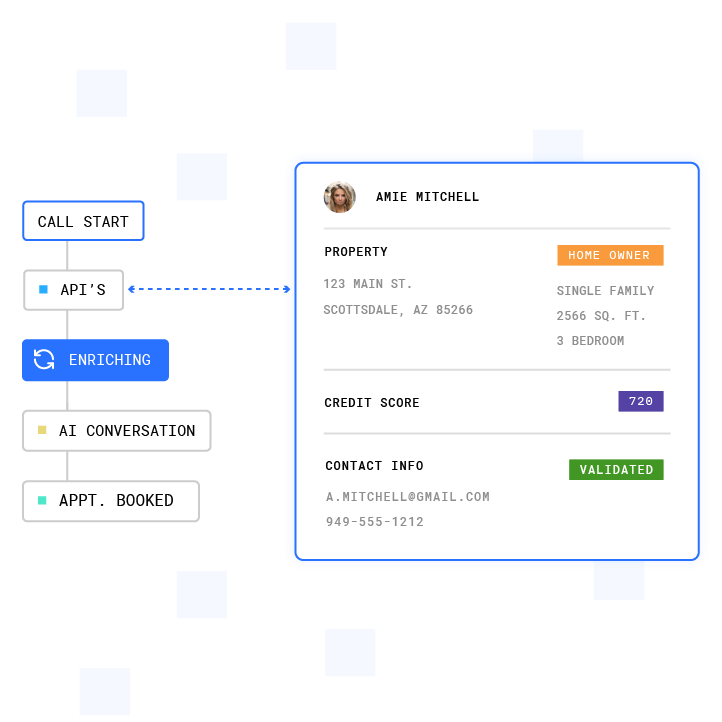
See Stateful Lead Scoring And Callback Priority Live to understand how the platform sequences your next dials.
The Metrics That Actually Matter For Predictive Dialer Performance
Predictive performance improves when leaders track outcome and risk, not just activity. Calls per hour functions as a vanity metric because it shows volume without showing quality or compliance exposure. A campaign can hit 120 dials per agent-hour and still produce fewer qualified conversations than a campaign at 80 if list quality, AMD accuracy, or pacing discipline is off. A useful metric framework separates KPIs into efficiency, quality, outcome, and risk/governance instead of collapsing everything into a single volume number.
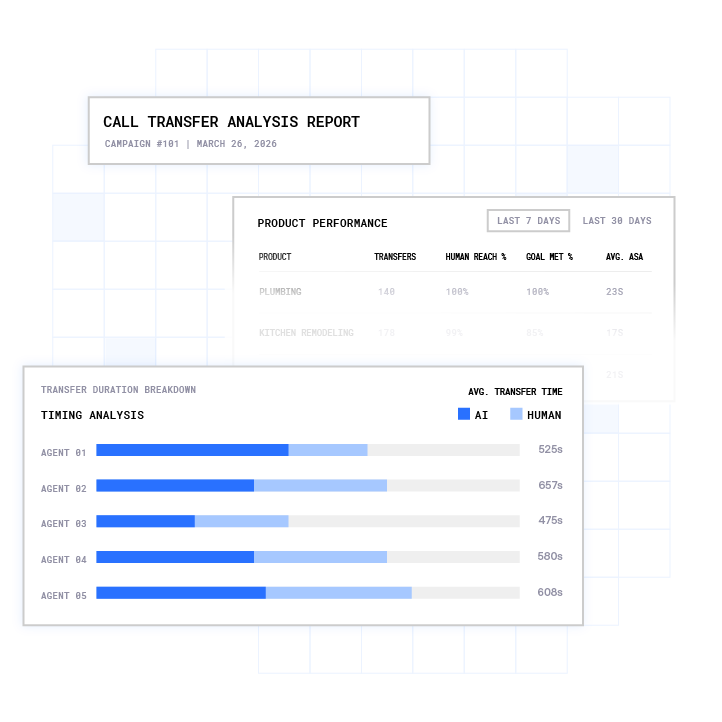
Typical outbound targets include a right-party contact (RPC) rate of 8 to 20%, contacts per hour of 4 to 12 depending on average handle time, a contact rate of 15 to 35% depending on list quality, and an abandonment rate under 3% as the regulatory ceiling. Agent utilization on a well-tuned predictive floor often runs in the high 70s to mid 80s percent.
Decision Rule: Monitor five numbers hourly:
- Abandon rate (abandoned calls divided by live answers, not total dials)
- Live answer rate trend
- Occupancy
- Connects per agent hour
- Dialable records remaining (checked at start of day and again by early afternoon)
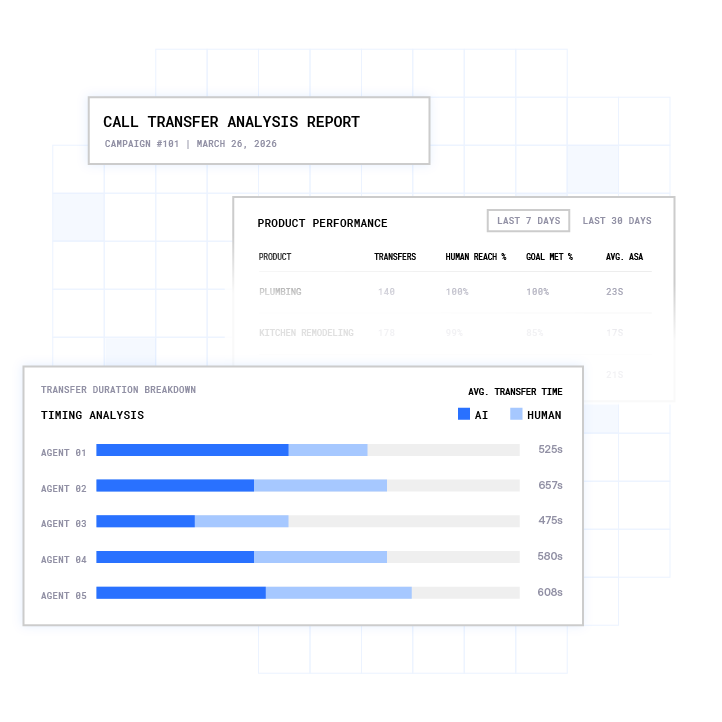
Plura’s platform delivers under 5 seconds to first contact, 3x average ROI in 90 days, 47% pipeline growth, and 90% faster lead-response time.3 Run Your Numbers Through Plura’s ROI Calculator to check your cost savings in real time. Internal studies show that 88% of outbound effort often goes unanswered without a platform like Plura3, driven by manual SDR queues, time-zone gaps, and humans who can only work one channel at a time.
Predictive Dialer Vs. Power Dialer Vs. Progressive Dialer
Dialing mode should match floor size, list type, and risk tolerance. The table below highlights how predictive, power, and progressive modes differ on pacing logic, compliance exposure, and best-fit campaign type so leaders can align architecture with their outbound strategy.
| Dialing Mode | Pacing Logic | Compliance Exposure | Best-Fit Campaign |
|---|---|---|---|
| Predictive | Dials multiple lines per available agent (2:1 to 5:1). Algorithm predicts agent availability every 5 to 15 seconds using live ASR, AHT, and agent count. | Abandonment exposure with a 3% ceiling against live answers. Safe harbor conditions under 47 CFR § 64.1200(a)(7) apply. | Dedicated outbound floors with 15+ agents working cold lists. |
| Power | Dials one line per available agent immediately after hangup. No prediction and no dialing ahead. | Pacing-driven abandonment is structurally zero. AMD false positives remain a risk and count against FCC limits. | High-value, low-volume prospects where preparation matters and deal size often exceeds $10,000 ACV. |
| Progressive | Dials one line per available agent at campaign level and holds the ratio near 1:1 to confirm agent availability before any call connects. | Pacing-driven abandonment is structurally zero. AMD false positives still exist. | Blended inbound/outbound teams and smaller floors of 5 to 15 agents. |
Predictive dialing fits dedicated outbound floors with 15 or more agents working cold lists, where the statistical model has enough volume to pace accurately. Power dialing fits high-value, low-volume prospects where the cost of a missed connection outweighs the efficiency gain from multi-line dialing. Progressive dialing fits blended inbound/outbound teams and smaller floors where pacing stability matters more than maximum throughput. Plura’s AI Predictive Dialer is built for high-volume outbound floors where stateful pacing and carrier-level controls are operational requirements.
Frequently Asked Questions About Predictive Dialer Best Practices
Are Predictive Dialers Illegal?
Predictive dialers operate within a safe harbor framework described in the FTC Telemarketing Sales Rule (16 CFR Part 310) and the FCC’s rules under 47 CFR § 64.1200. The safe harbor sets specific conditions:
- Abandonment of no more than 3% of calls answered by a live person per campaign per 30-day period
- A two-second connection window after the called person’s completed greeting
- A minimum ring time of 15 seconds or four rings
- A prerecorded identification message when no agent is available in time
- Records that demonstrate how these conditions were met
Missing any single condition affects safe harbor protection. State laws in Florida, Oklahoma, Washington, and others describe additional requirements that vary by jurisdiction.2 Consult the regulations directly or qualified counsel for guidance on your specific situation.
What Are the Common Problems With Auto Dialers?
Four operational problems appear most often: abandoned calls, spam labeling, list quality degradation, and pacing misconfiguration. Abandoned calls occur when the algorithm overshoots and more calls connect than agents can handle. Spam labeling appears when carrier analytics engines score per-number behavior negatively, often from high attempt volumes, short call durations, or complaint marks. List quality degrades when records are not scrubbed against DNC registries, when disconnected numbers are recycled, or when populations with different answer rates are mixed in one pool. Pacing misconfiguration often sits underneath the others because a ratio set for a tired list overshoots when fresh data drops, and a ratio left unchanged through midday shrinkage compounds the problem. Operating discipline addresses all four through internal abandonment ceilings, stable DID pools, segmented campaigns, and hourly metric monitoring.
What Are the Key Differences Between a Predictive Dialer and a Power Dialer?
A predictive dialer dials multiple lines per available agent simultaneously and uses a real-time algorithm to predict when an agent will be free. This approach increases agent utilization but introduces abandonment risk when the prediction overshoots, so the 3% ceiling against live answers becomes a central constraint. A power dialer dials one line per available agent immediately after the agent hangs up, with no prediction and no dialing ahead. Because a live agent waits whenever a call connects, pacing-driven abandonment does not occur, and the remaining exposure comes from AMD false positives. The comparison table above summarizes these differences across pacing logic, compliance exposure, and best-fit campaign type.
How Do Predictive Dialers Work?
A predictive dialer’s pacing algorithm reads live answer rate, average handle time, after-call work time, and agent availability, then dials ahead of the moment an agent frees up. The base dial ratio is approximately the inverse of the live connect rate: a list connecting at 25% requires roughly four dials to generate one conversation. The algorithm recalculates every five to fifteen seconds, raising the ratio when agents sit idle and lowering it when abandonment approaches the configured ceiling. AMD classifies answered calls within one to three seconds of audio to filter voicemails, busy signals, and disconnected numbers before routing to agents. For a deeper definition, see Plura’s glossary.
How Do You Keep Abandon Rate Down?
The 2.5% internal ceiling described earlier is the starting point. The harder work involves tuning AMD sensitivity and segmenting lists so the pacer is not fighting mixed answer rates. Hourly monitoring of abandonment, answer rate, and occupancy keeps pacing changes close to real time. Two weeks at 5% abandonment requires the rest of the 30-day window near 1% to recover within the legal measurement period. That math illustrates why leaders protect their buffer aggressively.
What Is the Minimum Number of Agents for Predictive Dialing?
Many compliance-focused vendors set eight to ten agents as the practical minimum for predictive mode. Below eight agents, statistical variance in simultaneous call-connect timing becomes too unpredictable, and a random cluster of simultaneous answers can overwhelm available agents and spike the abandonment rate above 3% faster than the algorithm can correct. Fifteen or more agents provide enough smoothing through the law of large numbers for the pacing model to function reliably. For teams below eight agents, progressive or power dialing often produces steadier results because the 1:1 ratio removes pacing-driven abandonment.
How Does Plura AI Handle Predictive Dialer Compliance?
Plura’s AI Predictive Dialer supports compliance through in-platform controls applied before each outbound contact. These controls include real-time DNC scrubbing against federal and state registries, TCPA litigator screening, automated quiet hours enforced through time-zone detection, and immutable consent logging. STIR/SHAKEN authentication runs on every outbound call through Plura’s own FCC-licensed carrier, which issues branded caller ID at the carrier level instead of through a third-party reseller. The compliance dashboard exports audit-ready reports in one click. Plura supports SOC 2, HIPAA, ISO certification, GDPR, SHAKEN/STIR caller ID verification, TCPA compliance, and DNC compliance.1 Plura provides the infrastructure, and customers remain responsible for their own compliance obligations and certifications. Learn more about the AI Predictive Dialer.
Conclusion: Operating Discipline As A Competitive Advantage
Predictive dialer performance depends on operating discipline more than on feature checklists. Three pillars separate a compliant, efficient, reputation-safe operation from one that burns through lists and generates complaints: compliance and abandonment control, dynamic pacing, and list and data hygiene. Every decision becomes a tradeoff between throughput and compliance or reputation, and each tradeoff benefits from a clear rule: internal ceiling at 2.5%, algorithm-driven pacing on steady lists with manual caps only for fresh data, segmented campaigns by lead population, callbacks before cold records, and five core metrics monitored hourly instead of post-mortem.
Plura’s AI Predictive Dialer applies these practices at the carrier level, with stateful pacing and controls built in before each outbound contact. Run your numbers through Plura’s ROI Calculator to check your cost savings in real time. Compare plans and rates side by side on Plura’s pricing page.
Schedule A Predictive Dialer Strategy Session to see how carrier-level controls and stateful pacing can reshape your outbound floor from day one.
1 Plura AI maintains SOC 2, HIPAA, ISO, and GDPR posture as part of its platform infrastructure. References to compliance frameworks in this article describe Plura’s platform capabilities and do not constitute a guarantee that any customer using Plura will themselves be compliant with applicable laws or standards. Customers remain solely responsible for their own regulatory obligations, certifications, consent management, recordkeeping, and the claims they make to their own end users. Consult qualified legal counsel for guidance specific to your use case.
2 This article describes regulatory frameworks at a general level and does not constitute legal advice. Laws and regulations vary by jurisdiction, change over time, and apply differently depending on facts and circumstances. Readers should consult qualified legal counsel before making compliance decisions.
3 Performance figures, customer outcomes, and industry statistics referenced in this article are drawn from cited third-party sources or Plura customer case studies. Individual results vary based on implementation, use case, industry, audience, and execution. Past or aggregate performance is not a guarantee of future results.
This article is provided for informational purposes only and reflects Plura AI’s understanding at the time of publication. Product capabilities, integrations, and specifications are subject to change. For the most current information, visit plura.ai.
This article was produced with the assistance of AI tools and reviewed by Plura AI prior to publication.