

Written by: Matt Beucler, CEO, Plura AI | Last updated: August 29, 2026
Key Takeaways for Lead Response Buyers
- Most lead response tools miss the mark for high-volume teams on infrastructure ownership and real-time compliance, which leaves procurement and regulatory risk unresolved.
- Sub-5-second stateful response across voice, SMS, RCS, and webchat becomes realistic only when a platform owns its FCC-licensed carrier and runs on a shared conversation database.
- Procurement teams should treat vendors as high risk when they lack carrier-level DNC/TCPA enforcement, rely on foreign infrastructure, or cannot produce immutable consent records.
- Routing engines and instant-engagement platforms cover only parts of the five-criteria framework. Owned-carrier omnichannel stacks address speed, compliance, integration, and TCO in one system.
- Plura AI is the only platform that owns its FCC-licensed carrier, enforces compliance at the carrier level, and delivers sub-5-second stateful response. Book a live demo to see the difference in action.
Executive Summary for High-Volume Lead Response
Lead response time tools should be evaluated against five criteria: speed, channel coverage, compliance posture, integration depth, and total cost of ownership (TCO). These criteria matter most for operators handling 500 or more daily interactions, where gaps in any area quickly show up as missed revenue and higher labor costs.
The conversion benchmarks are clear. Leads contacted within one minute are 391% more likely to convert than those contacted after 24 hours3, based on Velocify’s analysis of millions of sales leads. Harvard Business Review found that companies responding within five minutes are 100 times more likely to connect with a prospect than those waiting 30 minutes3. Despite these benchmarks, the median first response time for B2B inbound leads sits at roughly 42 hours, with one sample averaging 47 hours.
This gap between what converts and what most operators deliver is the core problem this guide addresses. To quantify what that gap costs in lost revenue and wasted labor, run your numbers through Plura’s ROI calculator.
The five evaluation criteria this guide applies to every tool category are:
- Speed: time from lead capture to first meaningful contact
- Channel coverage: voice, SMS, RCS, and webchat handled from a single stateful system
- Compliance posture: TCPA, DNC, STIR/SHAKEN, and state-level enforcement at the carrier or platform level
- Integration depth: native CRM connections, enrichment sources, and workflow triggers
- Total cost of ownership: per-contact economics, infrastructure fees, and procurement risk
Tools That Actually Reach Sub-5-Second Response
Sub-5-second stateful response means the platform starts a meaningful, context-aware contact within five seconds of a lead event. The system does more than send a generic autoresponder. It starts a conversation that already knows who the lead is, which channel they came from, and what prior interactions sit in the record.
Lead response automation tools fall into five functional levels. Level 0 is manual follow-up, which averages 4 to 47 hours. Level 4 is an AI voice agent that initiates calls in under 5 seconds with full qualification and 20 to 40 percent booking rates. Most tools on the market operate at Levels 1 through 3, including email or SMS autoresponders, speed-to-lead routing engines that dial available reps, and AI chatbots that engage via text. These tools do not reach sub-5-second voice contact with stateful memory.
Plura’s architecture closes that gap. The platform’s AI voice agent initiates outbound calls in under five seconds on Plura’s own FCC-licensed audio bridging carrier. The AI SMS agent fires in parallel, so leads can respond on whichever channel they prefer first. Both agents read from the same Stateful Conversation Database, so a lead who texts at 9 a.m. and picks up a call at noon does not repeat themselves.
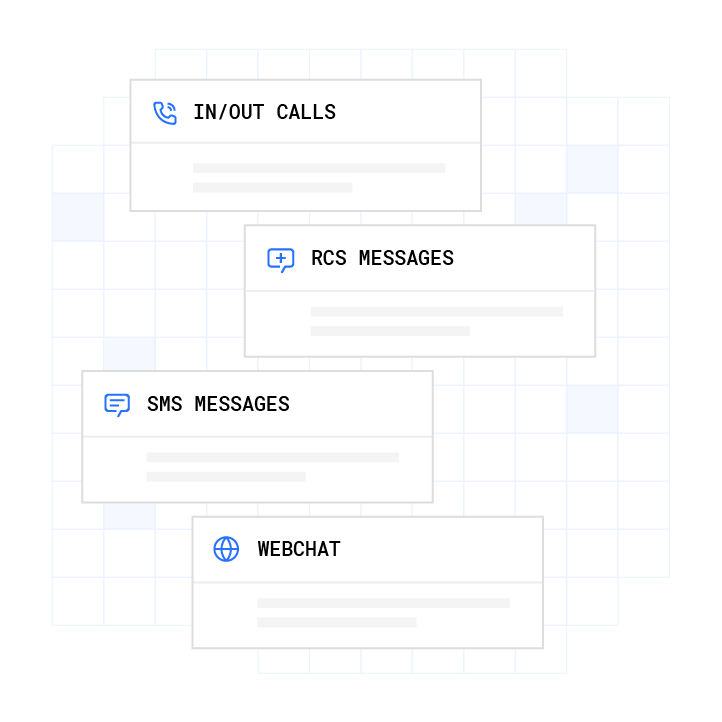
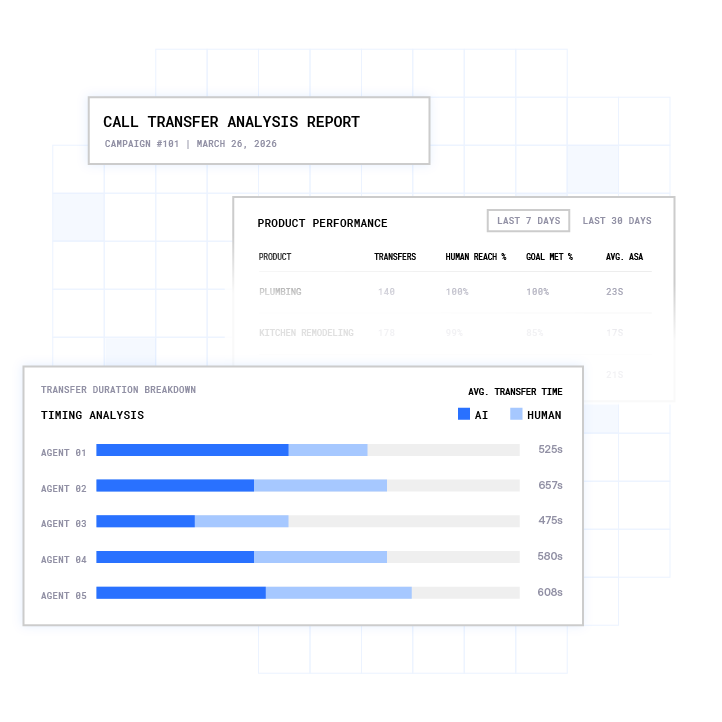
The AI Predictive Dialer extends this model to outbound campaigns. It prioritizes contacts based on historical answer rates and prior negotiation outcomes, which keeps agents focused on the highest-yield calls.
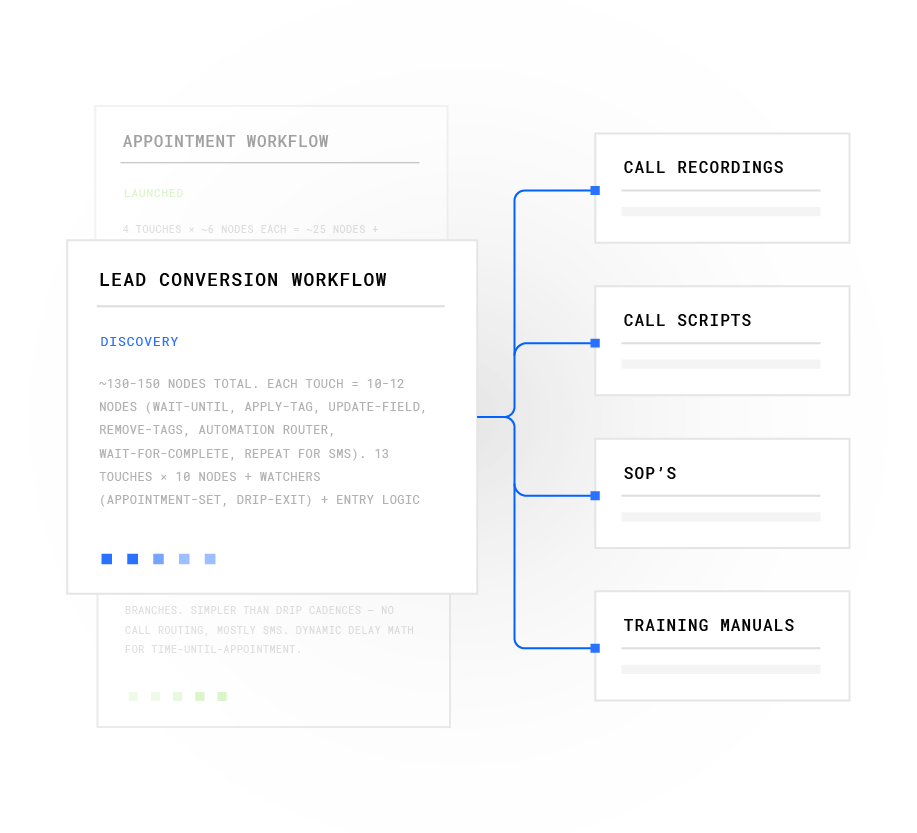
Cross-channel continuity works best when a single workflow runs across voice, SMS, chat, and email without separate builds for each channel. Plura’s no-code workflow builder manages this from one canvas, with every node referencing the same stateful database.
Comparing Routing Engines, Instant-Engagement Platforms, and Owned-Carrier Stacks
The lead response market breaks into three infrastructure categories. Each category solves a different part of the problem and carries a different level of procurement risk.
| Category | Infrastructure Ownership | Real-Time DNC/TCPA Enforcement | U.S.-Only Data Residency |
|---|---|---|---|
| Routing engines (e.g., scheduling-and-routing tools, account-graph routers, CRM-native assignment) | No carrier ownership, operate as software layers above third-party telephony | Application-layer rules only, enforcement depends on CRM sync and manual list management | Varies by vendor, typically dependent on cloud provider region selection |
| Instant-engagement platforms (AI chatbots, speed-to-lead dialers, SMS autoresponders) | Typically API resellers built on third-party CPaaS (Communications Platform as a Service) such as Twilio, no FCC carrier license | Bolted-on compliance tools, DNC scrubbing is a separate integration, not enforced before dial at the carrier level | Often dependent on CPaaS provider’s infrastructure, foreign data routing possible |
| Owned-carrier omnichannel AI stacks (Plura) | Plura owns its FCC-licensed audio bridging carrier, so voice originates on domestic infrastructure, not a third-party CPaaS | Real-time DNC scrubbing and TCPA-litigator filtering enforced at the carrier level before every outbound contact, per Plura’s compliance engine | 100% U.S. infrastructure by architecture: voice origination, model hosting, data storage, and call recording all on domestic infrastructure |
All three routing categories share a core limitation. Each assumes the lead has already self-qualified, which proves inaccurate 40 to 60 percent of the time. This assumption matters because routing engines move leads to the right rep but do not hold the conversation, so they cannot verify qualification in real time.
Instant-engagement platforms solve the initiation problem by making first contact within seconds. They introduce new gaps, since they cannot enforce compliance at the carrier level or maintain stateful memory across channels. Only an owned-carrier omnichannel stack closes both problems at once and addresses all five evaluation criteria from a single infrastructure layer.
Compliance Red Flags for Procurement Teams
Procurement teams evaluating lead response tools operate inside a layered regulatory environment. The TCPA (47 U.S.C. § 227) describes restrictions on autodialed and prerecorded calls and sets statutory damages of $500 to $1,500 per violation.2 The FCC’s February 2024 Declaratory Ruling states that AI-generated voice calls fall under the TCPA’s artificial or prerecorded voice provisions and references prior express consent and automated opt-out mechanisms for marketing calls.2 Telemarketers also face DNC obligations, including scrubbing calling lists against the National DNC Registry at least every 31 days, with state-level rules in Florida, Connecticut, and Oklahoma describing additional restrictions and penalties.2
Beyond TCPA and DNC, the FCC’s Notice of Proposed Rulemaking (NPRM, CG Docket No. 26-52) proposes caps on offshore customer-service calls and restrictions on offshore handling of sensitive consumer data. State laws in New York, New Jersey, Connecticut, Missouri, and Florida describe limits on offshore handling of medical, financial, and consumer data. Any lead response platform with foreign infrastructure dependencies operates within these frameworks and may increase exposure.
The main red flags to watch for in vendor procurement include:
- No FCC carrier license, which means the vendor routes calls through a third-party CPaaS and cannot enforce compliance before the call leaves the network
- DNC scrubbing delivered as a separate integration, so enforcement happens after routing instead of before dial
- Foreign infrastructure dependencies, including data storage, model hosting, or call recording outside U.S. borders
- No immutable consent ledger, which prevents exportable records for audit review
- No STIR/SHAKEN authentication, which blocks reliable verification of legitimate call origination to destination carriers
Plura’s compliance engine applies DNC scrubbing, TCPA-litigator filtering, quiet-hours rules, and STIR/SHAKEN authentication on every outbound contact before dial. Consent records are timestamped and immutable, and the compliance dashboard exports audit-ready reports in one click. Plura supports compliance infrastructure. Customers remain responsible for their own regulatory obligations and should consult qualified counsel on their specific requirements.
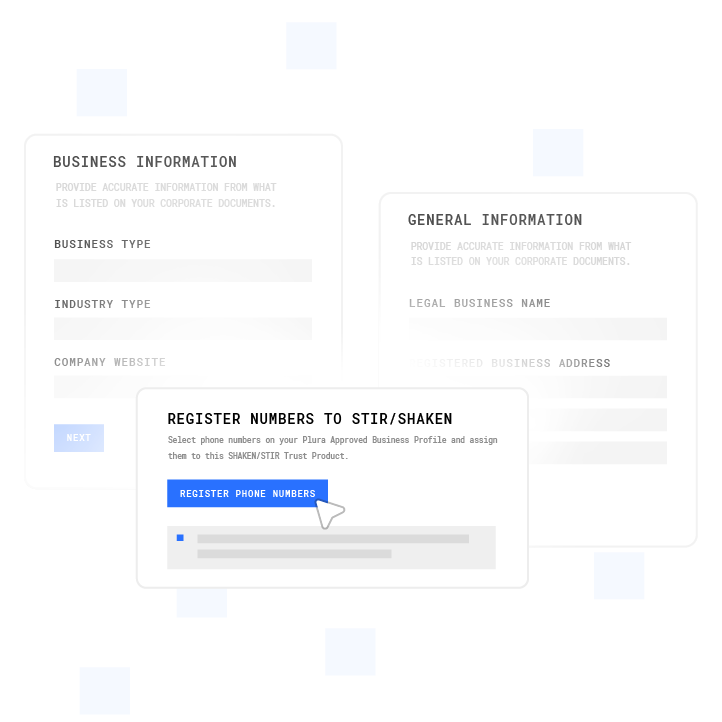
Book a live demo with Plura to see the compliance engine in action across voice, SMS, and webchat.
Selecting the Right Lead Response Tool for Your Operation
The decision matrix below routes by CRM environment, daily interaction volume, and regulatory exposure. Each path points to a tool category, not a specific vendor, except where Plura’s owned-carrier architecture is the only category that satisfies the requirement.
- CRM: Salesforce or HubSpot, volume under 500 daily interactions, low regulatory exposure. A CRM-native routing engine or scheduling-and-routing tool can handle assignment and calendar booking at low incremental cost. Speed-to-lead will depend more on rep availability than on the tool itself.
- CRM: Salesforce or HubSpot, volume 500 or more daily interactions, moderate regulatory exposure. An instant-engagement platform adds AI-initiated first contact. Procurement teams should confirm whether DNC scrubbing is enforced at the platform level or requires a separate integration. Plura’s native integrations with Salesforce and HubSpot connect the stateful conversation database directly to existing CRM records, with built-in data enrichment from over 30 sources that many CRM-native tools need separate integrations to match.
- CRM: any, volume 500 or more daily interactions, high regulatory exposure (TCPA litigation risk, HIPAA, FCC NPRM offshore exposure, or multi-state DNC requirements). Only an owned-carrier omnichannel AI stack satisfies all five evaluation criteria in one platform. Plura’s FCC-licensed carrier enforces compliance before dial, maintains stateful memory across voice, SMS, RCS, and AI webchat, and runs on 100% U.S. infrastructure by architecture. SOC 2, HIPAA, ISO documentation, and GDPR coverage form part of the platform’s described compliance posture.1
- Franchise networks or agency operators managing multiple client accounts. Multi-tenant compliance, centralized dashboards, and per-location or per-client performance reporting are requirements that routing engines and instant-engagement platforms rarely address at the system level. Plura’s conversation intelligence layer generates client-ready reports automatically and applies identical compliance rules across every account.
- Any operator evaluating TCO against a human contact-center baseline. Run your numbers through Plura’s calculator. A 15-agent operation at $20 per hour costs $60,000 per month at 40% talk utilization. Plura replaces that with six AI agents at 100% talk utilization for $14,400 per month, a $45,600 monthly difference that compounds to $547,200 over 12 months.3
Compare plans at Plura pricing to match your volume tier and channel requirements to the right deployment.
Frequently Asked Questions
Examples of Lead Response Time Tools
Lead response time tools fall into three functional categories. Routing engines, including scheduling-and-routing tools like Chili Piper and account-graph routers like LeanData, assign inbound leads to the correct rep or queue based on territory, firmographic data, and availability rules.4 Instant-engagement platforms initiate first contact via AI chatbot, SMS autoresponder, or speed-to-lead dialer within seconds of a lead event. Owned-carrier omnichannel AI stacks, the category Plura occupies, combine carrier-level voice origination, AI SMS, RCS, and webchat in a single stateful system that maintains conversation context across every channel.
The functional difference comes down to where the tool sits in the workflow. Routing engines move leads to humans. Instant-engagement platforms initiate contact. Omnichannel AI stacks handle the full conversation from first touch through qualification and transfer.
Definition of “Stateful” in Lead Response
A stateful lead response system retains conversation context across every interaction a lead has with the platform, regardless of channel or time elapsed. A lead who texts a question at 9 a.m. and receives a follow-up call at noon is recognized as the same contact, with the same qualification status, the same objections raised, and the same offers made.
Most instant-engagement platforms are stateless by channel. The SMS agent and the voice agent operate independently, with no shared memory. Stateful systems require a shared conversation database that all channels read from and write to in real time.
Plura’s Stateful Conversation Database keys every interaction to a customer token, such as phone number, email, or ID, and persists it across voice, SMS, RCS, and webchat. Every subsequent contact then picks up where the last one ended.
Lead Response Tools That Survive Procurement in Regulated Industries
Procurement in regulated industries such as healthcare, insurance, financial services, and legal often requires vendors to describe HIPAA alignment, SOC 2 certification, TCPA and DNC compliance infrastructure, and U.S.-only data residency. Many instant-engagement platforms and routing engines cannot satisfy all four expectations at once because they route voice through third-party CPaaS providers, store data on infrastructure they do not control, and bolt compliance tools on after the fact.
Plura’s documented compliance posture includes SOC 2, HIPAA, ISO certification, GDPR, STIR/SHAKEN caller ID verification, TCPA compliance infrastructure, and DNC compliance infrastructure, all enforced on Plura’s own FCC-licensed carrier with 100% U.S. infrastructure by architecture.1 Procurement teams should request audit-ready compliance exports and infrastructure ownership documentation from any vendor under evaluation. Customers remain responsible for their own regulatory obligations.
How Carrier Ownership Shapes Lead Response Compliance
Carrier ownership determines where compliance enforcement happens in the call path. Platforms that rent from a third-party CPaaS enforce compliance at the application layer, after the call has already been routed through infrastructure the vendor does not control. In those cases, DNC scrubbing, TCPA-litigator filtering, and STIR/SHAKEN authentication operate as software rules on top of someone else’s network, not as controls before the call leaves the originating carrier.
Plura owns its FCC-licensed audio bridging carrier, so every outbound contact is checked against federal and state DNC registries, filtered against TCPA-litigator lists, and authenticated via STIR/SHAKEN before dial at the carrier level. Branded caller ID is issued directly under Plura’s carrier identity, not through a reseller. This approach also addresses the “Spam Likely” label problem that reduces pickup rates for platforms using shared CPaaS infrastructure.
Total Cost of Ownership: Human Contact Center vs AI Platform
The TCO gap becomes significant at scale. A traditional contact center running 15 agents at $20 per hour, with standard taxes, benefits, commissions, and a 40% talk utilization rate typical of human operations, costs approximately $60,000 per month. Plura replaces that team with six AI agents running at 100% talk utilization for approximately $14,400 per month, which creates a monthly savings of $45,600 that compounds to $547,200 over 12 months and $2,736,000 over 60 months.
At higher volumes, the TCO comparison can shift from $7 million for a traditional contact center to $700,000 for Plura on equivalent volume. These figures reflect the default scenario on Plura’s calculator. Actual results depend on volume, channel mix, and existing infrastructure. Run your own inputs at Plura’s calculator to validate the math against your operation’s specific cost structure.
Conclusion: Applying the Five-Criteria Framework
The five-criteria evaluation framework introduced earlier, covering speed, channel coverage, compliance, integration, and TCO, separates tools that solve isolated problems from platforms that handle the full stack. Routing engines and instant-engagement platforms address portions of this framework. Only an owned-carrier omnichannel AI stack addresses all five in a single architecture.
Plura’s FCC-licensed carrier, sub-5-second stateful response across voice, SMS, RCS, and webchat, and 100% U.S. infrastructure by architecture position it as a procurement-safe choice for contact-center leaders, agency owners, and franchise networks operating at volume with regulatory exposure. The 90-day opt-out window in every annual contract puts the performance commitment on the line.
Run your numbers through Plura’s calculator to check your ROI against your current contact-center cost structure.
Compare plans at Plura pricing to match your volume tier, channel requirements, and compliance posture to the right deployment.
1 Plura AI maintains SOC 2, HIPAA, ISO, and GDPR posture as part of its platform infrastructure. References to compliance frameworks in this article describe Plura’s platform capabilities and do not constitute a guarantee that any customer using Plura will themselves be compliant with applicable laws or standards. Customers remain solely responsible for their own regulatory obligations, certifications, consent management, recordkeeping, and the claims they make to their own end users. Consult qualified legal counsel for guidance specific to your use case.
2 This article describes regulatory frameworks at a general level and does not constitute legal advice. Laws and regulations vary by jurisdiction, change over time, and apply differently depending on facts and circumstances. Readers should consult qualified legal counsel before making compliance decisions.
3 Performance figures, customer outcomes, and industry statistics referenced in this article are drawn from cited third-party sources or Plura customer case studies. Individual results vary based on implementation, use case, industry, audience, and execution. Past or aggregate performance is not a guarantee of future results.
4 References to third-party products, services, companies, or research are made for informational and comparative purposes only. Plura AI is not affiliated with, endorsed by, or sponsored by any third party named in this article unless explicitly stated. Trademarks and product names referenced remain the property of their respective owners.
This article is provided for informational purposes only and reflects Plura AI’s understanding at the time of publication. Product capabilities, integrations, and specifications are subject to change. For the most current information, visit plura.ai.
This article was produced with the assistance of AI tools and reviewed by Plura AI prior to publication.