
Written by: Matt Beucler, CEO, Plura AI
Key Takeaways
- After-hours calls represent 28.5% of total volume, and 34.8% of those callers express buying intent, so missed calls become direct revenue loss.3
- Voicemail fails to capture 62% of missed callers, while live or AI answering can qualify leads and book jobs immediately.3
- Most home-services businesses using AI answering at $99/month reach break-even with fewer than one captured job per month.3
- AI answering services deliver 24/7 coverage at a fraction of live-agent costs because they price software compute instead of hourly labor.
- For high-volume operators needing 24/7 coverage without shift staffing, Plura AI fits the operational and financial requirements.
After-Hours Call Answering vs. Voicemail: The Short Version
The table below compares voicemail, live answering, and AI answering across cost, who answers, lead capture, response speed, and best-fit business type. Watch how lead capture and response speed diverge between voicemail and live or AI coverage, because those gaps drive the revenue impact.
| Voicemail | Live Answering Service | AI Answering (Plura AI) | |
|---|---|---|---|
| Cost Model | Free (built into phone network) | $135–$400/month entry, $1.50–$6.00/minute metered | Flat monthly or per-minute, AI talk time billed separately at $14–$16/hour (roughly $0.23–$0.27/minute) on top of yearly plans of $2,500–$7,500/month |
| Who Answers | Pre-recorded system | Human receptionist | AI voice agent, first ring, 24/7 |
| Lead Capture | Caller must leave message; in a getnextphone dataset of 1,446,980 calls across 2,074 businesses, 62% left no voicemail when their call was missed | Agent captures details, books calendar | Qualifies leads, books calendar live on the call, live-transfers hot buyers to a U.S. agent |
| Response Speed | Next business day | Immediate during covered hours | Under 5 seconds to first AI-powered contact |
| Best-Fit Business Type | Low-volume, non-urgent, existing-customer-heavy | Mid-volume, high-empathy intake (legal, medical) | High-volume operators needing 24/7 coverage without shift staffing |
The Decision Framework: Four Variables That Drive the Choice
After-hours call answering vs voicemail is an arithmetic problem with four inputs. Run each variable against your own call data before you spend on coverage.
Variable 1: After-Hours Call Volume. A dataset of 1,446,980 calls across 2,074 businesses found that 28.5% of calls arrive outside standard business hours, and 34.8% of those after-hours callers express buying intent.3 That intent share makes volume the deciding variable. If you receive fewer than 10 after-hours calls a month, the expected number of missed buyers stays low enough that voicemail can be defensible. Once you cross roughly 30 calls a month, the expected missed revenue often exceeds the cost of coverage, and every missed call starts to look like a booked job that went to a competitor.
Variable 2: Average Value of a Booked Job. A $150 service call and a $9,500 roofing job justify very different coverage budgets. Average job values by trade run from $350 for pest control to $9,500 for roofing and $25,000 for general contracting. Pull your average ticket before you decide.
Variable 3: Urgency of the Typical Call. Emergency-intent keywords convert at 3–5x the rate of standard service keywords.3 A burst pipe, a no-cool call in July, or a lockout cannot wait until morning. Non-urgent calls from existing customers usually can.
Variable 4: New-Lead vs. Existing-Customer Mix. Existing customers know you and often call back. Strangers with urgent needs ring the next business on the list. If most of your after-hours callers are new leads, voicemail behaves like a funnel leak instead of a safety net.
One-line verdict: If your after-hours calls are mostly new leads, mostly urgent, and worth more than your monthly coverage cost divided by two, voicemail quietly drains profit.
When Voicemail Fits Your Call Pattern
Voicemail wins in some call patterns and loses in others. If your business receives fewer than 10 after-hours calls a month, your typical call is non-urgent and can wait until the next business day, and most of your after-hours callers are existing customers who already know you and will call back, voicemail is the right choice. Paying for live or AI coverage in that pattern wastes budget. Keep your voicemail, save the monthly fee, and revisit the decision when your after-hours volume or average job value changes.
This pattern applies to businesses where the call mix is dominated by scheduling confirmations, routine follow-ups, or account questions from long-standing clients. Those callers already have a relationship with you and will leave a message or try again. The calculus changes the moment your after-hours calls skew toward strangers who found you on Google at 9 PM with an urgent problem.
How Many After-Hours Calls Justify an Answering Service?
The break-even point depends on three numbers you already have: your monthly coverage cost, your average job value, and your close rate on captured calls.
The break-even formula:
Monthly coverage cost ÷ (average job value × close rate) = number of captured jobs needed to break even.
Worked example A: A home-services business paying $99/month for AI answering, with a $400 average job and a 30% close rate, needs less than one captured job per month to break even. The first saved call of the year covers the annual cost.
Worked example B: A business on Ruby’s $1,725/month 500-minute plan needs roughly four to five saved jobs per month to cover the service cost, per Dialnote’s break-even analysis.3,4
Run your own numbers. The threshold shifts with your coverage cost, your average job value, and your close rate. Average close rates by trade run from 20% for general contractors to 45% for pest control3, so the same coverage cost produces very different break-even points across industries.
Book a live demo with Plura to see how the break-even formula behaves with your specific call volume and job value.
Answering Service Pricing Models You Will See
How you get billed matters as much as the headline rate. The three dominant pricing structures each carry different risk profiles depending on your call pattern.
- Per-minute: You pay for every minute the agent or AI is on the call, often with rounding increments. Billing in 30-second increments turns a 70-second average call into 90 billed seconds, a 29% surcharge that never appears on any price page. Live per-minute rates run $1.50–$6.00/minute depending on tier and provider.
- Per-call: You pay a flat fee per answered call, regardless of duration. This model suits consultative businesses with long intake calls, such as legal intake or medical scheduling, where per-minute billing punishes every complex conversation.
- Monthly retainer: A flat monthly fee including a bucket of minutes or calls, with overage billed at a published rate. Entry-level live answering plans commonly cover only 30–50 included minutes per month, so the advertised starting price rarely matches the real bill.
What “pay per call” actually means: You are billed per answered call, not per dial. Spam and wrong-number calls often bill like customers on live services, a hidden cost that pushes real bills 20–40% above the rate card. Systems with a phone menu in front of the answering layer mostly keep those calls off the meter.
AI answering services price software rather than labor: compute costs of cents per marginal minute versus agent wages, training, quality control, and margin on every minute for live services. That structural difference explains why AI answering can run at a fraction of the per-minute cost of live coverage at comparable tiers.
Run your numbers through Plura’s ROI calculator to check your break-even in real time.
Before comparing service models, clear up a common terminology gap that affects how buyers evaluate their options.
Voicemail vs. Answering Machine: What Is the Difference?
A voicemail system is a network-based service hosted by your phone provider that stores messages remotely and can be accessed from any device. An answering machine is a physical device at your location that records messages onto local storage. Voicemail is the modern standard, and answering machines are legacy hardware. For any business evaluating after-hours call handling in 2026, the relevant comparison is voicemail versus a live or AI answering service.
How AI Answering Changes the Math
AI answering uses a different cost structure than a live answering service and runs on different economics.
Live services price labor. Every minute carries agent wages, training, quality control, and margin. AI answering prices software, where the marginal cost of an additional minute is measured in cents. That structural gap is why AI answering can run at a fraction of the per-minute cost of live coverage while delivering a comparable caller experience for most call types.
The economic case for AI answering strengthens as call volume rises. AI contact centers provide 24/7/365 availability without shift differentials, holiday surcharges, or the 30–50% annual front-desk turnover that forces constant retraining. There is no peak-season staffing problem. The AI handles the same call at 2 AM on a holiday weekend as it does at 10 AM on a Tuesday.
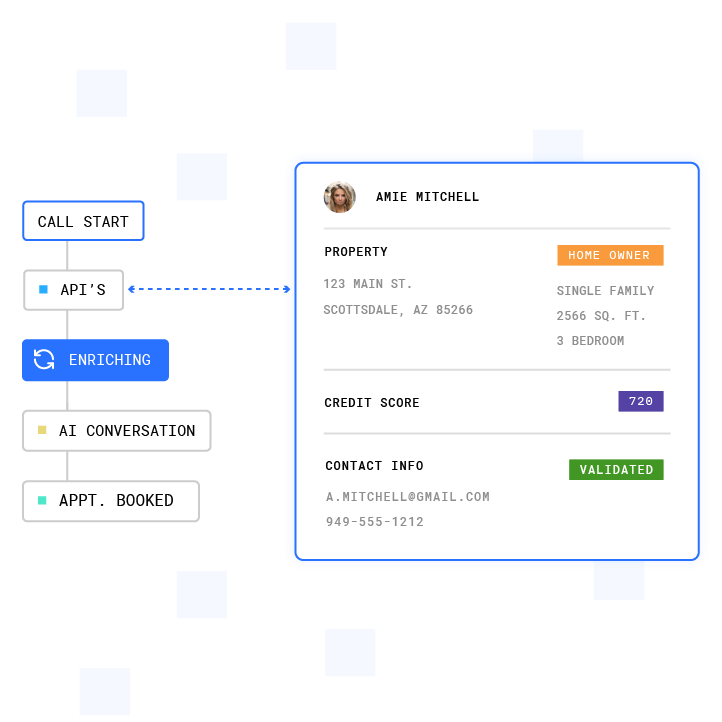
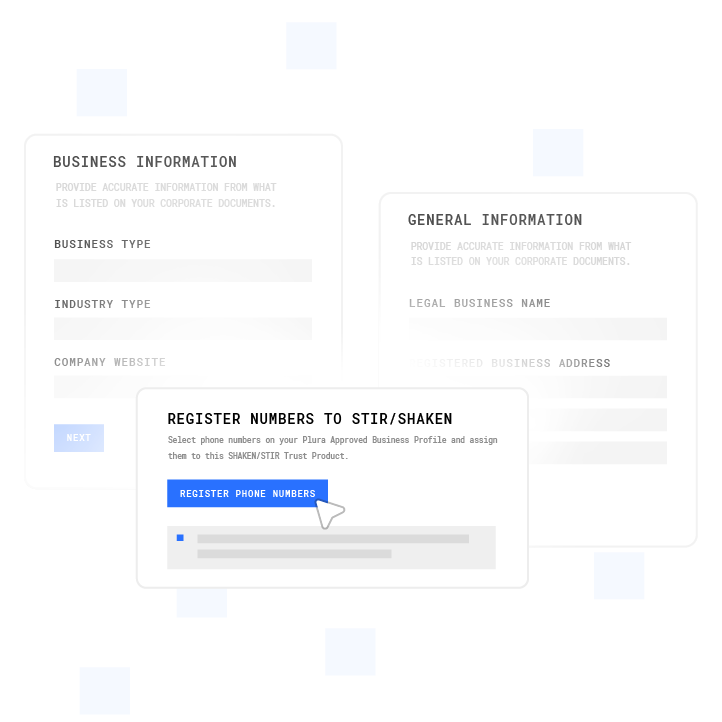
For high-volume operators running call-center-scale communication, typically at least 500 daily customer interactions or at least $5,000 per month in paid-media spend, Plura is a strong fit. Plura’s AI voice agents answer every call on the first ring 24/7, qualify leads, book the calendar live on the call, and live-transfer hot buyers to a U.S. agent. The platform runs on 100% U.S. infrastructure with an FCC-licensed audio bridging carrier and branded caller ID issued at the carrier level. Before dialing, it performs real-time DNC scrubbing and TCPA-litigator screening to support compliance.1,2 Stateful conversation memory carries context across voice, SMS, RCS, and webchat, and 50+ integrations connect the system to your existing stack. Plura backs the service with a 99.9% uptime SLA and automatic failover and reports 3x average ROI in 90 days.3
The speed advantage compounds the economic case. The Lead Response Management study (Dr. James Oldroyd, MIT Sloan/InsideSales) found companies responding within five minutes were roughly 100 times more likely to connect with a lead than those waiting 30 minutes.3,4 Voicemail responds the next business day, by which point 78% of customers have already bought from the company that responded first.3
Compare plans and rates side by side to see which coverage model fits your call volume.
Frequently Asked Questions
What Is an After-Hours Answering Service?
An after-hours answering service handles calls that arrive outside your published business hours, covering evenings, weekends, and holidays. It captures leads, books appointments, routes urgent calls, and ensures callers reach a live response or AI agent rather than voicemail. Services operate using live human receptionists, AI voice agents, or hybrid models that combine both. The primary purpose is to reduce the revenue loss that occurs when a new lead calls after 5 PM and reaches a recording instead of a system capable of booking the job.
What Does “After Hours Call” Mean?
An after-hours call is any call that arrives outside your published business hours. For most service businesses, that means calls before 8 AM, after 5 PM, and on weekends. After-hours calls often differ from daytime calls. A higher share come from new leads rather than existing customers, a higher share express urgency, and a higher share will not call back if they reach voicemail.
What Are the Different Types of Answering Services?
The market breaks into four categories. Live answering services use human receptionists who answer calls in real time, capture lead details, and book appointments. AI answering services use voice agents that answer every call on the first ring, qualify leads, and book the calendar without human intervention. Hybrid models combine AI-first answering with human escalation for calls that require judgment or empathy. IVR (interactive voice response) systems route callers through a phone menu without a live or AI conversation. Each model carries different cost structures, coverage capabilities, and best-fit use cases.
Can an AI Answering Service Book Appointments After Hours?
Yes. Plura’s AI voice agents check calendar availability in real time, book appointments directly on the call, and send confirmation texts, all without human intervention. The agent handles the full booking workflow from greeting to confirmation before the caller hangs up. For home services, dental, legal, and other appointment-based businesses, this means an after-hours caller who would have reached voicemail instead leaves the call with a confirmed appointment on the books.
Conclusion: Turning Call Data Into a Coverage Decision
Voicemail works for low-volume, non-urgent, existing-customer-heavy call patterns. High-volume operators with urgent, high-value, new-lead-heavy after-hours calls need coverage, and the arithmetic tells you which kind.
Evaluate on four variables: after-hours call volume, average job value, call urgency, and new-lead vs. existing-customer mix. Run the break-even formula against your own numbers. If the math points to coverage and you are running call-center-scale volume, Plura is a strong candidate. AI answering service for home services and appointment-based businesses means AI voice agents that answer every call on the first ring 24/7, qualify leads, book the calendar live on the call, and live-transfer hot buyers to a U.S. agent.
Velocify’s study of 3,500,000 leads found that calls made within one minute of an inquiry produced a 391% higher conversion rate than calls made at the two-minute mark.3,4 Harvard Business Review separately found that companies responding within an hour were 60 times more likely to qualify a lead than those waiting 24 hours or longer.3,4 Voicemail does not contact anyone in one minute. The cost of that gap shows up in your call log, not your credit card statement, which is why many operators underestimate it until they run the numbers.
If your analysis shows that coverage pays for itself, see how Plura’s AI voice agents handle your after-hours volume by booking a live demo.
1 Plura AI maintains SOC 2, HIPAA, ISO, and GDPR posture as part of its platform infrastructure. References to compliance frameworks in this article describe Plura’s platform capabilities and do not constitute a guarantee that any customer using Plura will themselves be compliant with applicable laws or standards. Customers remain solely responsible for their own regulatory obligations, certifications, consent management, recordkeeping, and the claims they make to their own end users. Consult qualified legal counsel for guidance specific to your use case.
2 This article describes regulatory frameworks at a general level and does not constitute legal advice. Laws and regulations vary by jurisdiction, change over time, and apply differently depending on facts and circumstances. Readers should consult qualified legal counsel before making compliance decisions.
3 Performance figures, customer outcomes, and industry statistics referenced in this article are drawn from cited third-party sources or Plura customer case studies. Individual results vary based on implementation, use case, industry, audience, and execution. Past or aggregate performance is not a guarantee of future results.
4 References to third-party products, services, companies, or research are made for informational and comparative purposes only. Plura AI is not affiliated with, endorsed by, or sponsored by any third party named in this article unless explicitly stated. Trademarks and product names referenced remain the property of their respective owners.
This article is provided for informational purposes only and reflects Plura AI’s understanding at the time of publication. Product capabilities, integrations, and specifications are subject to change. For the most current information, visit plura.ai.
This article was produced with the assistance of AI tools and reviewed by Plura AI prior to publication.