

Written by: Matt Beucler, CEO, Plura AI
Updated July 2026
Key Takeaways for 2026 Call Center Decisions
-
High-volume U.S. call center operators in 2026 need to weigh regulatory exposure, infrastructure ownership, and cross-channel memory before comparing features.
-
AI adoption has moved beyond pilots, with platforms delivering 100% talk utilization and far lower total cost of ownership than human-only models.
-
The FCC NPRM and state onshoring laws increase compliance risk for platforms with foreign infrastructure or offshore data handling.
-
Platforms that unify voice, SMS, RCS, and webchat through a single stateful conversation database reduce customer friction and lift conversion rates.
-
Evaluate Plura AI to see how an FCC-licensed, U.S.-only infrastructure platform can meet your compliance and performance requirements, and schedule a platform walkthrough.
Contact Center Trends in 2026: AI, Channels, and Infrastructure
Three structural shifts define the contact center market this year: AI agents at scale, omnichannel unification, and a pivot toward infrastructure ownership as a compliance requirement rather than a technical preference.
AI adoption has moved past pilot programs. High-volume operators now replace human agent queues with autonomous AI agents that handle inbound qualification, outbound follow-up, and negotiation flows end-to-end. The economics drive the decision: for a 100-seat contact center, traditional operations cost $4 million to $7 million annually, while AI-powered communications platforms cost $300,000 to $700,0003.
Omnichannel unification has become a hard requirement. Operators running separate tools for voice, SMS, and webchat face a structural problem: each channel holds its own memory. A customer who texted at 9 a.m. then receives a call at noon and has to re-explain the situation. Platforms that share a single stateful conversation database across all channels remove that friction and protect conversion rates.
Infrastructure ownership now separates low-risk platforms from high-risk ones. The FCC’s Notice of Proposed Rulemaking (NPRM, CG Docket No. 26-52) proposes capping offshore customer-service calls at 30% and prohibiting offshore handling of sensitive consumer data. Companion federal legislation, including the Keep Call Centers in America Act (S.2495), extends that regulatory perimeter. Platforms with foreign infrastructure dependencies now carry compliance liability by architecture. The table below shows how infrastructure ownership shapes total cost of ownership and compliance posture across three distinct risk profiles, not just pricing tiers.
|
Segment |
Monthly TCO Range |
Channels Supported |
FCC Carrier Ownership |
|---|---|---|---|
|
Twilio-based API resellers4 |
Varies, wrapper tax on per-minute rates |
Typically voice or SMS, rarely unified |
No, rents from third-party CPaaS |
|
Offshore BPOs |
Voice-primary, digital varies by vendor |
No, foreign infrastructure exposure |
All TCO figures above are drawn from cited Plura research. Offshore BPO and API-reseller figures reflect published industry patterns, not individual vendor quotes. Consult vendors directly for current pricing.
Will AI Replace Call Centre Staff?
The cost structures in the table above raise a direct question about staffing: AI replaces linear cost scaling and repetitive task execution, not human judgment. It does not replace relationship management or complex escalation handling. The operational shift is more precise. AI agents absorb the volume that currently consumes 60-70% of agent labor, while human agents handle the interactions that require discretion, authority, or empathy.
The economics behind that shift are significant. Human contact-center agents typically run at 40% talk utilization, which means 60% of paid time goes to hold, wrap-up, and idle queue time. Plura AI voice agents operate at 100% talk utilization3, with no taxes, benefits, commissions, or rehiring cycles. In a 15-agent scenario at $20 per hour with standard overhead, the monthly cost runs $60,000. Six Plura agents replacing that team cost $14,400 per month at $15 per hour, which produces a 30-day saving of $45,600 (per plura.ai/calculator). The 80-90% cost reduction mentioned earlier holds at this smaller scale.
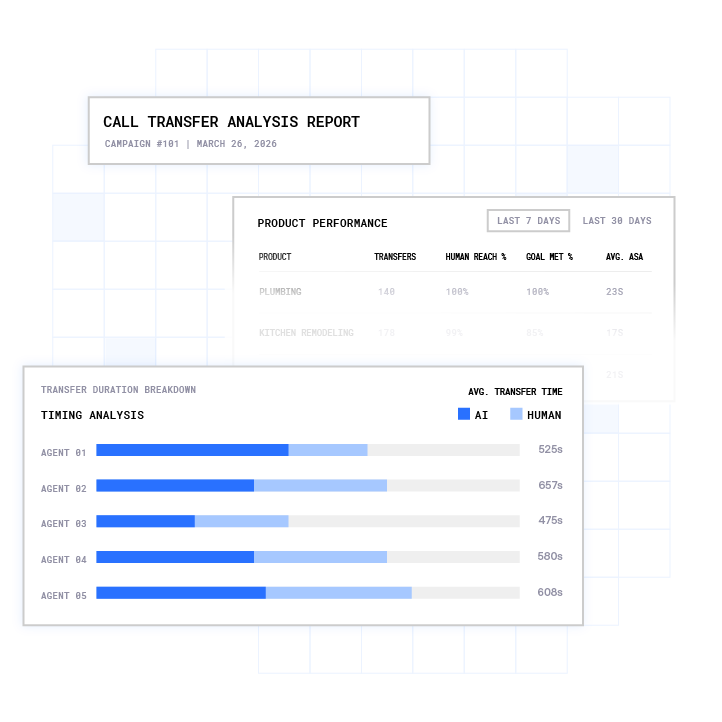
Plura’s AI Predictive Dialer contacts leads in under 5 seconds. The industry standard for first contact on an inbound lead is 47 or more hours. Contacting a lead within 5 minutes makes them up to 100 times more likely to connect, and a 60-second response lifts conversions by 391% (industry research published on plura.ai/calculator)3. That speed advantage does not require eliminating staff. It requires redirecting staff toward the conversations that actually need them.
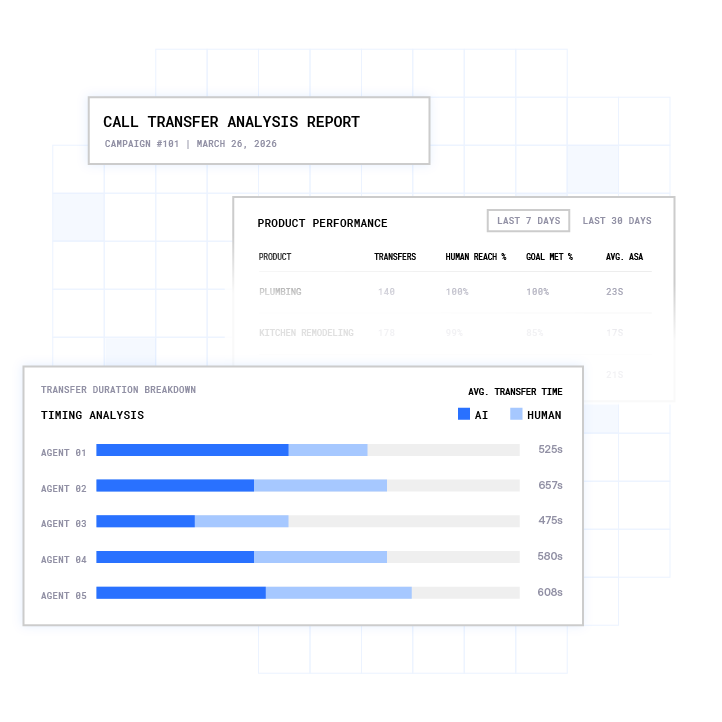
See the talk-utilization math applied to your operation in a live session.
What Is the Best Software for Call Centers?
Platform fit in 2026 depends on three variables that most software reviews skip: regulatory exposure, infrastructure ownership, and cross-channel memory. Each one removes categories of platforms before feature comparisons begin.
1. Regulatory Exposure: FCC NPRM, Federal Legislation, and State Onshoring Laws
The FCC NPRM (CG Docket No. 26-52) describes a 30% cap on offshore customer-service calls and a flat prohibition on offshore handling of sensitive consumer data, including passwords, multi-factor authentication credentials, Social Security numbers, and banking and card data.2 The Keep Call Centers in America Act (S.2495) and the Foreign Robocall Elimination Act (S.2666) extend the federal regulatory perimeter further.
State-level exposure is already active. New York’s Call Center Jobs Act describes penalties up to $10,000 per day. New Jersey, Connecticut, Missouri, and Florida each carry statutes or executive orders that restrict offshore handling of medical, financial, or consumer data.2 Operators in healthcare, insurance, financial services, and legal verticals should consult qualified counsel on their specific exposure under these frameworks.
Platforms with foreign infrastructure dependencies, or AI tools that route voice through offshore data centers, carry this exposure by architecture. Plura runs on 100% U.S. infrastructure. Voice origination, model hosting, data storage, and call recording all sit on domestic infrastructure.
2. Infrastructure Ownership: Spam Labeling and Branded Caller ID
Spam labels now sit at the carrier level, not the dialer level. Most AI voice platforms cannot address them because they do not own the carrier. They rent from a third-party CPaaS (Communications Platform as a Service) like Twilio and inherit that carrier’s caller ID reputation.
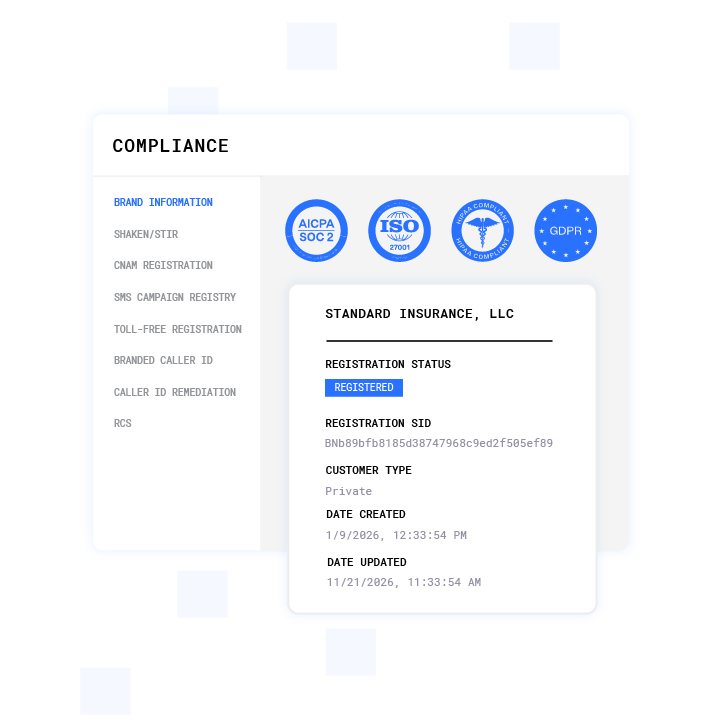
Plura owns its telecom infrastructure and holds an FCC carrier license, which means branded caller ID is issued at the carrier level, not bolted on. SHAKEN/STIR (Secure Telephone Identity Revisited/Signature-based Handling of Asserted information using toKENs) caller ID verification runs on every outbound call. Plura’s AI also communicates with Apple’s iOS 26 call-screening layer, which converts screened calls into pickups instead of voicemails.
3. Cross-Channel Memory: Stateful Conversation Architecture
Cross-channel memory now determines whether a platform can support modern customer expectations. Siloed tools treat each interaction as a new event. A customer who chats on the website, replies by SMS, and then answers a call often repeats the same information three times.
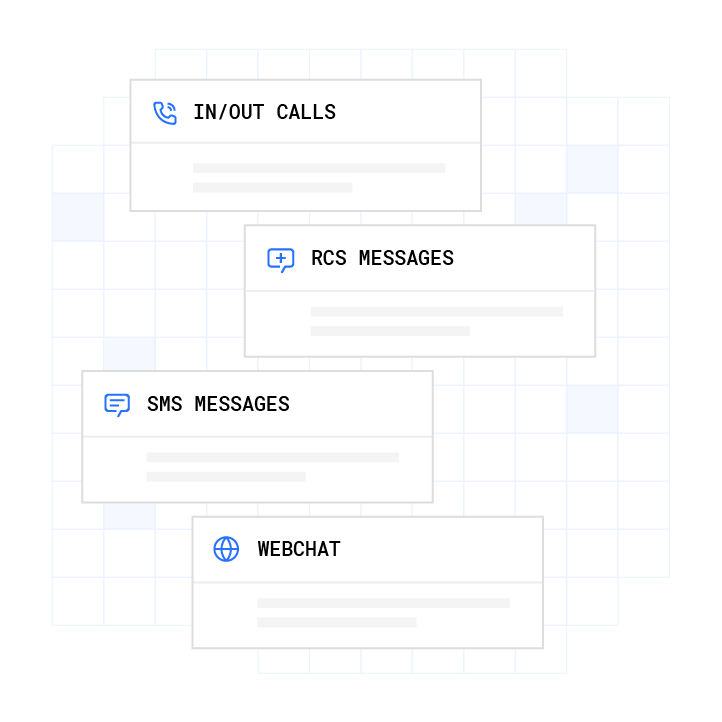
Plura uses a single Stateful Conversation Database that persists context across voice, SMS, RCS, and webchat. Every interaction ties to a customer token, so the AI and human agents see the same history. This structure removes the need for separate point tools and eliminates entire categories of platforms that cannot share memory across channels.
Best Call Center Software for Small Business 2026
Small-team operators, defined here as businesses handling 500 or more daily interactions or spending $5,000 or more monthly on paid media, face a specific problem. The cost structure of a human contact center is unworkable, but many AI platforms still require developer resources to deploy and maintain.
Plura deploys in 2 to 4 weeks from contract to live AI conversations across all channels, compared to 3 to 6 months for typical enterprise CCaaS setups. That speed is possible because the no-code workflow canvas lets operators build conversation logic, qualification gates, and transfer rules without waiting on engineering resources. The upfront cost is transparent. Agent build fees run $2,500 to $2,750 per agent (per plura.ai/pricing), and every annual contract includes a 90-day opt-out window so teams can validate ROI before the full commitment.
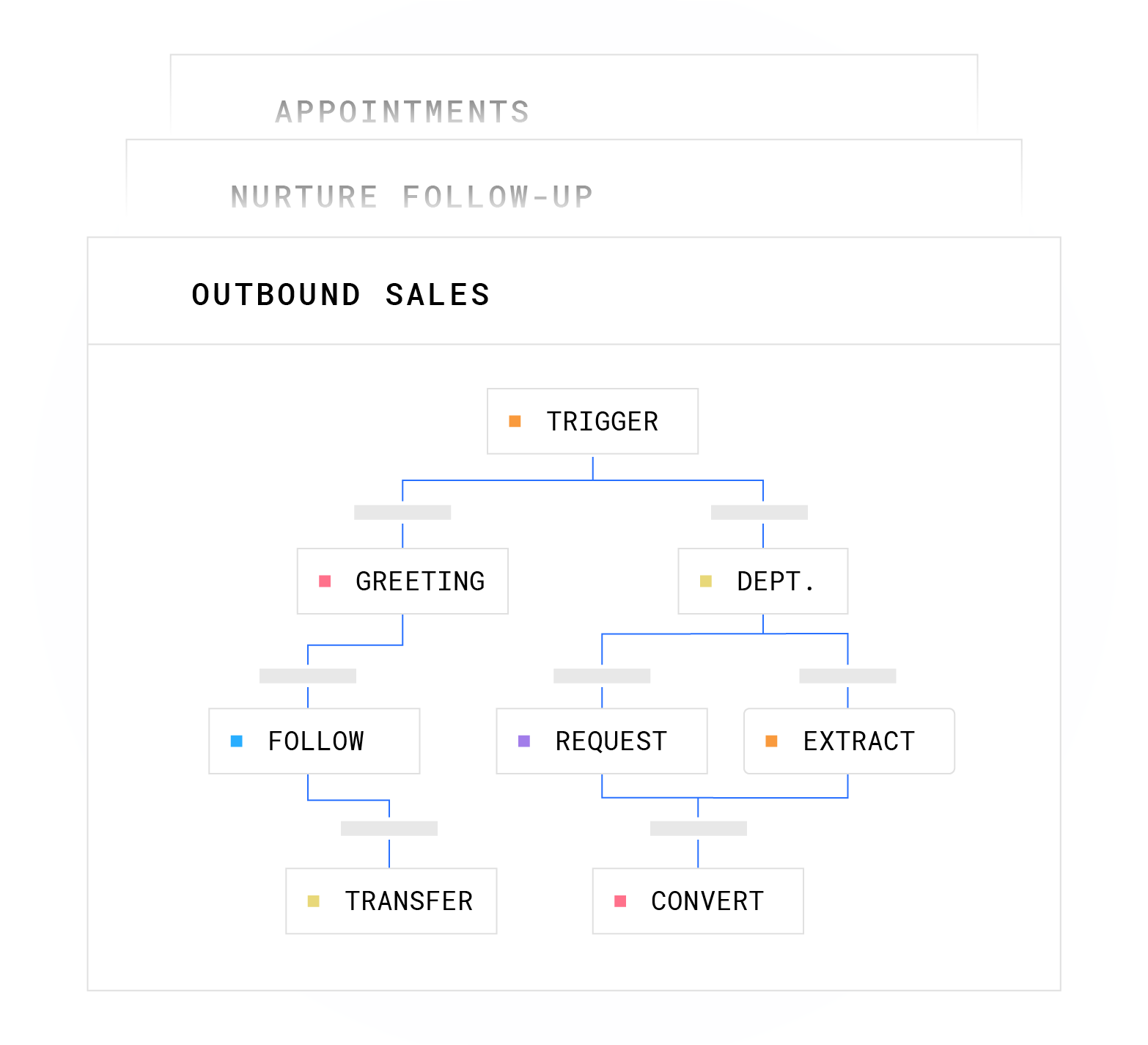
For small teams, a dedicated tier covers the full channel stack: voice, SMS, RCS, and webchat, all sharing the same Stateful Conversation Database. The 90-day ROI proof sits on the table before signing. Run your numbers at plura.ai/calculator.
See deployment timelines and small-team pricing in a live walkthrough.
Best Enterprise Call Center Software 2026
Stateful Conversation Memory vs. Siloed Tools
Enterprise operators typically run separate tools for voice, SMS, and webchat. Each tool holds its own memory. A customer who texted a question at 9 a.m. and receives a call at noon has to re-explain the situation from scratch. That friction compounds across thousands of daily interactions into measurable conversion loss.
Plura uses stateful AI architecture that remembers previous interactions, preferences, and outcomes across channels. Every interaction across voice, SMS, RCS, and webchat is keyed to a customer token and persisted in one Stateful Conversation Database. The AI reads and writes to that database on every conversation, so a negotiation offer made by SMS is visible when the voice call connects an hour later. The Unified Inbox gives human agents the same view the AI holds, so warm transfers carry full context.
Compliance and U.S. Infrastructure Requirements
Enterprise procurement teams in healthcare, insurance, financial services, and legal verticals require specific compliance postures before a platform reaches contract. Plura supports compliance with SOC 2, HIPAA, ISO certification, GDPR, SHAKEN/STIR caller ID verification, TCPA compliance, and DNC compliance.1 Plura provides HIPAA and SOC 2 compliance support, and integrates with The Blacklist Alliance’s TCPA Litigation Firewall for real-time Do Not Call scrubbing and litigation protection.1
Every outbound contact is checked against federal and state DNC (Do Not Call) registries in real time before dial. Consent records are timestamped, immutable, and audit-ready. Quiet-hours rules enforce automatically through time-zone detection. The compliance dashboard exports audit-ready reports in one click (per plura.ai/products/compliance). Customers are responsible for their own regulatory obligations. Plura provides the infrastructure that supports that posture.
Compare enterprise plans and rates at plura.ai/pricing.
Deployment Speed and 90-Day ROI Proof
Plura’s onboarding sequence runs from discovery audit through pilot test to full go-live in days to weeks, depending on conversation complexity. A simple inbound qualification flow is typically live in days. A 25-question health-history intake runs closer to one to two months because the workflow logic requires design and validation time, including routing rules, escalation paths, and data-handling checks.
Plura AI was built from the ground up for AI agents, with setup time of days, not months. The 90-day opt-out window in every annual contract puts that commitment on the line. If the deployment is not delivering, customers are not held to the annual term. The ROI calculator at plura.ai/calculator lets operators run their own numbers against the 3x average ROI benchmark before any contract is signed.
Conclusion: How Plura Fits the 2026 Call Center Landscape
The 2026 call center software market clusters into three options: Twilio-based API resellers that wrap the same underlying telecom and model layer, offshore BPOs operating under growing regulatory pressure from the FCC NPRM and state onshoring laws, and onshore human contact centers with cost structures that struggle to reach modern conversion economics. None of these categories alone solves the full problem.
Plura AI is the only FCC-licensed platform that owns the carrier stack, runs on 100% U.S. infrastructure by architecture, maintains stateful conversations across voice, SMS, RCS, and webchat, and supports compliance with SOC 2, HIPAA, ISO certification, GDPR, SHAKEN/STIR caller ID verification, TCPA compliance, and DNC compliance. The TCO of $300,000 to $700,000 per year replaces the $4 million to $7 million traditional contact-center cost structure on equivalent volume. The 90-day opt-out window means the math is on the table before the annual commitment begins.
For operators evaluating call center software in 2026, the criteria that matter most are the ones generic listicles skip: carrier ownership, infrastructure jurisdiction, cross-channel memory, and regulatory posture. Plura is built for exactly those criteria.
See the full platform in a single session.
Frequently Asked Questions
What makes Plura AI different from other AI voice platforms in 2026?
Most AI voice platforms in 2026 are API resellers built on top of third-party CPaaS providers. They do not own the carrier, cannot issue branded caller ID at the carrier level, and cannot enforce real-time DNC scrubbing as a first-class platform layer. Plura is its own FCC-licensed audio bridging carrier. Voice originates on Plura’s domestic infrastructure, which means lower per-minute economics, direct branded caller ID issuance, and compliance support enforced at origination rather than bolted on after the fact. Plura also runs voice, SMS, RCS, and webchat on a single Stateful Conversation Database, so cross-channel memory is native to the platform, not an integration project.
How does the FCC NPRM affect my call center software decision in 2026?
The FCC NPRM (CG Docket No. 26-52) describes a 30% cap on offshore customer-service calls and a prohibition on offshore handling of sensitive consumer data. Companion federal legislation, including the Keep Call Centers in America Act (S.2495), extends that perimeter. State laws in New York, New Jersey, Connecticut, Missouri, and Florida already restrict offshore handling of medical, financial, and consumer data. Operators in regulated verticals should consult qualified counsel on their specific exposure. From a platform-selection standpoint, any AI voice or contact center tool with foreign infrastructure dependencies, offshore data storage, or third-party CPaaS routing through non-domestic data centers carries regulatory exposure by architecture. As noted earlier, Plura’s 100% U.S. infrastructure posture means voice origination, model hosting, data storage, and call recording all remain on domestic infrastructure.
What compliance frameworks does Plura support?
Plura supports compliance with SOC 2, HIPAA, ISO certification, GDPR, SHAKEN/STIR, TCPA, and DNC. Every outbound contact is checked against federal and state DNC registries in real time before dial. Consent records are timestamped, immutable, and audit-ready. Quiet-hours rules enforce automatically through time-zone detection. The compliance dashboard exports audit-ready reports in one click. Customers are responsible for their own regulatory obligations and certifications. Plura provides the infrastructure that supports that posture.
How quickly can Plura be deployed, and what does the ROI look like in the first 90 days?
Deployment runs from days to weeks depending on conversation complexity. A simple inbound qualification flow is typically live in days. A complex multi-step intake, such as a 25-question health-history survey, runs closer to one to two months. The ROI calculator at plura.ai/calculator lets operators model their own numbers before signing. In a 15-agent scenario at $20 per hour with standard overhead, replacing the team with Plura drops monthly cost from $60,000 to $14,400, which produces a 30-day saving of $45,600 and a 12-month saving of $547,200. Every annual contract includes a 90-day opt-out window if the deployment is not delivering.
Can Plura handle both inbound and outbound conversations across multiple channels simultaneously?
Yes. Plura deploys fully autonomous AI agents across voice, SMS, RCS, and webchat simultaneously. Inbound flows handle intake, qualification, and warm transfer to U.S. agents. Outbound flows handle follow-up, negotiation, retention, and appointment confirmation. The AI Predictive Dialer contacts leads in under 5 seconds, using stateful conversion signals to prioritize contacts most likely to convert. All four channels share the same Stateful Conversation Database, so an agent that texted a lead at 9 a.m. picks up the voice call at noon already knowing what was said, what was offered, and what objections were raised.
1 Plura AI maintains SOC 2, HIPAA, ISO, and GDPR posture as part of its platform infrastructure. References to compliance frameworks in this article describe Plura’s platform capabilities and do not constitute a guarantee that any customer using Plura will themselves be compliant with applicable laws or standards. Customers remain solely responsible for their own regulatory obligations, certifications, consent management, recordkeeping, and the claims they make to their own end users. Consult qualified legal counsel for guidance specific to your use case.
2 This article describes regulatory frameworks at a general level and does not constitute legal advice. Laws and regulations vary by jurisdiction, change over time, and apply differently depending on facts and circumstances. Readers should consult qualified legal counsel before making compliance decisions.
3 Performance figures, customer outcomes, and industry statistics referenced in this article are drawn from cited third-party sources or Plura customer case studies. Individual results vary based on implementation, use case, industry, audience, and execution. Past or aggregate performance is not a guarantee of future results.
4 References to third-party products, services, companies, or research are made for informational and comparative purposes only. Plura AI is not affiliated with, endorsed by, or sponsored by any third party named in this article unless explicitly stated. Trademarks and product names referenced remain the property of their respective owners.
This article is provided for informational purposes only and reflects Plura AI’s understanding at the time of publication. Product capabilities, integrations, and specifications are subject to change. For the most current information, visit plura.ai.
This article was produced with the assistance of AI tools and reviewed by Plura AI prior to publication.