

Written by: Matt Beucler, CEO, Plura AI
Key Takeaways
- The 2025 Gartner Magic Quadrant and Critical Capabilities reports remain core frameworks for evaluating conversational AI vendors across vision, execution, and use-case fit.4
- Key 2025 market shifts include agentic AI execution, multimodal input handling, deeper generative AI integration, and stricter requirements around data residency and infrastructure geography.5
- Enterprises in regulated industries now prioritize vendors with carrier ownership, cross-channel state continuity, and built-in compliance controls that support FCC and state onshoring mandates.
- Critical evaluation criteria now include NLU accuracy, omnichannel orchestration, security governance, agentic guardrails, and total cost of ownership compared with legacy contact-center models.
- Plura AI delivers these capabilities through its own FCC-licensed carrier, 100% U.S. infrastructure, and Stateful Conversation Database. Book a live demo to see how it maps to your compliance and ROI requirements.
How the 2025 Gartner Magic Quadrant Frames Conversational AI Platforms
Gartner’s research on conversational AI platforms for enterprises spans two documents in the same cycle. The Magic Quadrant evaluates vendor viability, market strategy, and execution track record. The Critical Capabilities report scores each vendor against defined use cases, including customer-facing self-service, employee self-service, and agent-assist workflows. Enterprises typically use both documents together. The Magic Quadrant narrows the vendor field, and the Critical Capabilities scores guide final selection against the organization’s specific deployment context.
Definition of an Enterprise Conversational AI Platform
A conversational AI platform is enterprise software that enables automated, natural-language interactions between an organization and its customers or employees. These interactions span channels such as voice, chat, SMS (Short Message Service), and messaging applications. Platforms in this category typically include a natural-language understanding (NLU) engine, a dialogue management layer, integration connectors to backend systems, and analytics tooling. Enterprise-grade platforms add governance controls, compliance tooling, and cross-channel orchestration to support regulated industries and high-volume operations.
The category has expanded significantly since 2023. Generative AI (GenAI) integration, agentic task execution, and multimodal input handling have moved from roadmap items to evaluated capabilities in the 2025 Gartner cycle.
Vendors Included and Omitted in the 2025 Evaluation
Gartner’s 2025 Magic Quadrant for Conversational AI Platforms evaluated multiple vendors. The table below reflects publicly available analyst commentary and vendor-disclosed positioning as of June 2026. Enterprises should obtain the full Gartner report directly for complete scoring methodology and use-case weighting.
| Vendor | Quadrant Placement | Primary Market Focus |
|---|---|---|
| Leader | Enterprise contact center, multimodal AI | |
| Microsoft | Not included among the vendors evaluated in the 2025 Gartner Magic Quadrant for Conversational AI Platforms | Enterprise productivity and contact center |
| Amazon Web Services | AWS was not included in the 2025 Gartner Magic Quadrant for Conversational AI Platforms (it had previously been positioned as a Challenger but dropped off) | Cloud-native contact center AI |
| IBM | IBM was placed in the Challenger quadrant in the 2025 Gartner Magic Quadrant for Conversational AI Platforms | Regulated enterprise, hybrid deployment |
| Salesforce | Salesforce was not included among the vendors evaluated in the 2025 Gartner Magic Quadrant for Conversational AI Platforms | CRM-integrated conversational AI |
| ServiceNow | ServiceNow was not included among the vendors evaluated in the 2025 Gartner Magic Quadrant for Conversational AI Platforms | Employee self-service, IT workflows |
| Nuance (Microsoft) | Nuance (Microsoft) was not included among the vendors evaluated in the 2025 Gartner Magic Quadrant for Conversational AI Platforms | Healthcare and financial services voice AI |
| Verint | Verint was omitted from the 2025 Gartner Magic Quadrant for Conversational AI Platforms | Contact center workforce engagement |
| Kore.ai | Kore.ai was placed in the Leader quadrant in the 2025 Gartner Magic Quadrant for Conversational AI Platforms | Enterprise virtual assistants, banking |
| Cognigy | Cognigy was placed in the Leaders quadrant in the 2025 Gartner Magic Quadrant for Enterprise Conversational AI Platforms | Contact center automation, multilingual |
| LivePerson | Niche Player | Digital messaging and chat automation |
| Sprinklr | Evaluated in the 2025 Gartner Magic Quadrant for Conversational AI Platforms | Unified customer experience management |
| Avaya | Avaya was not included among the vendors evaluated in the 2025 Gartner Magic Quadrant for Conversational AI Platforms | Legacy contact center modernization |
Note: Vendor placements in analyst reports shift between publication cycles. Enterprises should verify current positioning directly with Gartner before making procurement decisions. The table above reflects publicly available information as of June 2026 and is not a substitute for the full licensed report.
How Gartner’s Critical Capabilities Map to Enterprise Concerns
The Critical Capabilities report scores vendors against a defined set of platform capabilities weighted by use case. The table below maps Gartner’s published evaluation dimensions to the enterprise concerns most relevant to regulated, high-volume operators in healthcare, insurance, financial services, and legal verticals.
| Gartner Critical Capability | Enterprise Concern | Regulated-Industry Implication |
|---|---|---|
| NLU and dialogue management accuracy | Conversation quality at scale | Script adherence in regulated intake flows |
| Omnichannel orchestration | Cross-channel state continuity | Consistent disclosures across voice, SMS, chat |
| Integration and extensibility | CRM, telephony, and backend connectivity | Carrier ownership vs. third-party CPaaS dependency |
| Security and governance controls1 | Data residency, access controls, audit logging | HIPAA, SOC 2, and state onshoring law posture |
| Analytics and conversation intelligence | Outcome measurement and script improvement | Audit-ready reporting for regulatory inquiries |
| Agentic task execution | End-to-end workflow automation without human handoff | Escalation guardrails for sensitive disclosures |
| Generative AI integration | Dynamic response generation and personalization | Hallucination controls in regulated conversations |
Gartner’s Critical Capabilities methodology weights these dimensions differently depending on the use case. A customer-facing self-service deployment in financial services weights security, governance, and omnichannel orchestration more heavily than an internal IT helpdesk deployment. Enterprises should map their primary use case to the relevant Gartner use-case score before shortlisting vendors.
Market Shifts in 2025: AI Agents, Multimodal Inputs, and Regulation
Three structural shifts defined the 2025 conversational AI platform market as reflected in analyst coverage and vendor announcements through June 2026.
Agentic AI execution. The 2025 evaluation cycle weighted agentic task completion as a scored capability. Agentic AI refers to systems that can autonomously complete multi-step tasks, such as retrieving account data, updating records, and issuing confirmations, without a human handoff at each step. Vendors that had shipped production-grade agentic workflows by the evaluation cutoff scored materially higher in this dimension than those still in preview.
Multimodal input handling. Voice-only and text-only platforms lost ground to platforms that can process voice, text, image, and document inputs within a single conversation session. This shift is particularly relevant for healthcare intake, insurance claims, and legal intake workflows where customers submit supporting documents alongside verbal or written responses.
Generative AI integration depth. The distinction between platforms that use GenAI for response generation and platforms that use GenAI for intent classification, entity extraction, and workflow branching became a scored differentiator. Shallow GenAI integration, where a large language model (LLM) is bolted onto an existing rules-based dialogue engine, produced lower scores on conversation quality and adaptability than native GenAI architectures.
Regulatory posture as a procurement gate. The FCC’s Notice of Proposed Rulemaking (NPRM) under CG Docket No. 26-52 proposed capping offshore customer-service call handling at 30% and prohibiting offshore processing of sensitive consumer data.2 Companion federal legislation, including the Keep Call Centers in America Act (S.2495) and the Foreign Robocall Elimination Act (S.2666), extended the federal regulatory perimeter.2 State-level onshoring laws in New York, New Jersey, Connecticut, Missouri, and Florida added further restrictions on offshore handling of medical, financial, and consumer data.2 These developments elevated data residency and infrastructure geography from procurement footnotes to primary evaluation criteria. Given these market shifts, enterprises now face procurement decisions that extend beyond feature checklists and into infrastructure, governance, and risk posture.
Enterprise Readiness Criteria Emerging from the 2025 Reports
The 2025 Gartner reports surface five readiness criteria that enterprise buyers in regulated industries should evaluate before selecting a conversational AI platform. These criteria address infrastructure, governance, and operational continuity gaps that now separate short-term pilots from durable production deployments.
1. Carrier ownership versus CPaaS dependency. Platforms built on top of third-party Communications Platform as a Service (CPaaS) providers, such as Twilio, inherit the carrier’s caller ID reputation, compliance posture, and infrastructure geography.4 Platforms that own their own FCC-licensed carrier originate voice traffic on domestic infrastructure, issue branded caller ID directly, and enforce compliance at the carrier level rather than as a bolt-on layer.
2. Cross-channel state continuity. Gartner’s omnichannel orchestration criterion maps directly to the operational problem of conversation fragmentation. A customer who interacts via SMS at 9 a.m. and receives a voice call at noon should not need to re-establish context. Platforms with a shared stateful conversation database across all channels satisfy this criterion. Platforms with siloed channel-specific memory do not.
3. Data residency and infrastructure geography. Under the FCC NPRM (CG Docket No. 26-52) and state onshoring laws, enterprises in covered industries face exposure if their conversational AI vendor routes voice traffic, stores call recordings, or hosts model inference on foreign infrastructure. Enterprises should request written confirmation of infrastructure geography from every vendor on their shortlist.
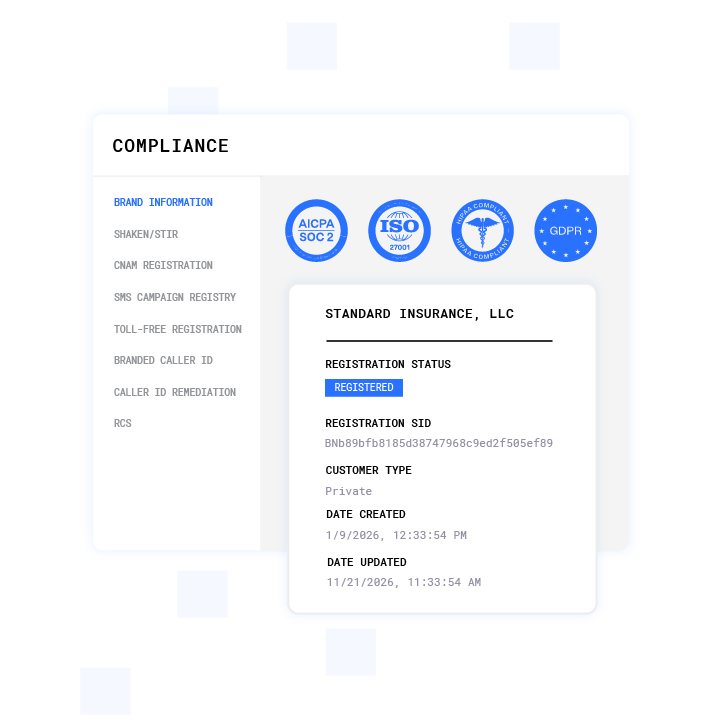
4. Compliance infrastructure as a first-class layer. Gartner’s security and governance criterion covers access controls, audit logging, and data handling. For regulated enterprises, this extends to real-time Do Not Call (DNC) registry scrubbing, Telephone Consumer Protection Act (TCPA) consent logging, Health Insurance Portability and Accountability Act (HIPAA) encryption, and quiet-hours enforcement.2 Platforms that enforce these controls before each outbound contact, with immutable audit trails, align with the governance criteria Gartner highlights. Platforms that treat compliance as a configuration option increase operational and regulatory risk.
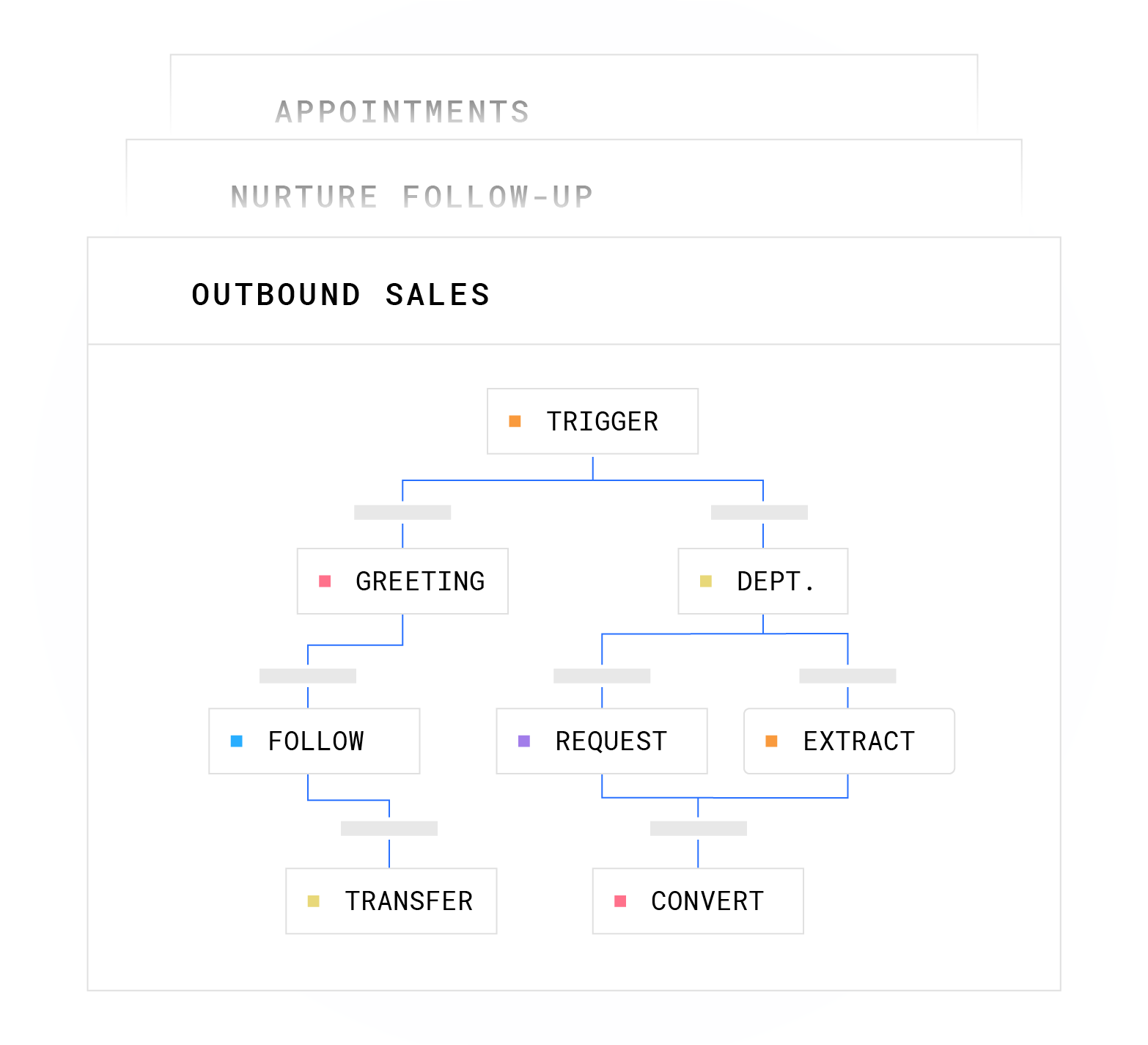
5. Agentic guardrails for sensitive workflows. Agentic AI that can autonomously complete multi-step tasks introduces escalation risk in regulated conversations. Platforms that include hard workflow guardrails, such as negotiation floors and ceilings, sensitive-data redaction at the field level, and warm-transfer triggers for out-of-scope disclosures, align with the governance dimension of Gartner’s agentic capability scoring.
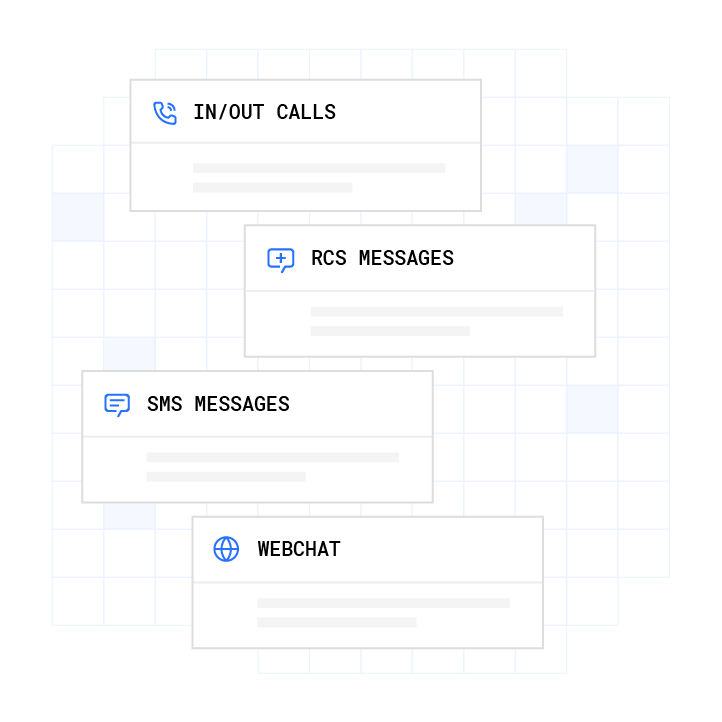
Plura AI addresses each of these criteria through its infrastructure architecture. Plura operates its own FCC-licensed audio bridging carrier, so voice originates on domestic infrastructure without a third-party CPaaS in the path. Its Stateful Conversation Database holds context across voice, SMS, RCS (Rich Communication Services), and webchat, so every channel inherits the full memory of every prior touchpoint. All voice origination, model hosting, data storage, and call recording run on 100% U.S. infrastructure by architecture. Plura’s compliance engine checks every outbound contact against federal and state DNC registries in real time before dial, logs TCPA consent records as timestamped and immutable entries, enforces quiet-hours rules through time-zone detection, and exports audit-ready reports on demand. Plura holds SOC 2 Type II certification, HIPAA alignment, and ISO certification, and supports STIR/SHAKEN (Secure Telephone Identity Revisited/Signature-based Handling of Asserted information using toKENs) caller ID authentication on every outbound voice call.1 Plura supports customer compliance efforts; customers remain responsible for their own regulatory obligations and certifications.
For enterprises evaluating total cost of ownership alongside governance posture, Plura’s platform TCO of $300,000 to $700,000 per year replaces the $4M to $7M traditional contact-center cost structure on equivalent volume, per Plura’s published cost analysis.3
Calculate your ROI based on current contact volume or review pricing tiers and feature breakdowns.
FAQ: Using Gartner Research on Conversational AI Platforms
What is the difference between the Gartner Magic Quadrant and the Critical Capabilities report for conversational AI platforms?
The Magic Quadrant evaluates vendors on two dimensions: Completeness of Vision and Ability to Execute. It produces a visual quadrant that places vendors into four categories: Leaders, Challengers, Visionaries, and Niche Players. The Critical Capabilities report goes deeper. It scores the same vendors against specific platform capabilities, such as NLU accuracy, omnichannel orchestration, security controls, and agentic task execution, and then weights those scores differently depending on the use case being evaluated. An enterprise deploying conversational AI for customer-facing self-service in a regulated industry will see different vendor rankings in the Critical Capabilities report than an enterprise deploying for internal IT helpdesk automation. Enterprises typically use the Magic Quadrant to narrow the vendor field and the Critical Capabilities report to make the final selection against their specific deployment context.
How should a contact center leader use the 2025 Gartner reports to build a vendor shortlist?
Contact center leaders should start with the Critical Capabilities report rather than the Magic Quadrant. Identify the use case that most closely matches your primary deployment, whether that is customer-facing self-service, agent-assist, or employee self-service, and pull the vendor scores for that use case specifically. Vendors that rank highly in the overall Magic Quadrant may score lower on the use case most relevant to your operation.
From that shortlisted set, evaluate each vendor against the criteria your organization weights most heavily. Data residency and infrastructure geography matter if you operate in a regulated industry under the FCC NPRM or state onshoring laws. Cross-channel state continuity matters if your customers interact across voice, SMS, and chat. Compliance infrastructure depth matters if your operation handles protected health information, financial data, or sensitive consumer data. Request written confirmation of infrastructure geography, compliance certifications, and audit-logging capabilities from every vendor before advancing to a proof of concept.
What does “agentic AI” mean in the context of the 2025 Gartner evaluation, and why does it matter for enterprises?
Agentic AI refers to conversational AI systems that can autonomously complete multi-step tasks without requiring a human to approve each action. In a contact center context, an agentic AI might retrieve a customer’s account record, verify eligibility, update a field in the CRM, and issue a confirmation, all within a single conversation session and without transferring to a human agent. In the 2025 evaluation cycle, Gartner weighted agentic task completion as a scored capability.
For enterprises, the operational implication is significant. Agentic AI can reduce handle time and cost per contact on routine workflows. The governance implication is equally significant. Agentic systems that operate without hard guardrails can make unauthorized commitments, disclose sensitive information outside approved channels, or fail to escalate conversations that require human judgment. Enterprises evaluating agentic platforms should assess whether the platform includes configurable escalation triggers, negotiation guardrails, and sensitive-data redaction at the field level before deploying in regulated workflows.
How does the FCC NPRM under CG Docket No. 26-52 affect enterprise conversational AI platform selection?
The FCC’s Notice of Proposed Rulemaking under CG Docket No. 26-52 proposed capping offshore customer-service call handling at 30% of total volume and prohibiting offshore processing of sensitive consumer data, including passwords, multi-factor authentication codes, Social Security numbers, banking data, and card data. If finalized, the rule would apply to enterprises that route customer conversations through vendors with foreign infrastructure dependencies, including conversational AI platforms that host model inference, store call recordings, or originate voice traffic outside the United States.
Enterprises should confirm the infrastructure geography of every conversational AI vendor under evaluation, including where voice traffic originates, where call recordings are stored, and where model inference runs. Platforms built on third-party CPaaS providers with foreign infrastructure exposure may create additional compliance risk under the proposed rule. Enterprises should consult qualified counsel regarding their specific obligations under the FCC NPRM and applicable state onshoring laws.
What compliance infrastructure should an enterprise require from a conversational AI platform vendor?
Enterprises in regulated industries should require comprehensive compliance infrastructure from any conversational AI platform vendor. This includes the DNC scrubbing, TCPA logging, HIPAA controls, and caller ID authentication capabilities described earlier in this article. Beyond those baseline requirements, enterprises should also confirm that quiet-hours enforcement, access controls, and audit logging operate at the platform level before each contact, not as optional campaign settings. As noted earlier, vendor infrastructure supports but does not replace an enterprise’s own compliance obligations. Consulting qualified legal counsel before deployment in regulated industries is advisable.
1 Plura AI maintains SOC 2, HIPAA, ISO, and GDPR posture as part of its platform infrastructure. References to compliance frameworks in this article describe Plura’s platform capabilities and do not constitute a guarantee that any customer using Plura will themselves be compliant with applicable laws or standards. Customers remain solely responsible for their own regulatory obligations, certifications, consent management, recordkeeping, and the claims they make to their own end users. Consult qualified legal counsel for guidance specific to your use case.
2 This article describes regulatory frameworks at a general level and does not constitute legal advice. Laws and regulations vary by jurisdiction, change over time, and apply differently depending on facts and circumstances. Readers should consult qualified legal counsel before making compliance decisions.
3 Performance figures, customer outcomes, and industry statistics referenced in this article are drawn from cited third-party sources or Plura customer case studies. Individual results vary based on implementation, use case, industry, audience, and execution. Past or aggregate performance is not a guarantee of future results.
4 References to third-party products, services, companies, or research are made for informational and comparative purposes only. Plura AI is not affiliated with, endorsed by, or sponsored by any third party named in this article unless explicitly stated. Trademarks and product names referenced remain the property of their respective owners.
5 This article contains forward-looking statements regarding industry trends, technology adoption, and future capabilities. These statements reflect current expectations and are subject to change. Plura AI undertakes no obligation to update forward-looking statements except as required.
This article is provided for informational purposes only and reflects Plura AI’s understanding at the time of publication. Product capabilities, integrations, and specifications are subject to change. For the most current information, visit plura.ai.
This article was produced with the assistance of AI tools and reviewed by Plura AI prior to publication.