
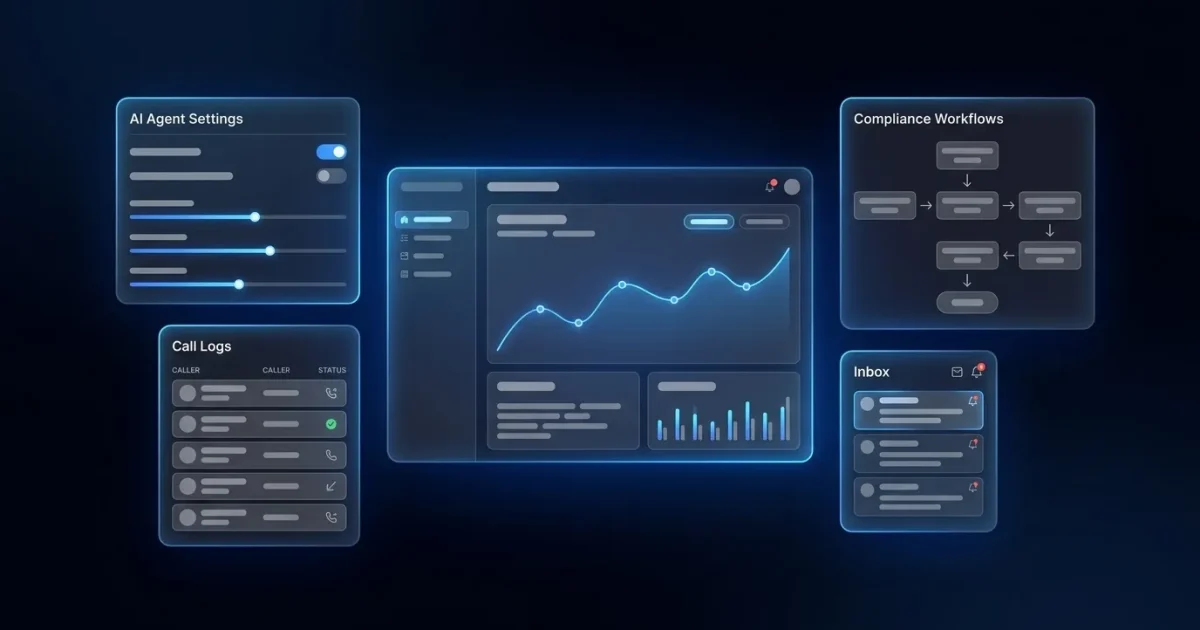
Written by: Matt Beucler, CEO, Plura AI
Updated September 2026
Key Compliance Advantages for U.S. Call Centers
- Onshore AI call centers deliver clear advantages in regulation, data residency, and auditability under 2026 FCC and state rules.
- The FCC’s proposed 30% offshore call cap, state data-handling limits, and TCPA AI-voice consent rules make domestic infrastructure a core compliance requirement.
- Plura AI’s U.S-based architecture, FCC carrier status, and built-in TCPA, DNC, HIPAA, and SOC 2 controls reduce cross-border data exposure and support one-click audit trails.1
- AI-specific compliance features keep every interaction within defined rules: start-of-call disclosure, timestamped consent, automated opt-out routing, and warm transfer to U.S. agents.
The Regulatory Shift Making Onshore Operations a Safer Bet
The FCC’s Notice of Proposed Rulemaking (NPRM), approved unanimously at the March 26, 2026 Open Meeting in CG Docket No. 26-52, proposes a 30% cap on offshore customer-service calls and a flat prohibition on offshore handling of sensitive consumer data, including passwords, multi-factor authentication credentials, Social Security numbers, and banking or card data.2 The FCC also proposes requiring start-of-call disclosure when calls are handled outside the United States and mandating free transfers to U.S. agents upon consumer request.
Companion legislation extends the regulatory perimeter further. The Keep Call Centers in America Act (S.2495) and the Foreign Robocall Elimination Act (S.2666) introduce overlapping disclosure and accountability requirements for covered entities and their vendors. Under Section 217 of the Communications Act, acts of any officer, agent, or other person acting within the scope of employment for a common carrier are deemed acts of the carrier itself. Covered entities therefore carry responsibility for vendor behavior when they use third-party offshore operators.
State laws add another layer. New York’s Call Center Jobs Act carries penalties up to $10,000 per day. New Jersey, Connecticut, Missouri, and Florida have enacted mirror statutes, state-contract bans, offshore-disclosure requirements, or medical-information offshoring limits. Every contract a covered entity signs with an offshore vendor now carries compliance exposure that did not exist two years ago.
Data Sovereignty and Privacy for PII and PHI
Data sovereignty means data is subject to the laws of the country where it is physically processed. For AI call centers handling personally identifiable information (PII) or protected health information (PHI), the key question is whether the architecture makes cross-border transfer impossible. The secondary question is whether any component quietly routes data through foreign infrastructure.
AI workloads introduce data residency risks that traditional call centers rarely faced. These include training data exposure, inference routing through foreign CDN (content delivery network) nodes, sub-processor access, and telemetry transmission to non-U.S. operations centers. Public cloud region selection provides a baseline level of data residency but does not fully guarantee it, because control planes may be operated from outside the U.S. and support engineers may be located globally.
Plura AI runs on U.S. infrastructure by architecture, not by promise. Voice origination, model hosting, data storage, and call recording all sit on domestic infrastructure. As an FCC-licensed carrier, calls originate on Plura’s own domestic network rather than a third-party CPaaS (Communications Platform as a Service) like Twilio that may route through foreign nodes.4 This design removes an offshore exposure layer. Onshore infrastructure supports your compliance posture, and your organization remains responsible for its own regulatory obligations.
Audit Readiness and Transparency You Can Prove
Regulators and plaintiffs’ attorneys expect more than policy documents. The FCC’s proposed rules require covered entities to track and report English proficiency of foreign staff, the percentage of calls routed offshore, transfer rates, wait times, and dropped calls. For AI call centers, audit readiness means every interaction is traceable from consent capture through final disposition.
Manual compliance auditing is structurally limited: a quality analyst can audit only 10 to 15 interactions per day, meaning a team of four analysts covering a contact center handling 100,000 interactions per month would review just 0.12 to 0.18% of calls.3 In contrast, AI-powered compliance monitoring analyzes 100% of interactions automatically.
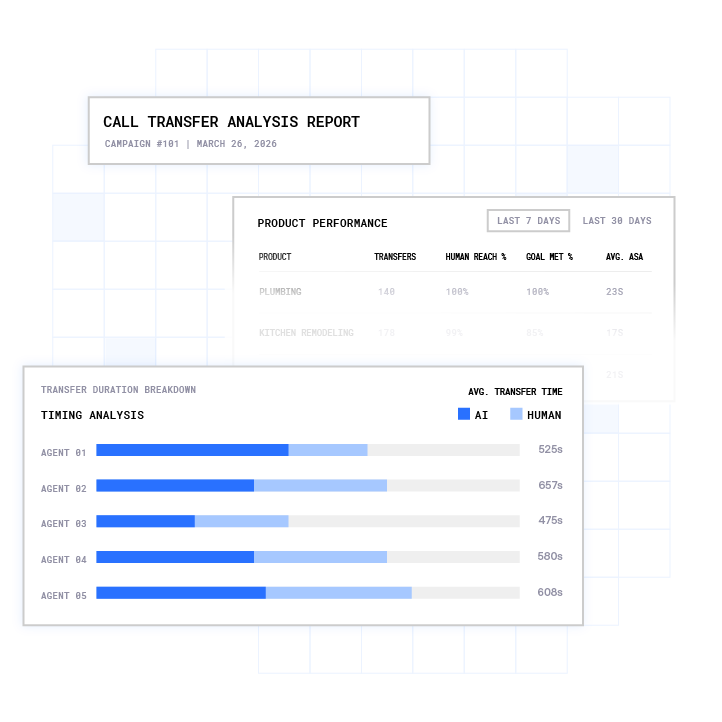
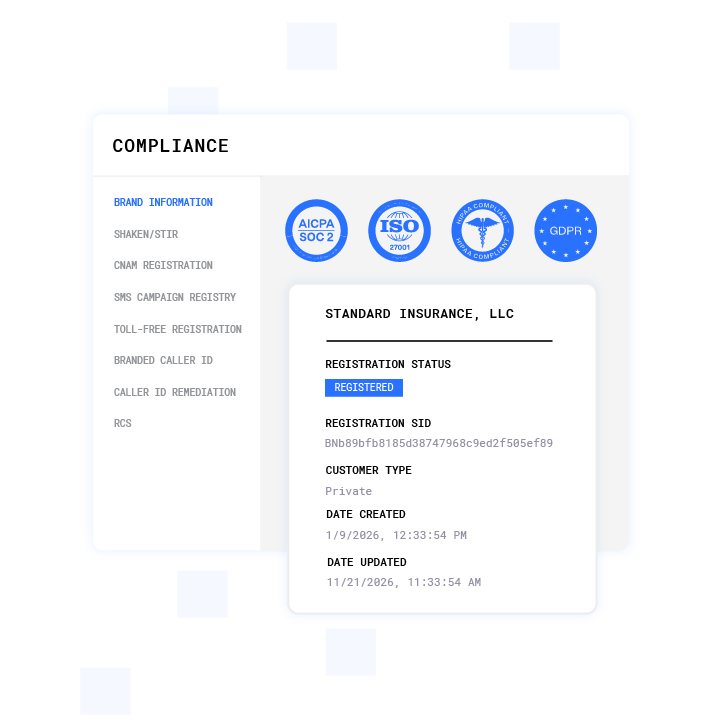
Plura’s compliance engine enforces TCPA, DNC, HIPAA, SOC 2, and 50+ state rule sets on every outbound contact.1 Real-time DNC scrubbing checks numbers against federal and state registries before dial. Consent records are timestamped, immutable, and audit-ready. Quiet-hours rules apply automatically through time-zone detection. The dashboard exports audit-ready reports in one click.
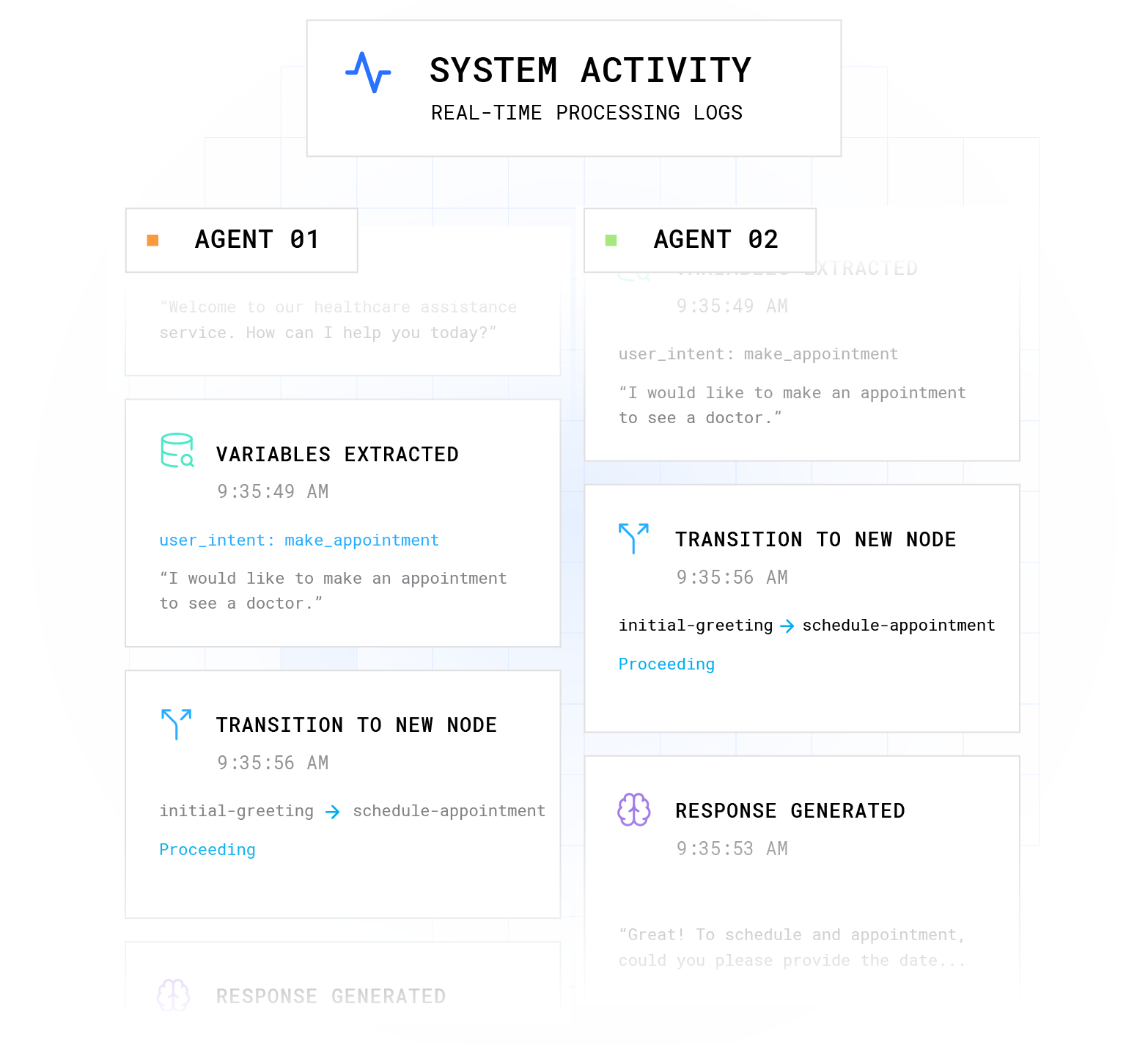
For AI-specific auditability, Plura logs every interaction artifact. The system records the workflow version, model response, consent prompt played, customer response, escalation trigger, and outcome. This end-to-end traceability aligns with the four questions auditors ask, as identified by NIST SP 800-53: what happened, who initiated it, what data was involved, and why the action was allowed.
Walk through a one-click audit export in a live demo and see how this evidence appears in practice.
AI-Specific Compliance: TCPA, Consent, and Human Escalation
The FCC’s February 2024 Declaratory Ruling (FCC 24-17) classified AI-generated voices as “artificial or prerecorded voice” under the TCPA.2 AI voice telemarketing calls require prior express written consent. Informational or transactional AI calls require prior express consent, with no AI carve-out. TCPA violations carry statutory damages of $500 to $1,500 per unsolicited call or text, with class action settlements averaging $6.6 million in 2023.3
The FCC’s separate NPRM (FCC 24-84), proposed in August 2024, would add an explicit “this call uses AI” disclosure requirement at the start of each outbound AI voice call. As of September 2026, that NPRM has not been finalized into binding law. The underlying TCPA framework for unconsented AI voice calls remains active. Consult qualified counsel on how these frameworks apply to your specific operations.
State laws layer additional requirements. California’s SB 1001 addresses bot disclosure for commercial transactions. Utah’s Artificial Intelligence Policy Act (SB 226, effective May 2025) introduces disclosure expectations in high-risk interactions. Twelve states require all-party consent for call recording. Plura’s AI voice agents handle these nuances through configurable workflows. These workflows support AI disclosure statements at call start, consent capture with timestamped proof, and automated opt-out routing that writes to suppression lists in real time.
For compliance-sensitive interactions, Plura’s workflows include guardrails and escalation paths. When a caller requests a human, objects to AI handling, or the conversation exceeds the AI’s policy scope, the system warm-transfers to a U.S.-based agent with full conversation context. The escalation event itself is logged, including the trigger condition, transfer history, and outcome. Operators can then demonstrate that the AI operated within its defined authority.
Onshore AI vs. Offshore BPO vs. Onshore Human Call Centers
| Compliance Dimension | Onshore AI (Plura AI) | Offshore BPO | Onshore Human Call Center |
|---|---|---|---|
| Data sovereignty | U.S.-based architecture with FCC-licensed carrier network | Data processed in foreign jurisdictions, subject to FCC NPRM caps and state restrictions | Domestic infrastructure for voice and storage |
| Regulatory alignment | Native enforcement of TCPA, DNC, HIPAA, SOC 2, and 50+ state rule sets, plus STIR/SHAKEN on every call | Contractual controls across foreign vendors, with Section 217 liability extending to carriers | Compliance driven by training, supervision, and manual processes |
| Auditability | Immutable, timestamped consent ledger, one-click audit exports, and end-to-end interaction logs | Compliance reporting depends on vendor cooperation, with fragmented evidence chains | Manual QA sampling with limited interaction coverage |
| AI-specific compliance | Built-in AI disclosure, consent capture for AI voices, and automated opt-out routing | AI tools layered on offshore infrastructure with unclear AI disclosure handling | N/A (human agents) |
| Human escalation | Warm transfer to U.S. agents with full context, with escalation events logged | Transfer to offshore agents, with U.S. transfer triggered by consumer request under proposed rules | Direct human escalation within the onshore team |
Vendor Evaluation Checklist for Compliance-Focused Buyers
Compliance-focused buyers can use the following questions to surface gaps before signing with an onshore AI call center vendor.
- Where is your infrastructure hosted? Verify voice origination, model hosting, data storage, and call recording all sit on U.S. infrastructure. Ask for architecture documentation instead of verbal assurances.
- Are you an FCC-licensed carrier or a reseller? Carrier status means controls apply at origination. Resellers renting from Twilio or another CPaaS inherit third-party compliance postures.
- How do you handle TCPA consent for AI voices? Confirm the platform captures prior express written consent with disclosure that calls may use artificial or prerecorded voice, timestamps consent records, and blocks calls without valid consent.
- What certifications do you hold? Look for SOC 2 Type II, HIPAA alignment, and ISO certification. Verify subprocessor coverage in Business Associate Agreements (BAAs).
- How do you enforce DNC compliance? Confirm real-time scrubbing against federal and state registries before every dial, plus internal suppression list management.
- What audit trails do you provide? Ask for immutable, timestamped logs covering consent, opt-outs, escalations, and interaction outcomes. Request a demonstration of one-click audit exports.
- How do you handle AI disclosure? Confirm the platform announces AI identity at call start where applicable and can configure state-specific disclosure rules.
- What is your human escalation protocol? Verify warm transfers to U.S.-based agents with full conversation context, and that escalation events are logged.
Frequently Asked Questions
What are the compliance advantages of onshore AI call centers?
Onshore AI call centers provide four primary compliance advantages over offshore BPOs and generic AI platforms. First, data sovereignty keeps PII and PHI within U.S. jurisdiction. Second, regulatory alignment allows infrastructure to match FCC NPRM proposals and state onshoring laws. Third, audit readiness comes from immutable, timestamped logs for every interaction. Fourth, AI-specific compliance includes native handling of TCPA AI voice rules, consent capture, and disclosure requirements. Plura supports all four of these dimensions through its FCC-licensed carrier infrastructure and built-in compliance engine.
How does the FCC NPRM affect call centers?
The FCC’s Notice of Proposed Rulemaking in CG Docket No. 26-52 proposes capping offshore customer-service calls at 30% of volume, prohibiting offshore handling of sensitive consumer data, requiring start-of-call disclosure when calls are handled abroad, and mandating free transfers to U.S. agents upon request. Covered entities include telecom, wireless, VoIP, cable, and satellite providers plus their affiliates and vendors. The proposed rules would also introduce compliance reporting on offshore call percentages, transfer rates, and wait times. The NPRM is not yet finalized. Consult qualified counsel on how the proposed rules may apply to your operations.
What is the difference between onshore and offshore call center compliance?
Onshore call centers operate under U.S. jurisdiction, which simplifies alignment with TCPA, HIPAA, state privacy laws, and data residency considerations. Offshore call centers introduce cross-border data transfer complexity, exposure to foreign data protection laws, and, under the proposed FCC rules, potential caps on offshore call volume and limits on handling sensitive data. The FCC’s Section 217 liability extension means carriers remain responsible for offshore vendor compliance failures. For AI call centers specifically, offshore infrastructure also introduces data residency risks from inference routing, sub-processor access, and telemetry transmission that onshore architecture can avoid by design.
What certifications should an AI call center platform hold?
Buyers typically look for SOC 2 Type II certification covering continuous monitoring, penetration testing, and third-party audits. Many also seek HIPAA alignment with a signed BAA covering the platform and all subprocessors, along with ISO certification. STIR/SHAKEN caller ID authentication on every outbound voice call supports call integrity. For AI-specific compliance, verify the platform enforces TCPA consent requirements, DNC scrubbing, and state-specific quiet-hours rules. Platform certifications support your compliance posture and do not replace your own regulatory obligations.
Conclusion: Turning Onshore AI into a Compliance Asset
The regulatory landscape has shifted toward tighter controls on offshore operations. The FCC’s proposed offshore call caps, state data-handling restrictions, and TCPA’s application to AI voices have increased compliance risk for high-volume U.S. operators that rely on foreign infrastructure. Onshore AI call centers running on U.S.-based architecture provide the data sovereignty, audit readiness, and AI-specific regulatory alignment that contact center leaders, compliance officers, and C-suite executives need for defensible vendor decisions.
Plura AI delivers the compliance-focused capabilities described in this guide. The platform uses domestic architecture, FCC-licensed carrier status, native enforcement of TCPA, DNC, HIPAA, SOC 2, and 50+ state rule sets, immutable audit trails, and AI-specific compliance handling with human escalation paths. Plura’s compliance engine functions as a first-class platform layer and applies controls before every contact, which supports proactive compliance management.
Run your numbers through Plura’s ROI calculator to see the cost impact, or compare plans and rates side by side.
See onshore AI compliance in action with a live demo and evaluate how it fits your contact center strategy.
1 Plura AI maintains SOC 2, HIPAA, ISO, and GDPR posture as part of its platform infrastructure. References to compliance frameworks in this article describe Plura’s platform capabilities and do not constitute a guarantee that any customer using Plura will themselves be compliant with applicable laws or standards. Customers remain solely responsible for their own regulatory obligations, certifications, consent management, recordkeeping, and the claims they make to their own end users. Consult qualified legal counsel for guidance specific to your use case.
2 This article describes regulatory frameworks at a general level and does not constitute legal advice. Laws and regulations vary by jurisdiction, change over time, and apply differently depending on facts and circumstances. Readers should consult qualified legal counsel before making compliance decisions.
3 Performance figures, customer outcomes, and industry statistics referenced in this article are drawn from cited third-party sources or Plura customer case studies. Individual results vary based on implementation, use case, industry, audience, and execution. Past or aggregate performance is not a guarantee of future results.
4 References to third-party products, services, companies, or research are made for informational and comparative purposes only. Plura AI is not affiliated with, endorsed by, or sponsored by any third party named in this article unless explicitly stated. Trademarks and product names referenced remain the property of their respective owners.
This article is provided for informational purposes only and reflects Plura AI’s understanding at the time of publication. Product capabilities, integrations, and specifications are subject to change. For the most current information, visit plura.ai.
This article was produced with the assistance of AI tools and reviewed by Plura AI prior to publication.