

Written by: Matt Beucler, CEO, Plura AI
Updated July 2026
What Reddit Threads Reveal About Predictive Dialers in 2026
- 2026 Reddit threads consistently flag predictive dialers for abandonment risk, TCPA exposure, and weak performance below 8-15 agents.
- Abandonment rates often exceed the FCC’s 3% cap on B2B mobile lists, which creates significant regulatory and financial liability.
- Data quality and carrier spam labeling, not dialer speed, drive connect rates, and reseller platforms cannot fix these issues at the network layer.
- Carrier-owned infrastructure with real-time DNC scrubbing and STIR/SHAKEN authentication directly addresses the core complaints raised across sales and real-estate communities.
- Plura AI’s FCC-licensed, carrier-owned AI Predictive Dialer solves these problems at the origination layer, and you can see it live in a working environment.
The Problem: What 2026 Reddit Threads Actually Say
Reddit users in r/sales, r/Entrepreneur, and r/WholesaleRealestate describe the same four predictive dialer problems with striking consistency.
Team size thresholds. The most repeated warning is that predictive dialers break down below a specific headcount. AgentTech puts the minimum at 10-15 concurrent agents for the pacing algorithm to function accurately. Revenue.io sets the floor at 8-10 concurrent agents, with power dialers recommended for anything smaller.4 ICTBroadcast’s analysis of the FCC’s 2026 FNPRM confirms that predictive dialer software requires at least eight active agents for statistical stability. Reddit users who ignore this threshold report over-dialing, abandoned calls, and burned lists.
Abandonment risk. Orum’s 2026 internal benchmarks across audited teams show predictive dialers exceeding the FCC’s 3% abandoned-call cap on B2B mobile-heavy lists, with real-world abandonment rates of 5-15%.3 That gap between the regulatory ceiling and day-to-day performance is where TCPA exposure accumulates.
Data quality over dialer speed. Wholesale real estate and insurance threads emphasize that list quality, not dialer speed, drives connect rates. US mobile answer rates for unknown numbers have declined substantially due to carrier spam labeling, STIR/SHAKEN enforcement, and iOS Silence Unknown Callers. A faster dialer on a degraded list produces more abandoned calls and fewer conversations.
Twilio-wrapped tools cannot fix carrier problems.4 Users warn that reseller platforms cannot remediate spam labels because they do not own the carrier. Predictive dialers generate calling patterns that wireless carriers flag as spam, causing rapid phone number blacklisting and reduced pickup rates over time. A platform renting capacity from a third-party CPaaS inherits that CPaaS’s caller ID reputation instead of controlling its own.
Regulatory Guardrails Around Predictive Dialers
Predictive dialers remain in use in the United States under specific operating conditions defined by federal and state frameworks. The FCC’s TCPA rules at 47 C.F.R. § 64.1200(a)(6) cap abandoned calls at 3% of calls answered by a live person, measured per campaign over a 30-day period.2 An abandoned call is one where a live person answers but no agent connects within two seconds of the completed greeting.
1
TCPA penalties reach up to $1,500 per willful violation and $500 per negligent violation, with class-action settlements commonly ranging from $5 million to $75 million.2 A campaign that exceeds the 3% cap by 100 calls faces $50,000 to $150,000 in potential liability based on those statutory ranges.
The regulatory picture tightened further in 2026. On April 30, 2026, the FCC adopted a Notice of Proposed Rulemaking seeking comment on potential enhanced Know-Your-Customer requirements for voice providers, including possibly collecting and verifying customer name, address, government ID, and alternative phone numbers. The FCC’s 2026 FNPRM also asks whether the 3% cap and 15-second minimum ring time still reflect modern outbound calling conditions, and the FNPRM is a request for public comment only and is not a final rule.
State mini-TCPAs add another layer. Florida’s FTSA and Oklahoma’s OTSA are cited as frameworks that restrict certain types of predictive dialing on cell phones without prior express written consent.2 and B2B contact lists show median coverage of 62% direct mobiles on target ICPs, with some providers reaching 60-75% coverage in 2026. Operators should consult qualified counsel on their specific obligations under federal and state frameworks.
Predictive Dialer Cost Structure vs Plura Economics
Cloud-based predictive dialers typically cost $75-$200 per seat per month for software, plus $0.01-$0.04 per outbound minute for telephony and $20-$50 per seat for compliance add-ons. Reddit users consistently report that the software subscription is the smallest line item. The larger cost comes from underperformance, including carrier blocks, TCPA exposure, list burnout, and the overhead of managing a Twilio-wrapped platform that cannot enforce controls at origination.
Plura changes that cost profile for high-volume teams. The platform’s total cost of ownership runs $300,000-$700,000 per year and replaces the $4M-$7M traditional contact-center economics on equivalent volume. In a 15-agent scenario at default inputs from Plura’s ROI calculator, human agent costs run $60,000 per month against $14,400 per month for Plura agents at 100% talk utilization. That gap compounds to $547,200 in 12-month savings and $2,736,000 over 60 months.3
The structural driver behind this difference is talk utilization. Predictive dialer logic can increase human agent utilization from about 40 minutes to 57 minutes per hour. Plura’s AI agents run at 100% talk utilization and remove taxes, benefits, commissions, and rehiring cycles from the cost base.
Use Plura’s calculator to model your own economics and see the impact on your P&L.
Predictive vs Power Dialer: How Reddit Draws the Line
Reddit users separate predictive and power dialers based on team size and compliance tolerance. A power dialer dials one number at a time with the agent live on the line from the first ring, which creates zero delay and no abandoned calls. A predictive dialer dials multiple numbers at once and routes only answered calls to available agents, which creates a 1-3 second dead-air pause that most prospects interpret as a robocall and hang up immediately.
Power dialers typically support 60-120 calls per hour while predictive dialers support 150-300 calls per hour. That volume advantage only holds when the team is large enough to absorb variance in answer rates without breaching the 3% abandonment cap described earlier.
Given the 8-agent threshold established earlier, Reddit consensus favors power or parallel dialing for smaller teams. The compliance burden of predictive dialing at those sizes does not justify the incremental volume, and predictive dialers produce bursts of short, disconnected calls that wireless carriers flag as spam, which accelerates phone number blacklisting.
Regulatory and Carrier Infrastructure in 2026
Outbound calling compliance in 2026 looks materially different from two years ago, and the underlying carrier infrastructure now determines whether a platform can keep pace.
The FCC’s NPRM under CG Docket No. 26-52 proposes capping offshore customer-service calls at 30% and prohibiting offshore handling of sensitive consumer data. Companion legislation, including the Keep Call Centers in America Act (S.2495) and the Foreign Robocall Elimination Act (S.2666), extends the federal perimeter. State laws in New York, New Jersey, Connecticut, Missouri, and Florida already restrict offshore handling of medical, financial, and consumer data.
For predictive dialer operators, infrastructure choices now have direct operational impact. Carrier infrastructure blocks can occur even for legal calls when predictive dialers repeatedly hit the same area code, use poor pacing, or exceed calls per minute from a single number, which triggers analytics filters from carriers like AT&T, T-Mobile, and Verizon.4
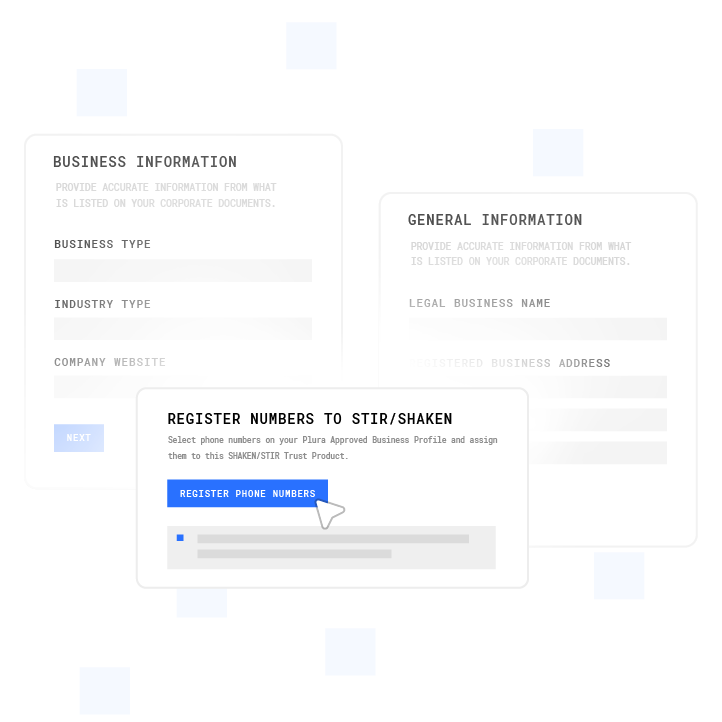
Carrier-owned platforms enforce STIR/SHAKEN, real-time DNC scrubbing, and consent ledgers at the network layer. Twilio-wrapped API resellers rent capacity, inherit third-party caller ID reputation, and bolt compliance on after origination, which raises per-minute costs and increases regulatory surface area. Plura is its own FCC-licensed audio bridging carrier. Voice originates on Plura’s domestic infrastructure, branded caller ID is issued at the carrier level, and real-time DNC scrubbing runs before any call leaves the switch. Platforms that cannot issue branded caller ID directly cannot reliably fix spam labeling, and mobile answer rates for unknown numbers have fallen to 8-12% in 2026 largely because unauthenticated origination triggers carrier filters.
Team-Size Decision Table for Dialer Selection
| Team Size | Recommended Dialer | Abandonment Risk | Compliance Burden | Plura AI Fit |
|---|---|---|---|---|
| 1-5 agents | Power / Preview | Low | Low | Not optimal |
| 6-7 agents | Power | Moderate | Moderate | Transition |
| 8-10 agents | Predictive | Manageable | High | Supported |
| 11-15 agents | Predictive | Controlled | High | Optimal |
| 15+ agents | Predictive | Lowest | Highest | Full scale |
Team-size thresholds are drawn from AgentTech’s dialer benchmarks, Revenue.io’s team-size guidance, and ICTBroadcast’s FCC FNPRM analysis. Compliance burden reflects the FCC’s 3% abandoned-call cap under 47 C.F.R. § 64.1200(a)(7) and state mini-TCPA exposure. Operators should consult qualified counsel on their specific regulatory obligations.
Conclusion: Reddit Complaints Point to Missing Carrier Controls
Every major complaint in 2026 Reddit threads on predictive dialers traces back to one structural gap, which is that the platform does not own the carrier. Abandonment risk reflects pacing that needs carrier-level enforcement. Spam labeling reflects caller ID that needs carrier-level issuance. TCPA exposure reflects consent and DNC handling that need carrier-level scrubbing before origination. Data quality failures become more costly when the platform cannot authenticate origination or maintain stateful context across channels.
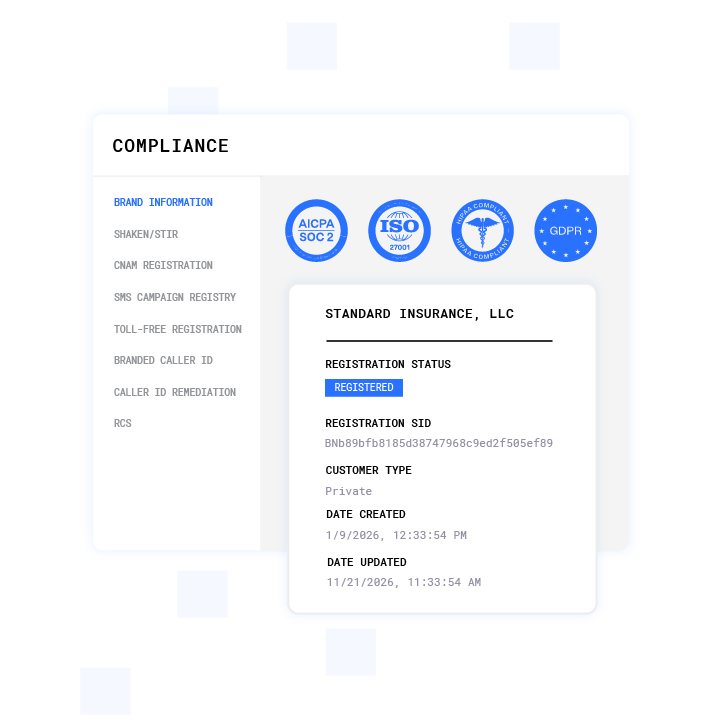
Plura’s AI Predictive Dialer runs on 100% U.S. FCC-licensed infrastructure, which directly addresses the carrier ownership gap Reddit users describe. Calls originate on Plura’s own carrier instead of a third-party CPaaS, so the platform can issue branded caller ID directly and reduce spam labeling that reseller tools struggle to remediate. Real-time DNC scrubbing runs before dial, which helps reduce TCPA exposure at the source, and STIR/SHAKEN authentication on every outbound call supports carrier-level verification that limits spam flags. The Stateful Conversation Database holds context across voice, SMS, RCS, and webchat, so the dialer can prioritize contacts based on historical answer rates and prior conversation outcomes instead of simple list order. Plura supports customer compliance with TCPA, DNC, SOC 2, HIPAA, and 50+ state rule sets that are enforced at the platform layer.1
Frequently Asked Questions
What abandonment rate does the FCC allow for predictive dialers?
The 3% cap described earlier applies per campaign over a rolling 30-day period, and calls answered by voicemail or automated systems are excluded from that calculation. Violations carry statutory damages of $500 to $1,500 per call based on TCPA penalty ranges. Operators should consult qualified counsel on how these rules apply to their specific campaigns and calling practices.
Does team size affect how a predictive dialer performs in practice?
Team size directly determines whether a predictive dialer’s pacing algorithm has enough data to behave predictably. Industry benchmarks consistently place the minimum viable team size at 8-15 concurrent agents. Below that threshold, the algorithm lacks sufficient information on call durations, answer rates, and agent availability, which increases the risk of over-dialing. Over-dialing produces abandoned calls, which increases regulatory exposure under the FCC’s 3% cap and accelerates list burnout as contacts are exhausted faster than they can be re-engaged. Teams under eight agents are generally better served by power or preview dialers that maintain a 1:1 calling ratio and remove abandoned call risk.
How does carrier ownership change spam labeling outcomes?
Spam labeling is enforced at the carrier level, so only platforms that own their carrier infrastructure can address it at the source. Platforms built on third-party CPaaS providers like Twilio inherit that provider’s caller ID reputation instead of controlling their own. When a number gets flagged as spam, a reseller platform has no direct path to remediate it at the network layer. Carrier-owned platforms can issue branded caller ID directly, authenticate calls through STIR/SHAKEN at origination, and remediate spam labels through the carrier rather than through an intermediary. Given the 8-12% answer rate for unknown numbers noted earlier, the difference between a branded, authenticated caller ID and an unauthenticated number showing as “Spam Likely” often determines whether an outbound operation remains functional or burns its list.
What is the difference between a predictive dialer and a power dialer for compliance purposes?
The core compliance difference is abandoned call risk. A power dialer maintains a 1:1 ratio, with one agent live on the line from the first ring, so an agent is always available when a prospect answers. A predictive dialer dials multiple numbers simultaneously and routes answered calls to available agents, which means excess answers become abandoned calls when agent capacity is insufficient. Managing that ratio to stay under the FCC’s 3% cap requires active monitoring, sufficient team size for statistical stability, and pacing controls that many reseller platforms cannot enforce at the carrier level. Power dialers carry lower regulatory exposure for abandoned calls, while predictive dialers carry higher exposure but can deliver higher call volume when team size and infrastructure support accurate pacing.
What does the FCC’s 2026 regulatory activity mean for operators using offshore or reseller dialing infrastructure?
The FCC’s NPRM under CG Docket No. 26-52 proposes capping offshore customer-service calls at 30% and prohibiting offshore handling of sensitive consumer data. The Know Your Customer proposal adopted April 30, 2026 requires originating voice providers to verify customer identity before carrying outbound calls, with a base forfeiture of $2,500 per offending call. State laws in New York, New Jersey, Connecticut, Missouri, and Florida already restrict offshore handling of medical, financial, and consumer data. For operators using Twilio-wrapped reseller platforms, the regulatory surface area is larger because many controls are applied after origination instead of at the carrier layer. Operators should consult qualified counsel to assess their exposure under current and proposed federal and state frameworks.
1 Plura AI maintains SOC 2, HIPAA, ISO, and GDPR posture as part of its platform infrastructure. References to compliance frameworks in this article describe Plura’s platform capabilities and do not constitute a guarantee that any customer using Plura will themselves be compliant with applicable laws or standards. Customers remain solely responsible for their own regulatory obligations, certifications, consent management, recordkeeping, and the claims they make to their own end users. Consult qualified legal counsel for guidance specific to your use case.
2 This article describes regulatory frameworks at a general level and does not constitute legal advice. Laws and regulations vary by jurisdiction, change over time, and apply differently depending on facts and circumstances. Readers should consult qualified legal counsel before making compliance decisions.
3 Performance figures, customer outcomes, and industry statistics referenced in this article are drawn from cited third-party sources or Plura customer case studies. Individual results vary based on implementation, use case, industry, audience, and execution. Past or aggregate performance is not a guarantee of future results.
4 References to third-party products, services, companies, or research are made for informational and comparative purposes only. Plura AI is not affiliated with, endorsed by, or sponsored by any third party named in this article unless explicitly stated. Trademarks and product names referenced remain the property of their respective owners.
This article is provided for informational purposes only and reflects Plura AI’s understanding at the time of publication. Product capabilities, integrations, and specifications are subject to change. For the most current information, visit plura.ai.
This article was produced with the assistance of AI tools and reviewed by Plura AI prior to publication.