
Written by: Matt Beucler, CEO, Plura AI | Last updated: August 26, 2026
Key Takeaways
- RCS Business Messaging is a carrier-approved enterprise channel that delivers verified brand profiles, rich media, and 80% read rates with 35% CTR.
- Most RCS platforms miss enterprise requirements because they lack carrier ownership, real-time compliance controls, and stateful cross-channel memory.
- Regulatory exposure under FCC NPRM CG Docket No. 26-52.2
- Plura AI’s FCC-licensed carrier, Stateful Conversation Database, and real-time DNC/TCPA engine deliver sub-5-second responses and 3x average ROI in 90 days.3
- Enterprises that need carrier-grade RCS with unified memory across voice, SMS, RCS, and webchat can start a conversation with Plura AI to see the platform in action.
The Gap: Why Most RCS Platforms Miss Enterprise Standards
Most generic RCS platforms sit on top of third-party CPaaS providers instead of owning the carrier layer. They cannot issue branded caller ID at the carrier level, apply real-time DNC scrubbing before a message leaves the network, or keep conversation context across voice, SMS, RCS, and webchat in one stateful database. For high-volume operations, that gap becomes a compliance risk and a revenue drag, not just a feature limitation.
Three specific risks define the problem in 2026:
- Regulatory exposure under FCC NPRM CG Docket No. 26-52.2 The Federal Register documents a proposed rulemaking that would cap offshore customer-service calls at 30% and restrict offshore handling of sensitive consumer data. Any RCS platform with foreign infrastructure dependencies sits inside that exposure window.
- State onshoring laws. New York, New Jersey, Connecticut, Missouri, and Florida each have active call-center onshoring or sensitive-data restriction statutes. New York’s Call Center Jobs Act includes penalties up to $10,000 per day. Operators running RCS on platforms with offshore data routing face compounding liability exposure.
- Stateless architecture. Many RCS tools treat messaging as a stand-alone channel. A customer who texted at 9 a.m. must re-explain their situation when the call comes at noon. That experience erodes trust and directly suppresses conversion rates across the pipeline.
Run your numbers through Plura’s calculator to check your ROI in real time.
RCS Messaging vs. RCS Business Messaging in Practice
RCS is a person-to-person messaging protocol built to the GSMA Universal Profile standard. It replaces SMS between individual users and adds read receipts, typing indicators, high-resolution media, and group chats. As of July 28, 2026, GSMA published Universal Profile 4.1, which refines end-to-end encryption specifications and introduces a gRPC-based connectionless transport protocol for greater stability and scale.
RCS Business Messaging (RBM) is the application-to-person layer built on top of that protocol. It adds verified sender profiles with brand name, logo, colors, and a carrier-verified check mark. It supports rich cards, carousels, in-message buttons, suggested replies, and interactive flows. Businesses cannot send RCS messages directly to consumers and must route all RCS Business Messaging through an approved aggregator or messaging provider. Senders must be verified and approved by Google or the mobile carrier, depending on the infrastructure used.
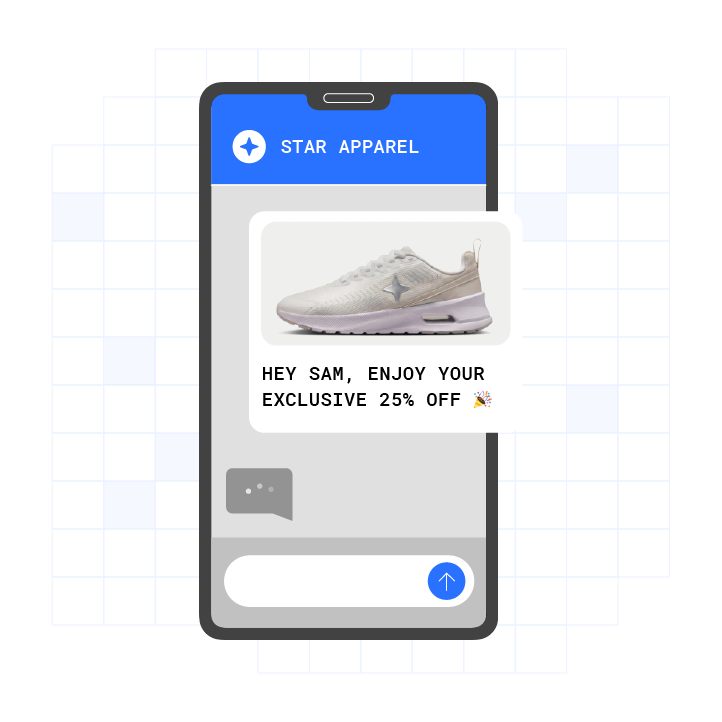
These technical requirements define the practical difference. P2P RCS functions as a consumer feature. RCS Business Messaging operates as a regulated, carrier-approved enterprise channel with its own onboarding, verification, compliance posture, and pricing structure.
RCS Business Messaging on iPhone
Apple added native RCS support to the Messages app with iOS 18 in September 2024, subject to carrier and market availability. RCS for Business began rolling out on iPhone with iOS 18.1 in October 2024 with select carriers, which enabled verified business messages on iPhone for the first time.
By early 2025, iOS 18 adoption reached approximately 68% of active iPhones. That adoption level allowed most iPhone users to receive RCS messages, alongside near-universal Android support.
On encryption, end-to-end encryption for personal RCS chats between iPhone and Android devices began rolling out with iOS 26.5 in May 2026 after beta testing in iOS 26.4. This rollout uses GSMA Universal Profile 3.0 and the Messaging Layer Security protocol. That E2EE capability applies to consumer P2P chats only. RCS for Business messages are encrypted in transit but not end-to-end encrypted, and the consumer E2EE rollout does not extend to them.
Approximately 6 billion devices worldwide are already RCS-capable per GSMA Industry Services, including around 4.5 billion Android devices and around 540 million Apple devices running iOS 18 or later per GSMA Intelligence.
How RCS and SMS Will Coexist
Traffic data points toward coexistence between RCS and SMS, not replacement. Juniper Research forecasts global business RCS traffic will exceed 485 billion messages by 2030, up from 125 billion in 20264, which represents 286% growth. Business RCS traffic has already grown substantially in the U.S.
SMS will remain in place for a structural reason. SMS reaches essentially every mobile phone in use today, including basic feature phones, with no dependency on internet connectivity at the time of delivery. For campaigns that must reach an entire customer base without exception, SMS is the only channel that can provide that guarantee. Every RCS Business Messaging campaign requires an SMS fallback, so businesses maintain an underlying A2P 10DLC, short-code, or toll-free registration.
The practical outcome for enterprise operators is clear. RCS handles rich, interactive, high-conversion touchpoints. SMS provides universal fallback. Both channels run in parallel on a platform that manages routing automatically.
Security and Sender Trust: RCS vs. iMessage
Security comparisons depend on which layer is under review. iMessage uses end-to-end encryption by default for Apple-to-Apple conversations. RCS for Business messages are encrypted in transit but not end-to-end encrypted. Consumer P2P RCS E2EE is rolling out in iOS 26.5 beta for supported carriers, but that rollout does not cover business messaging.
RCS Business Messaging has a structural advantage over iMessage for enterprise use in verified sender identity. RCS provides verified sender profiles with brand name, logo, colors, and a carrier-verified check mark. This verification is especially valuable for financial services and healthcare providers that are frequent targets of impersonation scams. iMessage does not provide an equivalent carrier-level sender verification layer for business messages.
For regulated industries, the key decision point is not iMessage versus RCS. The critical factor is whether the RCS platform enforces TCPA compliance, DNC scrubbing, HIPAA-aligned data handling, and audit-ready consent logging at the infrastructure level before a message is sent. That requirement sits at the infrastructure layer, not the protocol layer.
Channel Fit: RCS vs. SMS vs. WhatsApp
Operators need a clear view of how RCS Business Messaging compares to the channels it runs alongside. SMS provides universal reach, while WhatsApp dominates in many app-first markets. The table below highlights reach, interactivity, verification, and compliance posture across all three channels so leaders can align each channel to specific use cases.
| Dimension | RCS Business Messaging | SMS (A2P) | WhatsApp Business API |
|---|---|---|---|
| Reach | 1.5 billion users globally, 250 million in the U.S., with automatic SMS fallback for unsupported devices | Universal reach to essentially every mobile phone, no internet required | 3 billion+ monthly active users across 180 countries, requires app install and opt-in |
| Interactivity | Rich cards, carousels, buttons, in-message payments, AI-rendered video, 80% read rate, 35% CTR | Plain text only, no native rich media or interactive buttons | Rich media, buttons, and templates, strong in markets where WhatsApp dominates |
| Verified Sender | Carrier-verified brand name, logo, and check mark | Limited sender ID, no native verification layer | Verified business profile with green tick for opted-in users |
| Compliance Posture (U.S.) | TCPA consent and opt-out rules apply, state mini-TCPA frameworks vary by jurisdiction, requires carrier-level enforcement | TCPA, 10DLC registration, and DNC scrubbing apply within a well-established enforcement framework | Explicit opt-in required, Meta paused marketing templates to U.S. numbers since April 2025 |
Platform Comparison: Carrier Ownership, Memory, and U.S. Footprint
Choosing an RCS platform is an infrastructure decision. Carrier ownership, stateful memory, and U.S. data residency drive both performance and compliance posture. The table below compares Plura AI, Twilio-based API resellers, and generic CPaaS platforms on those dimensions.
| Capability | Plura AI | Twilio-Based API Resellers4 | Generic CPaaS Platforms |
|---|---|---|---|
| Carrier Ownership | FCC-licensed audio bridging carrier, with voice and messaging originating on Plura’s own infrastructure | Depends on Twilio or another CPaaS, with no owned carrier license | Routes through third-party telecom, carrier-level controls unavailable |
| Stateful Cross-Channel Memory | Unified Stateful Conversation Database shared across voice, SMS, RCS, and webchat | Channel-isolated by default, no shared memory across voice and messaging | No stateful memory, each session starts from zero |
| U.S. Infrastructure | 100% U.S. infrastructure by architecture, with voice origination, model hosting, data storage, and call recording on domestic infrastructure, which avoids offshore routing exposure described in the FCC NPRM | Infrastructure location varies, offshore data routing possible depending on configuration | Infrastructure location not guaranteed, with potential exposure under FCC NPRM CG Docket No. 26-52 |
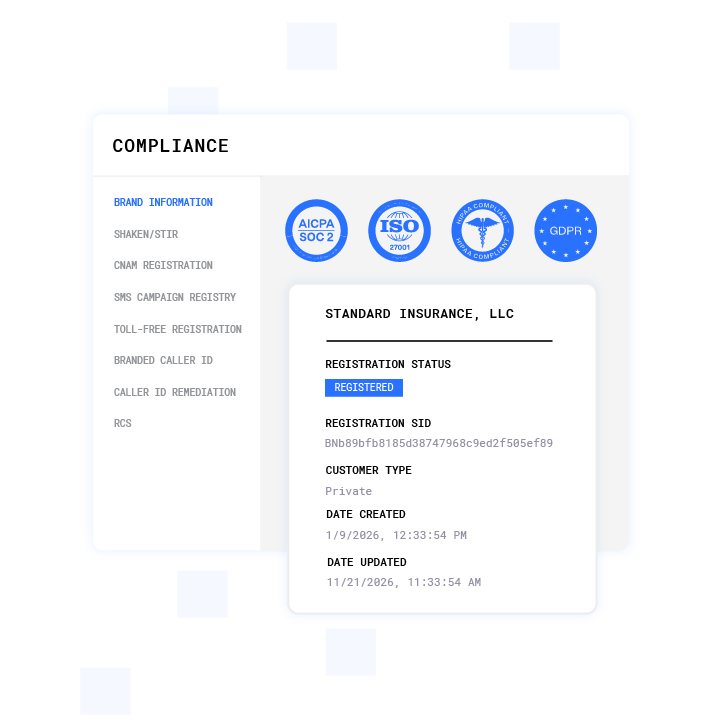
| Real-Time Compliance Enforcement | DNC scrubbing, TCPA-litigator filtering, and quiet-hours enforcement applied before every outbound contact, with SOC 2, HIPAA, ISO certification, GDPR, SHAKEN/STIR, TCPA compliance, and DNC compliance supported1 | Compliance added after the fact, customer responsible for DNC and TCPA enforcement | No pre-dial compliance layer, third-party add-ons required |
Compare plans and rates side by side at Plura’s pricing page.
The Solution: Plura AI’s Carrier-Grade RCS Business Messaging
Plura AI operates as its own FCC-licensed audio bridging carrier, which defines what the platform can enforce at the network edge. Voice originates on Plura’s domestic infrastructure rather than a third-party CPaaS. Branded caller ID is issued at the carrier level. SHAKEN/STIR caller ID authentication validates every outbound call. Real-time DNC scrubbing and TCPA-litigator filtering run before every outbound contact instead of as a post-dial audit.
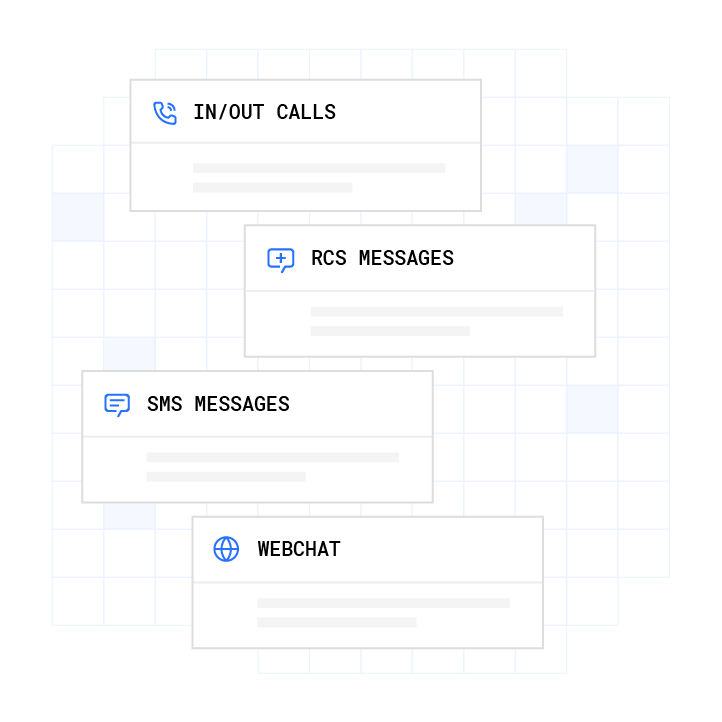
The Stateful Conversation Database is the second structural differentiator. Every interaction across voice, SMS, AI RCS, and AI webchat is keyed to a customer token and stored in one place. The AI reads and writes to that database during every conversation. A customer who texted at 9 a.m. is treated as the same customer when the call arrives at noon. Pricing offers, objections, qualification status, and sensitive-data redactions all carry forward across channels.
Performance numbers from Plura’s platform show how this architecture converts into outcomes:
- Sub-5-second first contact across voice, SMS, RCS, and webchat, compared with an industry standard of more than 47 hours3
- 3x average ROI in 90 days, driven by faster response and higher conversion3
- 47% average pipeline growth across deployments
- 90% faster lead-response time than baseline operations
- Up to 40% reduction in no-shows for healthcare operators (see Plura’s healthcare deployment patterns)
- 80% read rate and 35% click-through rate on AI RCS messaging, compared with SMS benchmarks of 4% to 7% CTR
The compliance engine functions as a core layer of the platform. Plura supports compliance with SOC 2, HIPAA, ISO certification, GDPR, SHAKEN/STIR caller ID verification, TCPA compliance, and DNC compliance.1 Every outbound contact is checked against federal and state DNC registries in real time before dial. Consent records are timestamped, immutable, and audit-ready. Quiet-hours rules apply automatically through time-zone detection. The compliance dashboard exports audit-ready reports in a single click. Customers remain responsible for their own regulatory obligations, and Plura provides infrastructure that keeps enforcement operationally consistent.
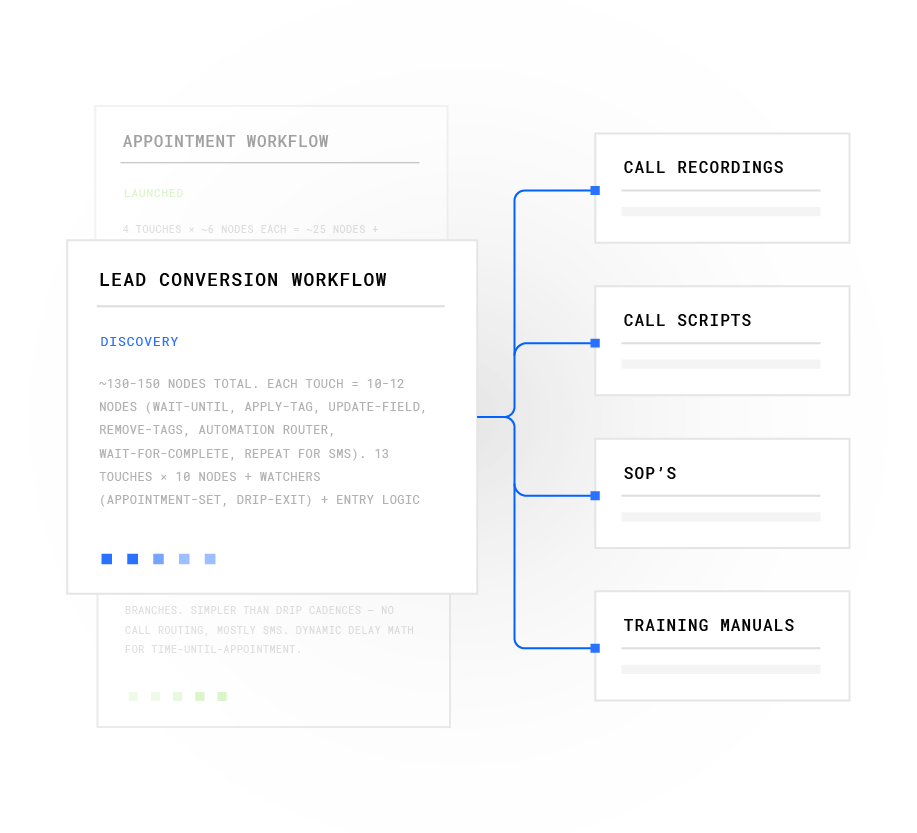
The no-code workflow builder lets operators design memory-driven AI conversation pathways without engineering resources. Each workflow node references the Stateful Conversation Database and supports BATNA-style negotiation guardrails that define the floor and ceiling within which an AI agent can negotiate. The conversation intelligence layer analyzes every interaction across all four channels to surface which scripts close, which objections recur, and which conversion paths win.
For operators running AI SMS lead generation alongside RCS, the same stateful memory applies. An AI predictive dialer that called a lead yesterday already knows the RCS conversation from this morning. That behavior reflects the underlying architecture rather than a surface feature.
Conclusion: RCS Growth and Infrastructure Reality in 2026
RCS for Business revenue is forecast to rise from $2.0 billion in 2026 to $6.5 billion in 2030, per Juniper Research5. RCS-capable device penetration in North America has increased significantly since 2024. The channel now operates as a mainstream option, not an experiment.
Operators that capture this revenue will not treat RCS as a simple add-on to an SMS platform. They will run RCS on carrier-grade infrastructure with stateful cross-channel memory, real-time compliance enforcement, and 100% U.S. data handling. The FCC NPRM, state onshoring laws, and the TCPA litigation environment described in the 2025 filing record turn infrastructure choices into legal risk decisions as well as performance decisions.
Plura’s platform is built for that reality. The combination of FCC-licensed carrier status, Stateful Conversation Database, 100% U.S. infrastructure by architecture, and the compliance posture detailed above is enforced in real time before every contact. Sub-5-second first contact then delivers the ROI benchmarks already outlined.
Frequently Asked Questions
What makes RCS Business Messaging different from a standard SMS campaign?
RCS Business Messaging is a carrier-approved, verified enterprise channel. Unlike SMS, it delivers branded sender profiles with a carrier-verified check mark, rich media such as carousels and interactive buttons, read receipts, and in-message actions like payments and document signing. The sender verification layer reduces impersonation risk, which matters for financial services and healthcare operators. SMS remains the universal fallback when RCS is unavailable on a recipient’s device or carrier, so enterprise deployments run both channels in parallel with automatic routing. The compliance posture for RCS Business Messaging mirrors SMS under TCPA in the U.S., with consent, opt-out, and quiet-hours obligations applying to both channels.2 Operators should consult qualified counsel on their specific obligations.
Does Plura AI support RCS Business Messaging alongside voice and SMS on the same platform?
Plura deploys AI RCS alongside AI voice agents, AI SMS, and AI webchat on a single Stateful Conversation Database. Every channel shares the same customer memory, so an AI agent that sent an RCS message in the morning already knows that context when the voice call arrives in the afternoon. This cross-channel memory is built into the platform architecture rather than assembled from separate point tools. The no-code workflow builder lets operators design conversation logic that spans all four channels without engineering, and the conversation intelligence layer surfaces performance data across every channel in one dashboard.
How does Plura’s FCC-licensed carrier status affect RCS Business Messaging compliance?
Plura operates as its own FCC-licensed audio bridging carrier, so compliance enforcement occurs at the carrier level before a message or call leaves the network. Real-time DNC scrubbing, TCPA-litigator filtering, SHAKEN/STIR authentication, and quiet-hours enforcement apply to every outbound contact inside the platform. Platforms built on top of third-party CPaaS providers cannot enforce these controls at origination because they do not own the carrier layer. For operators with exposure under FCC NPRM CG Docket No. 26-52 or state onshoring laws, Plura’s 100% U.S. infrastructure by architecture means voice origination, model hosting, data storage, and call recording all sit on domestic infrastructure. Customers remain responsible for their own regulatory obligations and should consult qualified counsel on their specific compliance posture.
What is the onboarding timeline for RCS Business Messaging in the U.S.?
The U.S. carrier approval process for new RCS business senders can take several weeks. That process includes brand and asset vetting, agent configuration review, and carrier-by-carrier approval across major carriers and participating MVNOs. Timelines are expected to improve as carriers scale their review infrastructure.5 Every RCS Business Messaging deployment also requires an underlying SMS fallback registration, typically A2P 10DLC, short-code, or toll-free. Plura manages the onboarding sequence as part of the deployment process, including the workflow build, a pilot test on a subset of real contacts, and full go-live. Annual contracts include a 90-day opt-out window if the deployment is not delivering.
Will RCS Business Messaging work for healthcare and financial services operators?
RCS Business Messaging is in active deployment across healthcare and financial services. Overall business RCS messaging is forecast to grow 286% from 125 billion messages in 2026 to 485 billion by 2030, per Juniper Research, driven by appointment confirmations, patient intake, and prescription reminders. Among financial institutions familiar with RCS, nearly half are already using it and another 45% plan to adopt or expand, with financial services adopting RCS faster than almost any other industry, primarily for fraud alerts, OTP delivery, and product offers. For regulated operators, critical infrastructure requirements include HIPAA-aligned encryption and audit logging, verified sender identity to reduce impersonation risk, and a compliance engine that enforces consent and opt-out rules before every send. Plura’s platform supports HIPAA, SOC 2, ISO certification, and DNC compliance at the infrastructure level. Operators in regulated industries should confirm their specific obligations with qualified counsel before deployment, because sector-specific rules such as HIPAA affect message content logging and audit trail requirements.
1 Plura AI maintains SOC 2, HIPAA, ISO, and GDPR posture as part of its platform infrastructure. References to compliance frameworks in this article describe Plura’s platform capabilities and do not constitute a guarantee that any customer using Plura will themselves be compliant with applicable laws or standards. Customers remain solely responsible for their own regulatory obligations, certifications, consent management, recordkeeping, and the claims they make to their own end users. Consult qualified legal counsel for guidance specific to your use case.
2 This article describes regulatory frameworks at a general level and does not constitute legal advice. Laws and regulations vary by jurisdiction, change over time, and apply differently depending on facts and circumstances. Readers should consult qualified legal counsel before making compliance decisions.
3 Performance figures, customer outcomes, and industry statistics referenced in this article are drawn from cited third-party sources or Plura customer case studies. Individual results vary based on implementation, use case, industry, audience, and execution. Past or aggregate performance is not a guarantee of future results.
4 References to third-party products, services, companies, or research are made for informational and comparative purposes only. Plura AI is not affiliated with, endorsed by, or sponsored by any third party named in this article unless explicitly stated. Trademarks and product names referenced remain the property of their respective owners.
5 This article contains forward-looking statements regarding industry trends, technology adoption, and future capabilities. These statements reflect current expectations and are subject to change. Plura AI undertakes no obligation to update forward-looking statements except as required.
This article is provided for informational purposes only and reflects Plura AI’s understanding at the time of publication. Product capabilities, integrations, and specifications are subject to change. For the most current information, visit plura.ai.
This article was produced with the assistance of AI tools and reviewed by Plura AI prior to publication.