

Written by: Matt Beucler, CEO, Plura AI
Key Takeaways
- Cost per contact depends on dialing cost, agent cost, and right-party contacts. List quality and answer rates move this number the most.
- Cleaning your contact list with real-time DNC scrubbing and data hygiene raises right-party contact rates by removing invalid and non-compliant numbers.
- Targeted calling windows, disciplined pacing ratios, and accurate answering-machine detection increase live connections while staying within the FCC’s 3% abandonment ceiling.
- Shorter wrap time, powered by automated CRM integrations and workflows, lowers agent cost by returning agents to the queue faster without adding headcount.
- Plura AI’s carrier-level infrastructure, branded caller ID, and real-time compliance tools improve answer rates before pacing even matters. See how carrier-level answer-rate controls change your cost per contact.
The Cost-Per-Contact Equation
Cost per contact is the core unit of economics in outbound operations. Every other metric only matters if it changes one of the variables in this equation.
The numerator has two components. Dialing cost covers per-minute carrier charges, DID (direct inward dialing phone number) pool maintenance, and any platform fees tied to call volume. Agent cost covers fully loaded labor: wages, taxes, benefits, and the overhead of seats that are paid for whether an agent is talking or waiting. Domestic contact center agents cost roughly $15–$25 per hour in base wages, and once benefits are added (about 45.6% on top of wages), the wage-plus-benefits cost rises to roughly $31–$33 per hour before supervision, facilities, technology, and recruiting overhead.3 Idle time is expensive by definition.
The denominator is right-party contacts (RPC), which are calls where the intended person actually picks up and engages. RPC differs from connect rate. Connect rate counts every answered call, including wrong numbers, voicemail boxes, and dead ends. RPC counts only calls where the intended party gets on the line. RPC benchmarks by campaign type range from 8–15% for cold B2C telemarketing up to 35–50% for preview-dial B2B. The six levers below explain most of that gap.
Track cost per qualified contact and cost per sale alongside cost per contact. A higher RPC that produces weaker conversations inflates the denominator without improving downstream revenue. Treat the equation as a diagnostic tool, not a single target to chase.
How to Reduce Cost Per Contact with a Predictive Dialer: 6 Levers
- Fix your list before you touch your dialer
- Optimize calling windows and pacing
- Get answering-machine detection right
- Cut wrap time
- Segment your dialing modes
- Fix the answer-rate layer
Lever 1 – Fix Your List Before You Touch Your Dialer
Your list creates more problems than your dialer settings in most operations. Invalid numbers, duplicates, previously contacted records, DNC-listed entries, and chronically unreachable numbers all make the dialer spend money on calls that can never convert. Every dial attempt against a dead number burns carrier cost and agent availability without adding to the RPC denominator.
ViciStack’s March 2026 contact center KPI guide reports contact rate benchmarks by data recency: fresh inbound leads (0–7 days) median 25%, warm data (7–30 days) median 16%, aged data (30–90 days) median 11%, cold purchased lists median 7%, and recycled or multi-pass data median 5%.3,4 The gap between a fresh list and a recycled one comes from the data itself, not from how the dialer is configured.
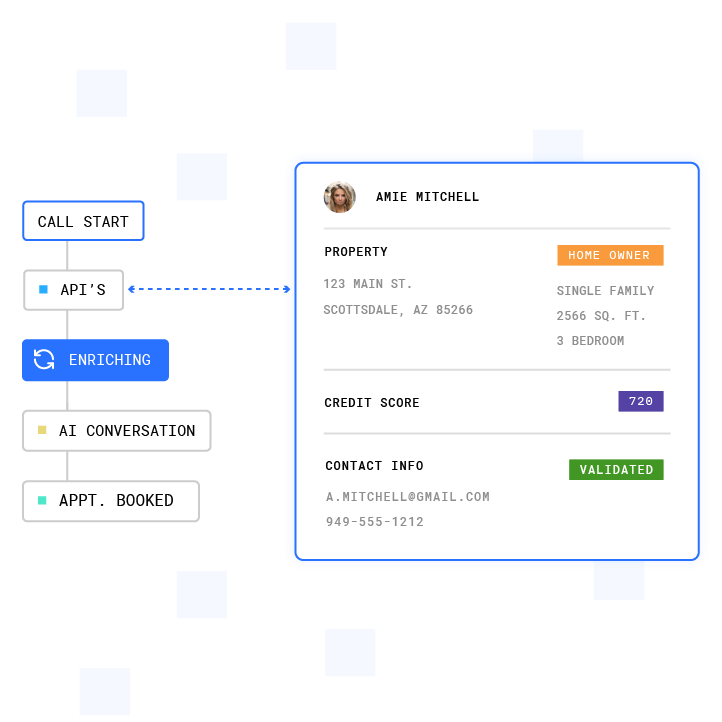
Real-time DNC scrubbing before dial serves two purposes at once. It keeps non-compliant numbers out of the dialing queue, and it stops the dialer from spending carrier cost and agent time on calls that can never convert. Plura AI’s AI predictive dialer enforces this scrubbing against federal and state registries before the first attempt, so non-compliant numbers are blocked in advance. The hopper then contains only numbers that are eligible to be called, which raises the RPC rate on every campaign that runs through it.
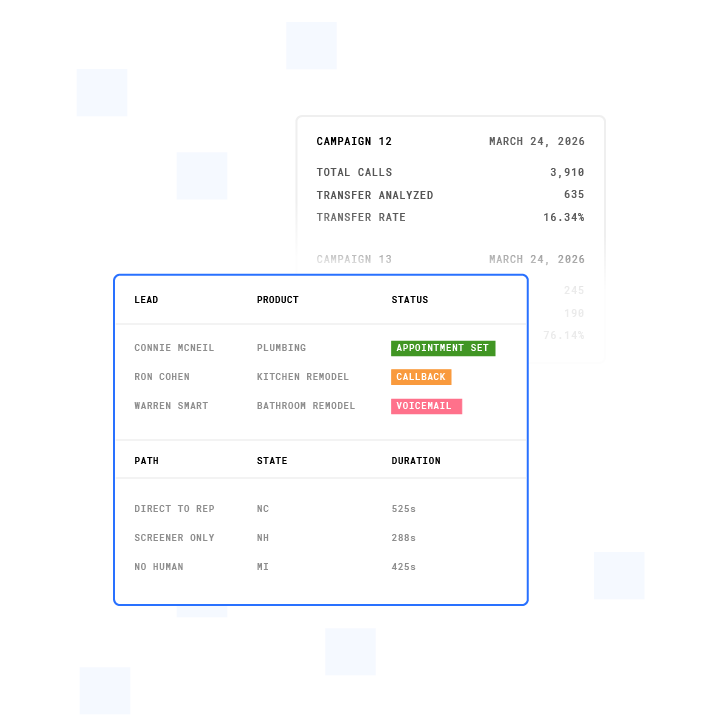
ContactBabel’s 2024 US Contact Center Decision-Makers’ Guide reports that outbound teams cleaning their contact list monthly hold RPC roughly 10 percentage points higher than teams refreshing quarterly.4 That gap justifies a full-time data steward on any campaign over 10 seats.
Lever 2 – Optimize Calling Windows and Pacing
Contact rate varies sharply across the day. Voiso’s 2026 outbound benchmark guide reports that Tuesday through Thursday in the 10–11 AM and 4–5 PM windows in the prospect’s local time are the highest-converting call slots, and that simply changing the call window can lift connect rates 30% to 70% with nothing else altered. Analyze contact rate by hour, day, geography, and lead source before changing any pacing setting.
Pacing ratio, which is the number of simultaneous lines dialed per available agent, is the main control between idle agents and abandoned calls. A conservative ratio of 1.5:1 keeps abandonment low but leaves agents waiting. An aggressive ratio of 3.0:1 or higher maximizes occupancy but pushes abandonment toward and past the regulatory ceiling.
That ceiling is a hard constraint. The FCC caps a predictive dialer’s abandoned call rate at 3% of all answered calls per campaign, measured over a rolling 30-day period, under 47 C.F.R. Section 64.1200(a)(7), finalized in the FCC’s 2003 Report and Order (FCC 03-153).2 The denominator counts only live-answer connections. Voicemail, busy signals, and non-connects are excluded. A call is considered abandoned when a live person answers and no agent is available within two seconds of that person’s completed greeting.
The operational takeaway is straightforward. Calibrate pacing to expected live-answer rate, not to total dials. A campaign with 5 agents at 3.0 lines per agent and a 25% live-answer rate produces roughly 3–4 simultaneous human answers; if the campaign connects 800 live answers and abandons 40, that is a 5% abandonment rate, which already exceeds the FCC limit. Dropping to 1.5 lines per agent brings abandonment comfortably under 3% at the cost of roughly 15–20% fewer dials per hour. Consult the regulation text and qualified counsel for guidance specific to your operation.
Real-time agent availability monitoring makes pacing work in practice. If agents are in wrap-up or unavailable, the dialer should pause outbound dialing instead of firing calls that will hit no agent. Schedule staffing blocks to match the calling windows where your list actually connects.
Lever 3 – Get Answering-Machine Detection Right
Answering-machine detection (AMD) protects agent time by routing voicemail calls away from live agents. False positives create the real risk. A live human answers, AMD misclassifies the call as a machine, and the call is dropped before the agent connects. That prospect never reaches your team, and the lost contact never appears in any report.
Manual audits across VICIdial shops running Asterisk’s stock AMD() application consistently turn up a 15–25% false positive rate, meaning up to a quarter of calls logged as “machine” were actually live humans who never reached an agent. At scale, that drag on RPC is material. At a 50-agent center running 10,000 dials per day with 4,000 answered calls, the difference between an 8% false positive rate (320 lost connections per day) and a 3% false positive rate (120 lost connections per day) is 200 additional live connections reaching agents daily.
Because the two numbers measure different things, track AMD accuracy separately from AMD rate. The AMD rate tells you how many calls were classified as machines. The false positive rate tells you how many of those classifications were wrong. Pull 150–200 recorded “machine” calls and listen to them. That audit is the only way to get a real number. Purpose-built AI AMD trained on greeting patterns benchmarks at 1–3% false positive rate, versus 15–25% for Asterisk stock AMD with default tuning.
Plura’s voicemail detection is a dialer setting built into the platform, not a third-party add-on. It runs on the same carrier infrastructure that handles every other outbound call.
Lever 4 – Cut Wrap Time
After-call work (ACW) is the time between a call ending and an agent becoming available for the next dial. ViciStack’s March 2026 KPI guide reports that every 10 seconds shaved off after-call work across 100 calls per agent per day recovers 17 minutes of productive time per agent. On a 20-agent floor, that recovery exceeds five agent-hours per day without adding headcount.
The main levers inside ACW are automated dispositions, CRM write-back, and callback scheduling. When an agent has to manually log a call outcome, navigate to a CRM record, and schedule a follow-up, wrap time climbs. When those steps are automated on call end, the agent returns to the queue in seconds.
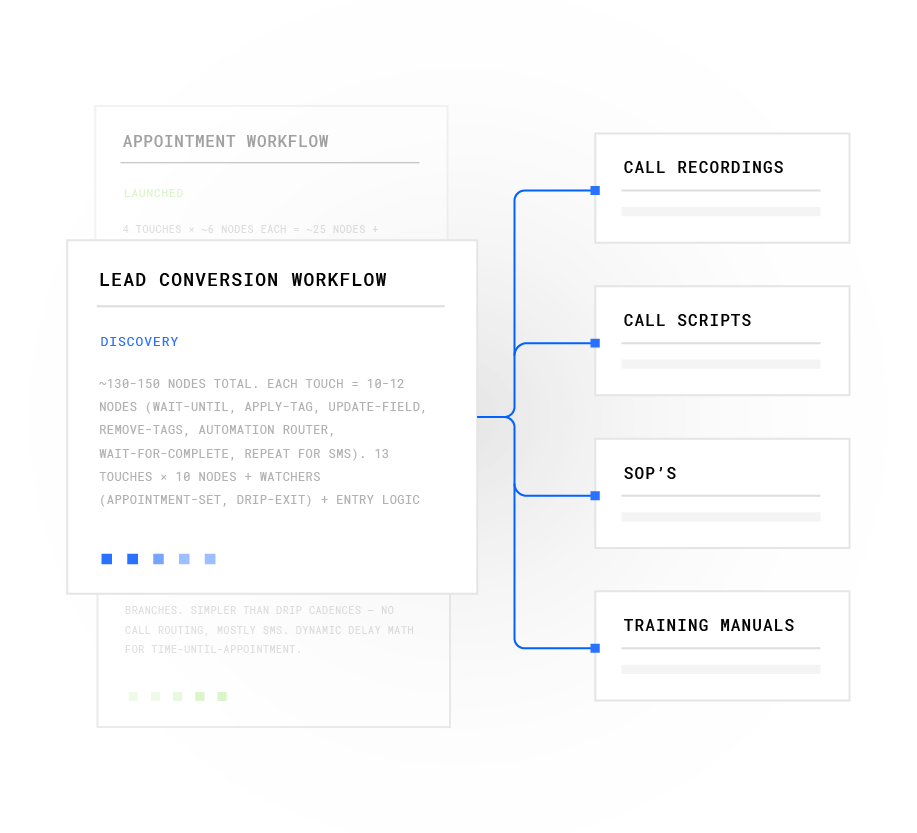
Plura’s CRM integration handles automated write-back to HubSpot, Salesforce, Zoho, and 50+ other tools, so disposition data flows without agent input. The managed workflows layer handles callback scheduling and post-call actions on a no-code workflow builder, so operations leaders can adjust logic without engineering work.
Lever 5 – Segment Your Dialing Modes
Not every list should run on predictive dialing. Predictive dialing is economical for large, high-volume lists where the math of over-dialing works in your favor. For smaller or higher-value lists, over-dialing often becomes uneconomical because the abandonment risk and the cost of burned contacts outweigh the throughput gain.
Progressive dialing places one call per available agent sequentially and carries low abandonment risk because the agent is already available. Preview dialing presents the next call record to the agent before dialing, carries zero abandonment risk, and enables personalization at the cost of throughput. contactSPACE’s March 2026 outbound dialer guide recommends progressive dialing for mid-market B2B sales, customer retention campaigns, collections, and regulated industries, and preview dialing for enterprise account management, high-value renewals, and retention of at-risk customers.
The table below shows how each mode trades throughput against abandonment risk, which is the core cost-per-contact tradeoff. Predictive dialing wins on volume but carries regulatory exposure. Progressive and preview dialing give up throughput to eliminate that exposure. Dials-per-agent-hour figures are drawn from JustCall’s outbound call center guide (Aug 27, 2026) and contactSPACE’s March 2026 outbound dialer guide.
| Dialing Mode | Dials Per Agent-Hour | Abandonment Risk | Best For |
|---|---|---|---|
| Predictive | Commonly benchmarked around 60–150, though some sources cite higher ranges (100–350 DPH) depending on agent count and optimization | Regulated by FCC 3% ceiling per 47 C.F.R. Section 64.1200(a)(7) | Large, high-volume lists |
| Progressive | Commonly benchmarked around 40–90 depending on the source and configuration | None by design | Smaller or higher-value lists |
| Preview | 10–25 | None by design | High-touch, regulated industries |
Running predictive dialing on a list that warrants preview dialing usually raises cost per contact. The abandonment exposure and the cost of burned contacts offset the throughput gain. Match the dialing mode to the list economics. Maximizing throughput is a separate goal and often the wrong one.
See how your current RPC and agent costs translate into a per-contact figure.
Lever 6 – Fix the Answer-Rate Layer
Caller-ID reputation, spam labeling, and iOS 26 call screening now suppress answer rates before the dialer’s pacing logic has any effect. If the phone never rings, no pacing setting fixes the problem.
When a business number gets spam-labeled, answer rates can drop by 40% to 60% because the call is flagged by carrier analytics before the phone ever rings. Cold-call connect rates fell from 4.82% in 2024 to approximately 2.3% in 2025, a roughly 52% year-over-year decline, with spam labeling and carrier blocking identified as primary drivers.
iOS 26, released September 15, 2025, introduced Call Screening: the phone answers unknown calls automatically, prompts the caller to state their name and reason for calling, and displays a live transcript before the phone ever rings for the user. Predictive dialers that connect calls before an agent is ready produce dead air in response to the screening prompt. A call that produces dead air never reaches the recipient. Apple holds approximately 61% of the US smartphone market, which makes this a structural issue for any operation running predictive dialing at volume.
This is a carrier-level problem requiring a carrier-level solution. Spam labels are generated by analytics engines working for terminating carriers. Those engines score behavioral signals: call volume, call duration, complaint rates, and authentication signals. A dialer cannot fix a carrier reputation problem. Only a carrier can.
Plura issues branded caller ID directly through its own FCC-licensed carrier. It also runs STIR/SHAKEN authentication on every outbound call. Calls originated through resellers or CPaaS (Communications Platform as a Service) platforms are capped at B-level attestation because the upstream carrier signing the call has a relationship with the reseller, not the end customer, and cannot verify number authority on the customer’s behalf. Plura is not a CPaaS reseller. It holds its own operating company number and signs calls at the carrier level, so A-level attestation is available by default.
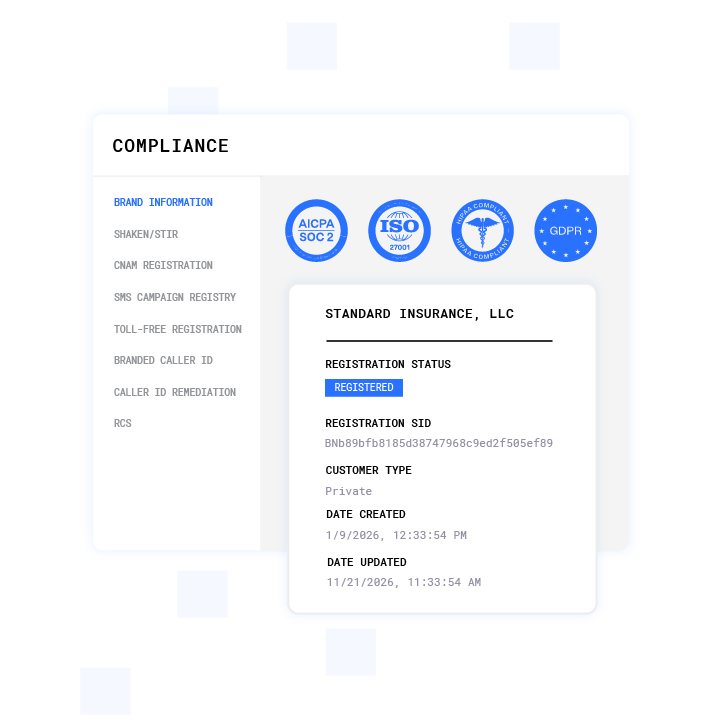
Plura also remediates spam labels at the carrier level to improve outbound call connection rates. That improvement flows directly into the RPC denominator in the cost-per-contact equation.
Metrics Glossary: What to Track
Track these metrics at the campaign level, not as a single blended figure across all outbound activity.
- Dials per hour per agent: Total outbound attempts divided by agent-hours worked. This varies by dialing mode, and predictive runs higher than progressive or preview.
- Answer rate: Answered calls divided by total dials. This includes voicemail, wrong numbers, and live answers. A sudden drop usually indicates a caller-ID reputation problem.
- Right-party contact rate (RPC): Live answers by the intended contact divided by total dials. This is the denominator in the cost-per-contact equation. Track it per campaign and per list source.
- AMD rate and false-positive rate: AMD rate is the share of answered calls classified as machines. False-positive rate is the share of those classifications that were actually live humans. Measure them separately.
- Abandon rate: Abandoned calls divided by live-answered calls, per campaign, over a rolling 30-day window. The FCC’s ceiling under 47 C.F.R. § 64.1200(a)(7) is 3%.
- Talk time: Minutes of live conversation per agent per hour. This is a direct measure of how much of the paid agent-hour generates value.
- Wrap time (ACW): Time between call end and agent availability. ACW above 60 seconds on outbound calls indicates the disposition workflow needs simplification.
- Contacts per agent-hour: Live conversations divided by agent-hours. This output metric combines answer rate, AMD accuracy, and wrap time into one number.
- Cost per contact: (Dialing cost + agent cost) ÷ right-party contacts. This is the primary unit of analysis for this article.
- Cost per qualified contact: Cost per contact adjusted for qualification rate. This tracks whether a higher contact rate is producing better or worse conversations downstream.
Compliance as an Economic Constraint
Compliance functions as an input to pacing decisions with direct economic consequences, not as a legal disclaimer at the end of an outbound playbook.
The FCC’s 3% abandonment ceiling under 47 C.F.R. Section 64.1200(a)(7) sets a hard upper bound on how aggressively a predictive dialer can be paced. Exceeding it creates statutory exposure under 47 U.S.C. Section 227(b)(3) at $500 per violating call for negligent violations and $1,500 per call for willful ones. At predictive dialer speeds, a configuration error can generate that exposure across thousands of calls before anyone notices. Staying under the ceiling protects the list and the caller-ID reputation that the next campaign depends on. Fine avoidance is a secondary benefit.
DNC scrubbing operates on the same logic. The National Do Not Call Registry had over 245 million registered numbers as of 2023, and telemarketers are expected to scrub their contact lists against it within 31 days before a campaign and re-scrub every 31 days for ongoing campaigns..2 A DNC-listed number that reaches the dialer’s hopper wastes a dial and creates complaint data that feeds carrier spam-labeling algorithms.
Plura supports compliance with TCPA, DNC, HIPAA, SOC 2, GDPR, and STIR/SHAKEN caller ID verification.1 Every outbound contact is checked against federal and state DNC registries in real time before dial. Consent records are timestamped and immutable. Quiet-hours rules enforce automatically through time-zone detection. Customers remain responsible for their own compliance obligations and should consult qualified counsel regarding the specific regulatory frameworks that apply to their operations.
Model how compliance-driven constraints affect your cost per contact.
Frequently Asked Questions
What Is the Difference Between a Predictive Dialer and an Auto Dialer?
An auto dialer is any system that dials numbers automatically without a human initiating each call. A predictive dialer is a specific type of auto dialer that uses algorithms to dial multiple numbers simultaneously per available agent, predicting when agents will finish their current calls and connecting answered calls to available agents. The defining characteristic of a predictive dialer is that it dials ahead of agent availability, which creates both efficiency gains and abandonment risk. A power dialer or progressive dialer also automates dialing but places one call per available agent, which removes the abandonment exposure that predictive dialing carries.
How Much Does a Dialer System for Call Centers Cost?
Dialer system costs vary widely by deployment model. Cloud-based predictive dialer platforms from established vendors typically run $65–$225 per seat per month depending on feature tier, with minimum seat counts that can push entry-level costs to $5,000–$10,000 per month or more. Self-hosted open-source platforms like VICIdial carry lower software costs but require dedicated infrastructure and administration labor. Per-minute carrier costs add $0.01–$0.02 per minute on top of platform fees. Compliance tooling such as DNC scrubbing, consent management, and AMD is frequently priced as an add-on. A fully loaded cost model should include platform license, carrier costs, compliance tooling, and the labor cost of the agents the dialer is serving. Plura’s pricing is available at our pricing page.
What Is the Maximum Abandonment Rate for a Predictive Dialer?
The 3% ceiling described in Lever 2 applies per campaign over a rolling 30-day window. See 47 C.F.R. § 64.1200(a)(7) for the full definition of an abandoned call and consult qualified counsel for guidance specific to your campaigns.
How Do You Calculate Cost Per Contact?
The formula matches the one introduced earlier in this article. Cost per contact divides dialing cost plus agent cost by right-party contacts. The key detail for operations leaders is that agent cost should reflect fully loaded labor for the hours actually worked during the campaign, and right-party contacts should count only calls where the intended person answered and engaged. Track this metric per campaign and per list source so you can see which variables are driving the number up or down.
Predictive Dialer vs. Progressive Dialer – Which Lowers Cost Per Contact?
List size and list quality determine the answer. Predictive dialing delivers more dials per agent-hour on large, high-volume lists, which can lower cost per contact when the list’s right-party contact rate is high enough to justify the abandonment risk. Progressive dialing delivers fewer dials per agent-hour but carries no abandonment exposure and tends to produce better conversation quality on smaller or higher-value lists. On a recycled list with a 5–7% contact rate, predictive dialing burns carrier cost and caller-ID reputation without proportionally raising the RPC denominator. On a fresh list with a 20%+ contact rate, predictive dialing’s throughput advantage typically wins. Match the dialing mode to the economics of each list.
How Does Caller-ID Reputation Affect Cost Per Contact?
Caller-ID reputation affects cost per contact by suppressing the RPC denominator before the dialer’s pacing logic has any effect. As noted in Lever 6, spam labeling can cut answer rates by 40–60%. The cost-per-contact effect is mechanical. Because total cost is largely fixed over a campaign, halving the number of contacts roughly doubles the per-contact figure. Fixing the answer-rate layer is a prerequisite for any other cost-per-contact work to show up in the numbers.
How Does Plura AI Reduce Cost Per Contact with a Predictive Dialer?
Plura operates its own FCC-licensed audio bridging carrier rather than routing calls through a third-party CPaaS. That architecture means branded caller ID is issued at the carrier level, STIR/SHAKEN authentication runs on every outbound call under Plura’s own operating company number, and real-time DNC scrubbing blocks non-compliant numbers before the first dial attempt. On the agent-cost side, Plura’s AI predictive dialer includes list management, dynamic pacing, timezone logic, and answer-rate optimization in a single platform. The CRM integration layer automates post-call disposition and write-back to reduce wrap time. The managed workflows layer handles callback scheduling without engineering work. Each capability moves a specific variable in the cost-per-contact equation.
What Metrics Should I Track to Measure Cost Per Contact?
Track the following metrics:
- Cost per contact
- Right-party contact rate
- Answer rate
- AMD false-positive rate
- Abandon rate
- Talk time per agent-hour
- Wrap time
- Cost per qualified contact
Track each metric per campaign and per list source. Blended figures hide the variance that tells you where the problem is. Review RPC weekly by list source, and use four-week rolling averages for trend analysis rather than single-session snapshots. If answer rate drops suddenly, check caller-ID reputation before adjusting pacing. If cost per contact rises without a change in agent cost, the RPC denominator is falling, which points to list quality, AMD accuracy, or the answer-rate layer.
Conclusion: Turning Cost Per Contact into a Daily Operating Metric
Cost per contact equals dialing cost plus agent cost, divided by right-party contacts. Every lever in this article moves one variable in that equation. List hygiene and DNC scrubbing raise the denominator by eliminating dials that can never convert. Calling window optimization and pacing discipline raise the denominator while keeping abandonment inside the FCC’s 3% ceiling. AMD accuracy recovers live contacts that default detection drops. Wrap-time reduction lowers the agent-cost numerator by returning agent capacity to the queue faster. Dialing mode segmentation matches throughput to list economics. The answer-rate layer determines whether the dialer’s math works at all before a single pacing setting is touched.
Plura runs on FCC-licensed AI contact center infrastructure that owns the carrier stack instead of renting from a third-party CPaaS. That design yields lower per-minute economics, direct issuance of branded caller ID, and compliance controls at the carrier level rather than bolted on later. For operations where the answer-rate layer is the binding constraint, which is increasingly common in 2026, this distinction separates a dialer that compounds value from one that burns numbers faster.
Validate these levers against your own campaigns with Plura’s cost-per-contact calculator.
Compare plans and rates side by side.
1 Plura AI maintains SOC 2, HIPAA, ISO, and GDPR posture as part of its platform infrastructure. References to compliance frameworks in this article describe Plura’s platform capabilities and do not constitute a guarantee that any customer using Plura will themselves be compliant with applicable laws or standards. Customers remain solely responsible for their own regulatory obligations, certifications, consent management, recordkeeping, and the claims they make to their own end users. Consult qualified legal counsel for guidance specific to your use case.
2 This article describes regulatory frameworks at a general level and does not constitute legal advice. Laws and regulations vary by jurisdiction, change over time, and apply differently depending on facts and circumstances. Readers should consult qualified legal counsel before making compliance decisions.
3 Performance figures, customer outcomes, and industry statistics referenced in this article are drawn from cited third-party sources or Plura customer case studies. Individual results vary based on implementation, use case, industry, audience, and execution. Past or aggregate performance is not a guarantee of future results.
4 References to third-party products, services, companies, or research are made for informational and comparative purposes only. Plura AI is not affiliated with, endorsed by, or sponsored by any third party named in this article unless explicitly stated. Trademarks and product names referenced remain the property of their respective owners.
This article is provided for informational purposes only and reflects Plura AI’s understanding at the time of publication. Product capabilities, integrations, and specifications are subject to change. For the most current information, visit plura.ai.
This article was produced with the assistance of AI tools and reviewed by Plura AI prior to publication.