
Written by: Matt Beucler, CEO, Plura AI
Updated September 2026
Key Takeaways for Finance and Revenue Leaders
- AI SDR ROI uses the formula (Gains – Costs) / Costs x 100 and typically delivers 70-95% cost savings versus human SDRs, with payback periods from under 30 days to 5-6 months.1
- Human SDRs cost $115,000-$170,000 annually fully loaded, while AI SDRs typically run $47,000-$114,000 in Year 1 with materially lower costs in later years.1
- AI SDRs handle 500-5,000 daily personalized touches versus 30-80 for humans, respond in under 60 seconds, and reach reply rates of 2.9-6.8% at steady state.1
- Strong ROI depends on clean ICP lists, validated offers, reliable deliverability infrastructure, and human oversight at escalation points, which reduces the risk of joining the 85% of AI projects that miss business targets.
- Plura AI provides the infrastructure, conversation memory, and built-in ROI measurement needed for high-volume operations, and a live demo with Plura shows the direct impact on your pipeline.
The SDR Cost Problem Facing Revenue Teams
The fully loaded annual cost of a single in-house SDR in 2026 runs between $115,000 and $170,000, according to published SDR cost research that includes base salary, on-target earnings, benefits, payroll taxes, sales tools, management overhead, recruiting fees, and ramp-period productivity loss.2 A 10-SDR team costs $1,050,000 to $1,400,000 annually on the same model.
The structural problems compound the raw cost.
- The Bridge Group’s 2024 SDR Metrics and Compensation Report puts average SDR ramp time at 3.2 months, with full quota capacity closer to month 4-5 in complex sales cycles.2
- Annual SDR turnover runs at 40%, so most companies absorb full recruiting and ramp costs every 14-17 months per seat.
- Only 45-47% of SDRs hit quota in a given month, per the same Bridge Group data, so most seats produce below the cost-per-meeting target used in planning.
- A standard SDR tech stack runs $7,068-$17,400 per seat annually, with Pavilion’s 2024 survey finding an average of $11,200 per SDR annually.
This structure creates a linear cost curve. Every additional meeting requires proportional headcount, and headcount requires proportional recruiting, ramp, and attrition spend. For VP Sales and CRO-level buyers building a business case, this forms the baseline for the AI SDR ROI calculation.
What AI SDR ROI Covers and How to Think About It
An AI SDR (AI-powered sales development representative) is a software system that uses artificial intelligence to handle top-of-funnel sales work. It identifies and enriches prospects, qualifies leads, books meetings, and connects to CRMs and other tools to tailor interactions. The ROI calculation has a gains side and a cost side.
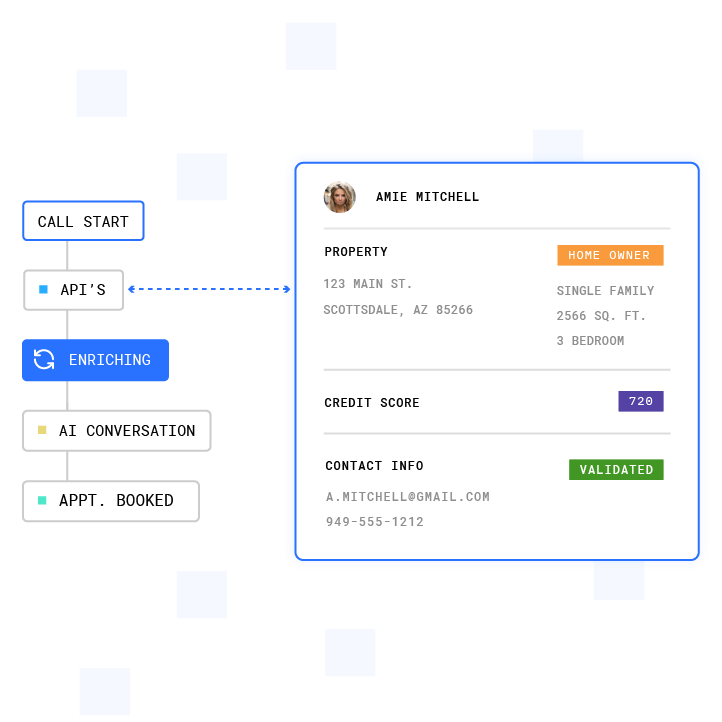
Gains fall into three categories.
- Cost savings. This is the difference between fully loaded human SDR cost and AI SDR total cost of ownership.
- Increased pipeline. This is the incremental pipeline value attributed to AI SDR touches beyond the pre-AI baseline.
- Speed-to-lead. Harvard Business Review research found that companies responding within five minutes are 100 times more likely to connect with a prospect than those waiting 30 minutes. Responding within 60 seconds lifts conversions by 391%, per benchmarks cited by Plura.
Costs include platform subscription, data and enrichment, implementation and build, domain infrastructure, and ongoing human oversight. Storylane’s 2026 ROI framework recommends adding a 25-30% realism buffer to first-year cost estimates, because first-year programs consistently cost more than the initial quote.
Side-by-Side Cost Comparison: Human SDR vs. AI SDR
| Cost Line Item | Human SDR (Annual) | AI SDR (Annual) |
|---|---|---|
| Base salary / platform fee | $65,000-$80,000 * | $10,800-$30,000 * |
| Benefits and payroll taxes | $18,000-$25,000 * | $0 |
| Sales tools and data | $8,000-$15,000 * | $6,000-$18,000 * |
| Management overhead and recruiting (amortized) | $18,000-$27,000 * | $12,000-$24,000 (optimization) * |
| Ramp / implementation cost | $15,000-$25,000 * | $15,000-$40,000 (one-time build) * |
| Total annual fully loaded | $115,000-$170,000 * | $47,000-$114,000 (Year 1), lower in Year 2+ * |
AI SDR costs vary significantly by vendor, volume, and whether the team builds a custom stack or uses a managed platform. Tomba’s 2026 pricing comparison advises budgeting 1.5x to 2x the advertised platform price once data, sending infrastructure, and enrichment are included. Compare plans and rates side by side at plura.ai/pricing.
For contact-center-scale operations, the economics shift even further. Plura’s executive communications guide documents a 100-seat equivalent scenario where traditional operations cost $4 million to $7 million annually versus $300,000 to $700,000 for AI-powered communications. At the 15-agent scenario modeled in Plura’s ROI calculator, monthly human agent costs run $60,000 versus $14,400 for Plura AI agents, which produces a 30-day ROI of $45,600 and a 12-month ROI of $547,200.
Where AI SDRs Create Efficiency: Speed, Volume, and Output
The efficiency case for AI SDRs rests on three structural advantages over human reps.
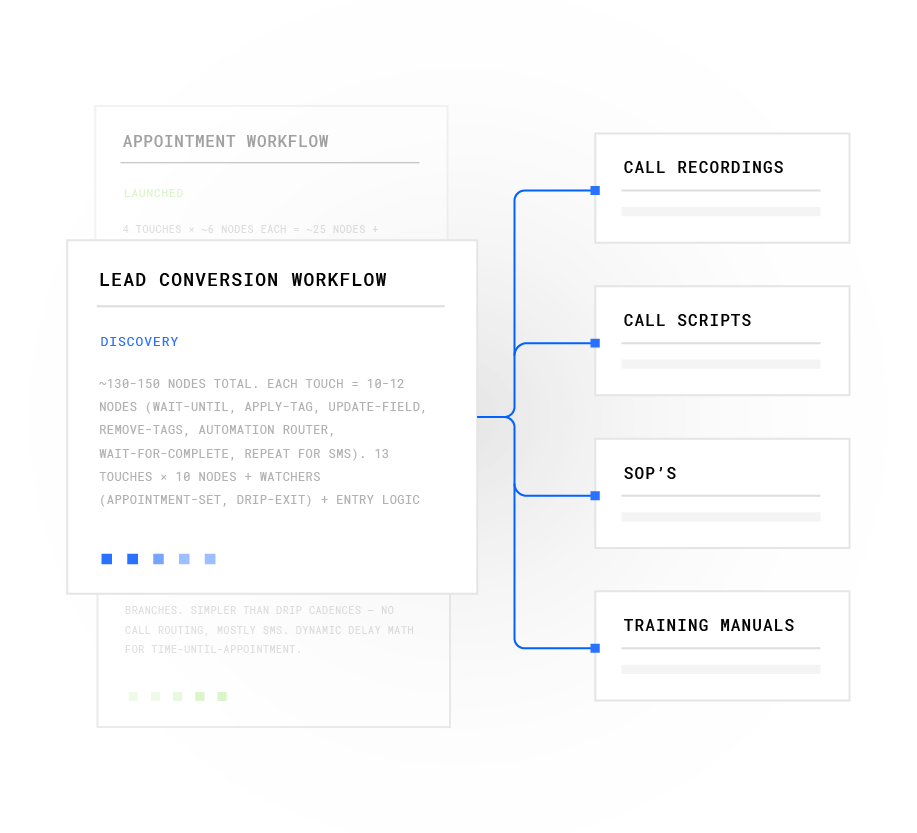
Speed-to-lead. The average B2B response time remains over 40 hours, per Plura’s speed-to-lead glossary. Plura’s marketing automation guide documents that 78% of prospects choose to buy from the first responder. AI SDRs respond to inbound leads in under 60 seconds at any hour. Lead conversion rates drop 10x after the first 5 minutes, per the same source.
Outreach volume. AtomGTM’s 2026 performance comparison shows AI SDR systems deliver 500 to 5,000 personalized touches daily versus 30 to 80 touches for a human SDR. Apollo.io’s 2026 guide cites SaaStr data showing AI SDRs can send 3,221 emails per month compared to 75-285 for human SDRs, an 11-40x volume difference.
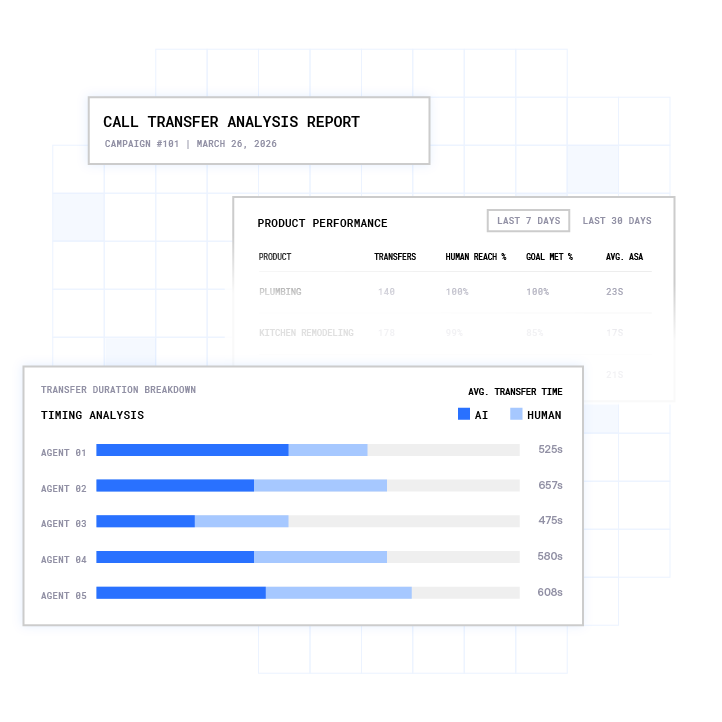
Meeting output and conversion benchmarks. BTE Analytics’ 2026 benchmark data reports AI SDRs typically generate 15-40 meetings per month per seat, with top-quartile programs reaching 50-80, compared to 12-20 for human SDRs. Reply rates for AI SDR cold email run 2-6% at baseline, with top-quartile programs using live intent signals reaching 8-10%. At typical mid-tier performance, AI SDR cost per held meeting runs $17-$85 versus $330-$500 for a human SDR producing 15 held meetings monthly, per BTE Analytics.
The remaining gap sits in meeting quality. BTE Analytics reports AI-booked meetings hold at 55-70% versus 70-80% for experienced human SDRs. The winning pattern in 2026 is hybrid. AI handles volume, speed-to-lead, and reactivation of dormant lists, while humans take inbound hot leads and accounts above a defined ACV threshold.
Book a live demo with Plura to see how AI-powered outreach compares with your current SDR benchmarks.
A 5-Step Framework to Measure AI SDR ROI
- Define goals with specific, measurable targets. Set baseline metrics before deployment. Track meetings booked per month, pipeline generated per quarter, cost per qualified opportunity, and speed-to-lead. Storylane’s framework states that without a 30-60 day pre-AI baseline, teams only have activity reporting, not ROI proof.
- Track the right metrics at each funnel stage. Organize measurement into four sequential conversion events, per BTE Analytics: contact-to-reply, reply-to-booked-meeting, booked-to-held, and held-meeting-to-opportunity. Each stage has its own benchmark and failure mode.
- Calculate ROI using a standard formula. ROI (%) = (Incremental value – Total AI SDR cost) / Total AI SDR cost x 100. Incremental value is the extra revenue or gross-margin-adjusted pipeline attributed to AI SDR beyond baseline. Total cost is fully loaded and includes platform, data, implementation, integrations, monitoring, and human oversight.
- Benchmark against published industry standards. Use the table below to separate outcome metrics from vanity metrics and compare your program against published benchmarks.
- Iterate and improve on a defined cadence. GetArtra’s 2026 guide recommends daily 15-minute checks for replies and deliverability alerts, weekly 30-minute reviews of core funnel metrics, and monthly 60-minute strategic reviews covering ICP refinement and sequence changes.
| Metrics That Matter | Vanity Metrics | 2026 Benchmark (AI SDR) |
|---|---|---|
| Meetings held * | Emails sent | 15-40/month per seat * |
| Qualified opportunities created * | Meetings booked (unqualified) | 20-35% opportunity rate from held meetings * |
| Pipeline generated (attributed) * | Open rate | Positive reply rate 2.3-4.7% * |
| Cost per qualified opportunity * | Total touchpoints sent | Median $440/qualified meeting * |
Plura’s conversation intelligence layer surfaces these outcome metrics automatically across every channel, so revenue leaders can run this framework without manual reporting overhead. Run your numbers through Plura’s calculator to check your ROI in real time.
Why AI SDR ROI Sometimes Misses Targets
Gartner (2024) reports that 85% of AI projects fail to deliver intended business results,2 with data quality and capability misunderstanding among the primary drivers. For AI SDRs specifically, the failure modes are well-documented.
Bad data. A 2025 UserGems survey found data accuracy and reliability as the top challenge in AI adoption for sales, cited by 62% of teams. AI scales existing data errors. A human SDR making one bad targeting call sends one bad email. An AI making the same mistake sends a thousand. Teams benefit from a data hygiene sprint before deployment that deduplicates, validates emails, and enriches firmographics.
Generic messaging. Digital Applied’s 100,000-email paired study found that named-recent-event personalization tokens, such as funding rounds, product launches, or conference talks, added 28% reply lift, the largest single personalization signal measured. Generic openers like “I hope this email finds you well” carried a -22% reply rate penalty.
Low-quality meetings and poor show rates. AI SDRs tend to book lower-intent prospects when tuned only for volume. BTE Analytics reports that programs adding a same-day human touchpoint lifted held rates by 10-15 percentage points. Plura supports up to 40% improvement in no-shows through its AI-driven follow-up and reminder workflows, per Plura’s healthcare industry page.
Lack of human handoff and escalation triggers. AiSDR’s implementation failure analysis documents a case where adding escalation triggers for budget, timeline, and capability questions produced a 34% jump in close rate the following quarter. Teams gain from defining escalation rules before go-live.
Poor CRM integration. Weak CRM sync often causes an AI SDR to create more work than it removes, per AY Automate’s 2026 AI SDR development guide. The AI SDR needs to read accounts and contacts, avoid duplicating outreach to prospects already owned by reps, and write back activity and outcomes so pipeline stays accurate. Plura’s integrations connect to HubSpot, Salesforce, Zoho, and 50+ other tools to keep CRM data current without manual entry.
Deliverability degradation. Digital Applied’s study found AI emails were spam-flagged at 8% versus 3% for human-written emails. Switching from 1-day to 3-day send intervals lifted inbox placement from 71% to 93% in the same dataset. Domain warmup, authentication (SPF, DKIM, DMARC), and disciplined send rates matter in 2026.
Frequently Asked Questions
How much do AI SDRs cost?
AI SDR platform costs in 2026 range from roughly $900 per month for entry-level managed tools to $5,000 or more per month for enterprise platforms. Fully loaded, including data, enrichment, sending infrastructure, and ongoing optimization, a production AI SDR program typically runs $7,000 to $36,000 annually. This compares to $115,000 to $170,000 fully loaded for a human SDR in the U.S. market. The advertised platform price rarely reflects the total cost, so many teams budget 1.5x to 2x the headline number to cover data providers, email infrastructure, and implementation. Compare plans and rates at plura.ai/pricing.
Is AI replacing SDRs?
The dominant model in 2026 is hybrid. AI handles top-of-funnel research, enrichment, first-touch outreach, and speed-to-lead, while human reps own discovery conversations, objection handling, and multi-stakeholder deal pursuit. The 2026 GTM Benchmark Report found AE headcount grew 32.1% while SDR headcount increased 3.2%, which signals a structural shift toward a diamond-shaped sales org where AI handles volume and humans handle judgment. Full AI autonomy without human oversight consistently underperforms hybrid models on meeting quality and downstream conversion.
Does AI SDR work?
AI SDRs produce measurable results when four conditions are present. Teams need a clean, well-defined ICP list, a validated offer, a properly warmed sending infrastructure, and human oversight at key escalation points. Programs meeting these conditions report 2-3x improvements in reply rates and meetings booked per month, with time to first pipeline activity dropping from weeks to 24-72 hours. Programs missing these conditions, particularly those with stale data or weak offers, often see reply rates below 1% and negative ROI. The technology performs as designed, and the operating model determines whether it delivers.
What is the ROI of AI SDR?
Published industry data puts the median payback period at 5.2 months, with 317% average annual ROI thereafter for programs that reach steady state.1 At the contact-center scale modeled in Plura’s ROI calculator, switching from 15 human agents to Plura AI agents produces a 30-day ROI of $45,600, a 12-month ROI of $547,200, and a 60-month ROI of $2,736,000. These figures are scenario-specific and depend on your current agent cost, talk utilization, and volume. Run your own numbers at plura.ai/calculator.
How do you measure AI SDR ROI?
The core formula is ROI (%) = (Incremental value – Total AI SDR cost) / Total AI SDR cost x 100. Incremental value is the additional gross-margin-adjusted pipeline or revenue attributed to the AI SDR beyond the pre-AI baseline. Total cost is fully loaded and includes platform, data, implementation, integrations, monitoring, and human oversight. Capture 30-60 days of pre-AI funnel data as a baseline before deployment. Track four sequential conversion events: contact-to-reply, reply-to-booked-meeting, booked-to-held, and held-meeting-to-opportunity. Report to CFOs with five rows: fully loaded cost, incremental value and its basis, ROI percentage, payback period, and a sensitivity band under conservative and optimistic assumptions.
Conclusion: Turning AI SDR ROI Into a Repeatable Motion
The human SDR model carries a structural cost problem with linear scaling, 40% annual turnover, 3-5 month ramp, and fewer than half of reps hitting quota in any given month. AI SDRs address the volume, speed, and cost dimensions of that problem, with fully loaded annual costs often running 70-95% below a human SDR and payback periods measured in months.
ROI depends on list quality, offer fit, deliverability discipline, human oversight at escalation points, and a measurement framework that tracks pipeline and revenue instead of only meetings booked and emails sent.
Plura AI is built for high-volume operators who need more than an email sequencer. The platform combines an AI voice agent, AI SMS, AI predictive dialer, and AI webchat on a single stateful conversation database. It adds conversation intelligence that surfaces the outcome metrics your CFO needs, a no-code workflow builder for conversation logic, and integrations with HubSpot, Salesforce, and 50+ tools.
Run your numbers through Plura’s calculator to check your ROI in real time, and compare plans and rates side by side at plura.ai/pricing. To see the impact on your pipeline, book a live demo with Plura.
1 Performance figures, customer outcomes, and industry statistics referenced in this article are drawn from cited third-party sources or Plura customer case studies. Individual results vary based on implementation, use case, industry, audience, and execution. Past or aggregate performance is not a guarantee of future results.
2 References to third-party products, services, companies, or research are made for informational and comparative purposes only. Plura AI is not affiliated with, endorsed by, or sponsored by any third party named in this article unless explicitly stated. Trademarks and product names referenced remain the property of their respective owners.
This article is provided for informational purposes only and reflects Plura AI’s understanding at the time of publication. Product capabilities, integrations, and specifications are subject to change. For the most current information, visit plura.ai.
This article was produced with the assistance of AI tools and reviewed by Plura AI prior to publication.