

Written by: Matt Beucler, CEO, Plura AI | Last updated: August 27, 2026
Key Takeaways
- Hosted predictive dialer services rely on two layers: dialer software and a carrier-owned telephony stack. Treating them as one layer creates compliance exposure under 2026 FCC rules.
- Carrier ownership directly controls STIR/SHAKEN A-level attestation, real-time DNC/TCPA enforcement, and porting independence. Reseller models inherit weaker B- or C-level attestation and introduce latency.
- 2026 pricing models range from per-seat SaaS with bundled minutes to carrier-direct wholesale. Transparent per-minute economics and the removal of CPaaS margins materially change total cost of ownership at scale.
- The FCC NPRM (CG Docket No. 26-52) and five state onshoring statutes focus on U.S. ownership and infrastructure. Only fully domestic carrier stacks satisfy these expectations by architecture.
- Plura AI delivers an FCC-licensed, 100% U.S.-infrastructure predictive dialer that embeds compliance controls at the carrier edge. Book a live demo to see how it reduces regulatory risk and total cost of ownership.
Hosted Predictive Dialer Architecture and Why It Matters
A hosted predictive dialer service has two distinct layers: the dialer software and the telephony or SIP trunk that terminates calls to the PSTN (Public Switched Telephone Network). Many operators treat these as a single product, which often creates blind spots in compliance and cost.
The dialer software layer manages pacing logic, agent routing, answering machine detection (AMD), campaign setup, and reporting. The telephony layer manages call origination, STIR/SHAKEN (Secure Telephone Identity Revisited/Signature-based Handling of Asserted information using toKENs) caller ID authentication, and PSTN termination. STIR/SHAKEN signing occurs at the originating carrier level, not inside the dialer software. When a dialer vendor resells upstream telephony instead of operating as an FCC-licensed carrier, outbound calls typically receive only B- or C-level attestation from the upstream provider.
Only direct carrier ownership, with the carrier’s own SP (Service Provider) certificate, enables verifiable A-level attestation after confirming the customer’s right to display the numbers. Per-seat SaaS dialers often bundle minutes into the seat price and typically rely on the vendor’s underlying carrier. Managed hosted instances and self-managed cloud deployments often support BYOC (Bring Your Own Carrier) configurations, which re-open the carrier-ownership question.
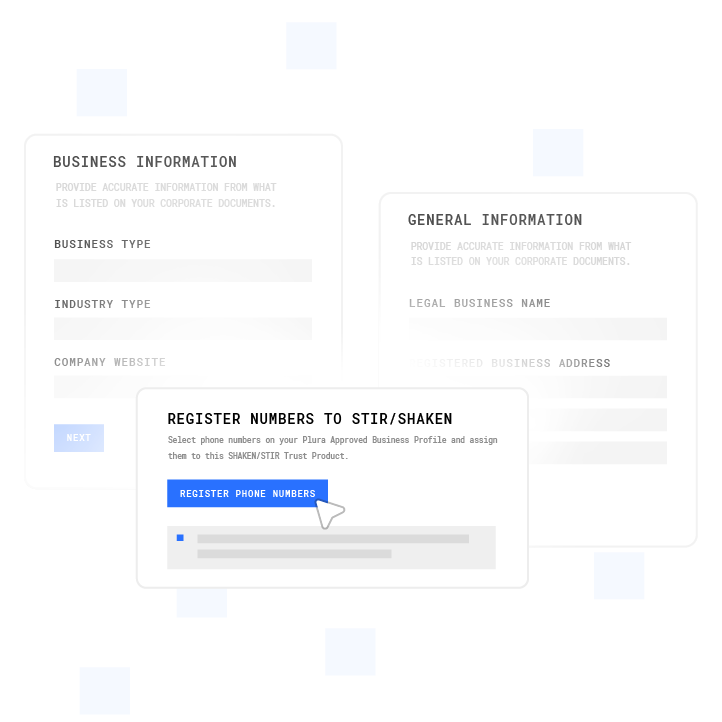
Plura’s AI Predictive Dialer runs on Plura’s own FCC-licensed audio bridging carrier. Voice traffic does not route through a third-party CPaaS (Communications Platform as a Service). Branded caller ID is issued at the carrier level, and STIR/SHAKEN authentication runs on every outbound call.
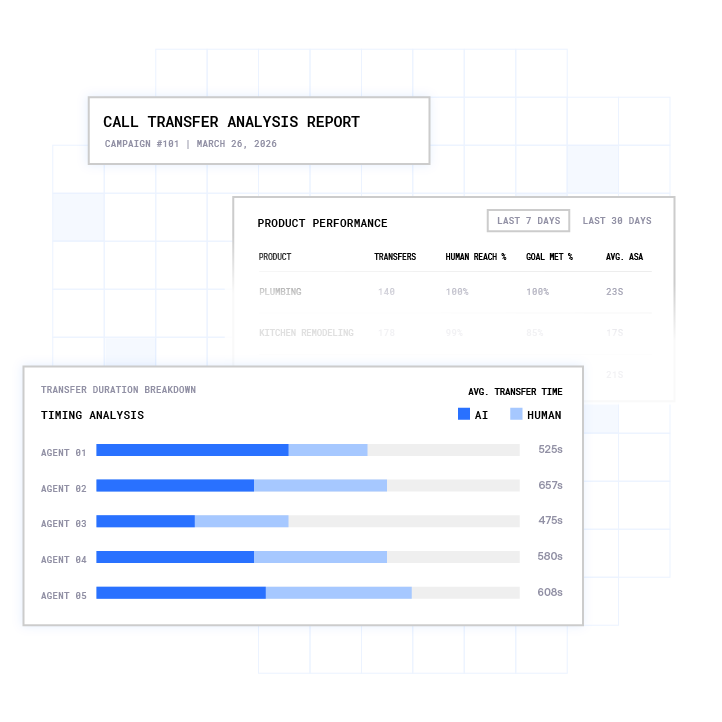
Book a live demo with Plura to see carrier-grade dialer infrastructure in action.
Carrier Ownership and Compliance Outcomes
Carrier ownership shapes three compliance-critical outcomes: STIR/SHAKEN attestation level, real-time DNC (Do Not Call) enforcement capability, and porting independence.
STIR/SHAKEN attestation levels. Under the TRACED Act and FCC implementing orders, voice service providers authenticate outbound calls.2 The FCC has proposed requiring terminating providers to transmit verified caller name or other caller identity information for presentation on a consumer’s handset whenever they transmit an indication that a call has received an A-level attestation. Major carriers like Bandwidth downgrade wholesale and reseller traffic lacking full attestation from A-level to C-level, and A-level attestation improves answer rates by 10–20% versus B-level for platforms that do not self-attest.3
Real-time DNC and TCPA enforcement. Under 47 C.F.R. § 64.1200, predictive dialers interact with National Do Not Call Registry requirements.2 Enforcement that sits on a reseller layer introduces latency and audit gaps. Plura enforces real-time DNC scrubbing and TCPA-litigator list filtering at the carrier edge, before the call leaves the network. An immutable consent ledger and one-click audit exports are available through the compliance dashboard.
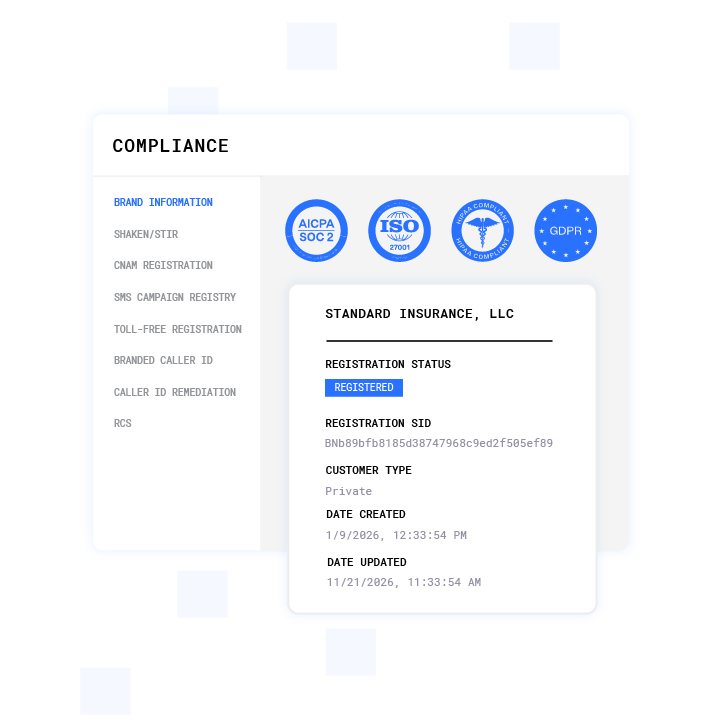
Porting independence. Using a customer’s chosen carrier for DIDs can simplify platform changes and reduce the need for number porting. Reseller-based dialers create porting lock-in that raises switching costs and extends exposure during regulatory shifts.
Plura supports TCPA compliance and DNC compliance as core platform layers, not as third-party add-ons. Customers remain responsible for their own regulatory obligations, and Plura provides infrastructure controls that support that posture.
Hosted Predictive Dialer Pricing Models in 2026
Three pricing structures dominate the hosted predictive dialer market in 2026, and each structure changes total cost of ownership (TCO) in different ways.
Per-seat SaaS with bundled minutes. HD Lite and HD Premium both include unlimited calling to the lower 48 states (plus Canada), with older listings at $49–$59 per agent and a current generic starting price of $99 per user per month. Bundled minutes hide the true per-minute rate and remove negotiation leverage. Heavy users subsidize light users within flat seat pricing, and carrier substitution is typically prohibited.
Per-server managed hosting. Per-server managed hosting includes initial provisioning fees, recurring server costs, and separate telephony billing. This model exposes the telephony layer but leaves the carrier-ownership question unresolved unless the operator brings an FCC-licensed carrier.
Carrier-direct models. Wholesale carrier-direct rates for high-volume dialer traffic typically land in the $0.005 to $0.030 per-minute range. Within that range, billing increments become a decisive cost variable. CPaaS providers like Twilio and Telnyx use per-minute billing, while carrier-direct models can offer more granular increments that reduce waste on short calls.4 That difference compounds quickly. At one million minutes of monthly volume, billing increment differences alone can produce five-figure monthly variances.
Enterprise platforms add further cost layers. Five9 charges $159 per core seat plus separate high-volume outbound telecom fees, AI overage fees, and storage overages, with a minimum of 50 seats and a 36-month contract.4
Plura’s pricing is structured to make telephony economics visible. Because Plura owns its carrier stack, per-minute costs do not include a CPaaS platform margin layered on top of wholesale rates.
FCC Onshoring Rules and Carrier Selection
The FCC’s NPRM in CG Docket No. 26-52, published in the Federal Register on April 23, 2026, outlines proposed requirements for FCC licensees related to foreign adversaries.
The NPRM proposes to require FCC licensees to certify and report ownership or control by foreign adversaries (China, Russia, Iran, North Korea, Cuba, and the Maduro Regime in Venezuela). It also proposes a percentage cap on offshore customer service calls, English proficiency certification requirements, start-of-call disclosures for overseas-routed calls, and restrictions on offshore handling of sensitive data such as passwords, Social Security numbers, and payment information.
The NPRM further proposes transparency rules requiring broadband providers to display in their Broadband Labels the percentage of customer service calls handled by U.S.-based representatives. Non-broadband providers of telecommunications, CMRS (Commercial Mobile Radio Service), interconnected VoIP, cable television, and DBS must disclose the same percentage on their websites.
Five U.S. states have enacted active call-center onshoring or sensitive-data restriction laws: New York, New Jersey, Connecticut, Missouri, and Florida. New York’s Call Center Jobs Act carries penalties up to $10,000 per day. Florida’s statute addresses offshore handling of medical information. Connecticut bans offshore handling in state contracts. Missouri’s executive order requires offshore-call disclosure. New Jersey mirrors New York’s framework.
| Carrier Status | Real-Time DNC/TCPA Enforcement | STIR/SHAKEN Support | U.S. Infrastructure |
|---|---|---|---|
| Plura AI: FCC-licensed audio bridging carrier | Carrier-edge enforcement before dial, immutable consent ledger, real-time DNC scrubbing | A-level attestation via Plura’s own SP certificate | 100% U.S. voice origination, model hosting, data storage, and call recording |
| Twilio-based CPaaS resellers: no FCC carrier license | Bolted-on third-party scrubbing, enforcement occurs outside the carrier layer | B- or C-level attestation inherited from upstream carrier | Variable, foreign infrastructure dependencies not disclosed by architecture |
Only 100% U.S.-infrastructure carriers align with the proposed onshoring rules by architecture rather than by contractual promise. Plura runs voice origination, model hosting, data storage, and call recording on domestic infrastructure. Plura clients report “100% U.S.-handled” in their broadband consumer label disclosures.
Evaluating Total Cost of Ownership for Dialers
Total cost of ownership (TCO) for hosted predictive dialer services includes four components: seat and license fees, per-minute telephony, abandoned-call risk, and onshoring liability.
Seat and license fees. Auto-dialer software typically costs between $40 and $75 or more per user per month, with enterprise contact-center platforms at $75 or more or custom pricing. Total cost of ownership equals the number of users multiplied by the monthly seat price, plus estimated call usage, required add-ons, setup and support fees, and compliance or storage costs.
Per-minute telephony. Hidden or variable TCO components in AI contact center deployments include telephony pass-through charges, AI add-ons, storage, transcription, analytics, implementation fees, premium support, API overages, and channel-specific usage costs. Procurement teams should request scenario-based pricing that covers baseline volume, peak traffic, and multi-location scaling.
Abandoned-call risk. Under 47 C.F.R. § 64.1200, predictive dialers interact with limits on the abandonment rate of live answers. Abandoned calls are subject to an FCC 3% maximum rate limit under TCPA rules rather than automatically constituting separate violations carrying $500/$1,500 statutory damages per call. The answer-rate advantage of A-level attestation, discussed earlier, also affects TCPA compliance math. Incomplete calls from lower attestation levels can unpredictably skew the measured abandonment rates used to calculate the 3% cap.
Onshoring liability. Every contract a covered entity holds with an offshore vendor or a platform with foreign infrastructure dependencies now represents a potential compliance liability under the FCC NPRM and state statutes. That liability does not appear on a per-seat invoice but belongs in any honest TCO model.
Plura’s TCO of $700,000 per year replaces a traditional contact-center cost structure of $7 million on equivalent volume, per the illustrative scenario at plura.ai/calculator.3
Regulatory readiness checklist for hosted predictive dialer evaluation:
- Real-time DNC scrubbing against federal and state registries before every dial attempt
- Immutable consent ledger with timestamped records and four-year retention capability under 28 U.S.C. § 1658
- Automated quiet-hours enforcement by contact time zone under 47 C.F.R. § 64.1200(c)(1)
- Audit-ready export of every dial attempt, consent record, DNC status, agent assignment, opt-out, and abandonment detail
- STIR/SHAKEN A-level attestation via the vendor’s own FCC-licensed SP certificate
- 100% U.S. infrastructure for voice origination, model hosting, data storage, and call recording
- Abandoned-call rate monitoring with real-time throttling to stay below the 3% FCC cap
Run your numbers through Plura’s calculator to check your ROI in real time.
Frequently Asked Questions
How Predictive Dialers Differ from Power Dialers
A power dialer dials one number per available agent at a time and waits for the agent to finish a call before starting the next. A predictive dialer uses statistical algorithms to dial multiple numbers simultaneously, predicts when agents will become available, and connects them only to live answers. Predictive dialers increase agent talk time but introduce abandoned-call risk when pacing predictions miss. Power dialers produce zero abandoned calls but lower agent utilization. Plura’s AI Predictive Dialer uses stateful conversion signals, including historical answer rates and prior negotiation outcomes, to pace calls and minimize abandonment while maximizing connected conversations.
Carrier Ownership and Abandoned-Call Risk
Carrier ownership affects abandoned-call risk through attestation level and concurrency capacity. When a dialer routes through a CPaaS reseller, the upstream carrier controls channel concurrency limits and calls-per-second ceilings. If those ceilings sit below the dialer’s pacing requirements, the dialer throttles and agents idle, or the dialer over-dials and produces abandoned calls. No software setting compensates for an undersized carrier trunk. B- or C-level STIR/SHAKEN attestation also produces lower call completion rates, which skews the denominator used to calculate the 3% abandoned-call cap under 47 C.F.R. § 64.1200. Plura owns its carrier infrastructure, controls concurrency directly, and issues A-level attestation through its own SP certificate, which gives operators a stable denominator for abandoned-call rate calculations.
States That Restrict Offshore Handling of Consumer Data
As of August 2026, five states have enacted active restrictions. New York’s Call Center Jobs Act requires advance notice of offshore relocations and carries penalties up to $10,000 per day. New Jersey’s mirror statute imposes similar requirements. Connecticut bans offshore handling in state contracts. Missouri’s executive order requires disclosure of offshore call routing. Florida’s statute addresses offshore handling of medical information. These state laws operate independently of the FCC NPRM and apply to covered entities regardless of whether the federal rule is finalized. Operators should consult qualified counsel to assess their obligations under each applicable state statute. Plura’s 100% U.S. infrastructure removes offshore exposure by architecture, not by contractual representation.
Conclusion: Selecting a Dialer That Survives 2026 Rules
The 2026 regulatory environment has made carrier ownership the decisive variable in hosted predictive dialer vendor selection. The FCC NPRM in CG Docket No. 26-52, the proposed STIR/SHAKEN FNPRM in FCC-26-32A1, the April 2026 Know-Your-Customer proposal in FCC-26-27A1, and active state onshoring statutes in five states collectively narrow the field for reseller-based and CPaaS-dependent dialer infrastructure in regulated verticals.
The evaluation framework stays straightforward: carrier status, real-time DNC and TCPA enforcement at the carrier edge, A-level STIR/SHAKEN attestation, and fully domestic infrastructure across all platform layers. Twilio-based CPaaS resellers satisfy none of these criteria by architecture. Plura AI satisfies all of them.
Plura is its own FCC-licensed audio bridging carrier. Its AI Predictive Dialer includes list management, dynamic pacing, time-zone logic, answer rate improvement, and compliance controls built into the carrier layer, not added afterward. The platform supports TCPA compliance, DNC compliance, HIPAA, SOC 2, ISO certification, and GDPR, with SHAKEN/STIR caller ID verification on every outbound call.1 A no-code workflow builder and a Stateful Conversation Database shared across voice, SMS, RCS, and AI webchat give operators cross-channel memory that CPaaS wrappers cannot replicate.
For operators running 500 or more daily interactions, the TCO math and the regulatory landscape point to the same conclusion. The only hosted predictive dialer service that aligns with the 2026 regulatory shift by architecture is one built on an FCC-licensed, 100% U.S. carrier stack.
1 Plura AI maintains SOC 2, HIPAA, ISO, and GDPR posture as part of its platform infrastructure. References to compliance frameworks in this article describe Plura’s platform capabilities and do not constitute a guarantee that any customer using Plura will themselves be compliant with applicable laws or standards. Customers remain solely responsible for their own regulatory obligations, certifications, consent management, recordkeeping, and the claims they make to their own end users. Consult qualified legal counsel for guidance specific to your use case.
2 This article describes regulatory frameworks at a general level and does not constitute legal advice. Laws and regulations vary by jurisdiction, change over time, and apply differently depending on facts and circumstances. Readers should consult qualified legal counsel before making compliance decisions.
3 Performance figures, customer outcomes, and industry statistics referenced in this article are drawn from cited third-party sources or Plura customer case studies. Individual results vary based on implementation, use case, industry, audience, and execution. Past or aggregate performance is not a guarantee of future results.
4 References to third-party products, services, companies, or research are made for informational and comparative purposes only. Plura AI is not affiliated with, endorsed by, or sponsored by any third party named in this article unless explicitly stated. Trademarks and product names referenced remain the property of their respective owners.
This article is provided for informational purposes only and reflects Plura AI’s understanding at the time of publication. Product capabilities, integrations, and specifications are subject to change. For the most current information, visit plura.ai.
This article was produced with the assistance of AI tools and reviewed by Plura AI prior to publication.