
Written by: Matt Beucler, CEO, Plura AI
Key Takeaways
- Predictive dialer subscription pricing ranges from $25 to $250+ per agent per month. Telephony minutes, DID rental, local presence pools, implementation, and compliance tooling often double or triple the final invoice.
- Quote-to-invoice gaps usually come from concurrent vs. named seat billing, minimum seat commitments, annual contract lock-ins, and overage charges that vendors rarely disclose upfront.
- Real-world examples show a 10-agent operation can total $1,750 to $4,600 per month and a 50-agent deployment $15,638 to $29,815 per month once all line items are included.
- Per-seat pricing is the wrong unit for AI dialers. AI agents run at 100% utilization with no 40% talk-time ceiling, so per-conversation pricing tracks actual output instead of headcount.
- Plura AI prices per conversation, owns its FCC-licensed carrier stack, and includes a 90-day opt-out window in every annual contract. Book a live demo with Plura to model your exact cost savings.
Predictive Dialer Pricing Tiers: Published Rates By Vendor
Published subscription rates vary widely by tier and by billing unit. The table below shows how those rates differ and how vendors bill on different units, such as per concurrent user, per named user, or per server, which makes quotes hard to compare directly.
According to data of September 2026, entry tiers run roughly $25 to $95 per seat per month, mid-market roughly $95 to $160, and enterprise roughly $160 to $250+. The figures below are drawn from published vendor pages and third-party roundups verified this quarter.
| Vendor | Published Rate (per seat/month) | Minimum Commitment | Verified |
|---|---|---|---|
| Five9 Digital4 | $119 per concurrent user | 50 seats, annual | Sep 2026 |
| Five9 Core | $159 per concurrent user | 50 seats, annual | Sep 2026 |
| Kixie Integrated4 | $35 per named user | Quarterly billing; minimum seat count not published | Aug 2026 |
| Kixie Outbound PowerCall | $95 per named user | Quarterly billing; minimum seat count not published | Aug 2026 |
| RingCentral RingCX Standard4 | $65 per named user | 20 seats, annual | Aug 2026 |
| Genesys Cloud CX 14 | $75 per named user | 10 seats, annual | Aug 2026 |
| DialedIn Enterprise Plus | $25 per named user | Not published | Aug 2026 |
| BatchDialer Starter (annual) | $95 per named user | Annual billing; minimum seat count not published | Sep 2026 |
| Hosted VICIdial (managed) | $40 avg. per seat (range $20-$120) | Month-to-month available | Mar 2026 |
Five9 bills per concurrent user rather than per named seat, which matters for shift-based operations where multiple agents share a single license across shifts. Most other vendors in the table bill per named user, though VICIdial/VICIhost bill per server and Amazon Connect bills per minute. That distinction determines whether a 10-agent team pays for 10 seats or 50, which is the first place quotes and invoices diverge.
The Line-Item Total Cost Of Ownership Model
Subscription pricing is only the first line on the invoice. The table below breaks out the six cost lines that typically appear after it, so you can map each one to your own operation.
| Cost Line | Published Rate Or Range | Notes |
|---|---|---|
| Subscription (seat) | $25-$250+ per seat/month | Entry to enterprise; excludes telephony on most platforms |
| Outbound telephony minutes | $0.003-$0.005/min wholesale; $0.013-$0.020/min retail CPaaS (Twilio) | Bundled “unlimited” plans make this rate invisible and hard to compare |
| DID rental (local numbers) | $0.50-$1.50/number/month local; $1.00-$3.00 toll-free | VICIhost published $2.50/DID/month as of mid-2026 |
| Local presence pool | $100-$200/month for ~50 area codes | Scales with area codes, not agent count |
| Implementation / onboarding | $500-$20,000+ depending on complexity; multi-site CRM integrations can exceed $50,000 | Front-loaded; rarely appears in the quote |
| Compliance tooling (DNC scrub, consent logs) | $0-$800/month for a 20-agent team; National DNC Registry access $85/area code/year effective Oct 1, 2026 | Consult the regulation or qualified counsel for your specific obligations |
| Regulatory and tax surcharges | 15-25% on top of pre-tax published rates | E911, USF/regulatory recovery, state/local telecom taxes |
Telephony is the line that surprises most buyers. Vendors that merge seat price and telephony price are making a margin decision. Bundled “unlimited” minutes make the per-minute rate invisible and hard to compare, which is why the quote looks clean while the invoice does not.
Model your own line-item total with Plura’s ROI calculator.
Quote vs. Invoice: Why the Final Bill Diverges
Four mechanisms explain most of the gap between the number on the quote and the number on the invoice.
Concurrent vs. named seats. Five9’s 50-seat minimum is priced per concurrent user, meaning 50 licenses cover however many agents are logged in simultaneously, not 50 individual people. For shift-based operations where multiple agents share a license across shifts, concurrent billing is favorable. For single-shift operations where every agent needs a seat at the same time, concurrent and named billing produce the same number. Buyers who do not ask which model applies cannot compare quotes from different vendors.
Minimum seat commitments. Five9 requires 50 seats on every plan. A 10-agent operation that wants Five9 pays for 50. NICE CXone requires 25 seats; Talkdesk requires 20; Convoso requires 10. The quote reflects the minimum, not the headcount.
Annual-billing requirements. BatchDialer’s annual billing rate runs roughly 20 to 25 percent below its month-to-month rate. Most enterprise platforms require annual contracts, and Five9’s early termination clause is notoriously expensive. The discount is real, and the lock-in is real as well.
Overage rates. Convoso charges telephony separately at $0.02 to $0.04 per outbound minute on top of seat licensing. Kixie’s real-world bills run 30 to 60 percent above the published per-seat rate once add-ons like AI Human Voice Detection ($30/user/month) and SMS volume are included. A quote of $99 can become a $400 invoice once telephony, add-ons, and minimum commitments are added, which is why the overage line deserves the same scrutiny as the seat rate.
Worked Monthly Examples: 10 Agents and 50 Agents
These worked examples show how quickly the subscription line gets diluted by telephony, DIDs, local presence, and compliance once you include every cost line.
10-Agent Operation (Mid-Market Hosted Dialer, Named Seats, Annual Billing)
Assumptions: 10 named seats at $95/seat/month (BatchDialer Starter annual rate). Telephony runs $0.015 per minute, with total monthly minutes of 660,000 at 3-minute AHT, 1,100,000 at 5-minute AHT, and 1,540,000 at 7-minute AHT across 22 business days. That is 66,000 to 154,000 minutes per agent per month. The operation also carries 20 DIDs at $1.00/month each, a local presence pool, and compliance tooling at approximately $340/month.
- Subscription: $950/month
- Telephony: varies with call volume and average handle time
- DID rental (20 x $1.00): $20/month
- Local presence pool: varies with area-code footprint
- Compliance tooling: approximately $340/month
- Total: varies with call volume; a mid-range point estimate is $1,750-$4,600/month ($175-$460 per agent)
The subscription is a minority share of the total. Telephony, DIDs, local presence, and compliance account for the rest, and none of those appeared in the per-seat quote.
50-Agent Operation (Five9 Core, Concurrent Seats, Annual Billing)
Assumptions: 50 concurrent seats at $159/seat/month. The operation runs roughly 500,000 call minutes per month at SIP trunk rates of $0.005 to $0.015 per minute. It also carries 75 DIDs at $1.00/month, a local presence pool at $200/month, implementation amortized over the contract term, and compliance tooling.
- Subscription: $7,950/month
- Telephony: varies with call volume and SIP trunk rate
- DID rental (75 x $1.00): $75/month
- Local presence pool: $200/month
- Implementation (amortized): varies with scope
- Compliance tooling: varies with requirements
- Total: a range of $15,638-$29,815/month ($313-$596 per agent), with $21,817/month ($436.34 per agent) as a mid-range point estimate
At 50 agents, telephony alone can exceed the subscription line. In CostBench’s 50-seat contact center example with automated texting, the $159 per-seat monthly quote, annualized to $95,400, represents 36 percent of the $215,400 Year 1 actual cost.
Cost Per Conversation Vs. Human Agent Cost
Per-seat pricing measures the wrong unit for an AI dialer. The relevant comparison is cost per conversation, not cost per seat.
The default scenario on Plura’s ROI calculator shows 15 human agents at $20/hour with 25 percent taxes, benefits, and commissions, running at 40 percent talk utilization, costing $60,000/month.3 Six Plura agents replacing those 15 humans, running at 100 percent talk utilization at $15/hour, cost $14,400/month.3 That is a $45,600 monthly saving, $547,200 over 12 months, and $2,736,000 over 60 months.
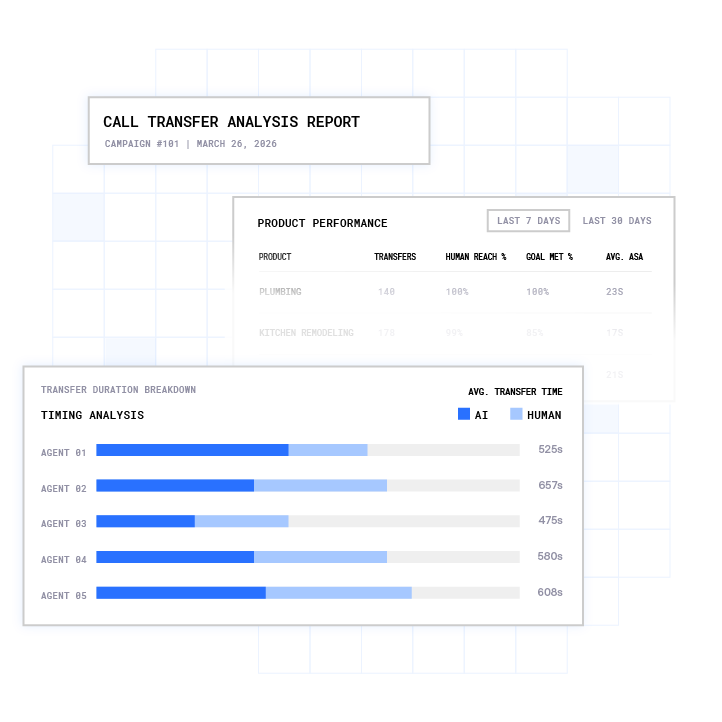
At scale, the comparison is a $700,000 total cost of ownership with Plura replacing $7,000,000 in traditional contact-center economics. For a 50-seat equivalent operation, traditional offshore operations cost $35,000 to $50,000 monthly, while AI contact centers cost $8,000 to $15,000 monthly.
Plura’s AI Predictive Dialer prices per conversation, scaling with AI volume, while Five9 prices per agent seat, scaling with human headcount. The $2,750 per-agent build fee and the 90-day opt-out window in every annual contract are the structural differences that make the math checkable before signing.
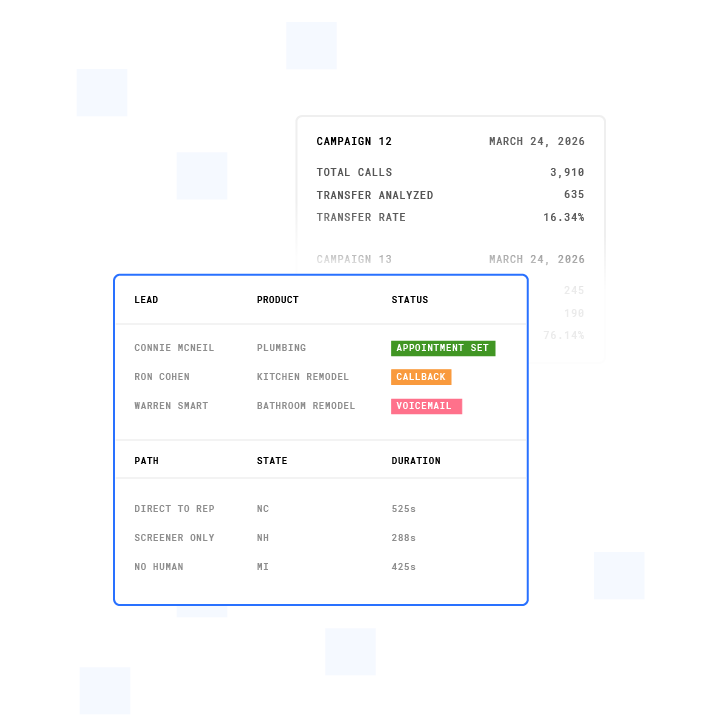
See how per-conversation pricing changes the math for your call volume.
The Cheapest Legitimate Options and What You Give Up
Hosted VICIdial is the honest answer for teams searching for a cheap predictive dialer. VICIdial’s core software is free under the AGPLv2 open-source license, but the license represents only about 2 percent of total cost of ownership. The remaining 98 percent goes to hardware, SIP trunking, DIDs, softphone licensing, compliance tooling, and maintenance labor.
A 10-agent self-hosted VICIdial operation totals approximately $2,502/month ($250/agent/month), comprising server hosting, SIP trunking, DIDs, DNC scrubbing, and part-time maintenance. A 50-agent VICIhost deployment totals approximately $9,512/month ($190/agent/month), with two servers, SIP trunking, DIDs, DNC scrubbing, and maintenance.
VICIdial becomes clearly cost-effective at 30 or more agents with competent technical management. Below 30 agents, the per-agent overhead erodes most of the savings versus a per-seat hosted dialer. Self-hosted VICIdial also carries no SLA unless one is built. A two-hour outage with 50 agents costs $1,500 to $2,500 in idle labor alone, before lost sales. Compliance configuration is entirely the operator’s responsibility. Consult qualified counsel on your specific obligations under the TCPA, TSR, and applicable state rules before deploying any dialer.2
Why Per-Seat Pricing Is The Wrong Unit For An AI Dialer
Per-seat pricing was designed for human agents, where each person needs one license. The model breaks when the agent is AI, because AI agents do not have a 40 percent talk utilization ceiling. They run at 100 percent utilization, handle multiple conversations in parallel, and do not require a seat for every concurrent call.
The concurrent-vs-named-seat ambiguity that causes most quote-to-invoice divergence disappears when pricing is per conversation. Plura’s AI Predictive Dialer is built on this model. Owning the carrier stack is what makes per-conversation pricing possible. Because Plura runs its own FCC-licensed audio bridging carrier instead of reselling a third-party CPaaS, it avoids the per-minute markup that resellers pass through, which keeps the per-conversation rate predictable. Plura offers transparent, all-inclusive pricing with no surprise charges or pass-through fees.
Branded caller ID is issued at the carrier level, not bolted on through a reseller. STIR/SHAKEN authentication runs on every outbound call. Real-time DNC scrubbing, TCPA-litigator screening, and automated quiet-hours enforcement are first-class layers of the platform, not add-ons billed separately.2 The result is a predictable per-conversation cost that aligns closely with the quote when the invoice arrives.
Compare Plura’s plans and rates side by side.
Frequently Asked Questions
How Much Is a Dialer Per Month?
As shown in the pricing tiers above, the subscription range is $25 to $250+ per agent per month. The all-in number is what matters, and it is typically two to three times that range. A realistic all-in monthly cost for a 10-agent dialer operation runs roughly $650 to $2,200, with many estimates clustering around $1,300 to $2,500 depending on hosting model and staffing. For a 50-agent VICIdial operation, the realistic all-in monthly TCO runs about $15,830 to $30,400 (roughly $317-$608 per agent per month).
Is There a Cheap Predictive Dialer Available?
Hosted VICIdial is the lowest-cost legitimate option, with managed hosting available from roughly $20 to $120 per seat per month. The software itself is free under an open-source license, but server hosting, SIP trunking, DIDs, compliance tooling, and maintenance labor make up approximately 98 percent of the real cost. Below roughly 30 agents, the overhead of maintaining a self-hosted VICIdial deployment erodes most of the savings versus a per-seat hosted platform. Entry-level hosted dialers like DialedIn start at $25 per seat per month, but telephony is billed separately on most platforms at that price point.
What Is the Cheapest Auto Dialer?
The cheapest auto dialer by published subscription price is DialedIn at $25 per seat per month. For teams willing to manage their own telephony, a self-hosted VICIdial deployment on a managed hosting provider can run $35 to $60 per seat per month all-in at scale. Neither figure includes telephony minutes, which at $0.013 to $0.020 per minute on retail CPaaS can exceed the subscription cost for high-volume operations. The cheapest dialer by total cost of ownership is the one with the highest talk-time efficiency, not the lowest sticker price.
How Much Does a Predictive Dialer Cost Per Month for 10 Agents?
The 10-agent worked example above lands at $1,750 to $4,600 per month, or $175 to $460 per agent. The subscription is a minority of that total. Telephony, DIDs, local presence, and compliance make up the rest, so operators who budget only the per-seat rate will see an invoice substantially larger than the quote.
What Hidden Fees Do Predictive Dialer Vendors Charge?
The most common hidden fees are telephony minutes billed separately from the subscription, DID rental for outbound caller ID numbers, local presence pool costs for area-code matching, implementation and onboarding fees ranging from $500 to $20,000 or more, add-on modules for features like AI voicemail detection or advanced analytics, and regulatory and tax surcharges that add 15 to 25 percent on top of pre-tax published rates. Annual-billing requirements and minimum seat commitments are structural costs that inflate the effective per-agent price for smaller operations. Asking vendors for a line-item invoice from an existing customer of similar size is a fast way to close the gap between the quote and the real number.
Predictive Dialer vs. Progressive Dialer Pricing: What Is the Difference?
A predictive dialer dials ahead of agent availability using an algorithm, maximizing talk time but creating abandoned calls that must be monitored against regulatory thresholds. A progressive dialer dials one number as soon as an agent is free, eliminating the abandonment problem at the cost of lower throughput. On pricing, most vendors sell a single platform with pacing modes as a toggle, so buyers are purchasing a tier rather than a distinct product. Predictive dialing is typically available on mid-market and enterprise tiers; entry-level tiers often limit buyers to power or progressive modes. The per-seat price difference between predictive and progressive dialer tiers is typically around $50 per agent per month when a vendor publishes both tiers (e.g., $119/month progressive vs. $169/month predictive), though predictive dialing is often priced as contact-center software with larger premiums and seat minimums. The productivity difference, measured in agent talk time per hour, can be 15 to 25 minutes per agent per hour.
Why Is Per-Seat Pricing the Wrong Unit for an AI Dialer?
The 40 percent utilization ceiling described earlier is the core problem. AI agents run at 100 percent utilization and handle parallel conversations, so a per-seat license charges for capacity that does not exist. Per-conversation pricing aligns cost directly to output, removes the concurrent-vs-named-seat ambiguity that causes quote-to-invoice divergence, and scales with actual usage rather than headcount.
How Does Plura AI’s Pricing Compare To Per-Seat Dialer Pricing?
Plura prices per conversation rather than per seat, and owns its FCC-licensed carrier stack rather than reselling a third-party CPaaS. The build fee and opt-out window described earlier replace the minimum-seat commitments and early-termination penalties common in per-seat platforms. The default ROI calculator scenario shows Plura agents costing $14,400 per month versus $60,000 per month for 15 human agents doing equivalent work, a $45,600 monthly saving. At scale, the total cost of ownership comparison is $700,000 with Plura versus $7,000,000 in traditional contact-center economics on equivalent volume.
Conclusion: The Number for Your Budget Meeting
The quote is not the invoice. The per-seat subscription is the smallest and most negotiable line on a predictive dialer bill. Telephony minutes, DID rental, local presence, implementation, and compliance tooling are what actually move the number, and no vendor publishes all of them in the same place.
The worked examples above give you a defensible line-item total for a 10-agent and a 50-agent operation, built entirely from cited published rates. Use them as a floor for your budget meeting, then add your actual call volume and area-code footprint to get to your specific number.
Plura owns its carrier stack, prices per conversation rather than per seat, and includes a 90-day opt-out window in every annual contract. The concurrent-vs-named-seat ambiguity that inflates most invoices does not exist in a per-conversation model. The math is on the table before you sign.
Run your numbers through Plura’s calculator to check your ROI in real time.
Compare plans and rates side by side at Plura’s pricing page.
Explore a live demo with Plura to see the model on your specific headcount and call volume.
1 Plura AI maintains SOC 2, HIPAA, ISO, and GDPR posture as part of its platform infrastructure. References to compliance frameworks in this article describe Plura’s platform capabilities and do not constitute a guarantee that any customer using Plura will themselves be compliant with applicable laws or standards. Customers remain solely responsible for their own regulatory obligations, certifications, consent management, recordkeeping, and the claims they make to their own end users. Consult qualified legal counsel for guidance specific to your use case.
2 This article describes regulatory frameworks at a general level and does not constitute legal advice. Laws and regulations vary by jurisdiction, change over time, and apply differently depending on facts and circumstances. Readers should consult qualified legal counsel before making compliance decisions.
3 Performance figures, customer outcomes, and industry statistics referenced in this article are drawn from cited third-party sources or Plura customer case studies. Individual results vary based on implementation, use case, industry, audience, and execution. Past or aggregate performance is not a guarantee of future results.
4 References to third-party products, services, companies, or research are made for informational and comparative purposes only. Plura AI is not affiliated with, endorsed by, or sponsored by any third party named in this article unless explicitly stated. Trademarks and product names referenced remain the property of their respective owners.
This article is provided for informational purposes only and reflects Plura AI’s understanding at the time of publication. Product capabilities, integrations, and specifications are subject to change. For the most current information, visit plura.ai.
This article was produced with the assistance of AI tools and reviewed by Plura AI prior to publication.