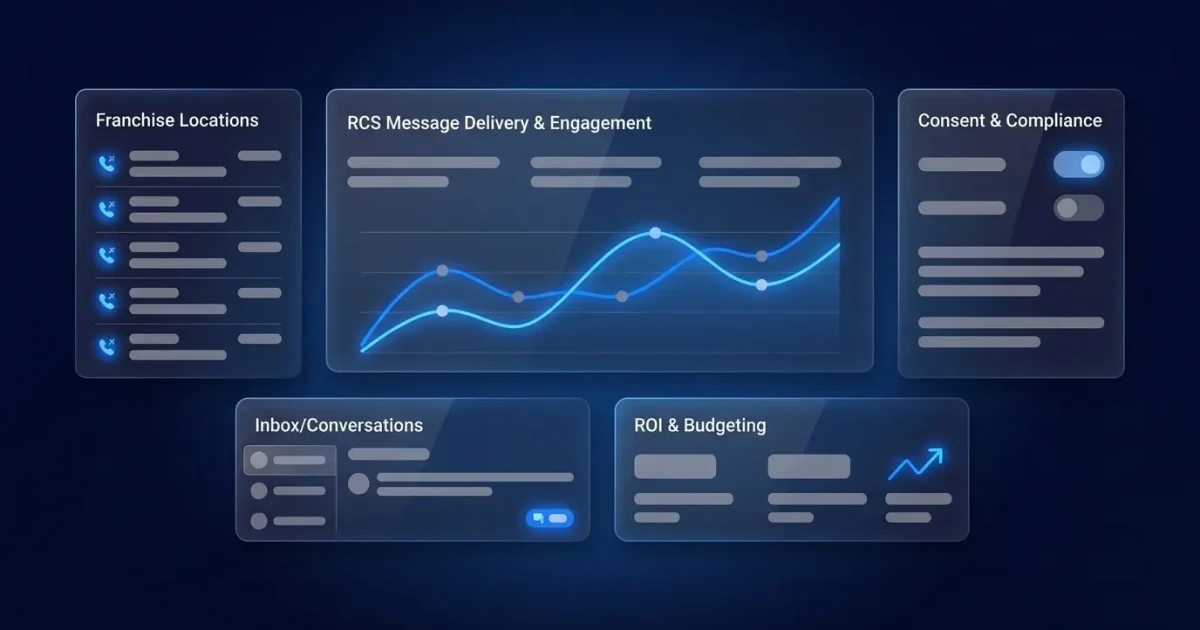
Franchise systems can run RCS from a centralized corporate model for tight brand control or a decentralized model that keeps franchisee control over lists and timing.
Compliance for RCS marketing relies on explicit per-channel consent, centralized suppression lists, and parallel 10DLC and RCS agent registration within the TCPA framework.2
Per-location budgets should cover message fees, carrier surcharges, registration, and platform subscriptions, with RCS often delivering 15-30% click-through rates versus 4-7% for SMS.3
Plura AI’s FCC-licensed platform provides a no-code workflow builder, centralized compliance tools, and per-location analytics to launch and scale RCS across franchise networks, and you can see the platform in a live walkthrough.
How Outbound RCS Fits Franchise Messaging
RCS (Rich Communication Services) is the next-generation SMS standard now supported across modern Android and iOS devices. Unlike SMS’s 160-character text limit, GSMA’s RCS Universal Profile supports rich media files up to 100MB as commonly implemented by service providers, while the specification allows each provider to configure file transfer size limits. RCS also supports verified sender profiles with brand logos and checkmarks, suggested action buttons, read receipts, and interactive carousels. All of this happens inside the customer’s native messaging app, with no separate download.
For franchise networks, the verified sender profile creates the biggest shift from SMS. When a customer receives an RCS message from a franchise location, they see the corporate brand logo, a verification checkmark, and clear buttons such as “Book Appointment” or “Order Now.” This format reduces “spam likely” concerns that affect SMS and lifts engagement. Plura AI’s AI RCS messaging reports 3x higher engagement than SMS, with a 35% click-through rate and 80% read rate across more than 2 billion devices.3
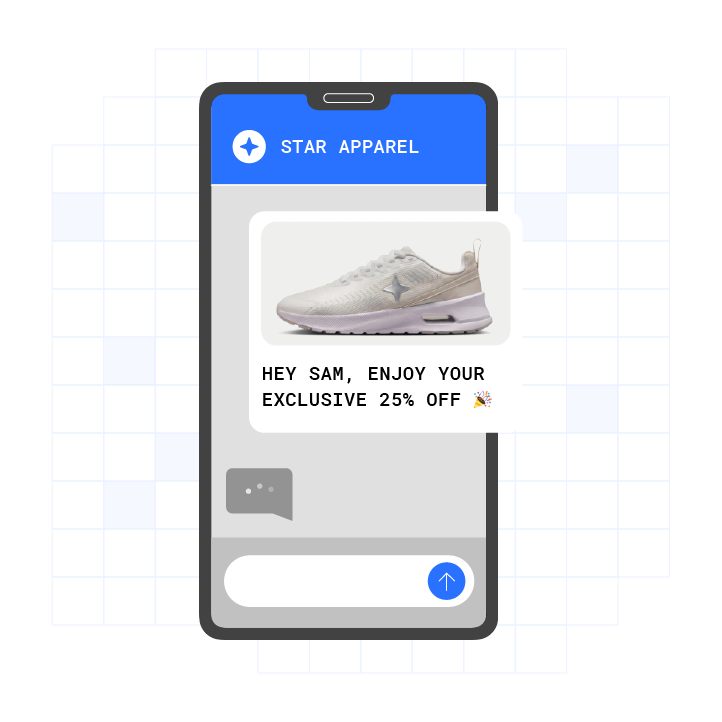
Plura RCS enables rich mobile messaging with interactive media, branded customer experiences, and AI-powered conversational engagement.
U.S. adoption has accelerated sharply. Infobip reported that U.S. RCS interactions grew 1,298.8% year-over-year between H1 2025 and H1 2026, making the United States the fastest-growing RCS market globally.4 All three major U.S. carriers, AT&T, Verizon, and T-Mobile, now support RCS business messaging, and by mid-2026 the vast majority of U.S. iPhones support RCS following Apple’s iOS 18 release.4 For franchise owners, that reach positions RCS as the new baseline for customer messaging.
Brand consistency across locations. Corporate designs master templates with approved branding, offers, and compliance language. Every location sends from the same verified brand profile, so customers see the same logo and quality whether they visit a location in Phoenix or Portland.
Local personalization at scale. A single corporate campaign can dynamically inject location-specific data, including store address, local phone number, map links, and localized offers, based on the recipient’s closest geographic location. Customers receive relevant content, and franchisees gain local execution without building campaigns from scratch.
Conversational commerce and analytics. Customers can complete purchases, book appointments, or sign documents inside the message thread. Franchise owners see granular analytics, including read receipts, button taps, and carousel interactions, that SMS does not provide. These metrics support accurate per-location ROI calculations. Plura enables franchises to handle 3x to 5x call volume during peak seasons without temporary staff, and the same operational scale applies to RCS outbound campaigns.
Franchise leaders can review RCS and SMS pricing inputs side by side on the Plura pricing page.
Choosing Centralized or Decentralized RCS Deployment
Franchise networks generally deploy RCS outbound through one of two models. The right choice depends on the franchise agreement, franchisee technical sophistication, and corporate governance structure.
Decision Factor
Corporate-Led (Centralized)
Franchise-Empowered (Decentralized)
Who controls messaging
Corporate marketing manages the master RCS agent, billing, compliance, and list segmentation
Corporate sets brand framework and rules, and franchisees trigger geo-targeted campaigns to their own lists
Best for
QSR chains, retail franchises with uniform offers, systems with low franchisee technical sophistication
Home services, fitness, automotive franchises where local relationships drive repeat business
Compliance burden
Corporate handles registration, consent, and opt-out management centrally
Each franchisee manages local consent, while corporate provides guardrails and audit tools
Brand consistency
High: every message comes from the same verified profile with corporate-approved content
Moderate: corporate sets templates, and franchisees customize offers and timing
Franchisee autonomy
Low: franchisees opt into campaigns and fund their zip codes
High: franchisees control their customer lists and campaign timing
The centralized model delivers a uniform brand experience, centralized compliance controls, and corporate-level analytics. Franchisees trade some local marketing control for that consistency, and corporate teams take on list segmentation and campaign operations.
The decentralized model keeps franchisees close to their customers and lets them time campaigns around local events or seasons. Corporate teams accept more training work and tighter monitoring of brand standards in exchange for that local agility.
A QSR chain with 200 locations might select a centralized model to enforce national promotions. A home services franchise with 50 locations might favor a decentralized model so each location can send appointment reminders with local technician photos and vehicle details. Many networks start with a centralized pilot, then introduce decentralized controls as franchisee sophistication grows.
This description is informational only. Franchise owners should consult qualified counsel to understand their specific obligations under TCPA, state laws, and carrier policies.
Plura supports franchise compliance efforts with real-time DNC (Do Not Call) scrubbing, immutable consent logging that records which channel each customer agreed to, and automated quiet-hours enforcement through time-zone detection. Compliance remains the customer’s responsibility, and Plura provides infrastructure that supports those efforts.
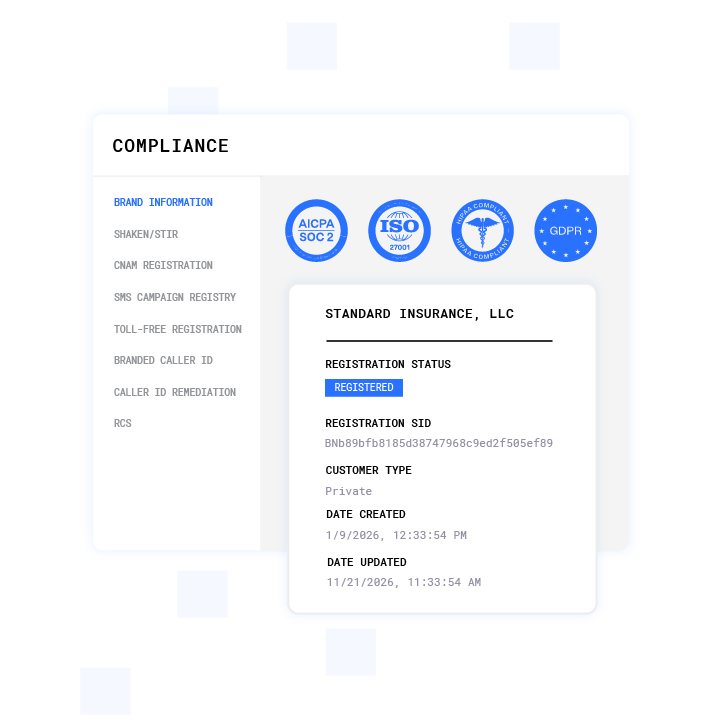
Plura Security & Compliance supports SOC 2, ISO, and GDPR standards with trust registration, verification management, and secure AI communications.
1
Cost and ROI: Budgeting RCS Per Location
RCS pricing varies by provider, message type, and carrier, so clear cost structure helps franchise owners budget accurately across locations.
RCS cost components include the following:
Per-message fees: Basic text-only RCS messages often cost about the same as SMS. Rich media messages run 20-30% higher. Conversational sessions run roughly double the SMS rate but include a 24-hour window for unlimited replies.
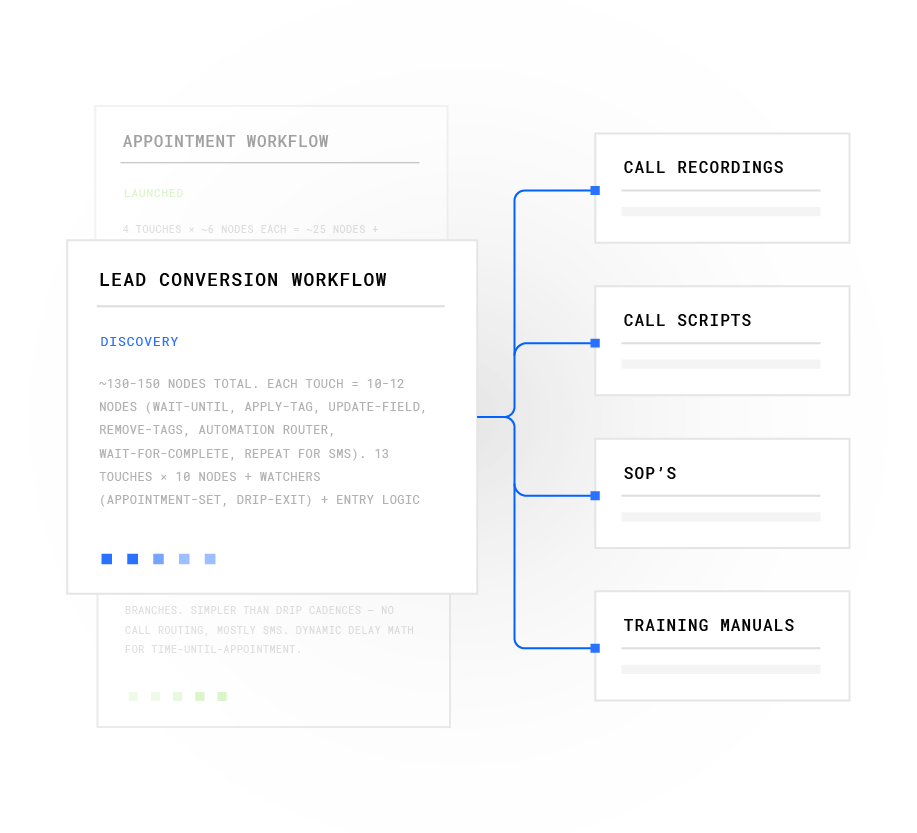
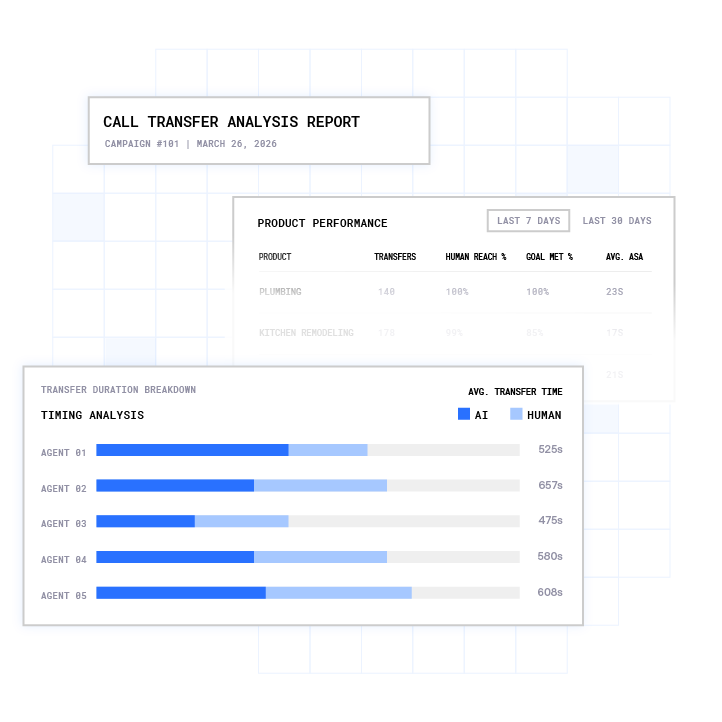
Plura Conversation Intelligence gives businesses AI-powered analytics, call transfer tracking, and customer interaction insights across every conversation.
Franchise leaders can model these inputs using the Plura pricing page to estimate cost and ROI per location.
5 Practical Steps to Launch RCS in Your Franchise
Step 1: Assess franchisee readiness. Survey franchisees on current messaging tools, customer list quality, and willingness to adopt a new channel. Identify your 3-5 most tech-savvy locations for the pilot. Franchises average a 67% missed-call rate during peak hours, so locations with the highest call volume and lowest answer rates often make strong pilot candidates.
Step 2: Choose an implementation model. Use the centralized versus decentralized framework above and start with a pilot in one region or district before system-wide rollout. Many brands treat the centralized model as lower risk for the pilot phase because corporate controls consent, templates, and suppression lists from day one.
Step 3: Set up compliance and consent infrastructure. Start by registering your brand with The Campaign Registry and completing 10DLC registration, then begin RCS agent verification in parallel, since carrier approval for new RCS business senders currently takes 8 to 16 weeks. While that process runs, audit existing consent records to confirm they document which channel each customer agreed to. Finally, implement a centralized suppression list so that an opt-out at any location suppresses that customer across the entire network.
Step 4: Design templates and workflows. Build corporate-approved templates for your highest-value use cases, such as appointment reminders, order confirmations, promotional offers, and service follow-ups. Include suggested action buttons, rich media, and SMS fallback content that still works as plain text. Plura’s no-code workflow builder lets corporate teams design these flows without engineering resources.
What is the difference between RCS and SMS for franchise businesses?
RCS is the next-generation SMS standard that supports verified sender profiles with brand logos, rich media, interactive buttons, read receipts, and carousels inside the native messaging app. SMS is limited to 160 characters of plain text with no branding or interactivity. For franchise networks, the practical difference is that RCS lets corporate deliver a consistent, branded experience at every location without requiring customers to download an app. Every message carries the corporate logo and a verification checkmark, which reduces the “spam likely” perception that undermines SMS outbound. As noted earlier, RCS often delivers click-through rates of 15-30% versus SMS’s 4-7%, with read rates around 70-92%. The tradeoff is that RCS requires internet connectivity and carrier approval, while SMS works on any cellular connection.
How do franchise networks manage consent for RCS messaging across multiple locations?
Consent for RCS should be explicit, documented, and tied to both channel and use case. A customer who opted into SMS has not automatically opted into RCS, and a customer who opted into appointment reminders has not automatically opted into promotional offers. Each opt-in should disclose the business name, message types, frequency, that message and data rates may apply, and opt-out instructions. The timestamp, source, and method of consent should be logged for each contact. For franchise networks, a centralized suppression list is the critical operational control, so a STOP request at any location suppresses that customer across every location and campaign. Consent records should be retained for at least five years per the FTC Telemarketing Sales Rule. Franchise owners should consult qualified counsel to understand their specific obligations under TCPA, state laws, and carrier policies.
What are the downsides of RCS for franchise networks?
RCS requires internet connectivity, so messages can fail or fall back to SMS in areas with poor data coverage. Not all devices support RCS, and older Android phones and iPhones running iOS versions prior to iOS 18 rely on SMS fallback. Carrier approval for RCS agents can take 8-16 weeks, which means planning timelines need to account for registration well before launch. RCS approval is per use case, so an agent approved for transactional messaging needs separate approval for marketing content. RCS also lacks universal end-to-end encryption between iPhone and Android users, which matters for franchises in regulated industries such as healthcare or financial services. Pricing is more complex than SMS, with per-message rates, carrier surcharges, registration fees, and platform fees all contributing to total cost per location.
How much does RCS cost per franchise location?
Costs depend on message volume, message type, carrier, and platform. Text-only RCS messages often cost about the same as SMS, and rich media messages typically run 20-30% higher. U.S. carrier rates for rich media marketing range from $0.0060-$0.0135 per message as of January 2026. Campaign Registry fees include approximately $4.50 for brand registration, $41.50 for brand vetting, $15 for campaign vetting, plus $1.50-$10 per month per campaign. Platform fees and SMS fallback costs for devices that cannot receive RCS also factor into budgets. For multi-location deployments, the most accurate approach is to model cost per location based on expected monthly message volume, then track ROI through per-location engagement metrics such as click-through rate, conversion rate, read rate, and revenue per message. Franchise leaders can review plan details for franchise-scale deployments on the Plura pricing page.
How do I get franchisees to adopt RCS outbound?
Franchisee adoption usually follows a clear pattern: demonstrate value, then request buy-in. Start with a pilot in your most tech-savvy locations and document measurable wins, such as higher engagement rates, reduced no-shows, and increased revenue per message. Provide corporate-designed templates so franchisees do not need marketing expertise to run campaigns. Offer training on the platform and compliance requirements, and clarify that corporate manages registration and suppression list infrastructure. Share per-location ROI data from the pilot. Franchisees who see the performance gap between pilot locations and their own results often become strong advocates for system-wide rollout. Plura’s centralized dashboard makes per-location comparison straightforward, giving corporate the data to build the internal business case.
Conclusion: Turning RCS Into a System-Level Advantage
RCS outbound for franchise owners addresses the core franchise challenge of delivering a consistent, branded customer experience across locations while still respecting franchisee autonomy. By selecting the right deployment model, building a clear consent framework, and budgeting accurately per location, franchise networks can treat RCS as a durable channel in their customer communication stack.
Plura AI serves as a focused platform for franchise RCS deployment. As an FCC-licensed carrier that owns its carrier stack, Plura enables branded caller ID and compliance support at the carrier level. Plura’s stateful conversation memory holds context across voice, SMS, RCS, and AI webchat, so a customer who texts at 9 a.m. appears as the same customer when the call arrives at noon. The no-code workflow builder lets corporate teams design compliant templates that franchisees deploy locally, and the conversation intelligence dashboard gives corporate visibility into per-location performance while franchisees retain control over local execution.
Franchise leaders can explore plan structures and rates for their networks on the Plura pricing page.
1 Plura AI maintains SOC 2, HIPAA, ISO, and GDPR posture as part of its platform infrastructure. References to compliance frameworks in this article describe Plura’s platform capabilities and do not constitute a guarantee that any customer using Plura will themselves be compliant with applicable laws or standards. Customers remain solely responsible for their own regulatory obligations, certifications, consent management, recordkeeping, and the claims they make to their own end users. Consult qualified legal counsel for guidance specific to your use case.
2 This article describes regulatory frameworks at a general level and does not constitute legal advice. Laws and regulations vary by jurisdiction, change over time, and apply differently depending on facts and circumstances. Readers should consult qualified legal counsel before making compliance decisions.
3 Performance figures, customer outcomes, and industry statistics referenced in this article are drawn from cited third-party sources or Plura customer case studies. Individual results vary based on implementation, use case, industry, audience, and execution. Past or aggregate performance is not a guarantee of future results.
4 References to third-party products, services, companies, or research are made for informational and comparative purposes only. Plura AI is not affiliated with, endorsed by, or sponsored by any third party named in this article unless explicitly stated. Trademarks and product names referenced remain the property of their respective owners.
This article is provided for informational purposes only and reflects Plura AI’s understanding at the time of publication. Product capabilities, integrations, and specifications are subject to change. For the most current information, visit plura.ai.
This article was produced with the assistance of AI tools and reviewed by Plura AI prior to publication.